Within two and a half hours of Athens, five UNESCO World Heritage Sites trace the full arc of Greek civilisation — from Bronze Age citadels and Classical temples to Byzantine mosaics and an oracle that advised kings and generals for nearly a thousand years. From Cultural Heritage Online.
Acropolis of Athens City centre — Metro Line 2
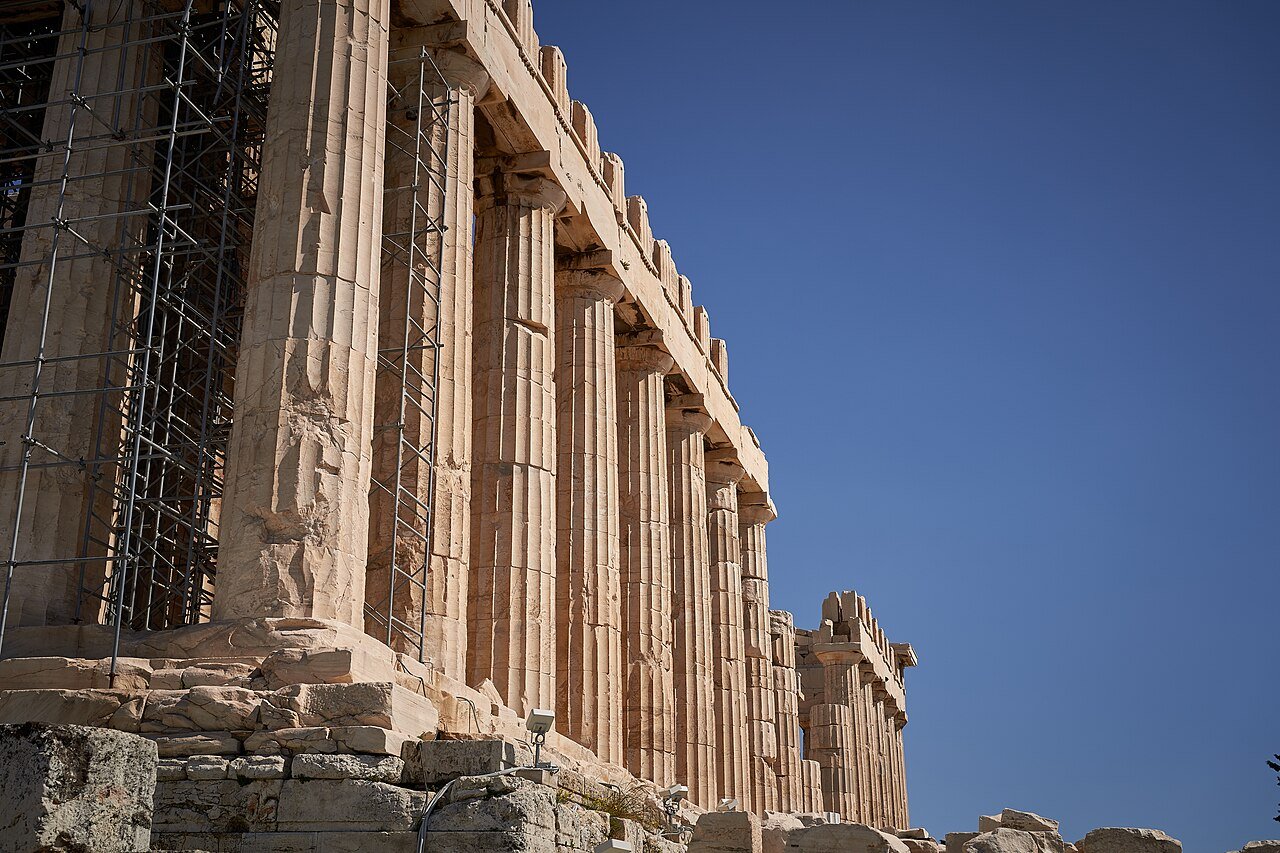
Inscribed in 1987, the Acropolis is the definitive monument of the ancient Greek world. The rocky outcrop rises 150 metres above sea level and covers roughly three hectares — small enough to cross in minutes, dense enough to occupy an entire morning. Pericles commissioned the major rebuilding programme during the Golden Age of Athens (460–430 BC), and the Parthenon, Propylaea, Erechtheion, and Temple of Athena Nike all date from that concentrated burst of construction. The Parthenon alone demanded more than a decade of labour and the finest Pentelic marble quarried from Mount Pentelicus, 16 kilometres to the northeast. Stand at the south colonnade in afternoon light and the honey-coloured stone seems almost warm to the touch. A modern restoration programme launched in 1975 has repositioned some 2,675 tonnes of architectural members and introduced 530 cubic metres of new marble to stabilise the structure.
Getting there: Metro Line 2 (red) to Acropolis station; the entrance gate is a five-minute walk. Allow: 3–4 hours. Best for: Visitors who want to read the entire sweep of Classical Athens in a single morning without leaving the city.
Byzantine Monasteries of Daphni 30 min — Metro Line 3 + bus
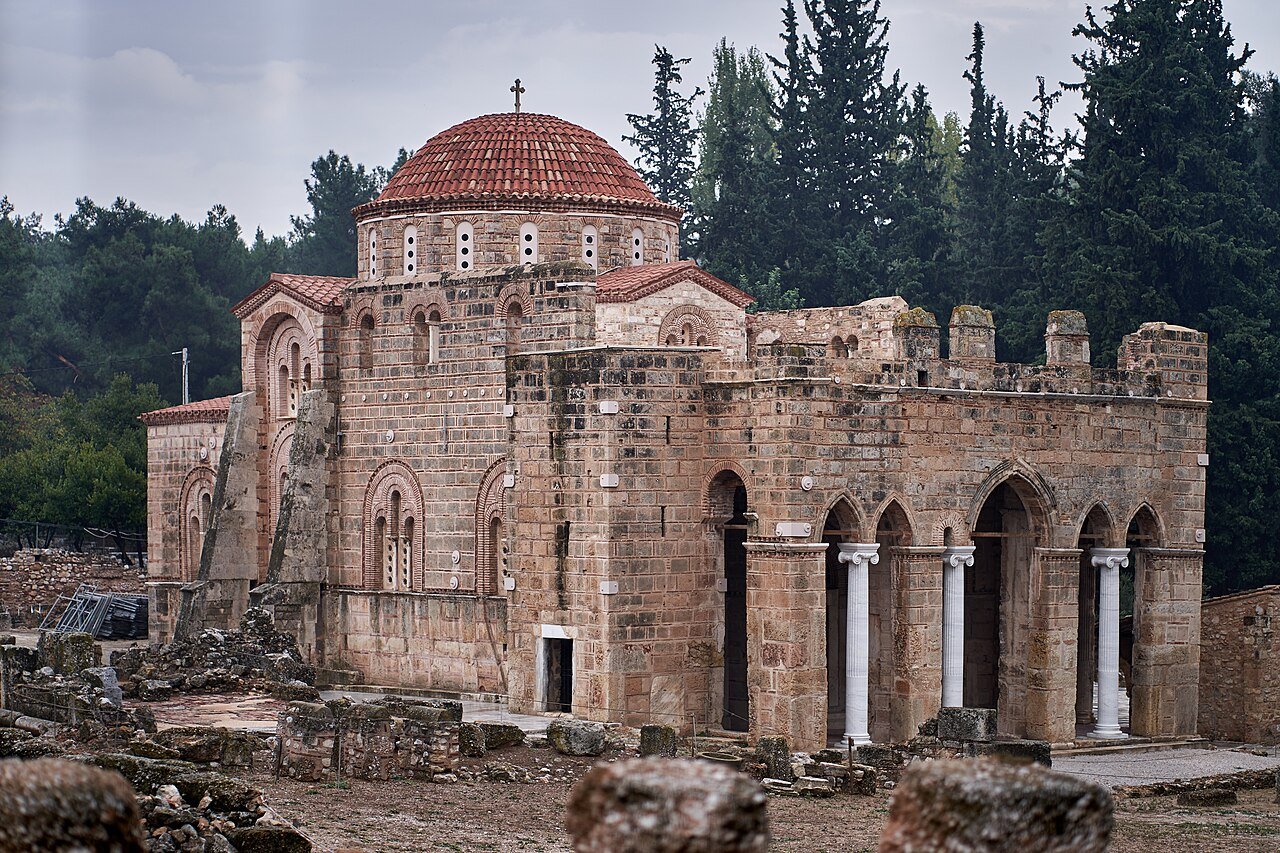
Daphni Monastery stands 11 kilometres northwest of central Athens along the ancient Sacred Way once walked by pilgrims heading to Eleusis. Built in the eleventh century, it belongs to the group of three medieval Greek monasteries — alongside Hosios Loukas and Nea Moni of Chios — inscribed together by UNESCO in 1990 as masterpieces of middle Byzantine architecture. The monastery is celebrated above all for its gold-ground mosaics, which cover the interior with a precision and theological programme that reflects the refined aesthetic of Constantinople at its height. The Christ Pantokrator in the central dome — stern, enlarged, eyes fixed on the nave below — is among the finest surviving examples of Byzantine monumental art. The surrounding forest of laurel trees, after which the site takes its name, gives the approach a stillness that makes the sudden brilliance of the gilded interior all the more arresting.
Getting there: Metro Line 3 to Egaleo, then bus toward the Sacred Way; total journey approximately 30 minutes from central Athens. Allow: 1–2 hours. Best for: Visitors interested in Byzantine art who want a site that few Athens day-trippers reach.
Archaeological Site of Mycenae and Tiryns 1 hr 30 min — KTEL bus from Kifissos
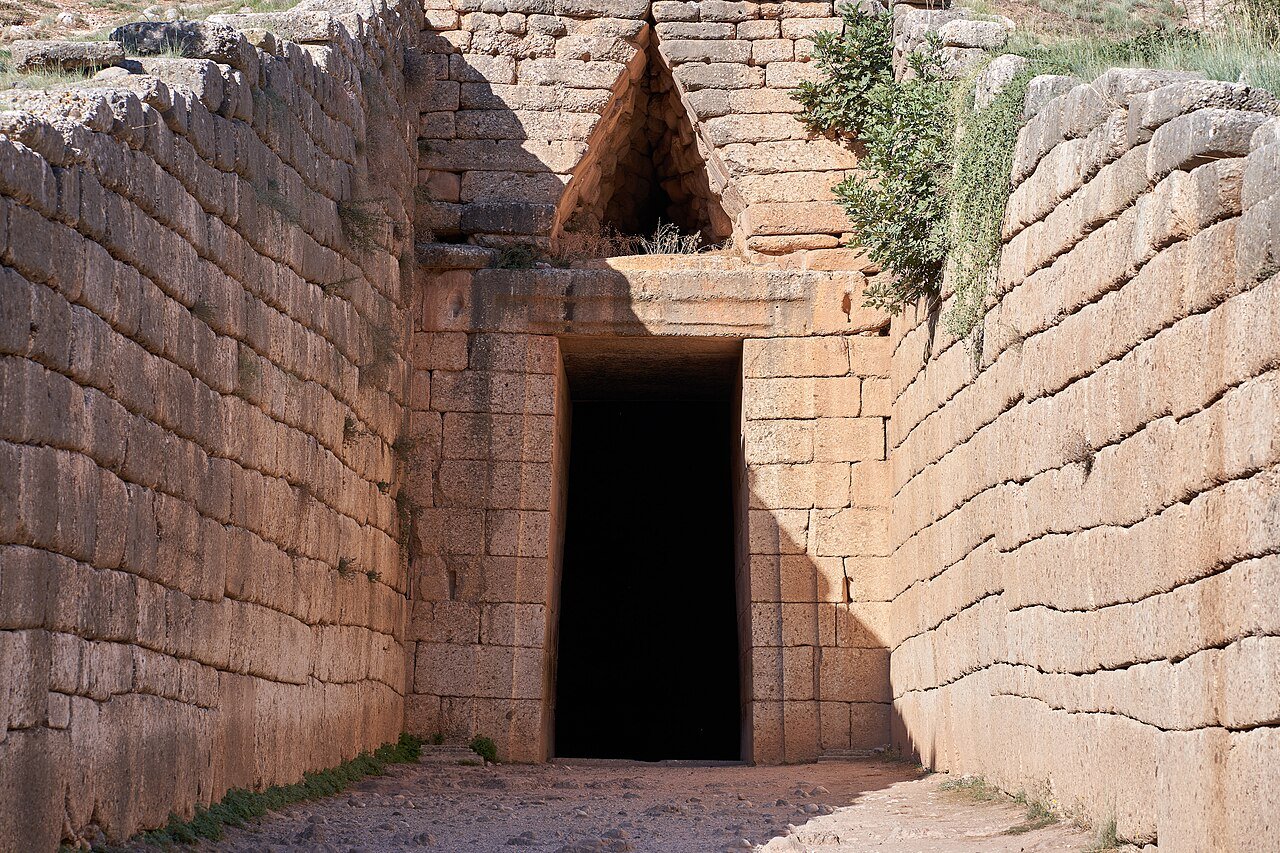
Mycenae was the dominant power of the Bronze Age Aegean between roughly 1600 and 1100 BC, and the citadel that crowns the Argolid plain at 274 metres above sea level still conveys that authority. Inscribed by UNESCO in 1999 together with Tiryns, the site encompasses the Lion Gate — Europe’s oldest monumental sculpture, dating to around 1250 BC — as well as the Treasury of Atreus, a corbelled tholos tomb whose entrance corridor runs 36 metres into the hillside. At its peak the settlement extended across 32 hectares and supported a population of around 30,000. The massive limestone blocks of the Cyclopean walls, some weighing several tonnes, seem impossible constructions for any human hand; later Greeks attributed them to the mythological giants. Walking the ridge in the early morning, before tour coaches arrive and when the Argive plain glitters below in the low light, brings the Bronze Age sharply into focus.
Getting there: KTEL Argolida bus from Kifissos terminal to Nafplio, then local bus or taxi to the site; approximately 1 hour 30 minutes total. Allow: 2–3 hours. Best for: History travellers who want the deepest chronological reach available from Athens in a single day.
Sanctuary of Asklepios at Epidaurus 1 hr 45 min — KTEL bus from Kifissos
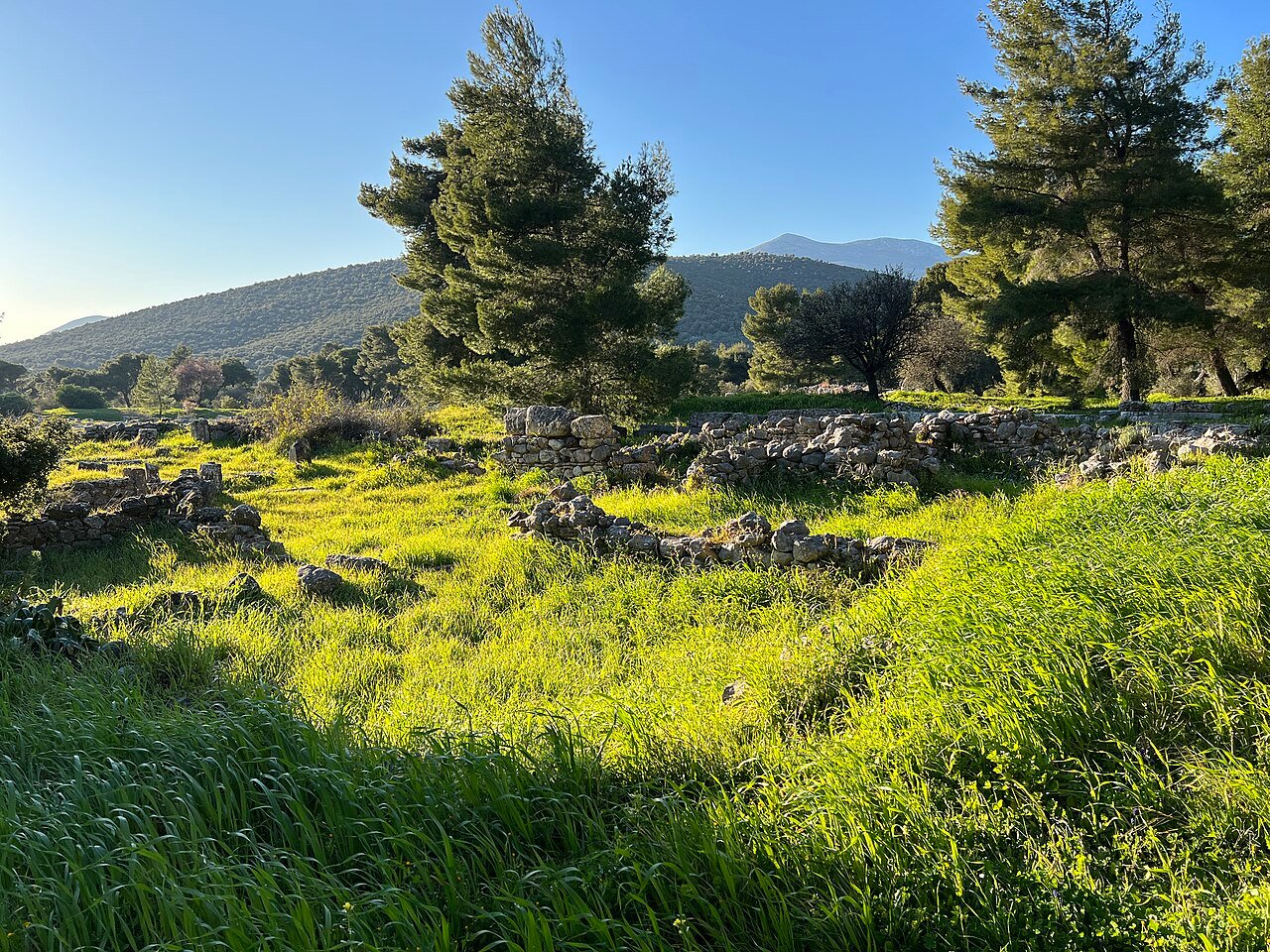
Inscribed in 1988, the Sanctuary of Asklepios at Epidaurus was the most celebrated healing centre of the ancient Greek and Roman world, drawing pilgrims who sought cures from the god of medicine through ritual sleep, bathing, and theatre. The site covers 1,393 hectares and encompasses temples, baths, and the abaton — a dormitory where supplicants slept hoping for divine visitation in their dreams. Its theatre, designed by Polykleitos the Younger around 340–300 BC, seats between 13,000 and 14,000 spectators across 55 rows of tiered limestone benches. The circular orchestra measures 20 metres in diameter. Drop a coin at the centre and it can be heard clearly from the uppermost row — the acoustic geometry remains without parallel in the ancient world. The site still hosts performances of ancient drama each summer under the open sky.
Getting there: KTEL Argolida bus from Kifissos terminal toward Nafplio, alighting at the Epidaurus junction; approximately 1 hour 45 minutes. Allow: 2–3 hours. Best for: Visitors wanting both an archaeological sanctuary and the experience of one of antiquity’s great performance spaces in a single excursion.
Archaeological Site of Delphi 2 hrs 30 min — KTEL bus from Liosion
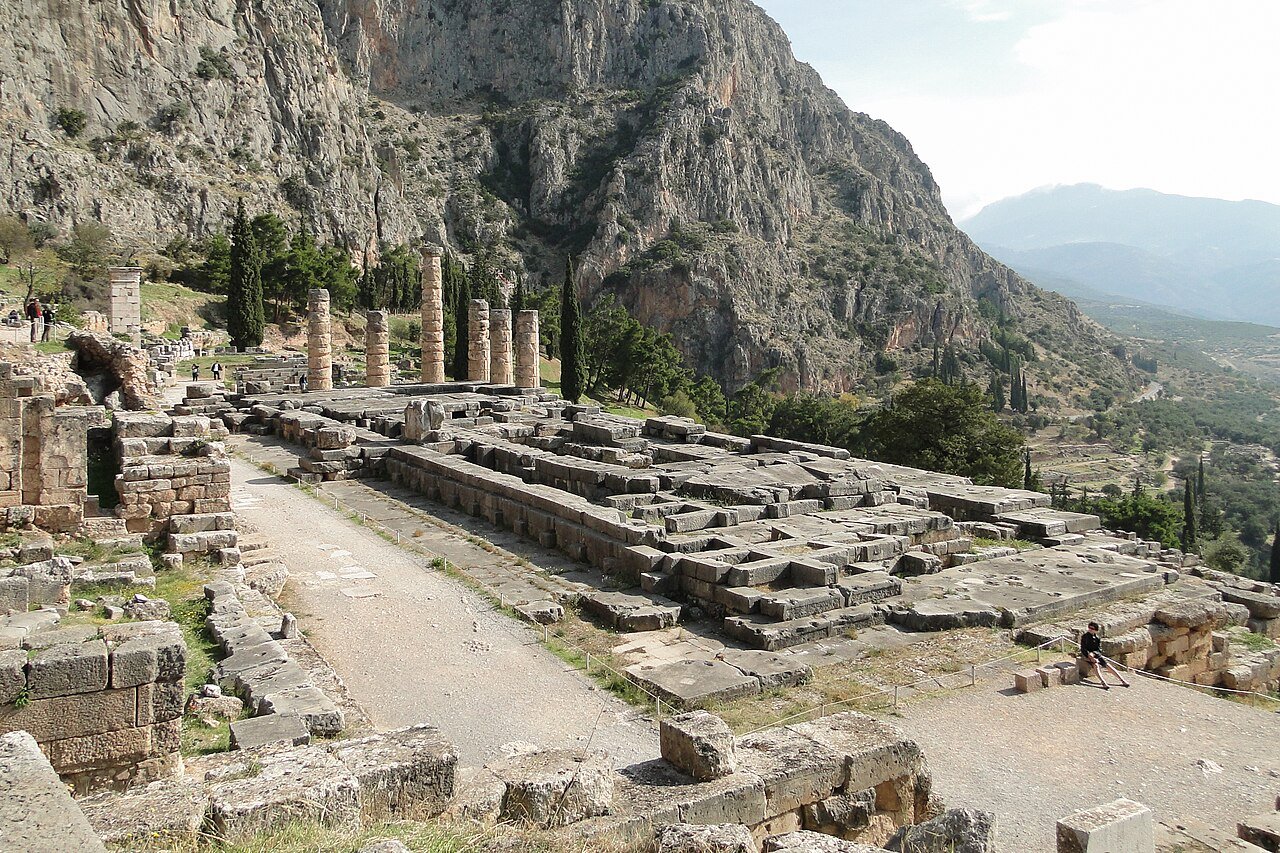
Delphi was inscribed by UNESCO in 1987 as a site whose influence on the development of Western civilisation is difficult to overstate. Set on the south-western slope of Mount Parnassus above a gorge that drops toward the Gulf of Corinth, the sanctuary served as the seat of the Pythia oracle from at least the eighth century BC until the emperor Theodosius I shut it down in 381 AD. The Temple of Apollo — a Doric peripteral structure raised in the fourth century BC by the architects Spintharus, Xenodoros, and Agathon — survives as six standing columns above a platform of dressed limestone. Nearby, the Tholos of Delphi, built between 380 and 360 BC with an exterior diameter of 14.76 metres, demonstrates the decorative ambition of the sanctuary’s later phases. The stadium above the temple, 177 metres long, hosted the Pythian Games from 586 BC. The scale of the site, spread vertically across the hillside with the pale limestone cliffs of the Phaedriades above and the Pleistos valley far below, is genuinely vertiginous.
Getting there: KTEL Fokidas bus from Liosion terminal in Athens; approximately 2 hours 30 minutes. A long day trip — an early departure is strongly recommended. Allow: 3–4 hours. Best for: Travellers prepared to make a full day of it and experience the site that once stood at the symbolic centre of the ancient world.
Frequently Asked Questions
How many UNESCO World Heritage Sites are near Athens?
Five UNESCO World Heritage Sites lie within approximately two and a half hours of Athens by public transport or car: the Acropolis of Athens, the Byzantine Monasteries of Daphni, the Archaeological Site of Mycenae and Tiryns, the Sanctuary of Asklepios at Epidaurus, and the Archaeological Site of Delphi. Together they span more than three thousand years of continuous civilisation, from the Bronze Age to the Byzantine period.
What is the closest UNESCO World Heritage Site to Athens?
The Acropolis of Athens is the closest — it sits at the heart of the city and is reachable in minutes by Metro Line 2 to Acropolis station. The Byzantine Monastery of Daphni, 11 kilometres northwest, is the closest site outside the city centre and can be reached in around 30 minutes by Metro Line 3 and bus.
Can you visit Mycenae and Epidaurus in the same day from Athens?
It is possible but requires an early start and private transport or a guided tour. Both sites are in the Argolid region of the Peloponnese; Mycenae is roughly 120 kilometres from Athens and Epidaurus approximately 150 kilometres. By car, with two to three hours at each site, a combined visit is manageable. By public bus the distances are considerable and the schedules require careful planning — most visitors choose one site per day trip.
Is Delphi worth the journey from Athens?
Delphi is the longest journey on this list at around two and a half hours by KTEL bus from Liosion terminal, but most visitors consider it essential. The site’s position on the slope of Mount Parnassus, its extraordinary state of preservation, and its role as the ancient world’s most influential oracle make it qualitatively different from any other Greek site. An early departure, three to four hours on site, and a return on the late afternoon bus complete a long but rewarding day.
Sources used in this article
- UNESCO World Heritage Centre — World Heritage List.
- Wikipedia — Acropolis of Athens.
- Wikipedia — Theatre of Epidaurus.
- Wikipedia — Delphi.
- CHO — Interactive heritage map.
Sources
- S1 — Hurwit, Jeffrey M. The Athenian Acropolis: History, Mythology, and Archaeology from the Neolithic Era to the Present. Cambridge University Press, 1999. ISBN 978-0-521-41786-0.
- S2 — Camp, John M. The Archaeology of Athens. Yale University Press, 2001. ISBN 978-0-300-08197-8.
Spotted an error? Write to editorial@culturalheritageonline.com and we correct it the same day.