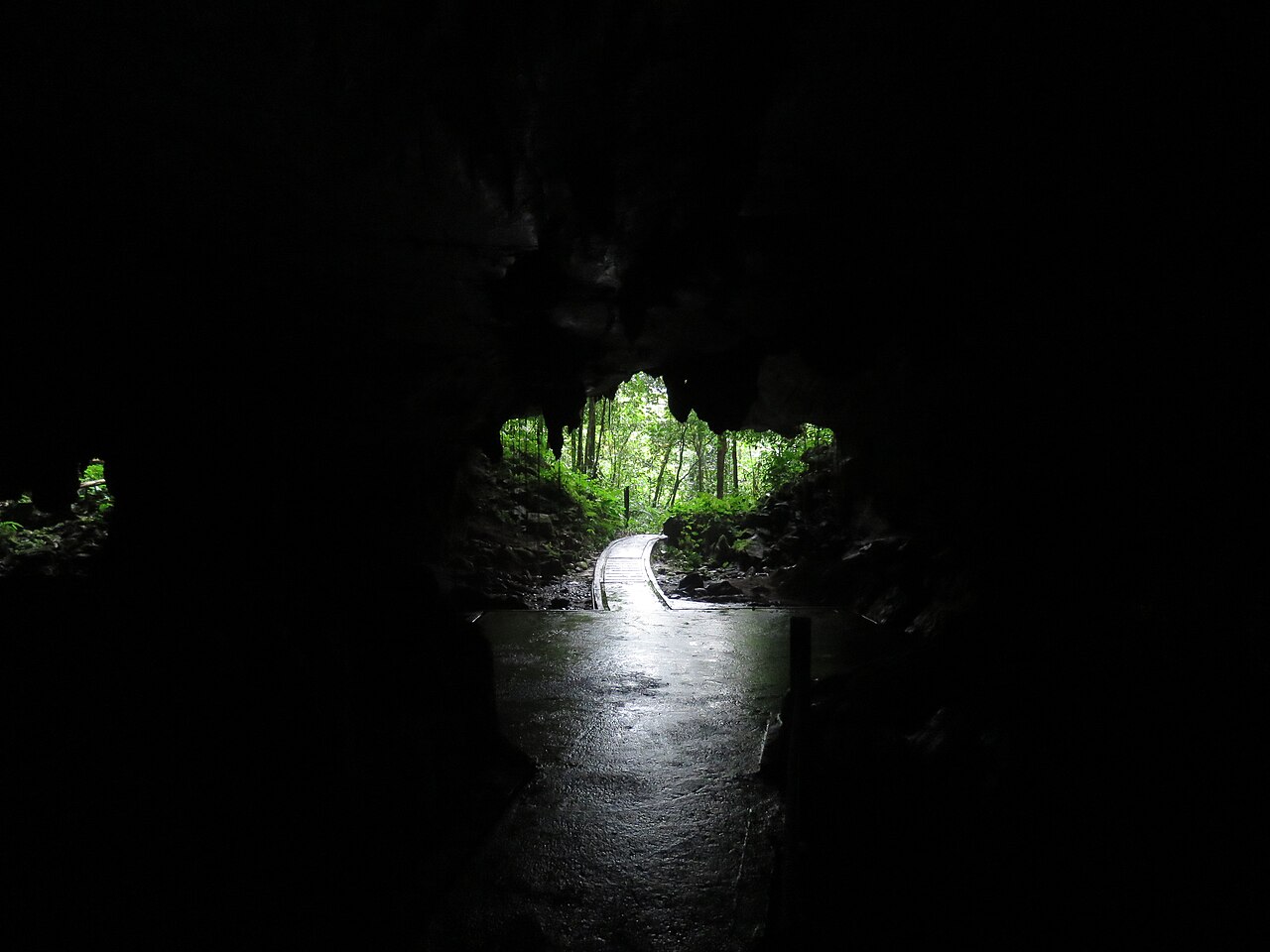
Two World Heritage properties lie within 300 kilometres of Gunung Mulu National Park as the crow flies: the Archaeological Heritage of Niah National Park’s Caves Complex (131 km) and Kinabalu Park (293 km), both in Malaysia. Mulu itself was inscribed in 2000. It protects the most studied tropical karst terrain in the world, including the largest known cave chamber and a bat colony numbering in the millions.
The World Heritage sites within reach of Gunung Mulu
The distances below are straight lines between the reference points that UNESCO publishes for each property. They tell you what is close. They do not tell you how long the journey takes, which depends on terrain, weather and the fact that much of Borneo’s interior has no road access.
| Site | Country | Distance | Inscribed | Type |
|---|---|---|---|---|
| The Archaeological Heritage of Niah National Park’s Caves Complex | Malaysia | 131 km | 2024 | Cultural |
| Kinabalu Park | Malaysia | 293 km | 2000 | Natural |
Read together, the two neighbouring properties show the span of UNESCO’s interest in Malaysian Borneo. Niah preserves the longest known record of human interaction with rainforest, spanning at least 50,000 years, while Kinabalu protects a granite massif whose habitats rise from lowland rainforest to sub-alpine scrub. Mulu sits between them in more than distance: it is the geological and ecological hinge, a limestone landscape whose caves hold biological records measured in millions of years.
What makes Mulu the most studied tropical karst area in the world?
The park lies in the Malaysian State of Sarawak on the island of Borneo. UNESCO describes it as the most studied tropical karst area in the world, a reputation built on decades of scientific work. The Melinau Limestone formation contains a concentration of caves that reveals over 1.5 million years of geological change. At least 295 km of passages have been explored and mapped, and the protected area extends across seventeen vegetation zones, from lowland forest to mountain summit. The park’s stated size is 52,864 hectares, within which some 3,500 species of vascular plants have been recorded.
The record-breaking caves: what is actually inside the mountain?
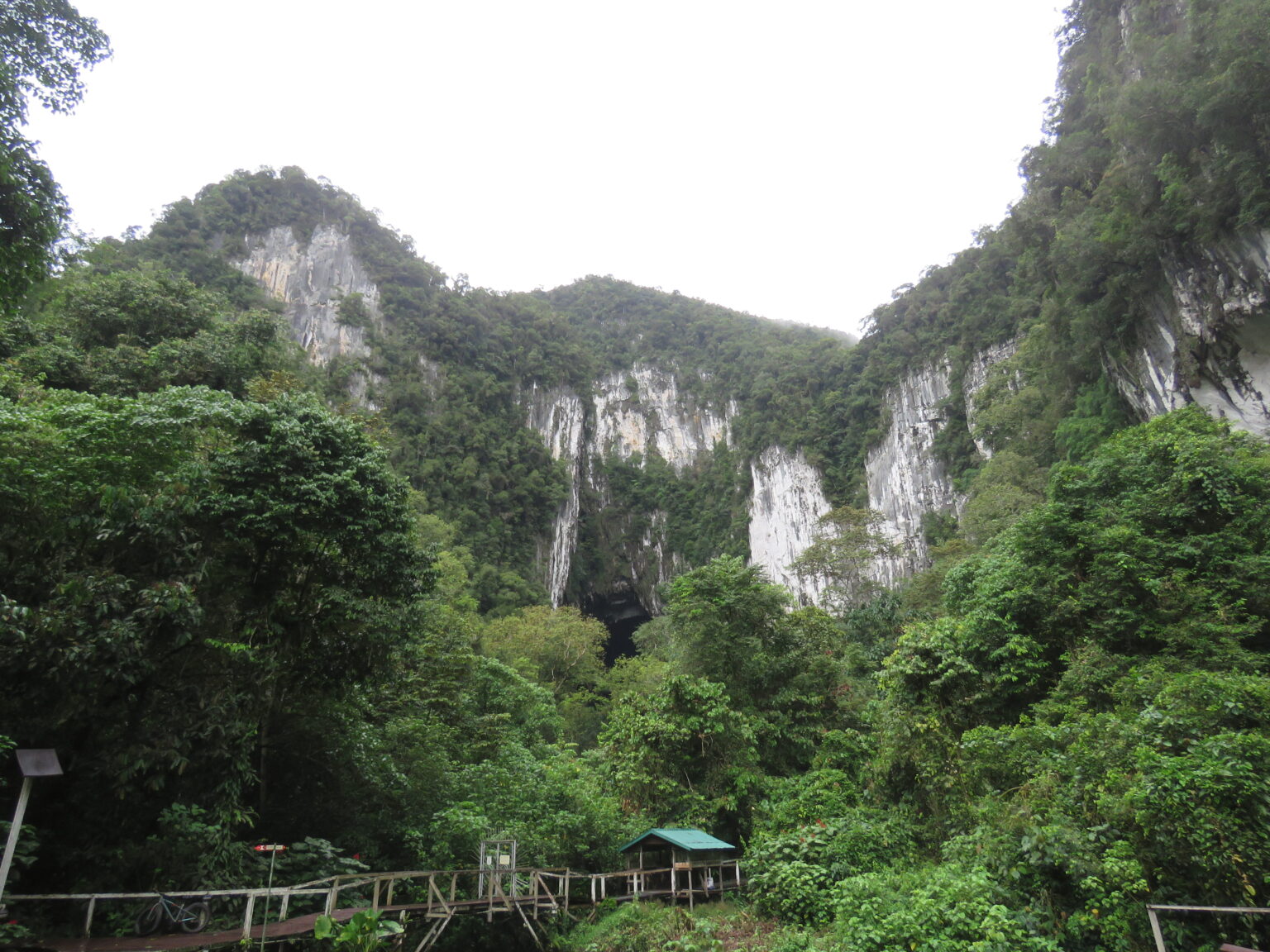
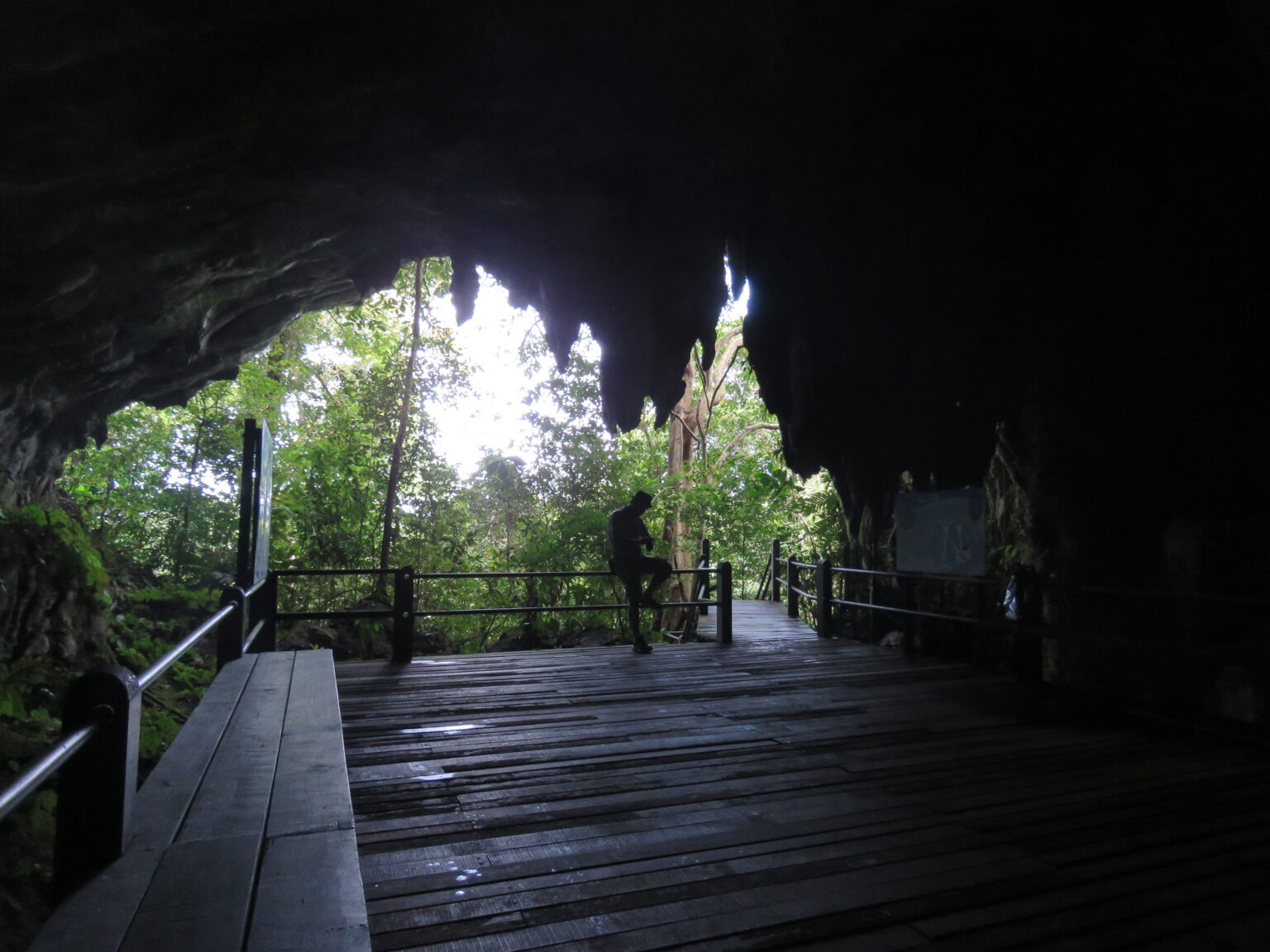
Three measurements define the scale of the Mulu caves. The Sarawak Chamber extends 600 metres in length, 415 metres in width and 80 metres in height, making it the largest known cave chamber anywhere on Earth. Deer Cave has a passage between 120 and 150 metres in diameter, giving it the status of the largest cave passage currently known. The Clearwater Cave System holds the Asian record for a single mapped cave at 110 kilometres of passages. Water still shapes this geography: the system contains tropical river caves, vadose and phreatic sections, and a full range of mineral formations deposited from moving water.
Why the bat colony matters beyond the evening spectacle
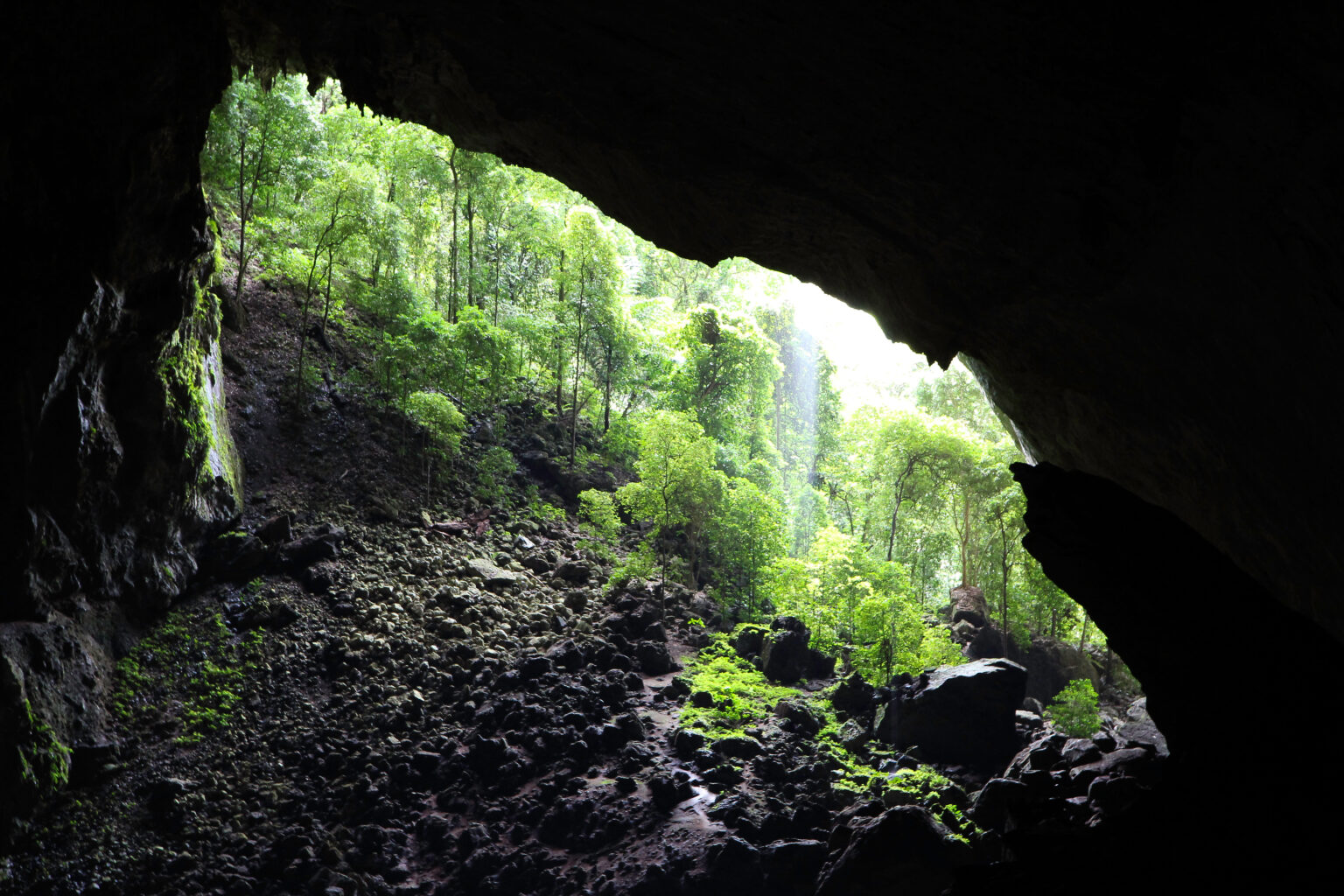
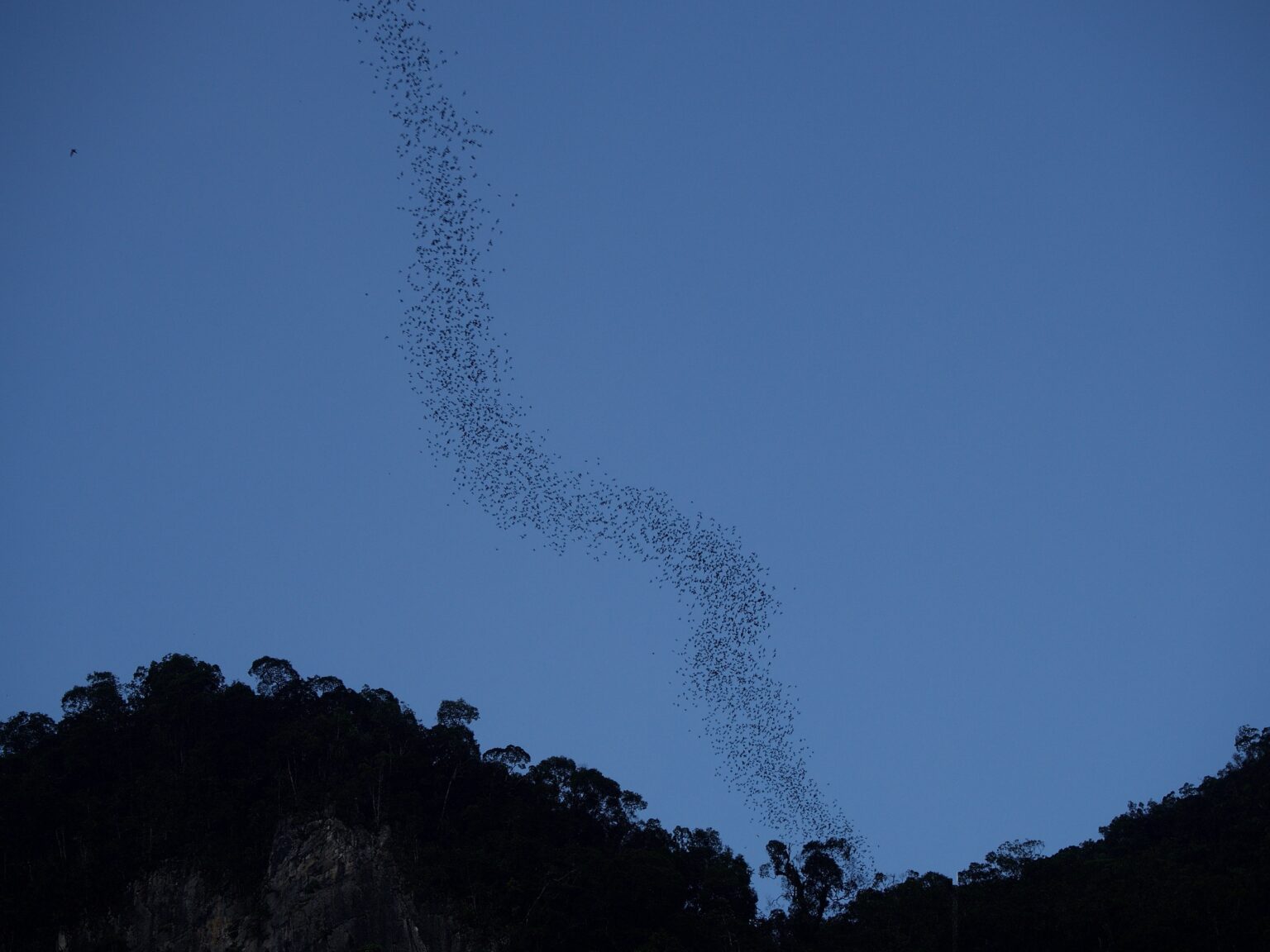
The property supports one of the richest assemblages of flora for an area of its size anywhere in the world, and its caves contain concentrations of cave swiftlets and bats. Deer Cave alone holds one of the world’s largest colonies of the free-tailed bat Chaerephon plicata, estimated at over 3 million individuals. The same cave holds the largest documented number of bat species for any single cave. Elsewhere in the system, several million cave swiftlets of the genus Aerodramus have been recorded, constituting the largest known colony. These populations connect the dark interior of the karst to the forest above: the park’s ecological value cannot be separated from the scale of its animal life.
How protection works in a park with no road access
The State Government has kept the park without a road link since its establishment in 1974, which UNESCO identifies as a deliberate measure to limit uncontrolled entry. Access restrictions extend underground as well: more than 90 per cent of the park and 95 per cent of its caves are closed to visitors, with only four show caves open to the public. Research access is the main exception. The management framework also includes consultation with local communities through a Special Park Committee, so that decisions about physical development inside the boundary involve the people who live nearby. Illegal activities and hunting remain challenges, but the absence of a road and the strict permit system keep most of the limestone landscape in a condition that scientists are still mapping.
Frequently Asked Questions
Which UNESCO World Heritage sites are near Gunung Mulu National Park?
The nearest is the Archaeological Heritage of Niah National Park’s Caves Complex at 131 km, also in Sarawak. Kinabalu Park, in the neighbouring state of Sabah, is 293 km away. Both are in Malaysia and both are reachable from Miri or Kota Kinabalu by air.
When was Gunung Mulu National Park inscribed on the World Heritage List?
In 2000, under natural criteria (vii), (viii), (ix) and (x). These recognise the area’s exceptional natural beauty, its record of major changes in the earth’s history, its ongoing ecological and biological processes, and its importance for the conservation of biological diversity.
What is the Sarawak Chamber?
It is the largest known cave chamber in the world, stretching 600 m in length, 415 m in width and 80 m in height. Its volume is 12 million cubic metres and its roof span is 300 m.
How many bats live in Deer Cave at Mulu?
The cave holds one of the world’s largest colonies of the free-tailed bat Chaerephon plicata, estimated at over 3 million individuals. It also has the largest number of bat species found in a single cave.
Sources
- UNESCO World Heritage Centre — Gunung Mulu National Park (inscribed 2000). https://whc.unesco.org/en/list/1013/
- UNESCO World Heritage Centre — The Archaeological Heritage of Niah National Park’s Caves Complex (inscribed 2024). https://whc.unesco.org/en/list/1014/
- UNESCO World Heritage Centre — Kinabalu Park (inscribed 2000). https://whc.unesco.org/en/list/1012/
- UNEP-WCMC World Heritage Datasheet — Gunung Mulu National Park. http://world-heritage-datasheets.unep-wcmc.org/datasheet/output/site/gunung-mulu-national-park
- Mulu National Park World Heritage Area — official site. https://mulupark.com/
Spotted an error? Write to editorial@culturalheritageonline.com and we correct it the same day.