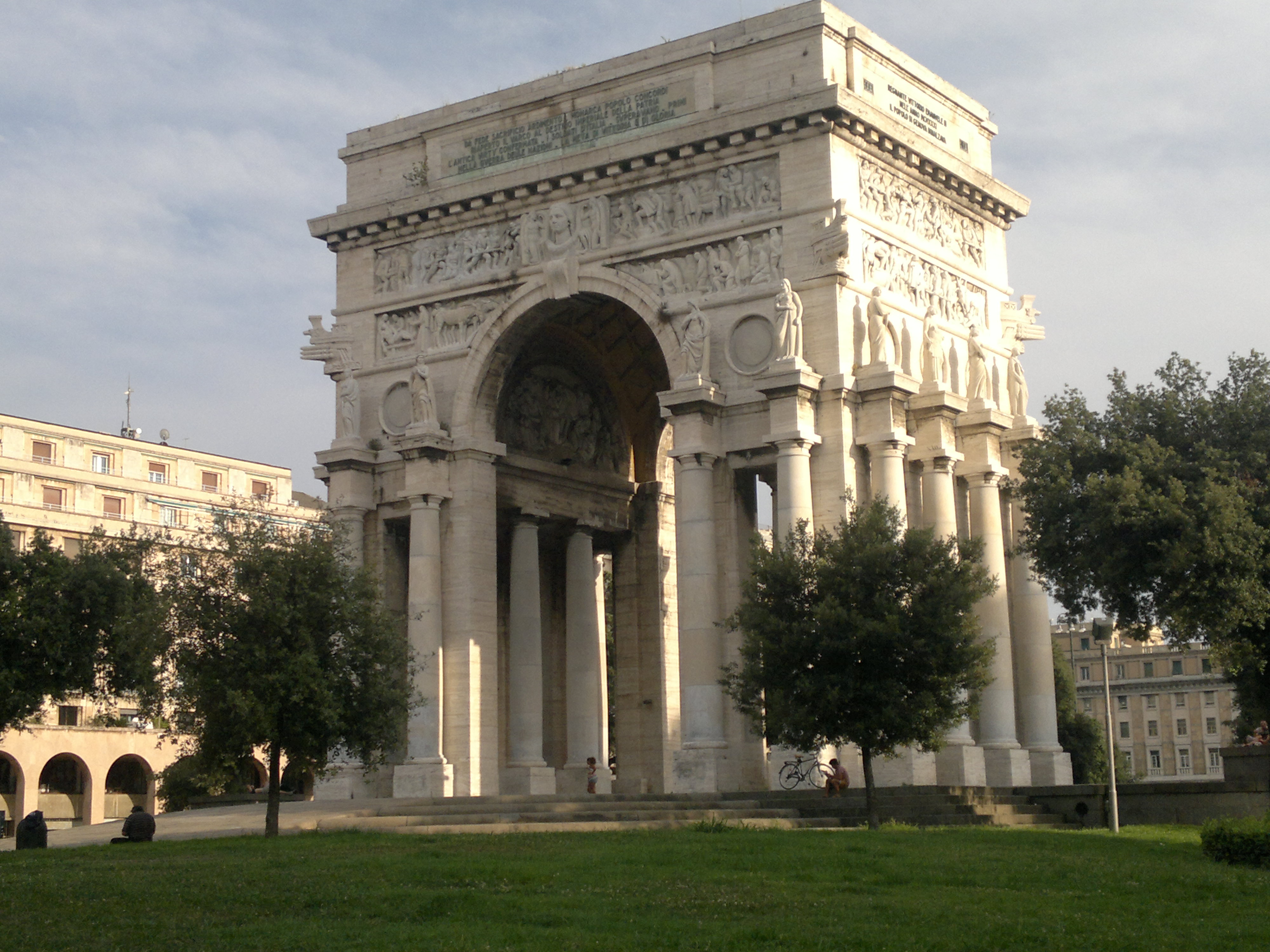
The Arco di Trionfo, a monument to the fallen, was designed by architect Marcello Piacentini and completed in Genoa in 1931. This triumphal arch represents a significant example of Rationalist architecture from Italy’s interwar period.
Piacentini was a prominent urban theorist and architect whose career spanned several decades of the twentieth century. Working within evolving currents of Italian architectural thought, he contributed substantially to urban design and monumental architecture. The Genoa arch reflects the period’s engagement with formal, geometric design principles and the commemoration of national memory through architectural form.
About Marcello Piacentini
Born in Rome in 1881, Piacentini studied at the Regio Istituto di Belle Arti and trained under his father, architect Pio Piacentini. He held teaching positions at the Accademia di Belle Arti in Rome and participated in numerous competition entries and urban planning projects, establishing himself as a significant figure in early twentieth-century Italian architecture.
Details
- Designer: Marcello Piacentini
- Year completed: 1931
- Location: Genoa, Liguria, Italy
- Type: Triumphal arch and war memorial
- Architectural movement: Rationalism
On video
Explore more: 50 heritage places in Genova
Frequently asked questions
Who designed the Arco di Trionfo in Genoa?
Marcello Piacentini, an Italian architect and urban theorist, designed the monument.
When was it completed?
The arch was completed in 1931.
What movement does this architecture represent?
The work exemplifies Rationalist principles that characterized much of Italian architectural thought during the 1930s interwar period.
Sources
- S1 — Lupano, Mario. Marcello Piacentini. Laterza, 1991. ISBN 978-88-420-3882-5.
- S2 — Ciucci, Giorgio. Gli architetti e il fascismo: architettura e città 1922-1944. Einaudi, 2002. ISBN 978-88-06-16310-5.
Spotted an error? Write to editorial@culturalheritageonline.com and we correct it the same day.