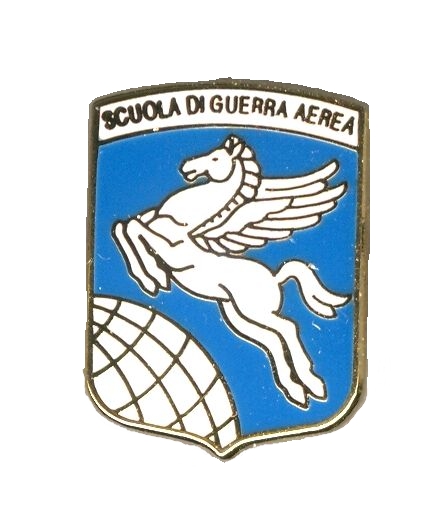
This sculptural detail formed part of the Officers’ Club entrance at Florence’s Scuola di Applicazione Regia Aeronautica (Royal Aeronautical School), created by Italian sculptor Mario Moschi in 1937–38. The work documents a significant institutional commission during Italy’s interwar architectural renaissance.
The Officers’ Club entrance exemplifies the Rationalist vocabulary that defined Italian architectural culture in the 1930s. Moschi’s sculptural contribution integrated with the larger complex designed by Raffaello Fagnoni, a carefully composed ensemble of buildings situated between viale dell’Aeronautica and via del Barco. The original aeronautical school function has evolved; the campus now houses the Aeronautical Military School Giulio Douhet and the Institute of Aeronautical Military Sciences.
About Mario Moschi
Mario Moschi (1896–1971) was an accomplished Italian sculptor whose career extended across the twentieth century. His work was selected for the sculpture competition at the 1936 Summer Olympics, marking international recognition during the period of this commission.
Details
- Creator: Mario Moschi, Italian sculptor
- Date: 1937–38
- Location: Scuola di guerra aerea, Florence
- Movement: Rationalist architecture
- Current institutional use: Scuola Militare Aeronautica Giulio Douhet and Istituto di Scienze Militari Aeronautiche
On video
Frequently asked questions
Who designed this entrance?
Sculptor Mario Moschi created the sculptural detail for the Officers’ Club entrance as part of the broader 1937–38 complex designed by architect Raffaello Fagnoni.
Where is the Aeronautical School located?
The school occupies a campus in Florence between viale dell’Aeronautica and via del Barco, housing military aeronautical institutions today.
What architectural style does this represent?
The complex exemplifies Italian Rationalist architecture of the 1930s, a movement characterised by geometric clarity and functional design principles.
Sources
- S1 — Ciucci, Giorgio. Gli architetti e il fascismo: architettura e città 1922-1944. Einaudi, 1989. ISBN 978-88-06-11656-9.
- S2 — Pontiggia, Elena. Il Novecento Italiano. Abscondita, 2003. ISBN 978-88-8416-048-5.
Spotted an error? Write to editorial@culturalheritageonline.com and we correct it the same day.