A 5.1-kilometre walk across five stops that trace Montreal’s Art Deco moment, from the Aldred Building to Atwater Market, in about 185 minutes.
Why This Walk Exists
Montreal’s Art Deco legacy is often measured against larger North American cities, yet the five stops in this walk show a distinct local logic. The style arrived late, matured quickly, and was applied to a railway station, a cinema, and a public market as much as to office towers. The route covers 5.1 kilometres and takes about 185 minutes on foot.
Unlike Deco districts that survive as a single homogeneous set piece, Montreal’s examples are scattered across the downtown and the Lachine Canal. Some are intact, some are lost, and one survives only as salvaged murals inside a newer university building. The walk therefore reads as a series of episodes rather than a preserved ensemble.
Aldred Building: A Setback Tower on an Old Square
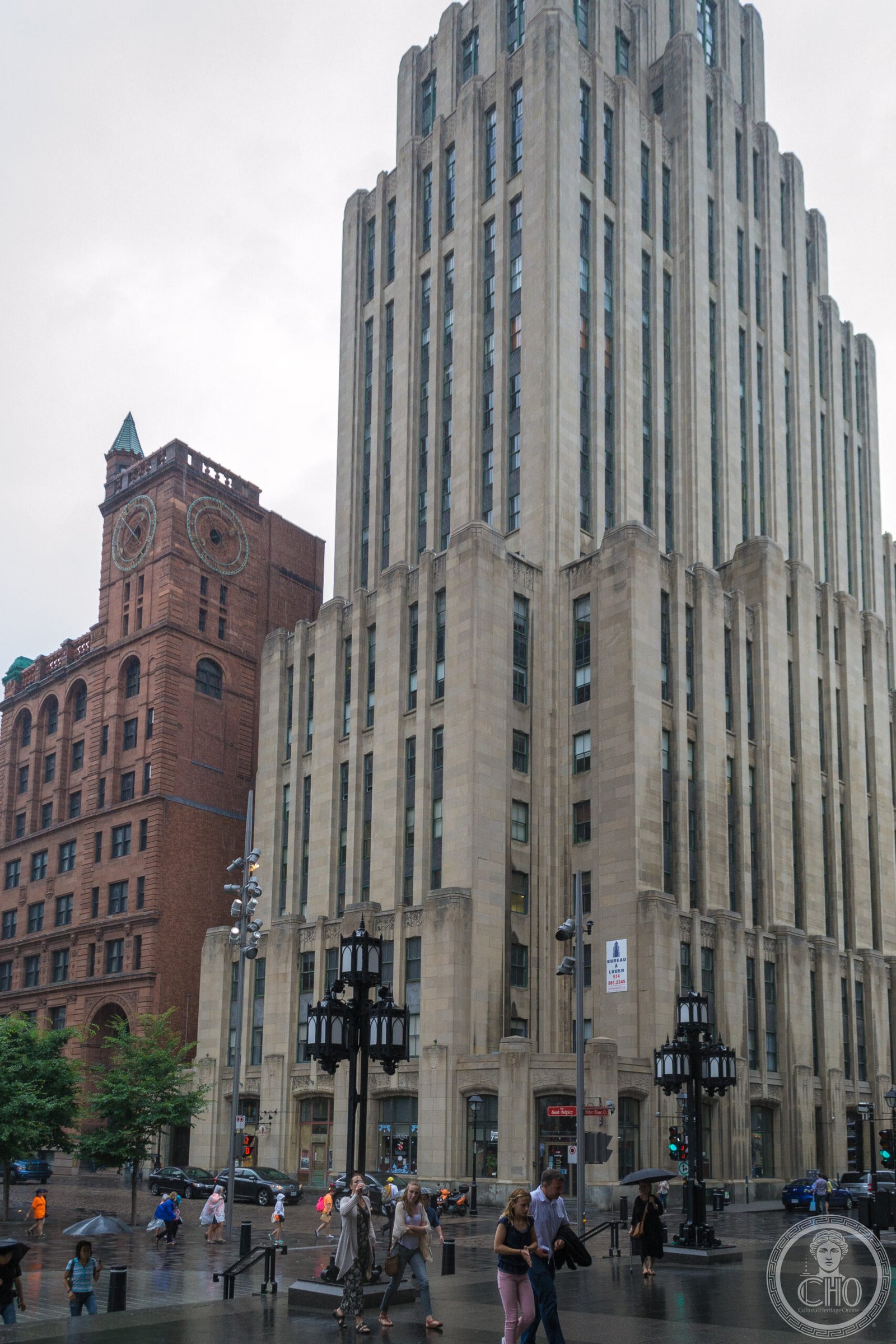
The Aldred Building stands on Place d’Armes, facing the Notre-Dame Basilica across one of the oldest squares in Montreal. Designed by Ernest Isbell Barott of Barott and Blackader and completed in 1931, it is among the purest Art Deco towers in Canada. Its setback silhouette deliberately echoes the great New York skyscrapers of the same decade, yet its scale was held in check so as not to overwhelm the baroque basilica beside it.
Twenty-three storeys of Indiana limestone rise in carefully judged steps. The façade is faced in pale limestone over a granite base, the window bands separated by aluminium spandrel panels that were a modern touch in 1930. The building steps back at the eighth, thirteenth and sixteenth floors, producing the cathedral-like profile that defines the corner of Place d’Armes.

Architects’ Building: A Demolished Deco Landmark
Built between 1930 and 1931, the Architects’ Building stood 69.82 metres tall on the southeast corner of Dorchester Boulevard, now René Lévesque Boulevard. Its sleek geometric forms and vertical emphasis exemplified Art Deco design principles then reshaping North American cities. Ross and Macdonald completed the building shortly after their celebrated Édifice Price in Quebec City.
Canadian Industries Limited leased space in 1934 and became the principal tenant. Around 1936, the building was renamed CIL House. After a 1954 U.S. antitrust ruling split CIL, DuPont Canada remained until 1967. The building was demolished in 1968. Nothing of it stands today, but its vertical striping and setbacks survive in photographs and in the work of Ross and Macdonald elsewhere in the city.

Montreal Central Station: Art Deco Rail Hub
Montreal Central Station opened in 1943. The station building is distinguished by art deco bas-relief friezes adorning both interior and exterior surfaces. The main concourse occupies almost an entire city block, with street-level vehicular access via de La Gauchetière and multiple pedestrian connections through neighbouring buildings that integrate the station into the urban fabric.
The station welcomes nearly 11 million passengers each year, second in Canada only to Toronto Union Station. Central Station anchors the Quebec City–Windsor Corridor, Canada’s busiest inter-city rail service area. Its integration with the Montreal Metro and the Réseau express métropolitain, opened July 2023, reinforces its role as a multimodal hub.
York Theatre: A Lost Cinema, Three Murals Survive
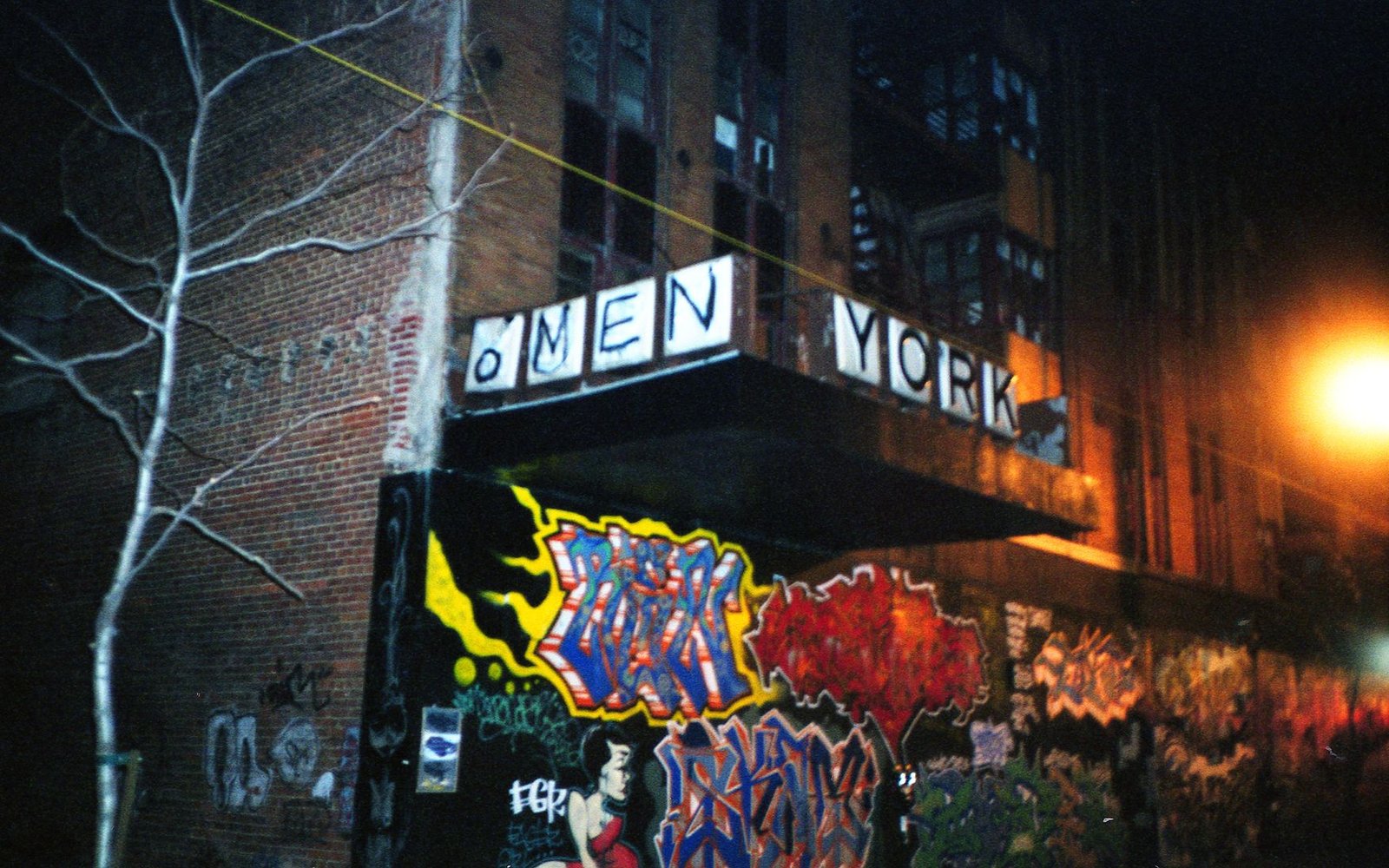
The York Theatre was an Art Deco cinema designed by architects Perry, Luke and Little, with interior design by Emmanuel Briffa. Opened in 1938 with a capacity of 1,200 seats, it combined cinema, residential and commercial spaces in a single complex. Briffa had shaped the interiors of over 100 Canadian cinemas and commissioned murals by artist Kenneth Hensley Holmden for the York.
A fire in 1989 badly damaged the murals and signalled the building’s decline. Concordia University purchased the complex in 1998 and demolished it in 2001 to make way for its Engineering, Computer Science and Visual Arts Integrated Complex. Three of the eight original murals were salvaged and restored by the university, and they are preserved within Concordia’s successor building.
Atwater Market: A Working Deco Market
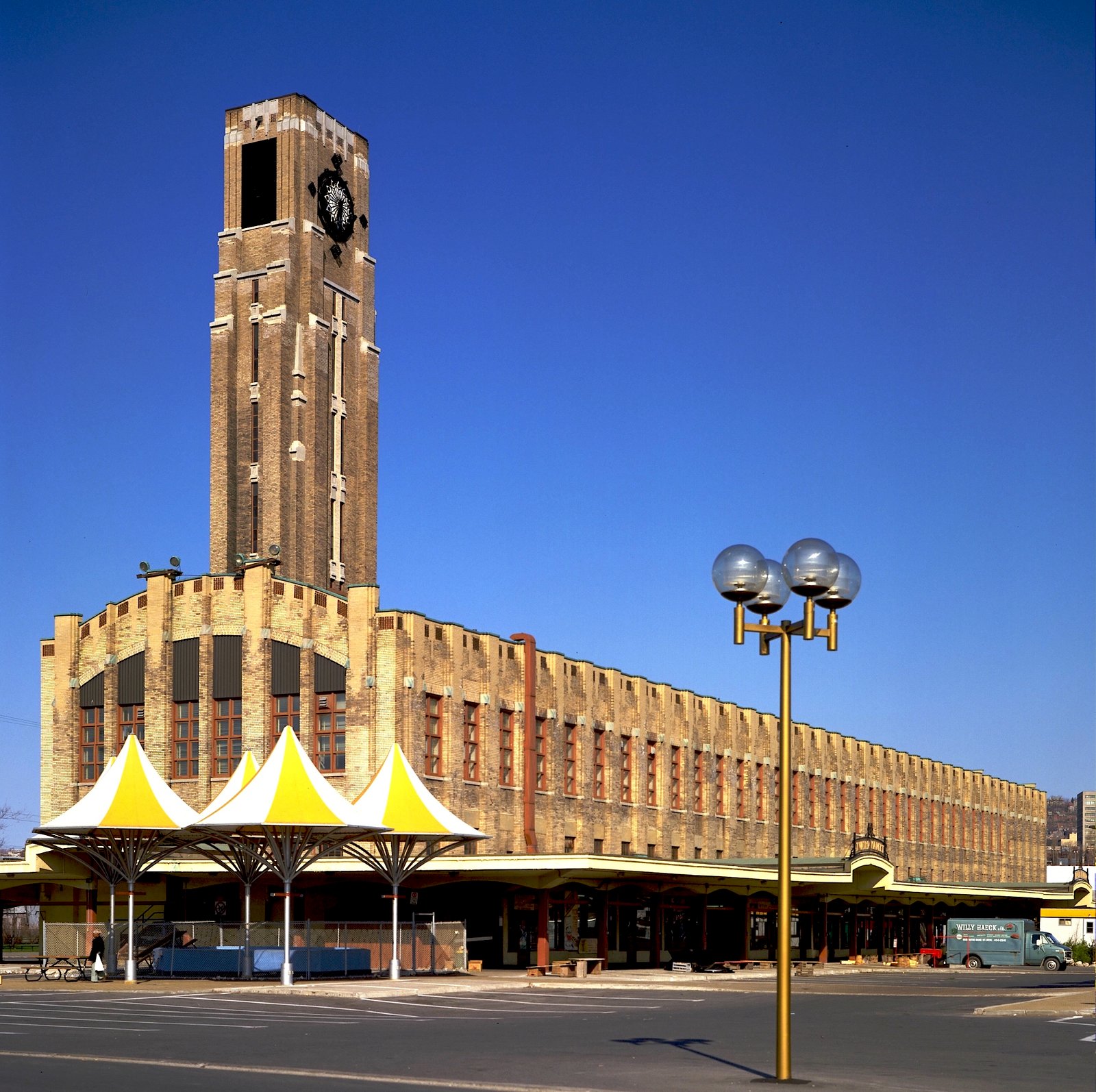
Atwater Market opened in 1933, designed by architect Ludger Lemieux and his son Paul Lemieux. Its Art Deco building anchors the site on Atwater Street near the Lachine Canal and Greene Avenue. A pedestrian and bicycle bridge connects the market to Saint-Patrick Street and extends across the canal to a bicycle path in Pointe-Saint-Charles.
The market combines a historic hall with seasonal outdoor stalls. The interior features multiple butchers and a Première Moisson bakery; the exterior hosts farmers’ stalls selling local and imported produce, along with dedicated cheese, wine, and fish vendors. Since the Lachine Canal’s reopening in 2002, the surrounding neighbourhood has undergone rapid gentrification, with residential property values in the Southwest borough rising 61% by 2006.
Practical Notes for the Walk
The route runs from Place d’Armes to Atwater Market, covering 5.1 kilometres in about 185 minutes. The order follows the material: Aldred Building, Architects’ Building site, Montreal Central Station, York Theatre site, then Atwater Market. The first three stops sit close together in the downtown core; the final two lie further southwest along the Lachine Canal.
The walk can be done in any season, but the market is most active in warmer months when outdoor stalls are full. A bicycle could be useful for the final leg, since Atwater Market is a popular stopping point along a cycling corridor maintained by Parks Canada that stretches from the Old Port to the Lachine Marina.
The full route, with the order of the stops and the distances, is on the Montreal Art Deco: a walk through downtown skyscrapers, station, cinema and market page.
Sources
- Aldred Building · https://culturalheritageonline.com/places/aldred-building-montreal/
- Architects’ Building (Montreal) · https://culturalheritageonline.com/places/architects-building-montreal/
- Montreal Central Station · https://culturalheritageonline.com/places/montreal-central-station/
- York Theatre (Montreal) · https://culturalheritageonline.com/places/york-theatre-montreal/
- Atwater Market · https://culturalheritageonline.com/places/atwater-market/
- Montreal Art Deco: a walk through downtown skyscrapers, station, cinema and market · https://culturalheritageonline.com/itineraries/montreal-art-deco-walk/
Spotted an error? Write to [email protected] and we correct it the same day.