

Six Liberty buildings between Corso Venezia and Porta Venezia, three kilometres on foot: apartments, shopfronts and two façades covered in coloured ceramics.
Corso Venezia, where the walk begins
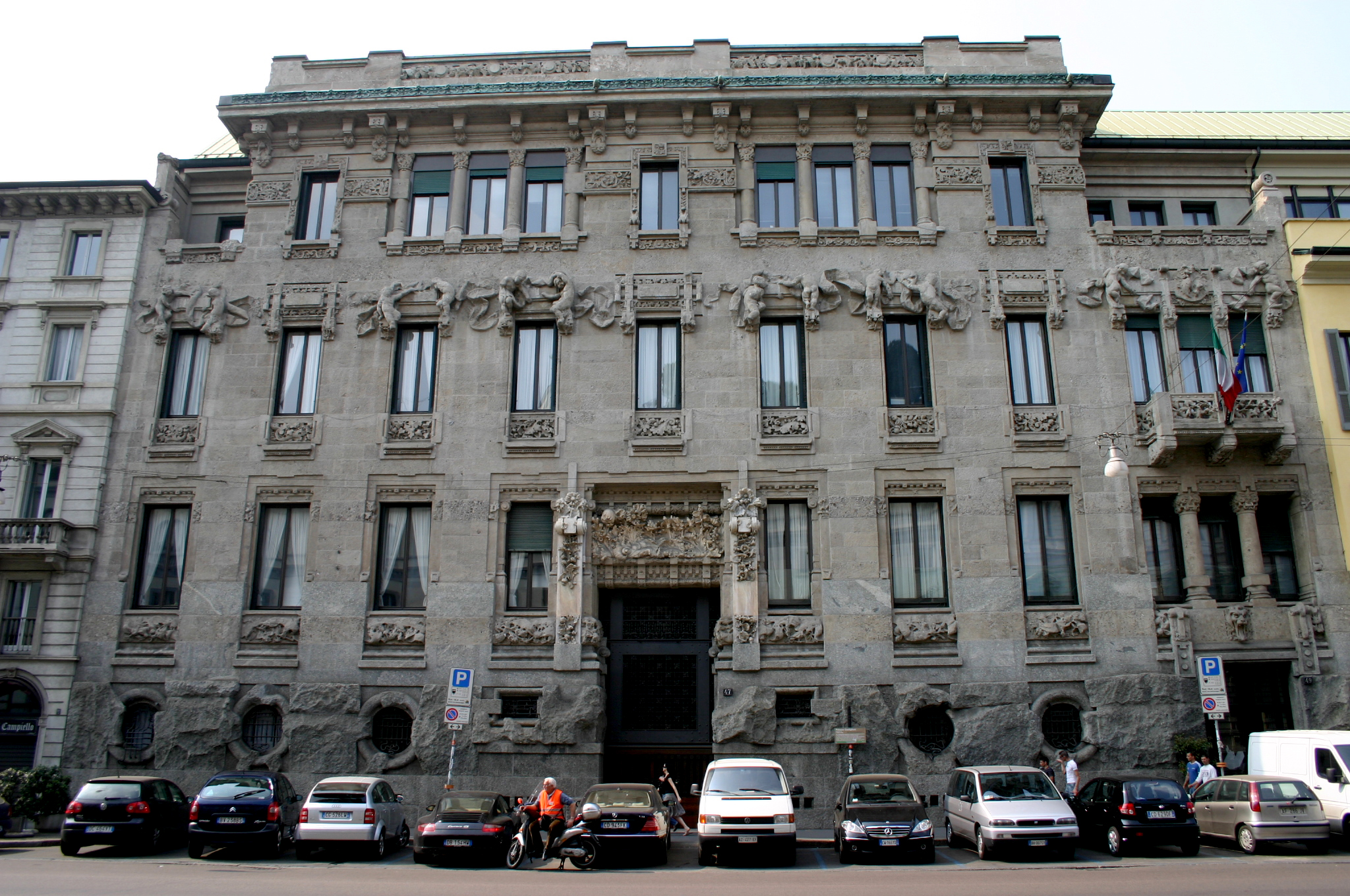
Milan kept its Liberty on the fronts of apartment buildings. There are no villas by the sea here, no exhibition palaces: there is a city that was growing fast around 1900 and a group of architects who took the new style and used it on houses, shops and the gates of courtyards. The walk below covers six of them, all inside a rectangle of about a kilometre and a half. It starts on Palazzo Castiglioni at Corso Venezia 47-49, where Giuseppe Sommaruga finished in 1904 a building that argued in public with everything around it: heavy stone, curved balconies, a mass that does not line up politely with the street.
Sommaruga designed it for the Castiglioni family between 1901 and 1903. Look first at the corner and at the way the upper floors step back; then walk under the entrance and turn round. This is the building Milanese architects had in mind when they said the new style had arrived.
Two commissions on the way to Porta Venezia
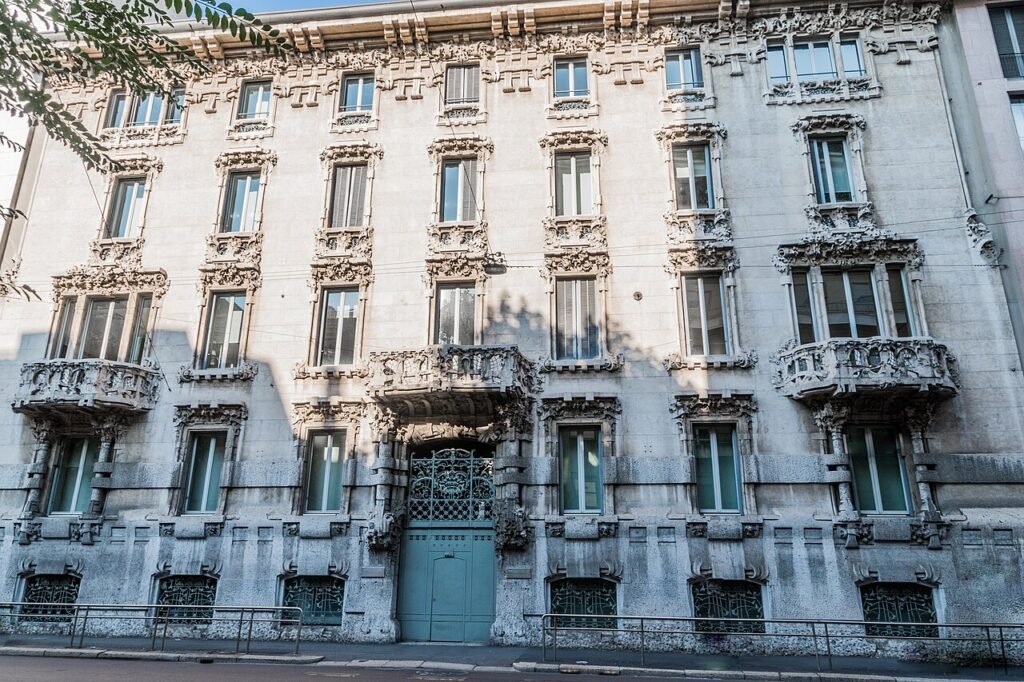
From Corso Venezia the route turns into Via Senato, where Casa Tosi stands at number 28. Alfredo Campanini built it in 1909 as a private residence, and it shows the other face of Milanese Liberty: the floral vocabulary is there in the iron and in the carved stone, but the grammar is borrowed from the Milanese Baroque, with a portal and a balcony that could belong to a house of a century earlier. Campanini had already built his own house in Via Bellini, four years before, and he knew how to make the new style acceptable to a client who did not want a polemic.
A few streets east, in Via Mozart, the first Casa Berri-Meregalli was begun in 1911 by Giulio Ulisse Arata. The family were builders, and they used Arata and three houses as a catalogue of what they could do. The base is rough rustication, stones of different sizes; above it a band of irregular blocks and a brick front; the ornament is no longer only floral but mixes in what was about to be called Art Deco. It is the point in the walk where Liberty starts to turn into something else.
Via Malpighi, where the colour is
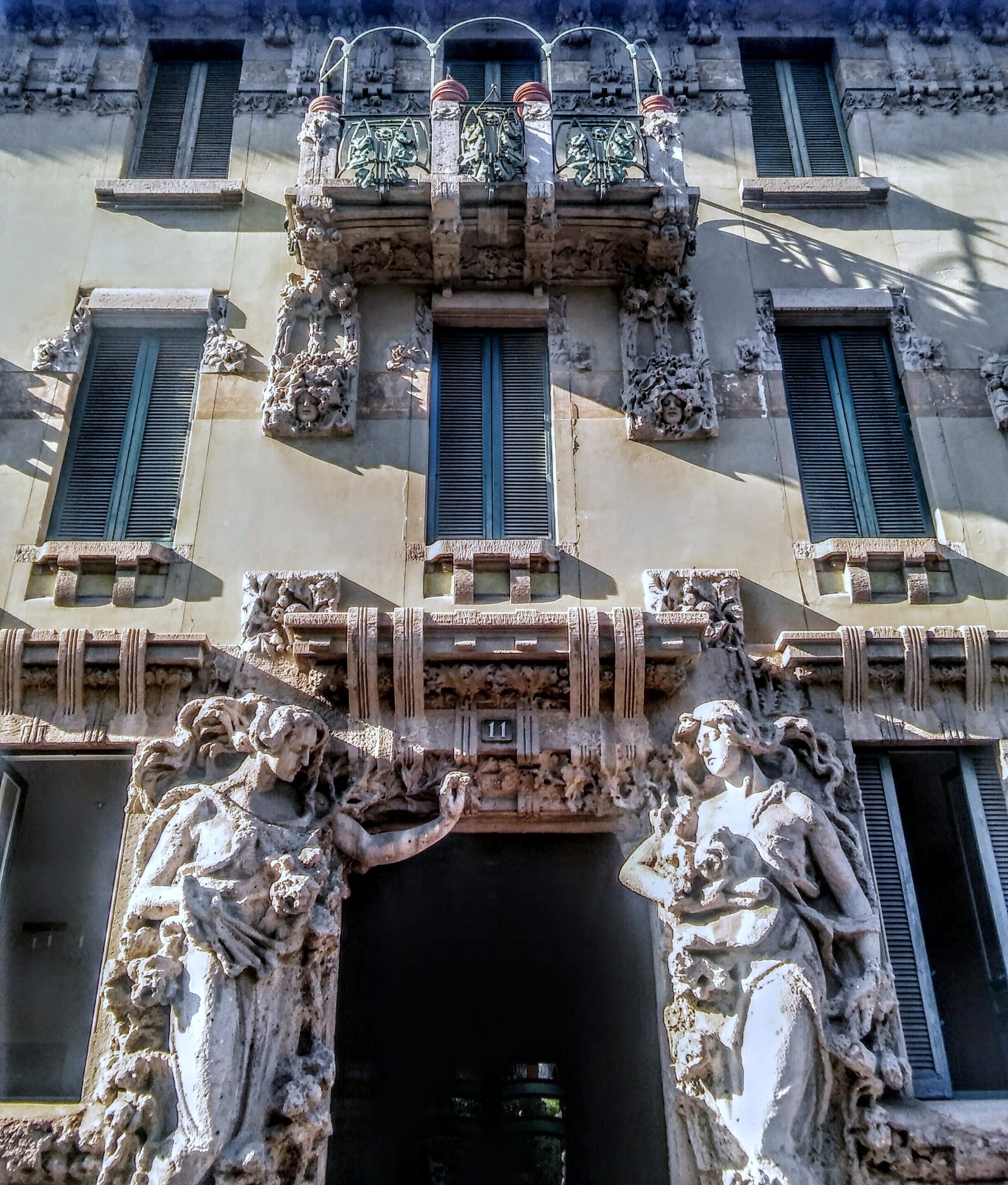
The last three buildings are the reason people come. In Via Vincenzo Bellini 11, Casa Campanini (1904–1906) is the house Campanini built for himself, with two allegorical figures in artificial stone at the portal by Michele Vedani and ironwork attributed to Alessandro Mazzucotelli. The gate is worth the detour on its own: it is the best place in Milan to see what the city’s blacksmiths could do with a flower.
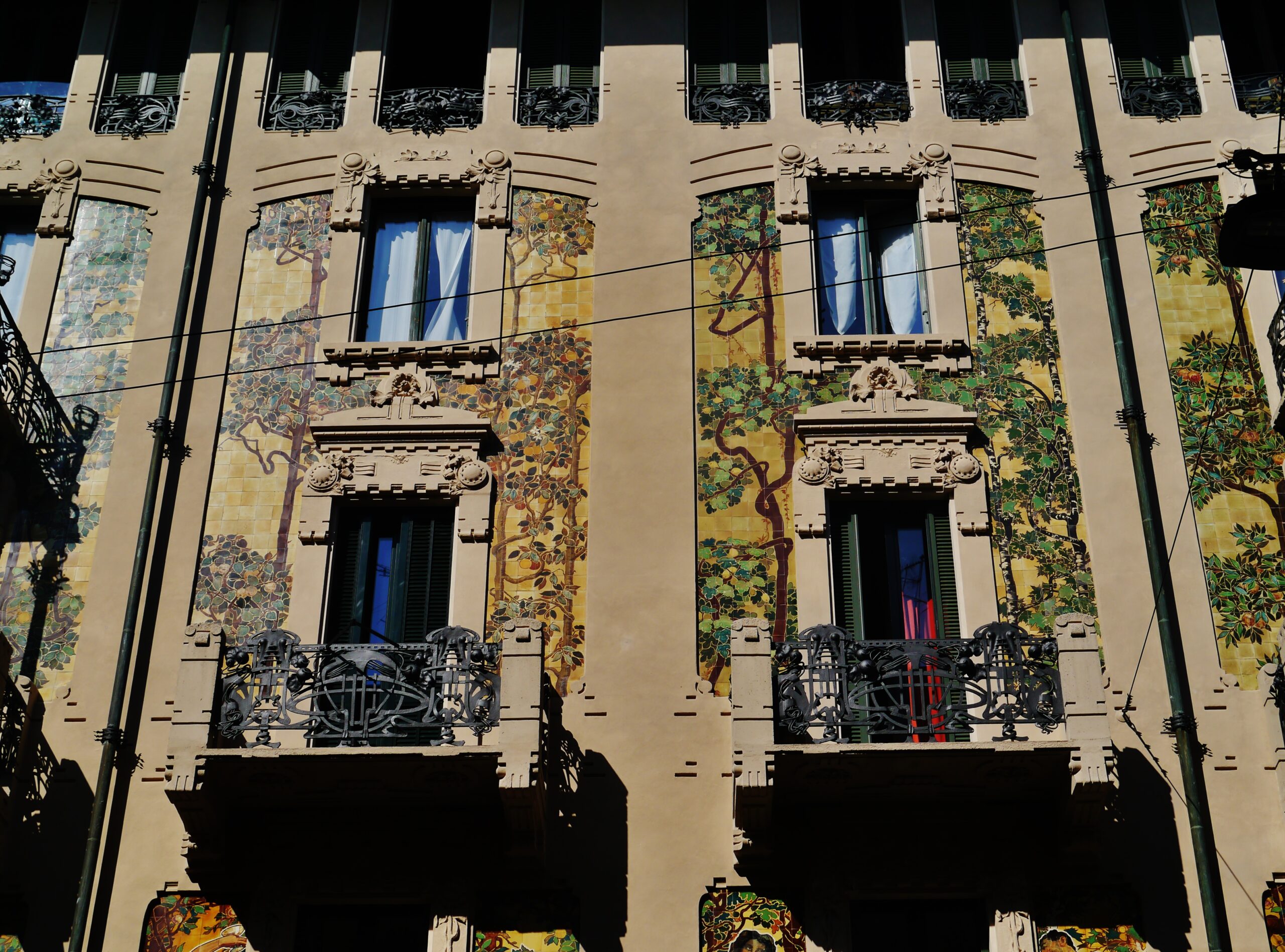
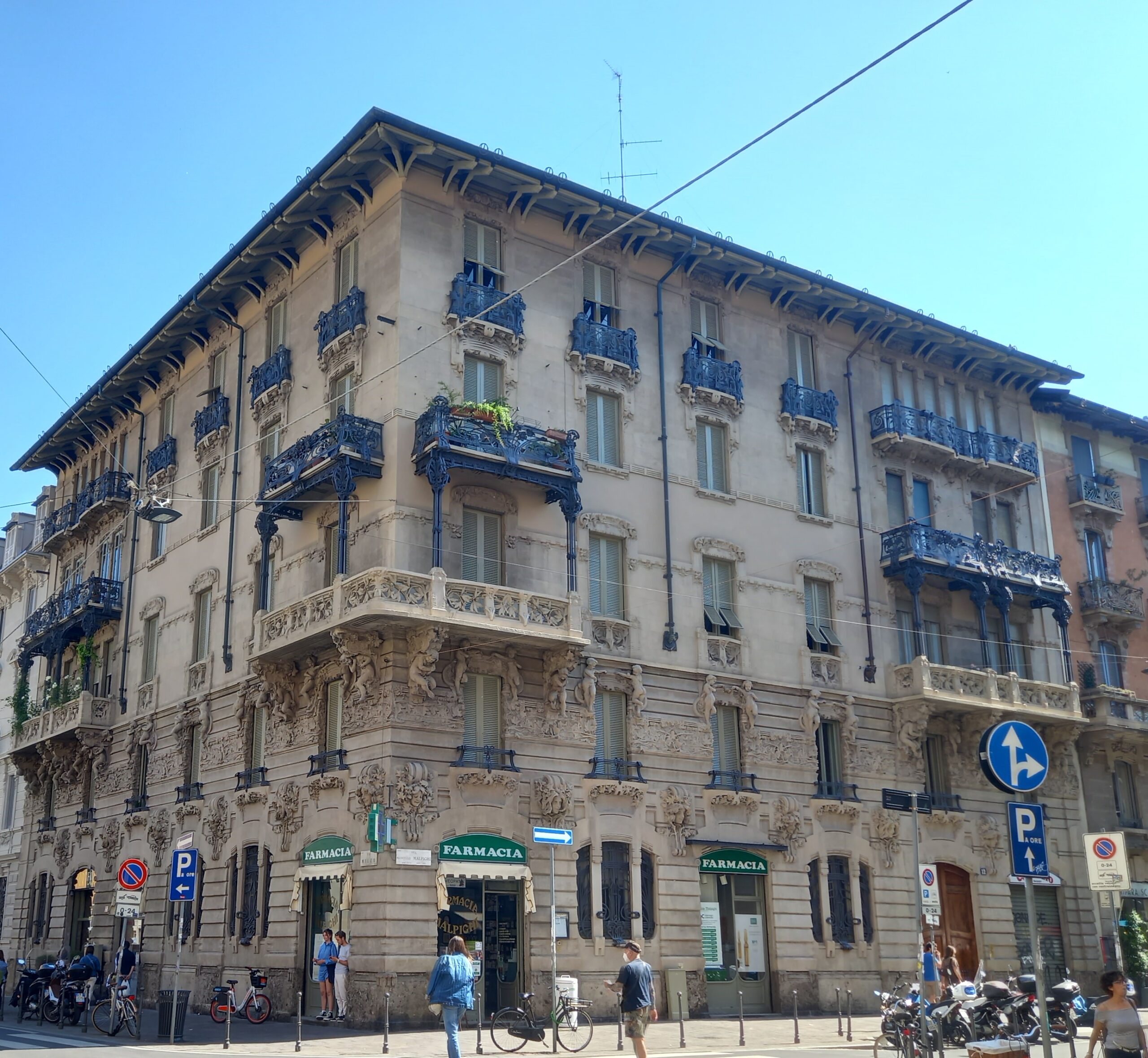
Then Via Malpighi, where two buildings face each other across a few metres of pavement. Casa Galimberti at number 3, finished in 1905 to a design by Giovanni Battista Bossi, is covered from the ground floor to the roof in painted majolica from the Brambilla e Pinzanti workshop: terracotta women in long robes, peacock-feather borders, floral scrollwork. It is a listed monument and it is still a private apartment building, so the visit is from the street. On the other side, Casa Guazzoni at number 12, built for Giacomo Guazzoni between 1904 and 1906 by the same Bossi, sets cast-iron balconies by Mazzucotelli above cement reliefs and fresco panels attributed to Paolo Sala. The two together explain why this corner of the city is called the Buenos Aires district: it was built as a stage set, and it still reads that way.
How to walk it
The six stops add up to 3.4 kilometres on the streets, and the whole route takes about three hours if you spend twenty-five minutes at each building. The ground is flat and the pavements are wide. Start from Corso Venezia (Metro Palestro or San Babila) and finish in Via Malpighi, a few minutes from Porta Venezia station. Weekday mornings are quieter, and the façades face the street, so the light matters less than the crowds.
The complete route, with the order of the stops and the distance between them, is on the Milan Liberty walking tour page. Each stop there opens its own card, with the address, the photographs and the history.
Sources
- Palazzo Castiglioni · https://culturalheritageonline.com/places/palazzo-castiglioni-milano/
- Casa Tosi (Palazzo Baratti) · https://culturalheritageonline.com/places/casa-tosi-palazzo-baratti-milano/
- Casa Berri-Meregalli · https://culturalheritageonline.com/places/casa-berri-meregalli-via-mozart-milano/
- Casa Campanini · https://culturalheritageonline.com/places/casa-campanini/
- Casa Galimberti · https://culturalheritageonline.com/places/casa-galimberti/
- Casa Guazzoni · https://culturalheritageonline.com/places/casa-guazzoni/
- Milan Liberty walking tour · https://culturalheritageonline.com/itineraries/milan-liberty-walking-tour/
Spotted an error? Write to [email protected] and we correct it the same day.


