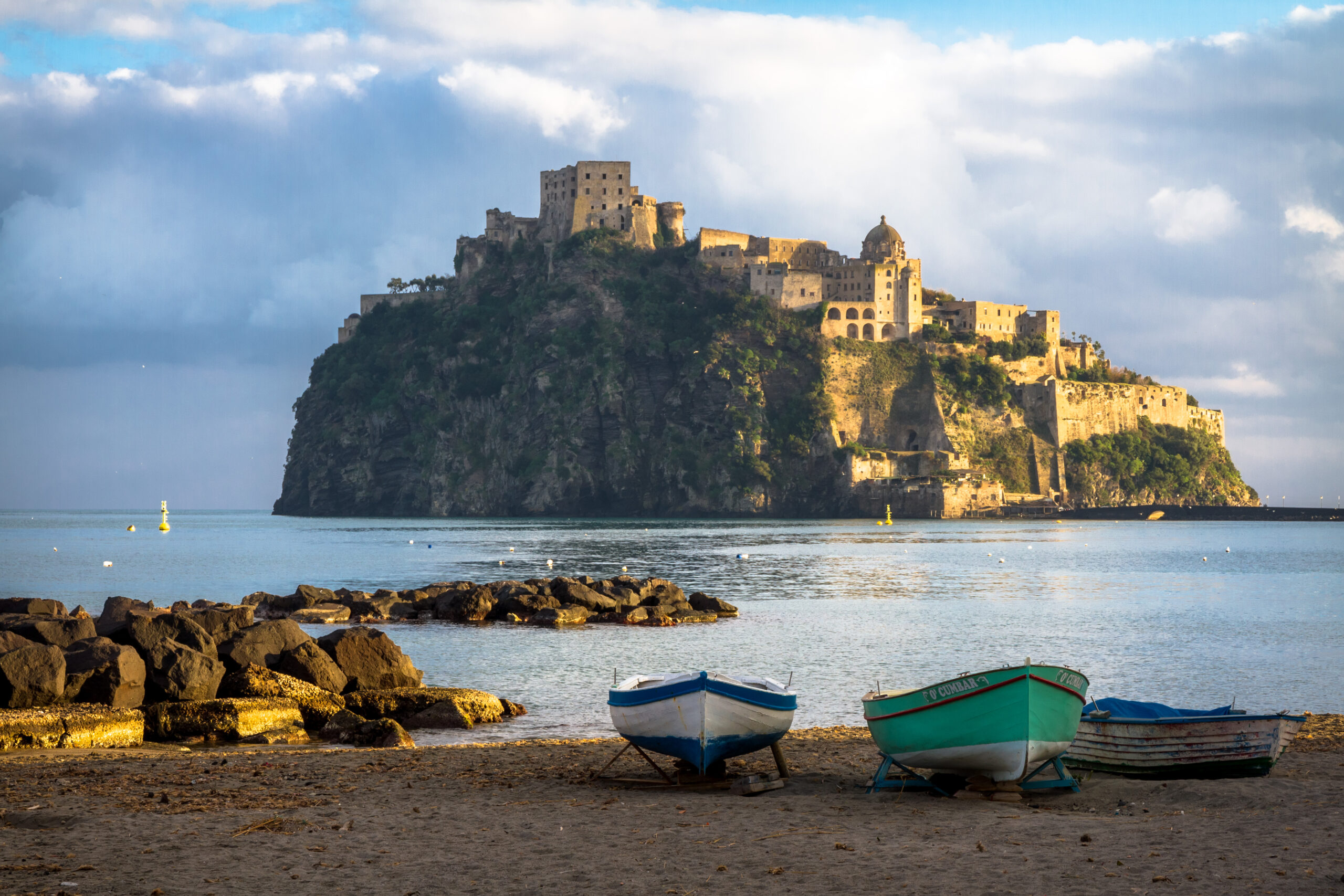
Presented in March 2019, the Aragonese Castle of Ischia stands on a small island in Campania, connected by a masonry bridge to the ancient village of Celsa, now known as Ischia Ponte. The castle’s defining feature is a 400-meter tunnel carved into the rock, which made land access possible for the first time in its history.
Access and Medieval Defense
Before the reign of Alfonso V of Aragon, the castle could only be reached by sea. Alfonso V commissioned the tunnel, which remains illuminated by high skylights. These skylights served dual purposes: they provided light and ventilation, but also functioned as defensive positions from which defenders threw hot oil, stones, and other materials onto attacking forces below.
Film Production and Modern Legacy
In 1952, the castle became a location for filming scenes of the film “The Corsair of the Green Island,” which starred Burt Lancaster. This cinematic moment marked a shift in the castle’s role from purely defensive stronghold to part of Italy’s growing film industry heritage during the postwar period.
On video
On the heritage map: Aragonese Castle of Ischia – Virtual Tour 360°
Frequently asked questions
How long is the tunnel that provides access to the castle?
The tunnel carved into the rock is 400 meters long and was commissioned by Alfonso V of Aragon to enable land access to the fortress.
What was filmed at the castle in 1952?
Scenes from the film “The Corsair of the Green Island,” starring Burt Lancaster, were filmed at the castle in 1952.
What defensive purpose did the skylights serve?
The high skylights in the tunnel functioned as defensive openings through which hot oil, stones, and other materials were thrown onto enemies approaching the castle.
Sources
- S1 — Barbera, Gioacchino. Dimore storiche ed eccellenze d'Italia. Sellerio, 2005. ISBN 978-88-389-1834-6.
- S2 — Settis, Salvatore. Italia S.p.A.. L'assalto al patrimonio culturale. Einaudi, 2002. ISBN 978-88-06-16973-2.
Spotted an error? Write to editorial@culturalheritageonline.com and we correct it the same day.