Paola Bonometti
Content Editor

Paola Bonometti

Contributions: 1.022 articles

Nome dell'autore: Paola Bonometti

UNESCO Sites Near Mogao Caves: What to See

UNESCO Sites Near Mogao Caves: What to See

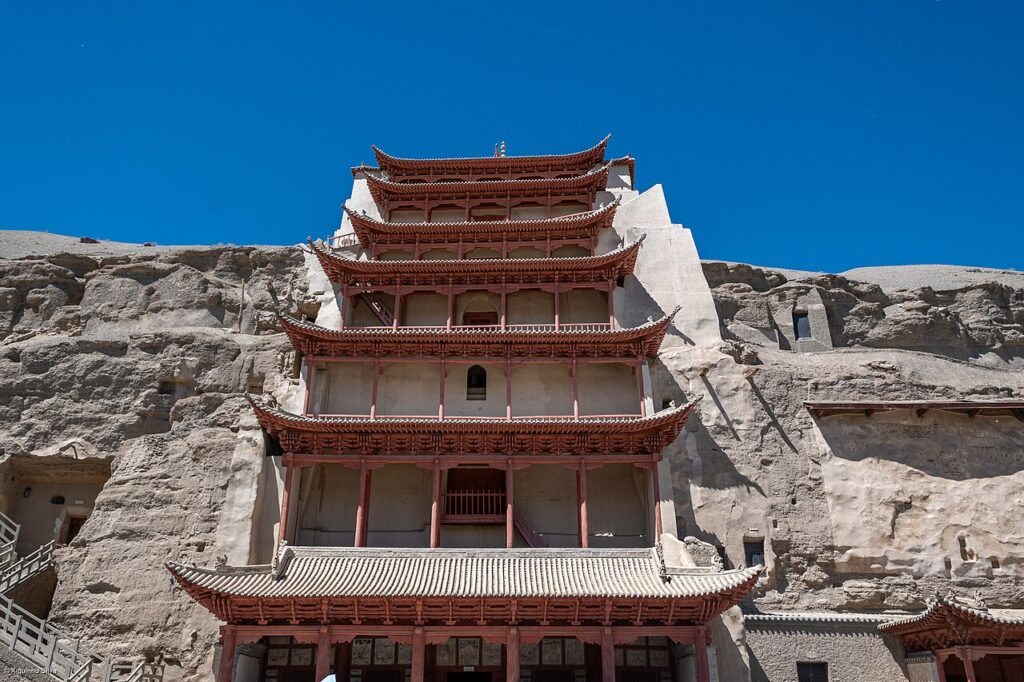
The Mogao Caves near Dunhuang, Gansu province, preserve 45,000 square metres of Buddhist murals painted between the 4th and 14th centuries CE across 492 cave shrines cut into a desert cliff face. A sealed side chamber rediscovered in 1900 contained the 868 CE Diamond Sutra — the oldest dated printed book in existence — along with roughly 40,000 manuscripts, most of which left China in the early 20th century through transactions with Western archaeologists.
UNESCO Sites Near Qal’at al-Bahrain: What to See

UNESCO Sites Near Qal’at al-Bahrain: What to See

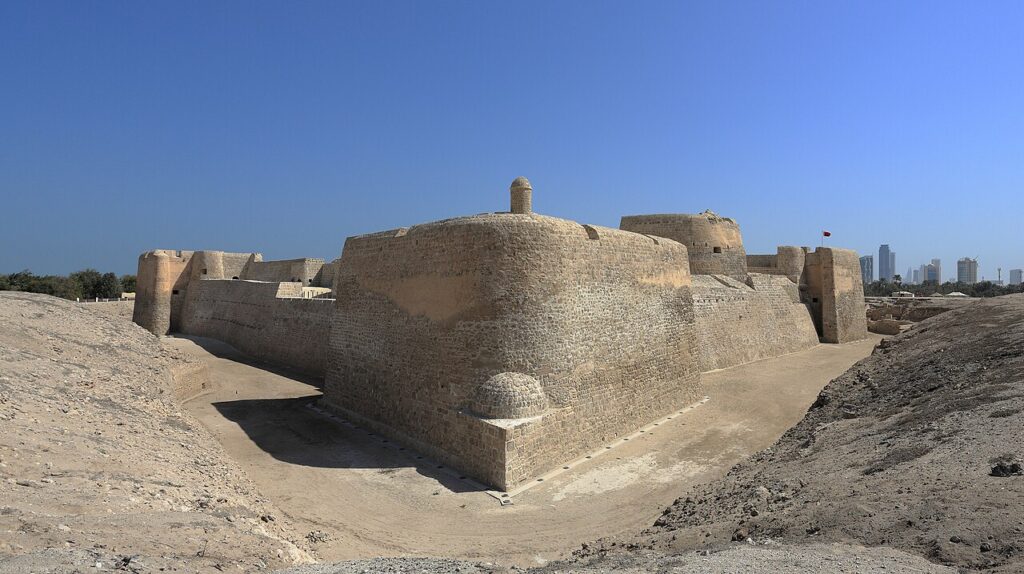
Qal’at al-Bahrain is a 4,000-year tell on the northern coast of Bahrain documenting the capital of Dilmun — the Bronze Age trading hub between Sumer and the Indus Valley that Gilgamesh visited in search of immortality. A Portuguese fort built from 1521 and captured by Safavid Persia in 1602 forms the uppermost occupation layer, above six earlier strata.

UNESCO Sites Near Um er-Rasas: What to See

UNESCO Sites Near Um er-Rasas: What to See

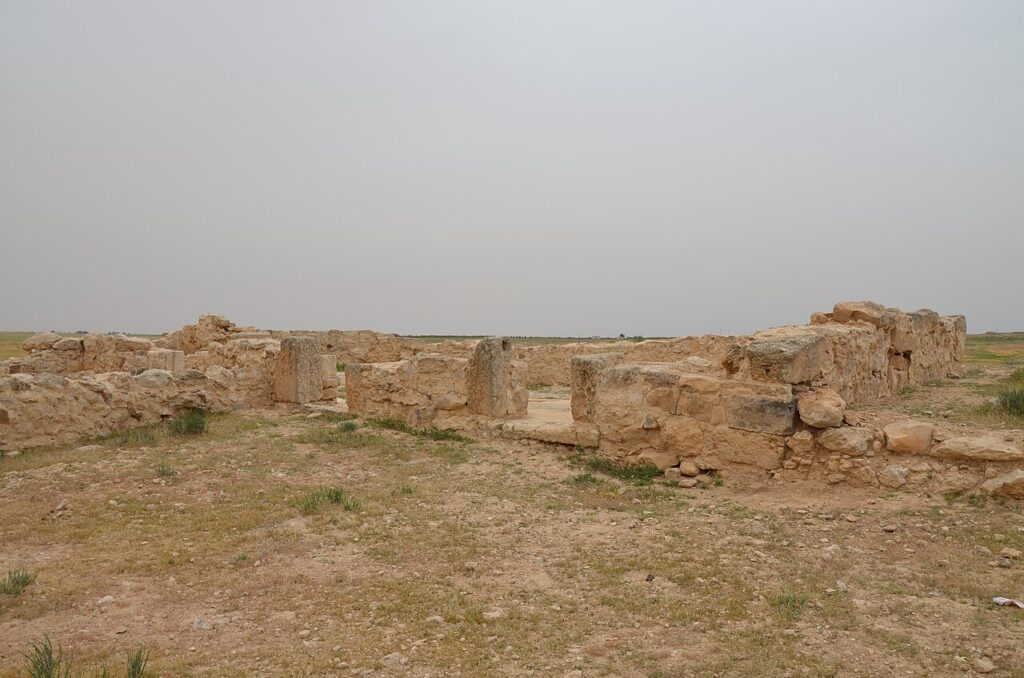
Um er-Rasas (Kastrom Mefa’a), a UNESCO site since 2004, holds the 718 CE mosaic floor of the Church of Saint Stephen — a 28-city panorama of the Levant and Nile Delta buried under soil for 1,200 years and rediscovered in 1986. A freestanding 14-metre stone tower with no staircase stands 1.5 km away, almost certainly the column of a stylite ascetic.

UNESCO Sites Near Wadi Rum: What to See

UNESCO Sites Near Wadi Rum: What to See

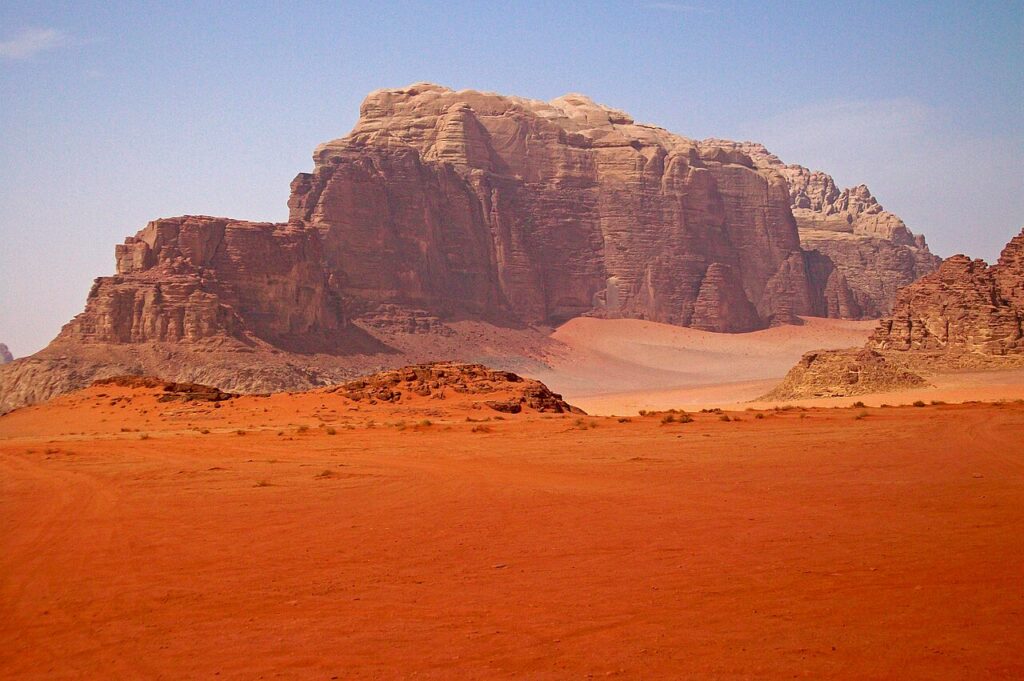
Wadi Rum’s 74,000 hectares of red sandstone and granite mountains contain 25,000 rock engravings spanning 12,000 years, including the earliest known Nabataean inscriptions. T.E. Lawrence coordinated the Arab Revolt from the valley in 1917, and Hollywood has since filmed it as Mars in five productions. Petra lies 100 km north.

UNESCO Sites Near Petra: What to See

UNESCO Sites Near Petra: What to See

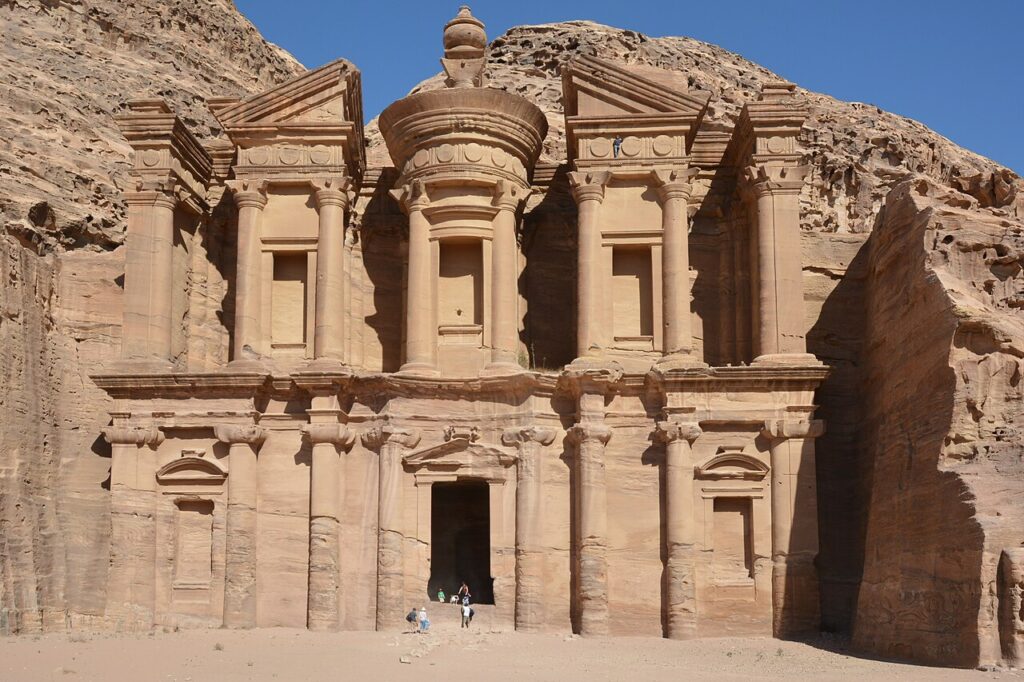
Petra, the Nabataean capital carved from rose-red sandstone 240 km south of Amman, has been a UNESCO World Heritage Site since 1985. Its hydraulic engineers supplied a desert city of up to 30,000 people with 40 million litres of water daily — a feat not rediscovered by Western scholars until 1812. Two further UNESCO sites, Wadi Rum and Um er-Rasas, lie within 100 km.

UNESCO Sites Near Ancient Merv: What to See

UNESCO Sites Near Ancient Merv: What to See

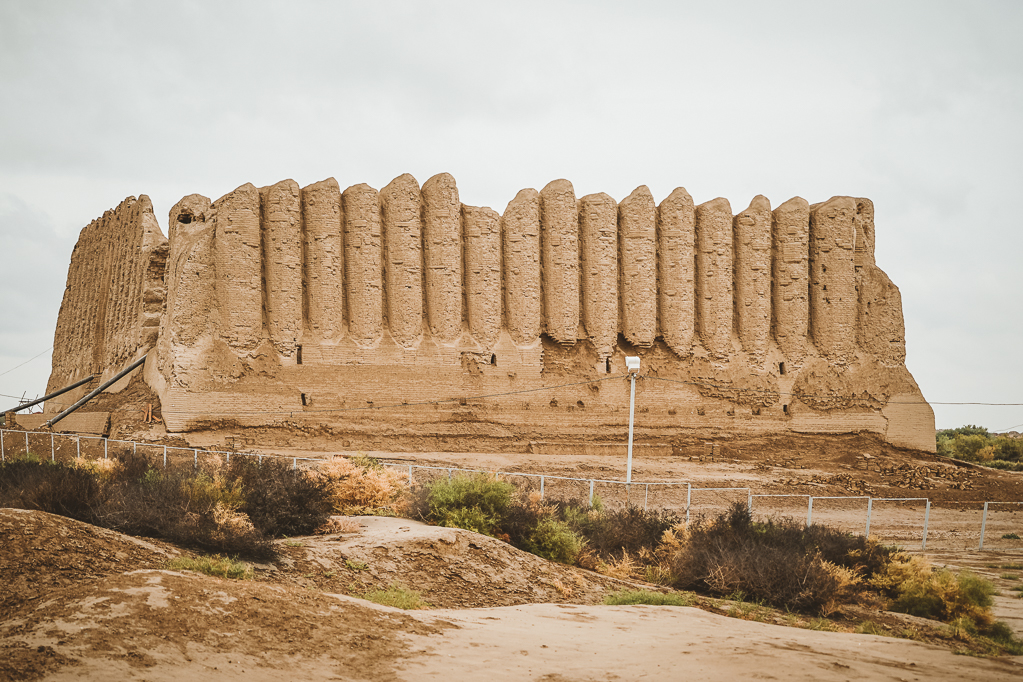
Ancient Merv in the Karakum Desert of Turkmenistan preserves five successive cities built on the same oasis over 4,500 years, from Achaemenid and Parthian settlements to the 12th-century Seljuk capital that was possibly the largest city in the world, with an estimated population of up to one million and 12 public libraries when Paris had none. Mongol forces under Tolui massacred the population in 1221 and destroyed the qanat irrigation system; Merv never recovered its former scale, leaving the Sultan Sanjar Mausoleum standing in isolation across the ruins of a once-colossal city.

UNESCO Sites Near Itchan Kala: What to See

UNESCO Sites Near Itchan Kala: What to See

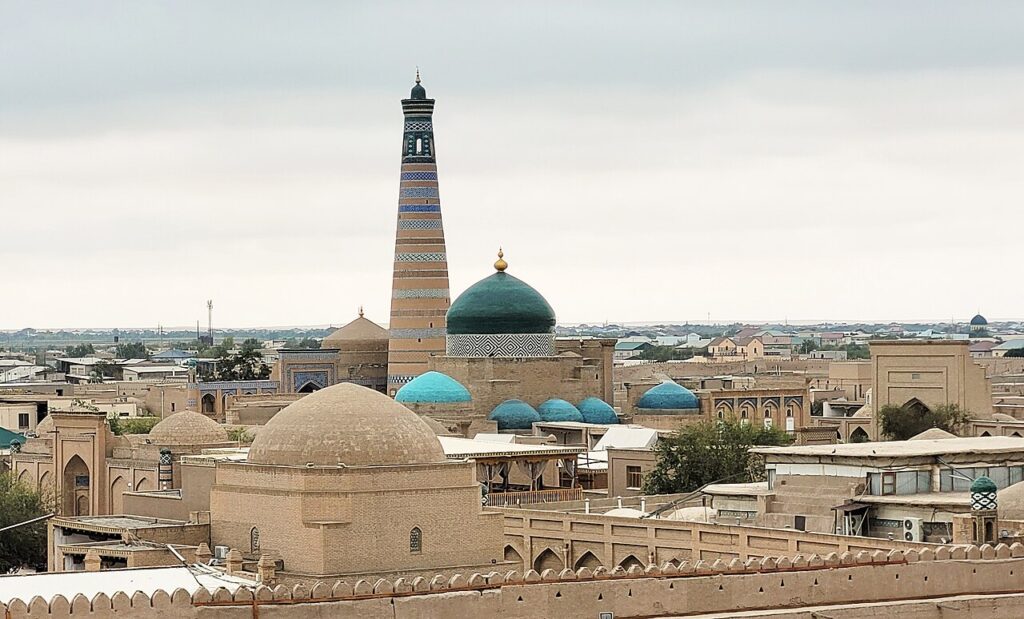
Itchan Kala, the walled inner city of Khiva, was the first Soviet Central Asian site inscribed by UNESCO (1990) and remains the most intact medieval Islamic city in Central Asia — its street network and building ensemble survived the Mongol campaigns, Soviet redevelopment, and the collapse of the khanate largely unaltered. The Kalta Minor, an unfinished 1851 minaret stopped at 26 metres when its khan died in battle, and the Juma Mosque, which shelters 212 carved wooden columns some dating to the 10th century, define the architectural character of the Itchan Kala.

UNESCO Sites Near Bukhara: What to See

UNESCO Sites Near Bukhara: What to See

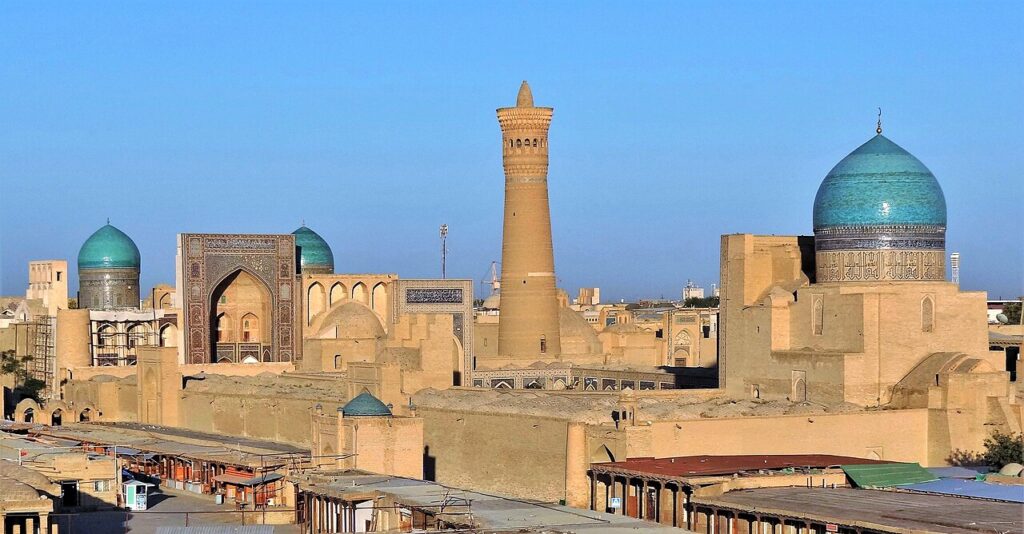
Bukhara’s historic centre, a UNESCO World Heritage Site since 1993, contains the oldest surviving Islamic building in Central Asia — the 9th-century Ismail Samani Mausoleum, whose decorative brickwork influenced mausoleum design across the Islamic world — alongside the 1127 Kalon Minaret, which Genghis Khan reportedly spared when his forces burned and massacred the rest of the city in 1220. The bazaar domes, the ruined Ark citadel, and the compact walkable historic centre make Bukhara the most intact Silk Road city in Uzbekistan.

UNESCO Sites Near Samarkand: What to See

UNESCO Sites Near Samarkand: What to See

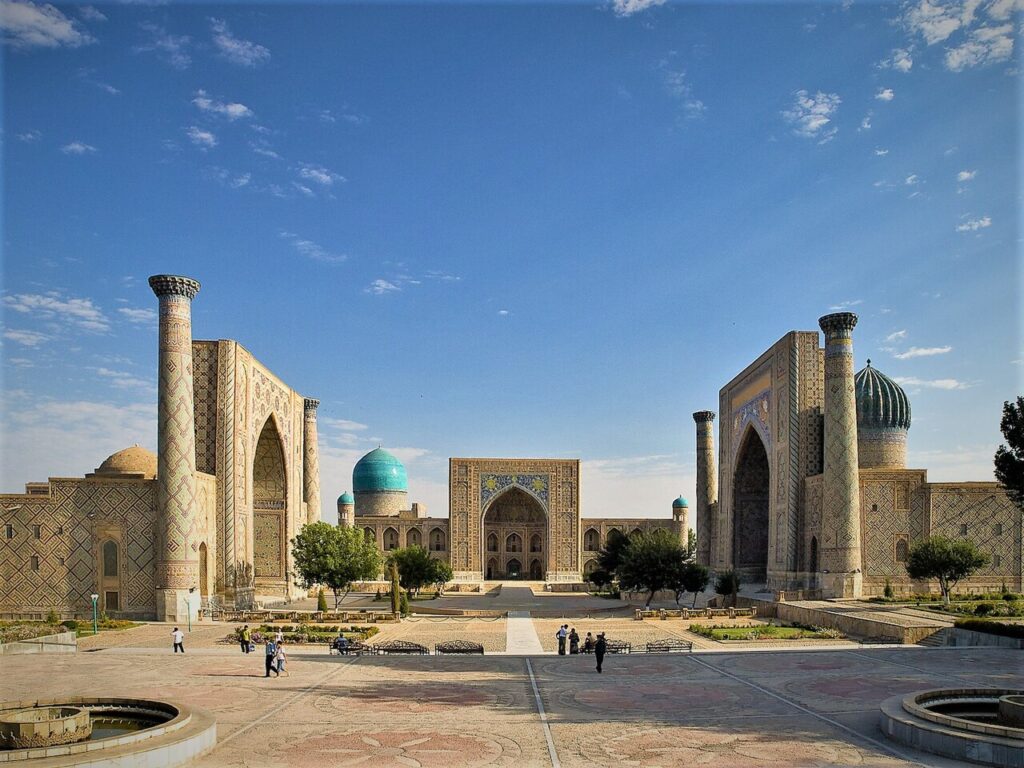
Samarkand has stood in the Zerafshan valley of Uzbekistan for more than 2,750 years, conquered by Alexander the Great in 329 BCE and later transformed into one of the most ornate cities in the Islamic world by Timur and his successors. The Registan square, where three madrasahs of the 15th–17th centuries face each other across a single open plaza, and the Gur-e-Amir mausoleum, where a block of dark-green jade the size of a door marks Tamerlane’s grave, place Samarkand among the most architecturally significant Silk Road cities anywhere.

UNESCO Sites Near Hội An: What to See

UNESCO Sites Near Hội An: What to See

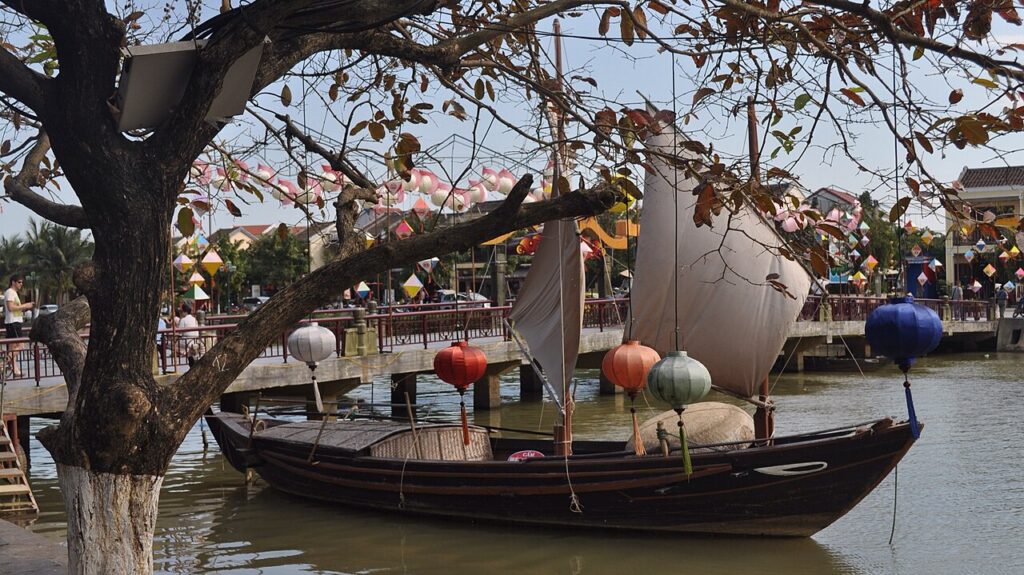
Hội An is a trading port town in central Vietnam that received merchants from China, Japan, the Netherlands, Portugal, and India during the 16th and 17th centuries; approximately 1,100 historic buildings survive in the old town, including the Japanese Covered Bridge (ca. 1593) and five Chinese assembly halls built by migrant communities organised by province of origin. The town’s historic fabric was preserved by the silting of the Thu Bồn River, which ended large-scale maritime trade and left the town’s buildings intact.

Torna in alto