Paola Bonometti
Content Editor

Paola Bonometti

Paola Bonometti is a volunteer with the ABCO association and still contributes to it today.

Contributions: 1,022 articles

Author name: Paola Bonometti

Paola Bonometti is a volunteer with the ABCO association and still contributes to it today.

UNESCO Heritage Sites Near Old Town of Zamość, Poland

UNESCO Heritage Sites Near Old Town of Zamość, Poland

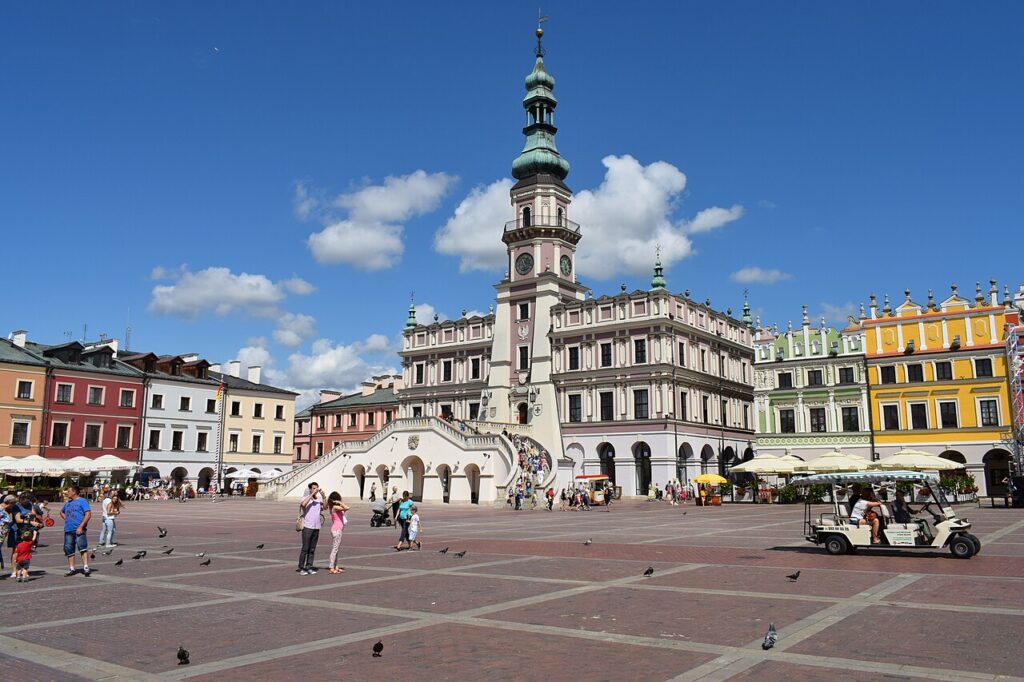
Zamość was founded in 1580 as a complete Renaissance ideal city — designed by Italian architect Bernardo Morando for Poland’s Grand Chancellor Jan Zamoyski, with a 100×100-metre market square, distinctive Armenian merchants’ arcades, and fortifications never successfully breached in four centuries of conflict. UNESCO inscribed it in 1992; the nearest comparable World Heritage sites are Kraków 270 km northwest and Lviv 170 km east.
UNESCO Heritage Sites Near Wieliczka Salt Mine, Poland

UNESCO Heritage Sites Near Wieliczka Salt Mine, Poland

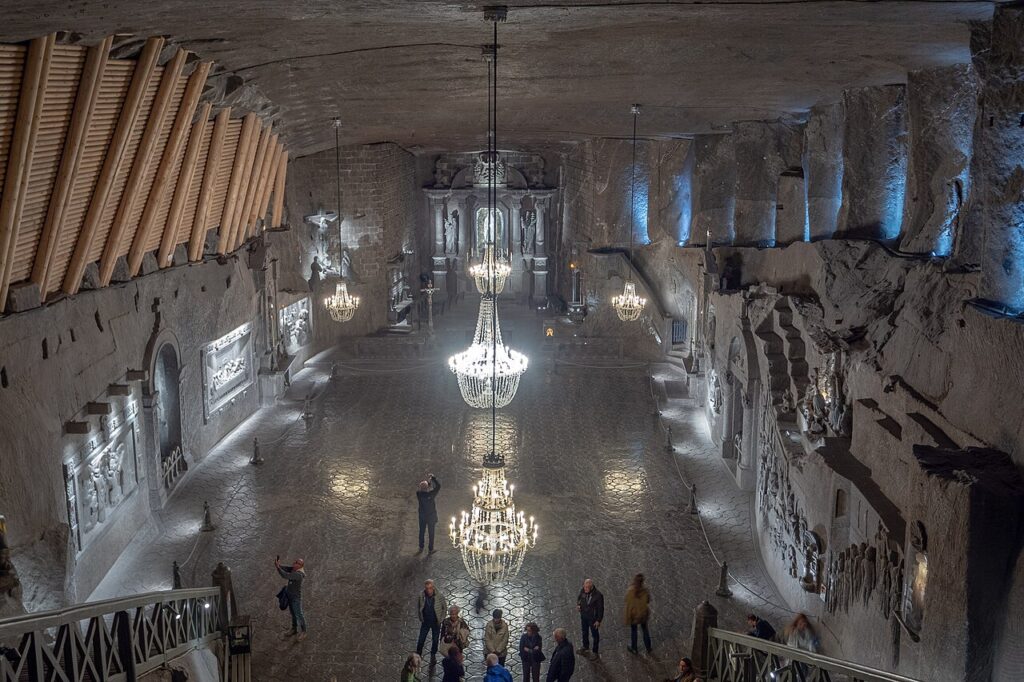
The Wieliczka Salt Mine, one of the first twelve UNESCO World Heritage Sites inscribed in 1978, contains 287 km of tunnels and a cathedral-scale chapel carved from salt over 67 years by miners working in their spare time. Located 14 km from Kraków, it sits at the centre of southern Poland’s densest concentration of World Heritage Sites, with Kalwaria Zebrzydowska 35 km south and Auschwitz-Birkenau 50 km west.

UNESCO Heritage Sites Near Diocletian’s Palace in Split

UNESCO Heritage Sites Near Diocletian’s Palace in Split

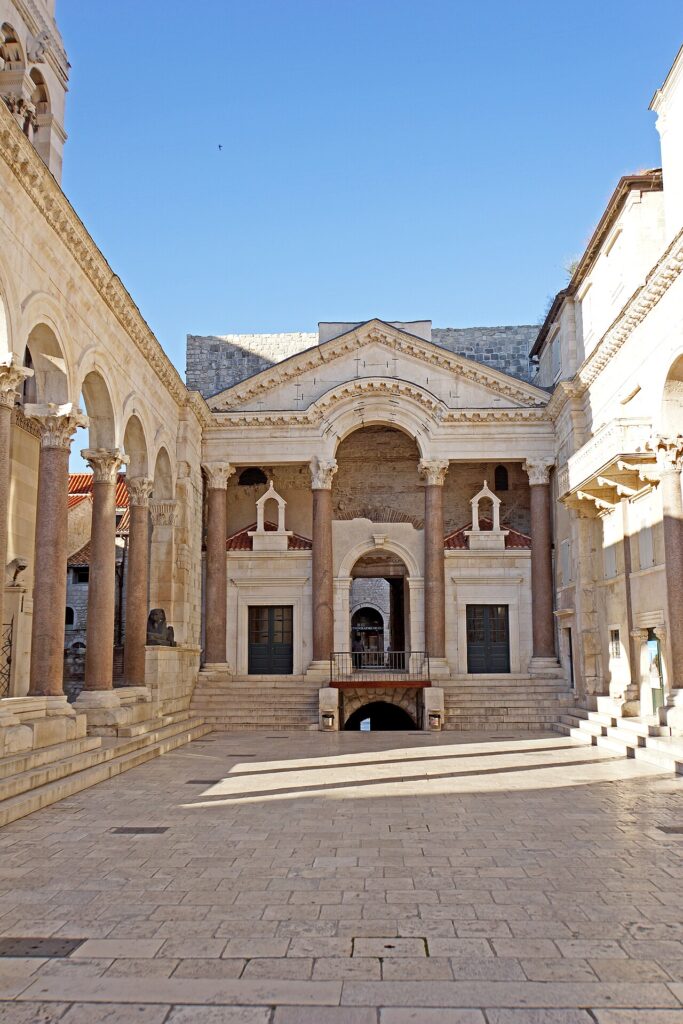
Diocletian’s Palace in Split — built between 295 and 305 CE as the retirement residence of the emperor who voluntarily abdicated — is today a living city of 3,000 inhabitants inside its Roman walls. The emperor’s mausoleum became the Cathedral of Saint Domnius, dedicated to one of his own persecution victims; Egyptian sphinxes from 3,500 years ago still stand on the Peristyle; and the intact basement halls were used as Game of Thrones’ Meereen set.

UNESCO Heritage Sites Near Plitvice Lakes, Croatia

UNESCO Heritage Sites Near Plitvice Lakes, Croatia

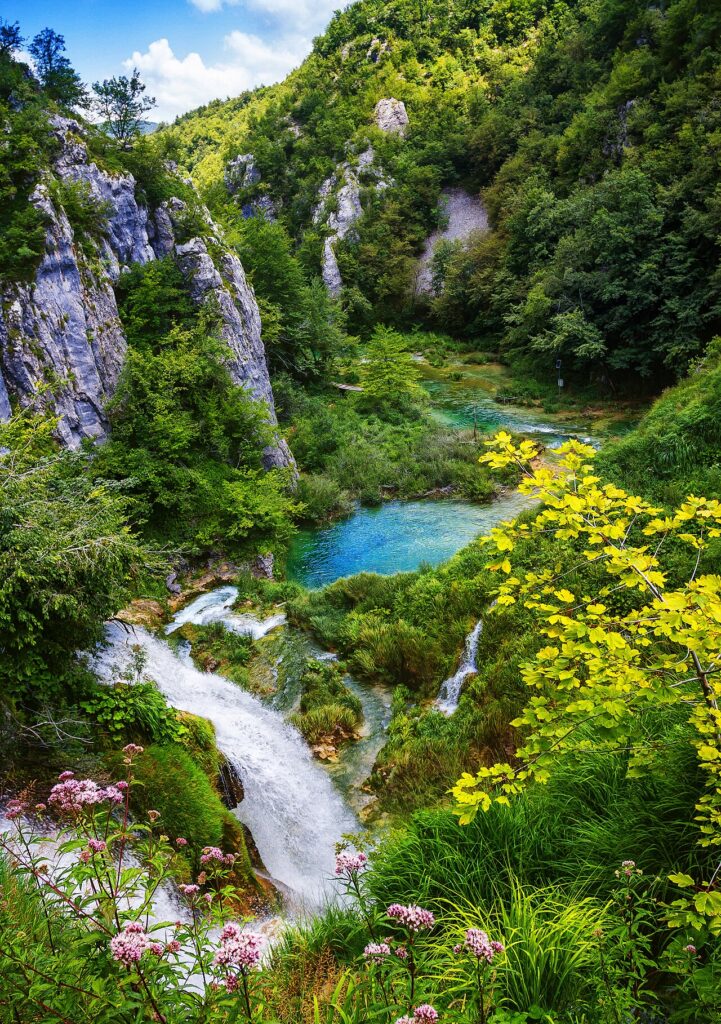
Plitvice Lakes National Park — sixteen travertine-terraced lakes covering 296 km² in central Croatia — has been UNESCO World Heritage since 1979. The lakes’ turquoise colour comes from dissolved minerals and shifts with light and season; the waterfalls are built by living microorganisms and grow millimetre by millimetre each year. Croatia’s highest waterfall, the 78-metre Veliki Slap, anchors the system; the park also witnessed the first armed clash of the 1991 Croatian War of Independence.

UNESCO Heritage Sites Near Ohrid Region, North Macedonia

UNESCO Heritage Sites Near Ohrid Region, North Macedonia

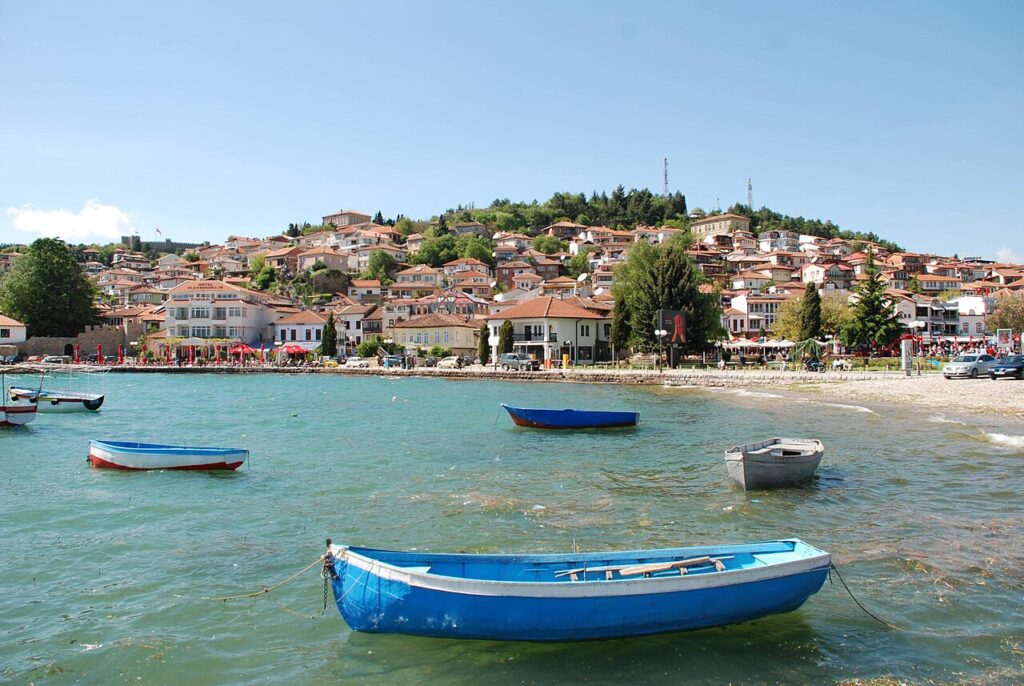
Lake Ohrid — two to three million years old, 288 metres deep, and home to more than 200 endemic species — is one of Europe’s very few UNESCO sites inscribed under both natural and cultural criteria. The town above its shores gave the world the Cyrillic alphabet in 886 CE, served as Tsar Samuel’s imperial capital, and preserves 365 medieval churches including the cliff-perched St. John at Kaneo above the lake.

UNESCO Heritage Sites Near Old Bridge of Mostar, Bosnia

UNESCO Heritage Sites Near Old Bridge of Mostar, Bosnia

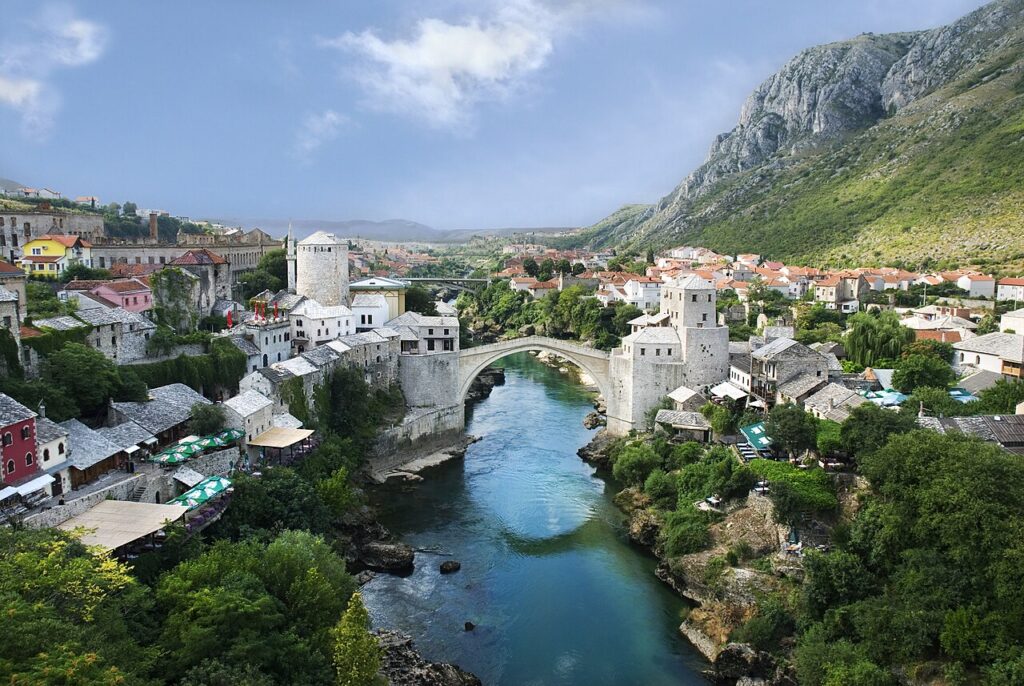
The Stari Most bridge in Mostar was built in 1566 by Ottoman architect Mimar Hayruddin using tenelija limestone — at the time the widest arch bridge in the world. Croatian forces destroyed it deliberately on 9 November 1993 during the Bosnian War; the rebuilt bridge, constructed from the same stone using Ottoman techniques, reopened in 2004 and earned UNESCO World Heritage status in 2005. The annual bridge-diving competition from the 21-metre parapet into 10°C water has been held since 1664.

UNESCO Heritage Sites Near Meteora, Greece

UNESCO Heritage Sites Near Meteora, Greece

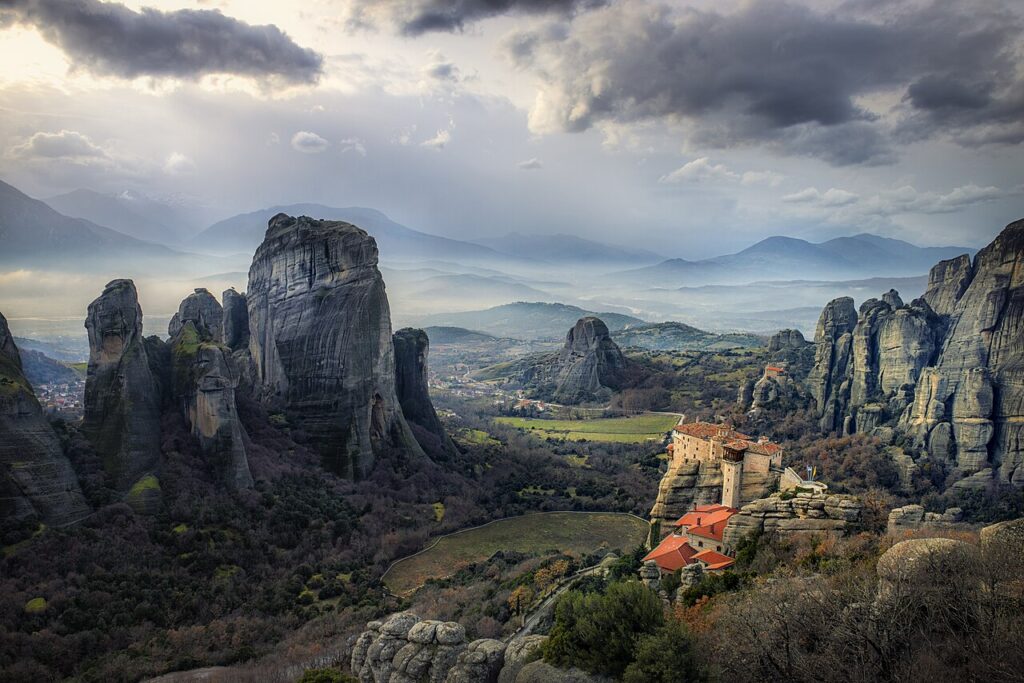
Meteora’s six surviving Orthodox monasteries stand on sandstone pillars up to 400 metres tall in Thessaly, central Greece — formed 60 million years ago and first inhabited by hermit monks in the 9th century. At the site’s 16th-century peak, 24 monasteries operated, their construction materials and inhabitants hoisted up cliff faces in nets; steps into the rock were not cut until the 1920s. UNESCO listed Meteora as a mixed natural and cultural World Heritage Site in 1988.

UNESCO Heritage Sites Near Mount Athos, Greece

UNESCO Heritage Sites Near Mount Athos, Greece

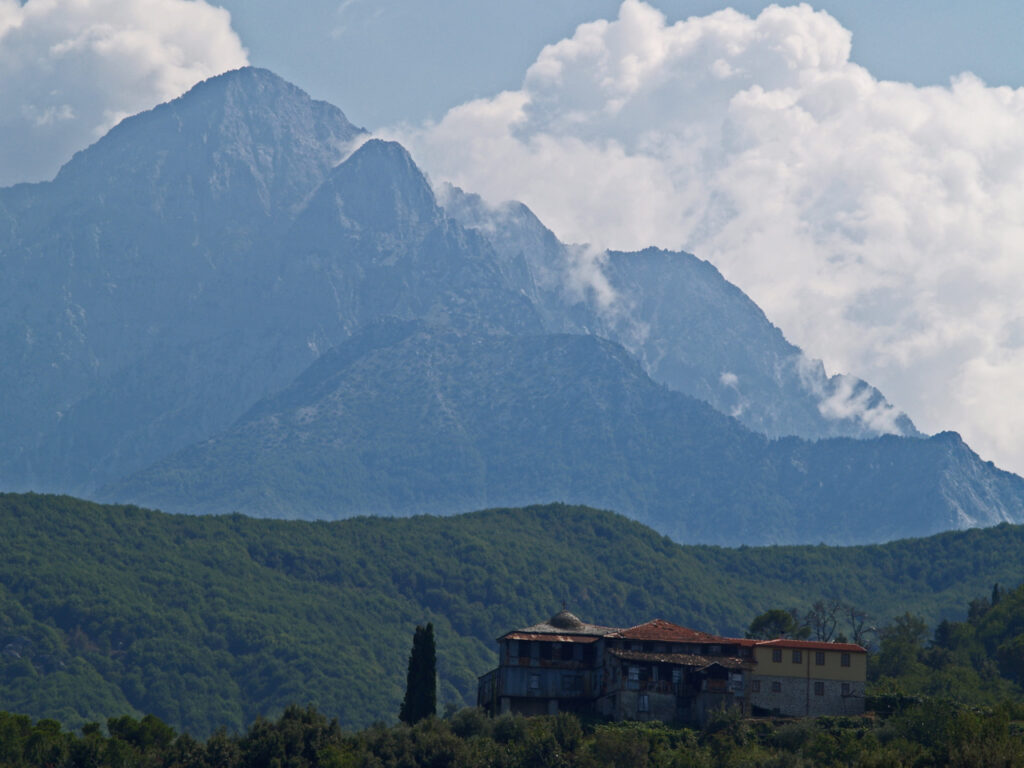
Mount Athos, a 50-km peninsula in northern Greece, has been governed by a self-ruling community of twenty Orthodox monasteries since 963 CE. Women have been excluded from the peninsula since 1046 under a ban now enshrined in EU law; male visitors require a special permit capped at 10 non-Orthodox per day. Its libraries, icons, and Byzantine embroideries — including the 14th-century Epitaphios of Thessaloniki at Vatopedi — make it one of the richest concentrations of Byzantine art outside Istanbul.

UNESCO Heritage Sites Near Boyana Church, Bulgaria

UNESCO Heritage Sites Near Boyana Church, Bulgaria

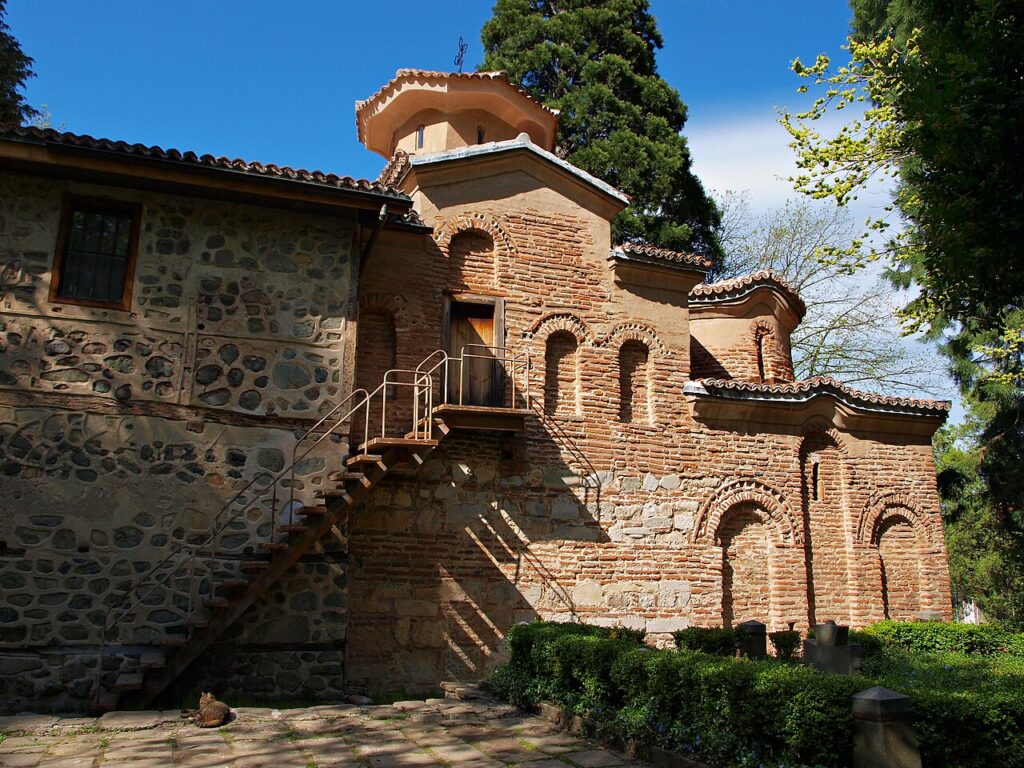
Boyana Church, a UNESCO World Heritage Site since 1979, stands 8 km south of Sofia at the foot of Vitosha Mountain. Its 1259 fresco cycle — painted a decade before the Italian proto-Renaissance — depicts 240 figures including the individualized donor portraits of Sebastokrator Kaloyan and his wife Desislava, considered among the earliest realistic portraits in medieval European art. The narthex containing these paintings measures barely 30 square metres; visitors enter in timed groups of ten.

UNESCO Heritage Sites Near Lavaux Terraces, Switzerland

UNESCO Heritage Sites Near Lavaux Terraces, Switzerland

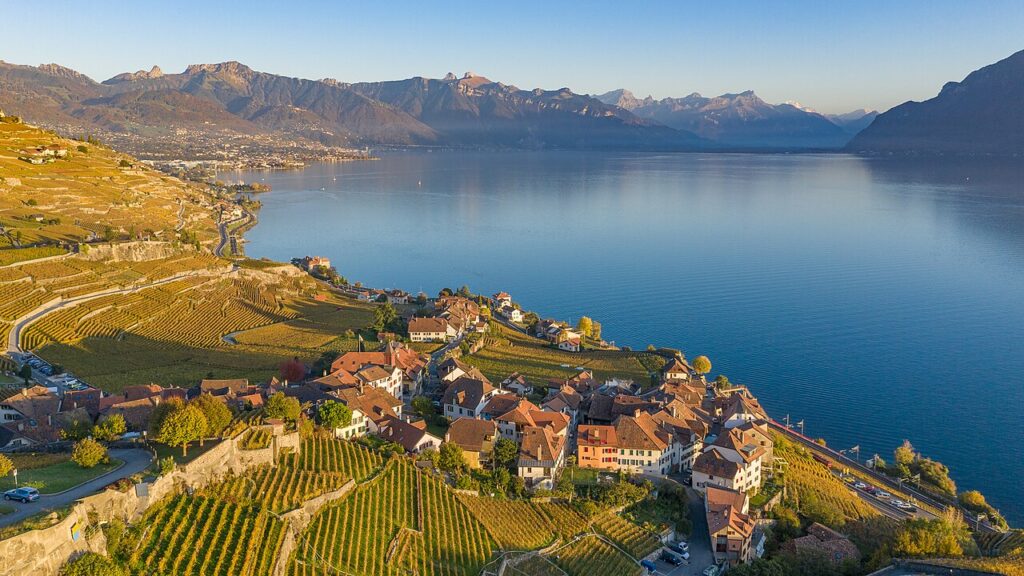
Lavaux’s 830 hectares of vineyard terraces above Lake Geneva, UNESCO World Heritage since 2007, were first cut by Cistercian monks in the 11th century, benefit from a three-sun microclimate unique in viticulture, and appear on Switzerland’s 200-franc banknote — still producing Chasselas wine by methods continuous with those 900-year-old foundations.

Scroll to Top