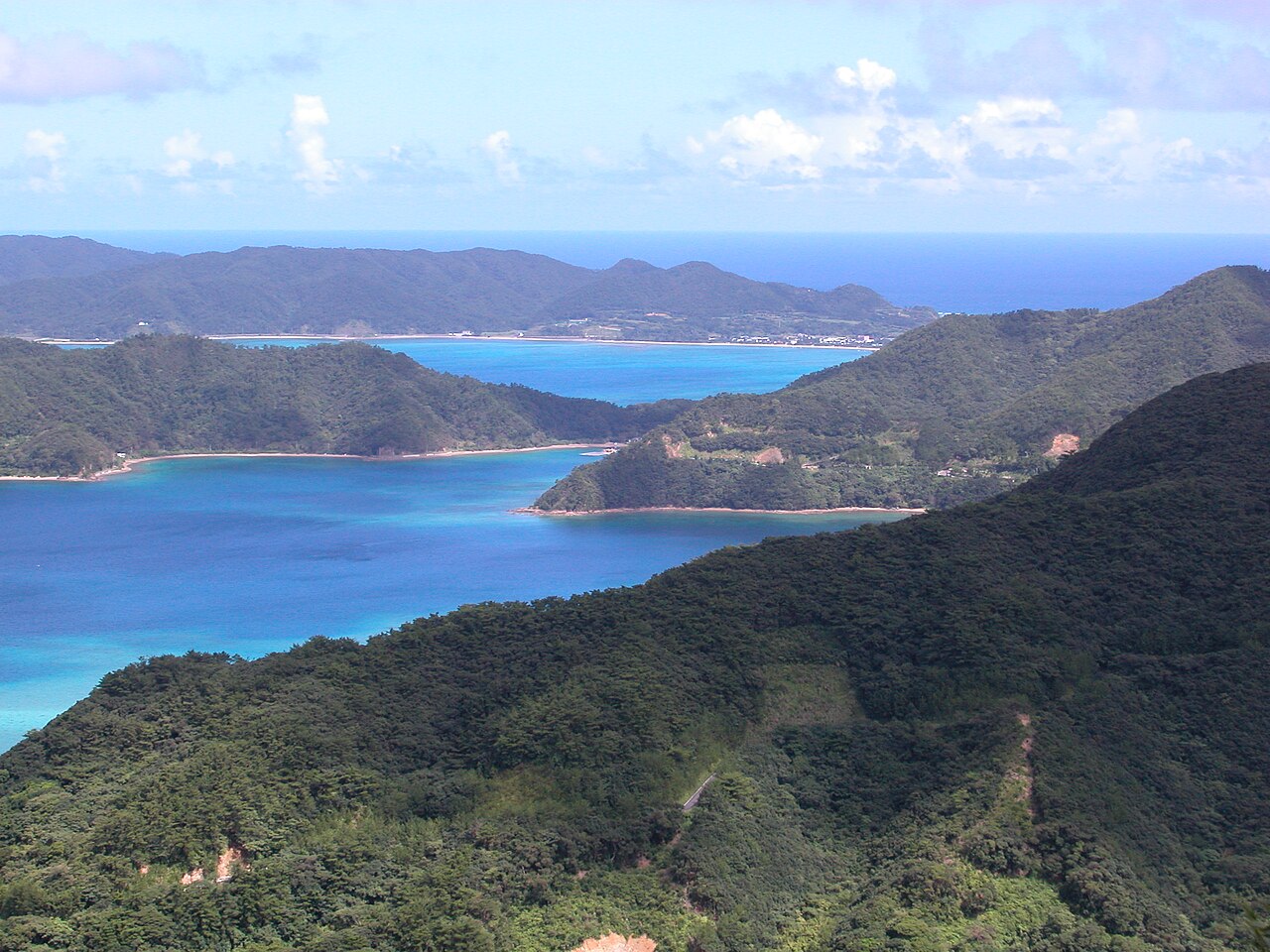
The Amami-Oshima Island, Tokunoshima Island, Northern Part of Okinawa Island, and Iriomote Island natural UNESCO inscription (2021) protects 42,698 hectares across four islands in the Ryukyu archipelago, documenting one of the world’s remaining subtropical island biodiversity hotspots. The inscription’s four components hold 58 endemic vertebrate species — including the Amami rabbit (Pentalagus furnessi), a living fossil that has remained virtually unchanged since the Pliocene epoch 5 million years ago; the Iriomote cat (Prionailurus bengalensis iriomotensis), one of the rarest felids in the world with a total wild population of approximately 100–120 individuals; the Okinawa rail (Gallirallus okinawae), a flightless bird first described in 1981; and the Ryukyu black-breasted leaf turtle, found nowhere else on earth.
The Ryukyu arc from Amami to Iriomote Okinawa · Yakushima · Kagoshima — 160 to 500 km
One hundred fifty kilometres south of Amami-Oshima by inter-island flight (approximately 40 minutes), Okinawa Island forms the cultural centrepiece of the Ryukyu archipelago. The northern part of Okinawa Island (Yambaru) is one of the four components of the 2021 natural inscription, contiguous with the Gusuku Sites and Related Properties of the Kingdom of Ryukyu (inscribed 1999) which covers the castle ruins and related sites of the historical Ryukyu Kingdom concentrated in central and southern Okinawa. The same island thus holds both a natural UNESCO inscription (northern forests of Yambaru) and a cultural UNESCO inscription (Gusuku castles in the south), making Okinawa the only island in Japan with two distinct UNESCO inscriptions. The natural and cultural inscriptions document two different aspects of the same island: the prehistoric biodiversity that survived on its forested ridges and the feudal political culture that developed on its coastal lowlands over the same period. From Amami-Oshima, Okinawa’s Naha City is reached by short-haul flight (approximately 50 minutes).
One hundred sixty kilometres north of Amami-Oshima by ferry (overnight) or domestic flight to Kagoshima and short flight, Yakushima island in Kagoshima Prefecture holds Japan’s first UNESCO natural inscription (1993). The two natural inscriptions — Yakushima (1993) and Amami-Oshima/Okinawa (2021) — are separated by 28 years in UNESCO recognition history but occupy the same biogeographic corridor: the Ryukyu island chain from Yakushima (30°N) through Amami-Oshima (28°N) to Iriomote (24°N). The biodiversity of each island reflects its latitude — Yakushima’s subarctic-to-subtropical forest gradient gives way to the fully subtropical forests of Amami-Oshima and the tropical rainforests of Iriomote further south. The endemic species assemblages of the two inscriptions derive from the same Pleistocene-era isolation that separated each island from the continental land mass as sea levels rose at the end of the last glaciation. From Amami-Oshima, Yakushima is reached by domestic flight to Kagoshima (approximately 60 minutes) and Toppy hydrofoil to Yakushima (approximately 90 minutes).
Four hundred fifty kilometres southwest of Amami-Oshima by ferry or flight via Okinawa, Iriomote Island in the Yaeyama Islands is the southernmost inscribed component of the 2021 natural inscription. Iriomote (117 square kilometres) has approximately 2,400 permanent residents and supports an estimated 100–120 Iriomote cats in its mangrove, subtropical forest, and river system. The Iriomote cat was first described to science in 1967 by Japanese mammalogist Yukio Imaizumi and initially classified as a distinct species; current taxonomy treats it as a subspecies of the leopard cat (Prionailurus bengalensis) that has been isolated on Iriomote for several hundred thousand years, producing a distinct island population with a smaller body size and a different coat pattern than mainland leopard cats. The island’s UNESCO component covers 80.2% of Iriomote’s land area, excluding only the residential and agricultural zones around Ohara and Uehara. From Amami-Oshima, Iriomote requires flight to Okinawa (Naha), domestic flight to Ishigaki, and ferry to Iriomote (approximately 4–5 hours total).
Five hundred kilometres north of Amami-Oshima by domestic flight to Kagoshima and Shinkansen, Kagoshima is the gateway to the Sites of Japan’s Meiji Industrial Revolution — specifically the Shuseikan complex, the 1852 pre-Restoration industrial facility of the Shimazu domain. The Shimazu domain governed the Ryukyu Kingdom as a vassal state from 1609 until the Meiji government formally abolished the Kingdom in 1879. The Shimazu’s control over the Ryukyuan trade routes through the Amami islands — which produced sugar cane and tropical goods as tribute commodities — was one of the most economically productive domain structures in Edo-period Japan. The same islands whose subtropical biodiversity the 2021 UNESCO inscription protects were the productive agricultural hinterland of the same Shimazu domain whose industrial programme the Meiji inscription documents. From Amami-Oshima, Kagoshima is reached by domestic flight (approximately 55 minutes).
Practical information
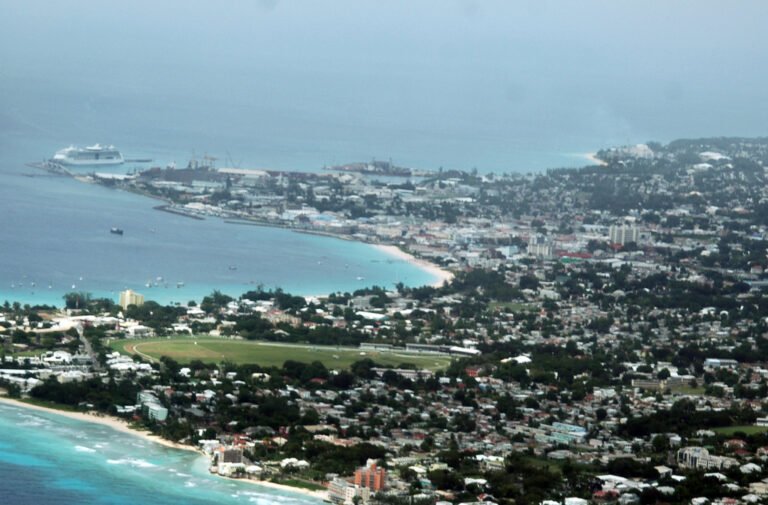
Amami-Oshima is the largest and most accessible of the four inscription components. It is served by domestic flights from Kagoshima (approximately 55 minutes), Osaka (approximately 2 hours), and Tokyo (approximately 2.5 hours by ANA/JAL), and by inter-island ferry from Kagoshima (approximately 11 hours overnight). Amami Airport is in the island’s northern area; Naze City in the island’s centre is the primary accommodation hub. The UNESCO inscription’s natural areas cover the island’s forested interior (managed by the Forestry Agency) and the Kin Bay mangrove at the island’s southwestern coast — Japan’s second-largest mangrove system (71 hectares), accessible by canoe tour from Naze. The Amami Wildlife Conservation Centre in Sumiyou operates as the primary monitoring facility for the Amami rabbit and the Amami tip-nosed frog (another endemic species). Road access to the inscription’s interior is limited; the forest roads that cross the island’s ridge are not suitable for standard vehicles in wet conditions. Guided forest night walks to observe the Amami rabbit (which is nocturnal) are available through licensed eco-tour operators in Naze; the Amami rabbit is reliably observable only after dark and only by vehicle along the forest roads. Tokunoshima, the second component island, is served by domestic flight from Amami-Oshima (approximately 30 minutes); northern Okinawa (Yambaru) is accessed from Naha by rental car (approximately 2 hours north on Route 58). Iriomote is accessible by ferry from Ishigaki Airport (approximately 40 minutes to Uehara Port).
Frequently Asked Questions
What makes the Amami rabbit a “living fossil”?
The Amami rabbit (Pentalagus furnessi) is described as a living fossil because its morphology — small ears, short limbs, dense fur, nocturnal and fossorial behaviour — closely resembles fossil rabbit species from the Pliocene epoch (5.3–2.6 million years ago), before the evolutionary diversification that produced the modern long-eared, fast-running rabbit genera Oryctolagus (European rabbit) and Lepus (hares). The Amami rabbit’s evolutionary isolation on Amami-Oshima and Tokunoshima — where it has been separated from the continental land mass for approximately 5 million years — has allowed it to retain characteristics that mainland rabbit populations lost through competitive evolution. Its small ears (poorly suited for radiating heat but requiring less blood flow in the island’s mild climate), powerful digging forelimbs (used for nesting burrows), and dark brown colouration (providing forest camouflage) are primitive features compared to modern continental rabbit species. It is the sole living member of the genus Pentalagus and has no close relatives in the modern fauna; phylogenetic analysis places it as an early diverging lineage of the Leporidae (rabbits and hares) family that branched from the main leporid radiation before the ancestor of all modern rabbits had differentiated. The IUCN lists it as Endangered, with a total estimated population of 2,000–4,800 individuals on two islands — the primary threats being predation by introduced mongooses (deliberately released to control Habu pit vipers) and vehicle collisions on the islands’ forest roads.
Why is the Iriomote cat one of the rarest felids in the world?
The Iriomote cat’s extreme rarity is a function of its island geography: the species exists only on Iriomote Island (117 square kilometres), making it one of the smallest ranges of any felid species in the world. The total wild population, estimated from camera-trap and radio-collar monitoring by the Japanese Environment Ministry, is approximately 100–120 individuals as of the most recent surveys. The population size is near the minimum viable for long-term persistence without genetic management; at this population level, stochastic events (disease, severe typhoon, car strikes) can eliminate a significant fraction of the population in a single incident. The primary mortality causes are vehicle strikes on the island’s two main roads — a wildlife mortality that has been partially addressed by installation of underpasses and reflectors on the main Iriomote roads — and competition with feral cats (domestic cats gone wild) that have colonized the island’s lowland zones. The Iriomote cat was initially classified as a separate species (Prionailurus iriomotensis) by Imaizumi in 1967; subsequent molecular analysis revised this to a subspecies of the leopard cat (Prionailurus bengalensis iriomotensis), the most widely distributed small cat of South and East Asia. The reclassification reduced the Iriomote cat’s unique taxonomic status but did not reduce the conservation urgency — a subspecies extinction is irreversible. The UNESCO inscription’s coverage of 80.2% of Iriomote’s land area was designed to protect the full range of the cat’s habitat, including the mangrove and river systems that provide its fishing grounds.
How does the 2021 Amami-Oshima inscription differ from the 1993 Yakushima inscription?
The 2021 and 1993 inscriptions are based in the same island biogeographic corridor but document different aspects of its natural heritage. Yakushima (1993) was inscribed under two UNESCO criteria: the exceptional natural beauty of its ancient cedar forest landscape (criterion vii) and the outstanding ecological processes of vertical zonation across a small island (criterion ix). The Amami-Oshima/Okinawa inscription (2021) was inscribed under two different criteria: the exceptional biodiversity and threatened species concentrations (criterion x — the site contains a significant proportion of the world’s species of special conservation concern) and the geological and evolutionary processes of island speciation (criterion ix). In practical terms, Yakushima’s inscription prioritizes the ancient forest landscape and the processes that produced it; the 2021 inscription prioritizes the endemic species assemblages and the island isolation processes that differentiated them. The two inscriptions are complementary in documenting the Ryukyu biodiversity hotspot at its northern and southern extremes: Yakushima represents the forest ecosystem at the subarctic margin of the subtropical zone; Amami-Oshima and Iriomote represent the endemic species assemblages that have accumulated through millions of years of isolation in the subtropical and tropical zones further south. UNESCO’s inscriptions in both cases reflect the same underlying judgment that the Ryukyu island chain is among the most ecologically significant island groups in East Asia — a judgment validated by Conservation International’s inclusion of the Ryukyu-Taiwan Biodiversity Hotspot in its list of 36 global biodiversity hotspots.
Sources
- S1 — UNESCO World Heritage Centre — Amami-Oshima Island, Tokunoshima Island, Northern part of Okinawa Island, and Iriomote Island (Ref. 1574) — https://web.archive.org/web/20230601000000/https://whc.unesco.org/en/list/1574/
- S2 — UNESCO World Heritage Centre — Statement of Outstanding Universal Value (Ref. 1574) — https://whc.unesco.org/en/list/1574/
Spotted an error? Write to editorial@culturalheritageonline.com and we correct it the same day.