On 27 September 2008 a small group crossed the Giudecca on foot — through a boatyard where gondolas were taking shape, a fifteenth-century cloister full of workshops, the courts of a Byzantine-revival villa, and onto rooftops residents opened for the occasion. It was not a guided tour. It was a passeggiata patrimoniale, a heritage walk — a format Venice helped pioneer, and one that is still being practised today.
Not a tour: a walk among witnesses
The heritage walk is a child of the Faro Convention, the Council of Europe framework of 2005 that shifted the question of cultural heritage from “what do we protect?” to “who is it for?”. The convention introduced the idea of the heritage community: people who value specific aspects of their surroundings and take responsibility for passing them on. The walk is that idea on foot. As the Venetian association Faro Venezia defines the format, a heritage walk is “conceived and planned by citizens acting as a heritage community”, is “centered on the encounter with testimonies” rather than on a professional guide’s script, and allows “the visit of private places, habitually not open to the public, with the consent of the owners”.
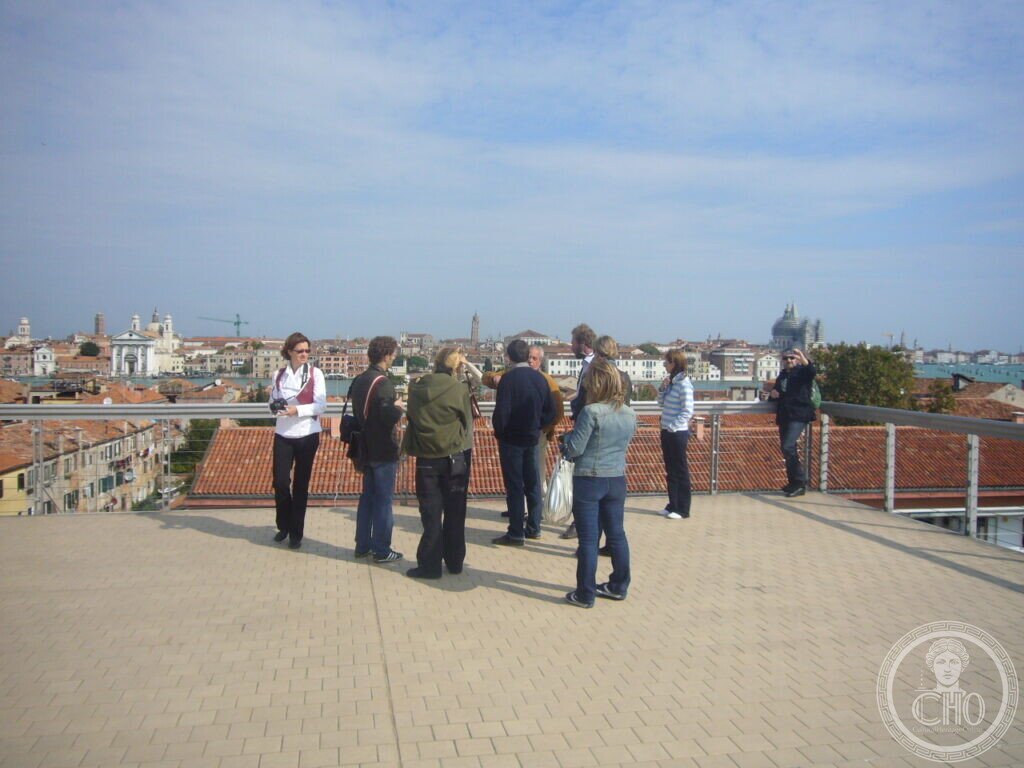
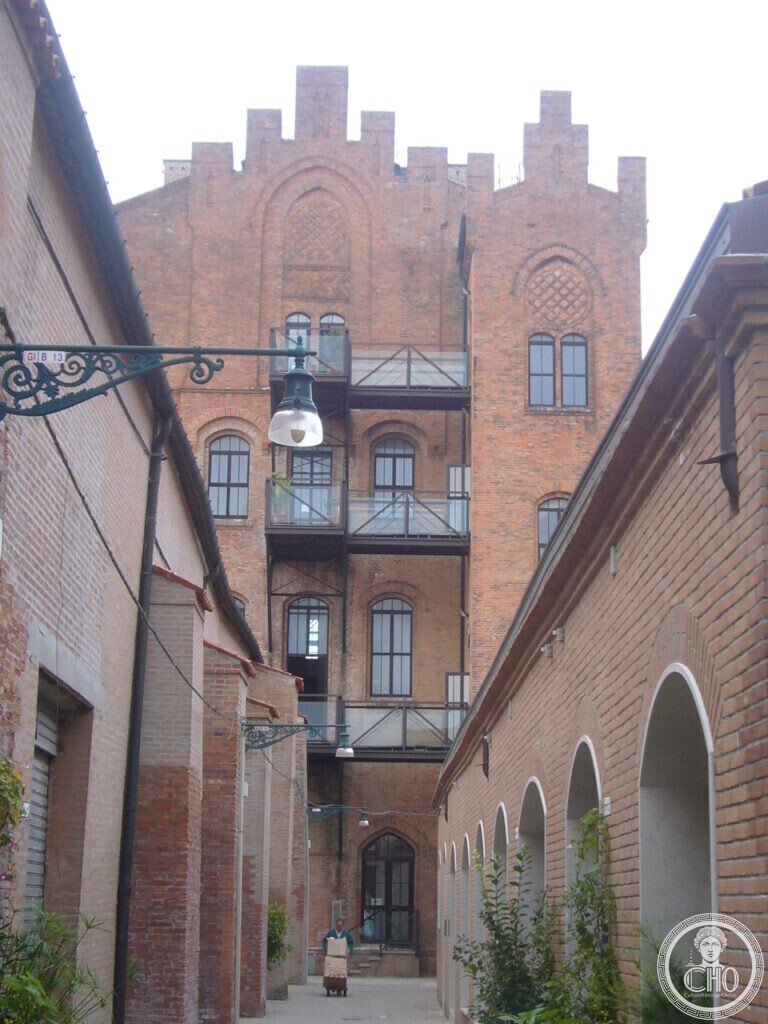
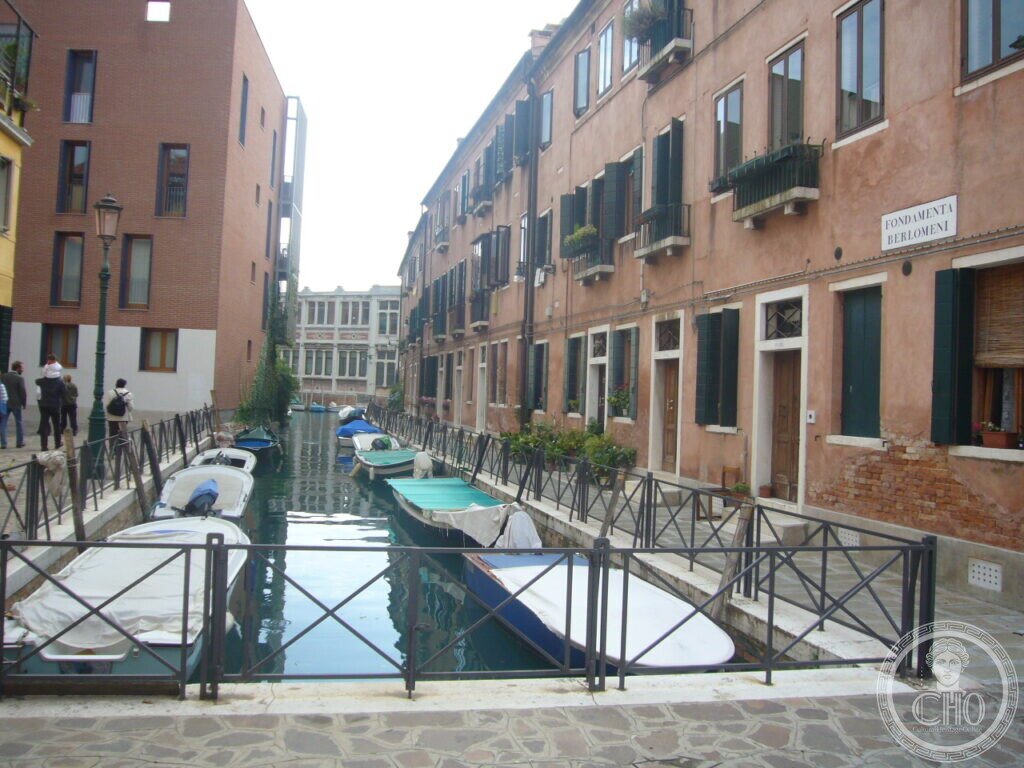
The difference shows in the photographs from that September day. Nobody is holding a flag or a microphone. The group stands talking in an empty beamed hall; it gathers on a roof terrace; it files down a lane between brick factory walls. The places themselves are not the Venice of postcards — and that is the point.
Why the Giudecca
The Giudecca was the right island for the experiment. A short vaporetto hop from St Mark’s, it spent the twentieth century as Venice’s factory district: flour mills, breweries, shipyards, a watch factory that became a munitions plant, textile works in a suppressed convent. When the industry died — most of it between the 1950s and the 1970s — the island was left holding the largest stock of abandoned working buildings in the historic city, and almost none of the tourist economy that cushioned the rest of Venice.
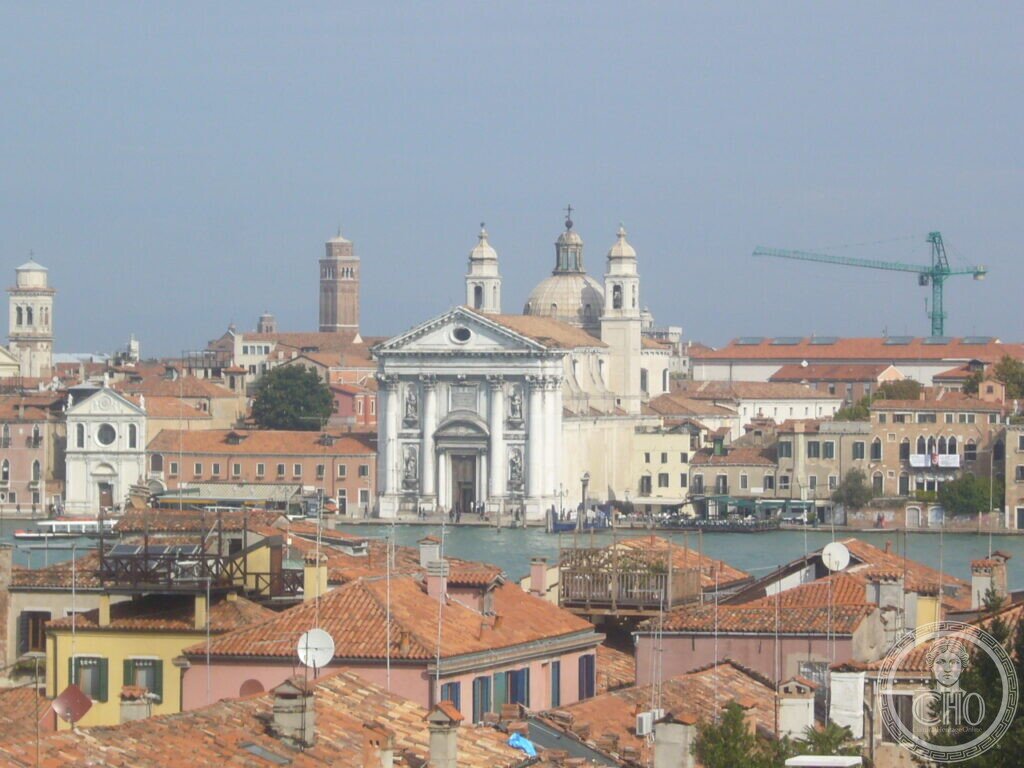
What the 2008 walkers saw was that inheritance in mid-transformation. The route wound past the brick sheds of the old CNOMV shipbuilding compound, where the Cantiere Nautico Crea still builds and restores gondolas by hand — hulls open like anatomy lessons, acanthus ornament half drawn, half carved. It passed the former convent of Santi Cosma e Damiano, restored by the city a decade earlier as a craft centre, its quattrocento cloister sheltering twelve artisan workshops. It entered the grounds of Villa Hériot, the Byzantine-revival villa complex that houses cultural institutions on the island’s south shore. And it climbed to the terraces — because from the Giudecca’s rooftops the whole lagoon city rearranges itself, Gesuati and Redentore and campanili lining up across the water.
What the photographs hold
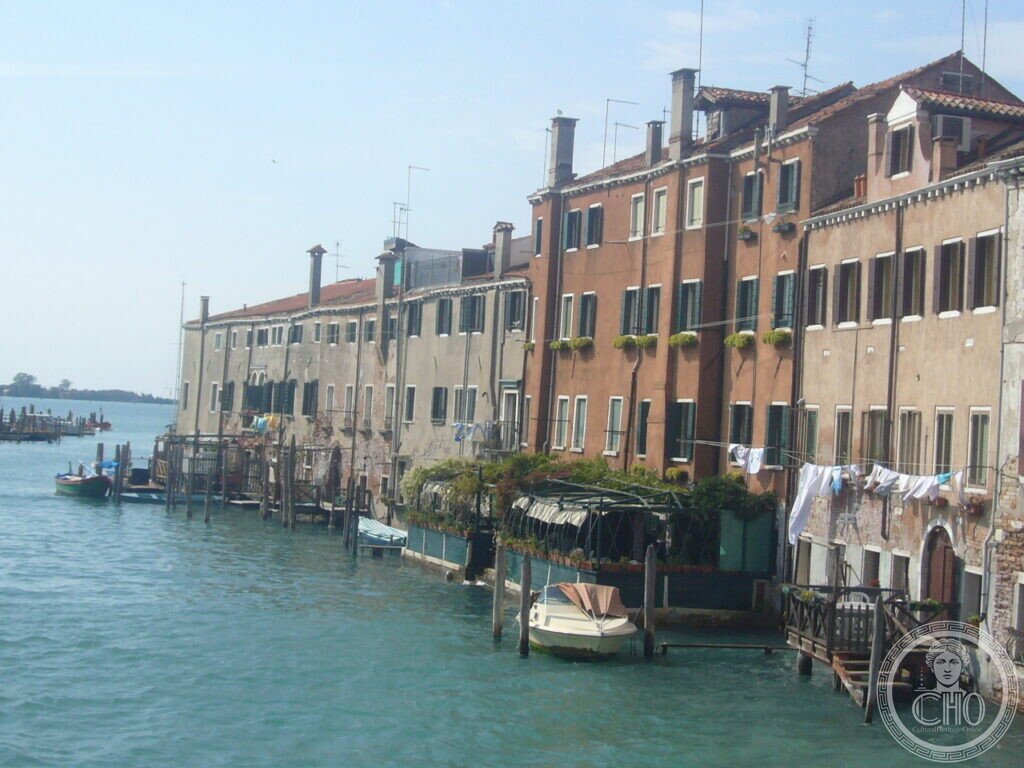
Looked at from 2026, the photographs have become documents. The gondola under construction at the Crea yard was photographed three years before the yard’s future was fought over — the city ruled in 2011 that on that site only boatbuilding is allowed — and eighteen years before the same yard launched the new ferry gondola for the Rialto–San Silvestro crossing, in June 2026, with wine poured over the hull. The empty beamed hall in the former convent now hums with workshops. The factory conversions that looked raw in 2008 have settled into ordinary Giudecca life, washing strung between the windows.
That is what a heritage walk produces, beyond the afternoon itself: a lay archive. Not the professional survey of the monuments office, but the attentive record of citizens who were let in and looked carefully. The photographs from one Saturday in 2008 now document buildings, trades and views of the Giudecca at a precise moment of its long conversion — several of which have changed already.
Still walking
The format did not stay an experiment. Faro Venezia, the citizens’ association founded in Venice in 2008 to promote the convention’s implementation, has organised heritage walks ever since — on glass production, on women’s labour, on hospitality, on religious communities. Italy ratified the Faro Convention in 2020, and heritage communities across the country now publish annual calendars of passeggiate patrimoniali — the Faro Italia network lists programmes running through 2026. The walk photographed here was an early crossing of ground that has since become common practice: ordinary places, opened by the people who know them, one afternoon at a time.
For a visitor, the lesson travels well. The Giudecca is still there, ten minutes from St Mark’s and a world apart — the boatyard, the cloister, the villa, the quiet fondamente. You can walk it alone with this page in hand. But if you ever find a heritage walk on the calendar, in Venice or anywhere, take it: the difference between seeing a place and being let into one is the whole idea.
Sources
- Faro Venezia — Le Passeggiate Patrimoniali
- Council of Europe, Venice Office — Faro Convention activities in Veneto
- Comune di Venezia — il varo della nuova gondola da traghetto al Cantiere Crea (June 2026)
- Comune di Venezia — SS. Cosma e Damiano
Photographs by Luigi De Marchi, taken during the heritage walk of 27 September 2008 on the Giudecca. Related places on CHO: Cantiere Nautico Crea · Former Convent of Santi Cosma e Damiano · Church of Santi Cosma e Damiano · Teatro Junghans · Villa Hériot