

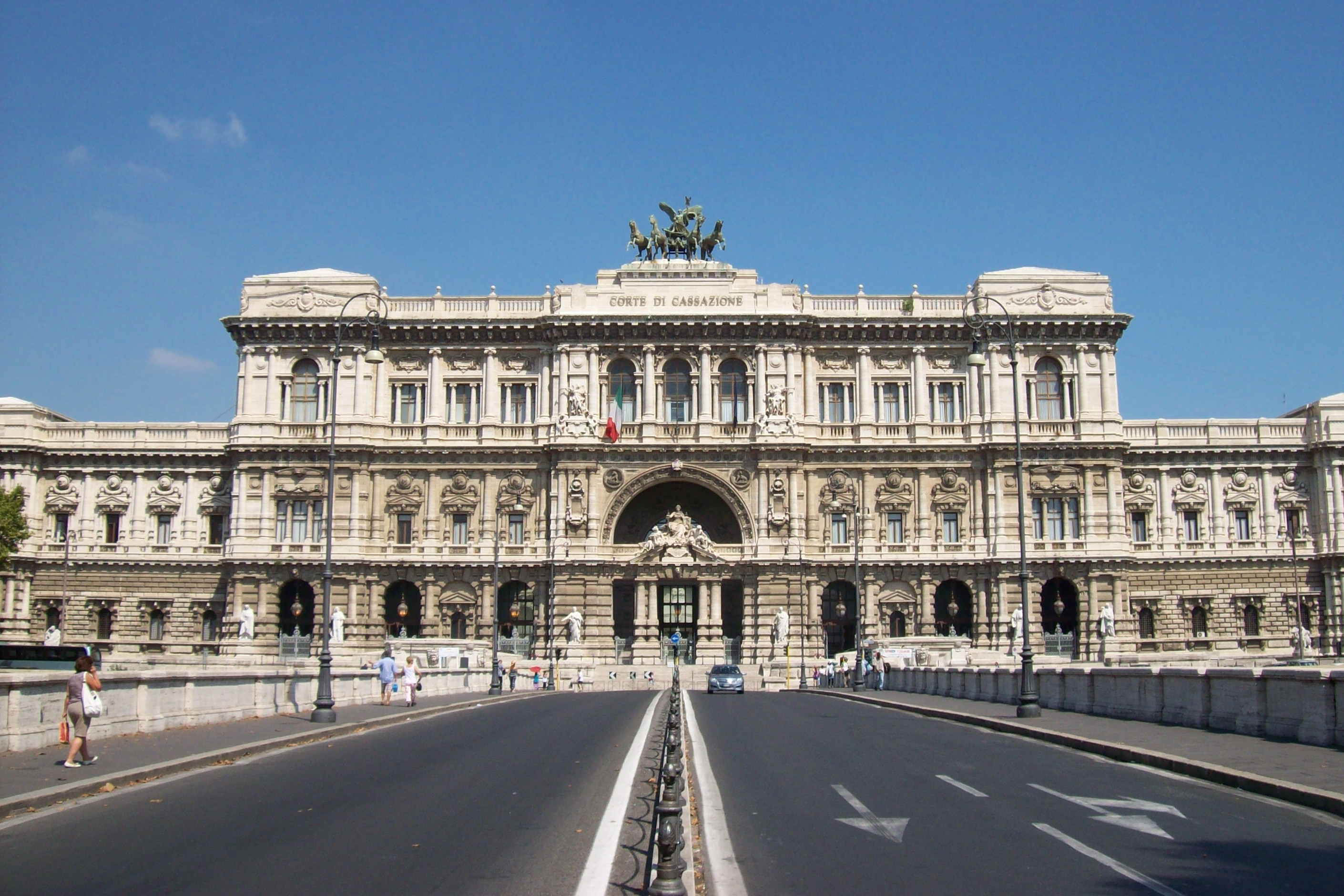
The Palace of Justice, known colloquially as the Palazzaccio (“ugly palace”), is the seat of the Supreme Court of Cassation and the Judicial Public Library of Italy, located in the Prati district of Rome facing the Tiber. Designed by Guglielmo Calderini and built between 1888 and 1911, the building is an imposing example of late-19th-century Italian eclectic architecture, notorious both for its grandiose ambitions and for the structural problems that have troubled it almost from the day it opened.
At a glance
- Type
- Government palace and court of law
- Period
- Construction 1888–1911; inaugurated 1911
- Style
- Italian Eclectic / Beaux-Arts with Renaissance and Baroque references
- Architect
- Guglielmo Calderini
- Location
- Piazza dei Tribunali / Piazza Cavour, Prati district, Rome
- Coordinates
- 41.9040° N, 12.4704° E
- Current use
- Sede della Corte Suprema di Cassazione (Supreme Court of Cassation) and Biblioteca per i Beni Culturali e Ambientali
Overview
The Palace of Justice is one of the most prominent public buildings of post-unification Rome, a deliberate statement of the new Italian state’s authority built in the years when Rome was being remade as a national capital. Its massive travertine facade, colossal bronze quadrigae atop the entrance pavilions, and parade of allegorical statues representing Justice and Italian jurisprudence make it one of the most elaborate civic buildings in the country. The pejorative nickname “Palazzaccio” reflects both popular unease with its overwhelming scale and the long catalogue of structural scandals that have marked its history.
History
The Italian government launched an architectural competition for a new court palace in 1883, selecting Guglielmo Calderini’s eclectic design over numerous rivals. Construction began in 1888 on a site cleared in the newly developed Prati district, requiring massive foundation works on the soft alluvial ground near the Tiber. The building was inaugurated in 1911 for the fiftieth anniversary of Italian unification, but almost immediately began exhibiting structural failures — subsidence, cracking, and instability of decorative elements — that led to repeated closures and costly remediation over the following decades.
A major restoration programme in the late 20th century stabilised the structure and renewed several interior halls. The building also houses the Biblioteca per i Beni Culturali e Ambientali, one of Italy’s principal legal and cultural heritage libraries, which is open to researchers.
What you see
The exterior presents a monumental travertine mass with a central entrance loggia of paired Corinthian columns, flanked by two symmetrical wings and crowned by bronze quadrigae representing Justice triumphing over Iniquity. Allegorical statues of renowned Italian jurists line the facades at cornice level. The interior grand staircase and principal halls are decorated with marble, gilded ceilings, and large-format paintings glorifying Italian legal history. The Piazza dei Tribunali in front of the building offers the best external views, and the adjacent Piazza Cavour allows appreciation of the building’s river-facing elevation.
Cultural significance
The Palazzaccio stands as the most complete expression in Rome of the late-19th-century desire to equip the new Italian capital with monumental public buildings rivalling those of Paris, Vienna, and Brussels. Its contested reputation — simultaneously celebrated for its grandeur and ridiculed for its structural failures and aesthetic excess — makes it a key document of post-unification Italian identity and ambition. The building’s survival and continued active use as Italy’s highest court of civil and criminal appeal gives it an institutional centrality matched by few other buildings in Rome.
Practical information
- Address
- Piazza dei Tribunali 1 / Piazza Cavour, 00193 Rome
- Public access
- The exterior and Piazza dei Tribunali are freely accessible; interior visits to the library require prior arrangement; court sessions are not generally open to the public
- Nearest landmark
- Castel Sant’Angelo, approximately 500 metres south-east
Getting there
The Palace of Justice is a 15-minute walk from Castel Sant’Angelo and the Vatican Museums. The nearest metro stations are Lepanto (Line A, 8 minutes on foot) and Ottaviano (Line A, 12 minutes). Bus lines along the Lungotevere stop immediately in front of the building. From Roma Termini, take Metro A towards Battistini and alight at Lepanto.
Sources & resources
Find it on the map
See this place and what’s around it →📷 Become a Cultural Heritage Online photographer
Share your photos of places: they stay published under your name as the author. The more they're seen, the more you get noticed — and soon a contest will reward the most appreciated photos.
Log in or sign up free to add a photoIs this page about you?
This page is read by travellers and heritage enthusiasts who find it on Google. Tell us how you are connected to this place and we will take it from there.