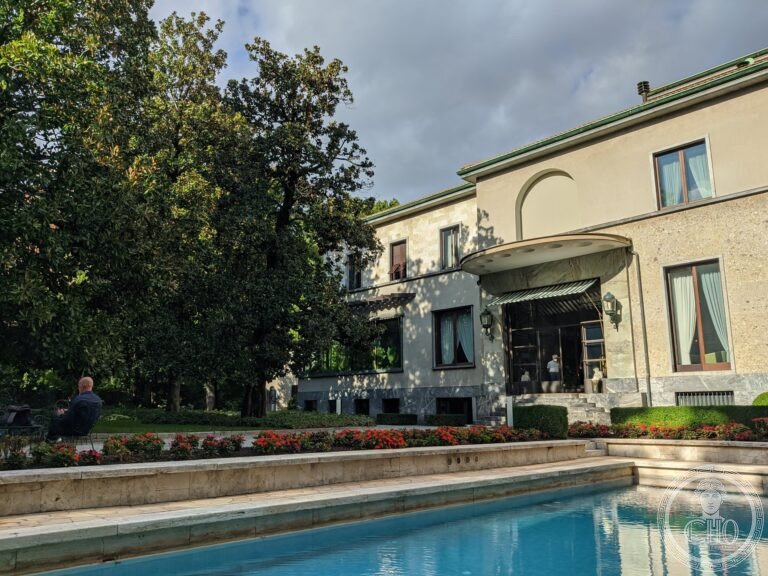
A commonplace hangs over the relationship between Italy’s Fascist regime and the visual arts: that an authoritarian state must produce a uniform, state-imposed art. The Italian record is more complicated. Unlike Nazi Germany, where the avant-garde was branded “degenerate” and banned, Italy never codified a single official style. In the early 1920s, opening a Milan exhibition of the Novecento group, Mussolini himself declared:
“It is far from my idea to encourage anything that might resemble a State art. Art belongs to the sphere of the individual. The State has only one duty: not to sabotage it, to give artists humane conditions, to encourage them from the artistic and national point of view.”
Benito Mussolini, speech at the Galleria Pesaro, Milan, 1923, as cited in the historiography of the period
We quote the sentence as a document, not a verdict. That this “freedom” ran within precise limits — of patronage, market and political allegiance — is the subject of a rich scholarship, from Ruth Ben-Ghiat to Emily Braun. The point of fact remains: through the interwar years several competing tendencies coexisted on Italian walls and in Italian salons. This article maps that plurality, keeping documented fact and historiographical interpretation explicitly apart.
The Second Futurism and aeropittura
Futurism, born in 1909 with Filippo Tommaso Marinetti’s founding manifesto, did not end with the First World War. In the Twenties and Thirties it entered a second season whose most recognisable strand was aeropittura — aeropainting: the painting of flight, speed and the aerial view. Its reference text, the Manifesto of Futurist Aeropainting, appeared in the Turin daily Gazzetta del Popolo on 22 September 1929 under the title Prospettive di volo, signed among others by Marinetti, Giacomo Balla, Fortunato Depero, Enrico Prampolini, Gerardo Dottori, Benedetta Cappa, Fillìa and Tato.
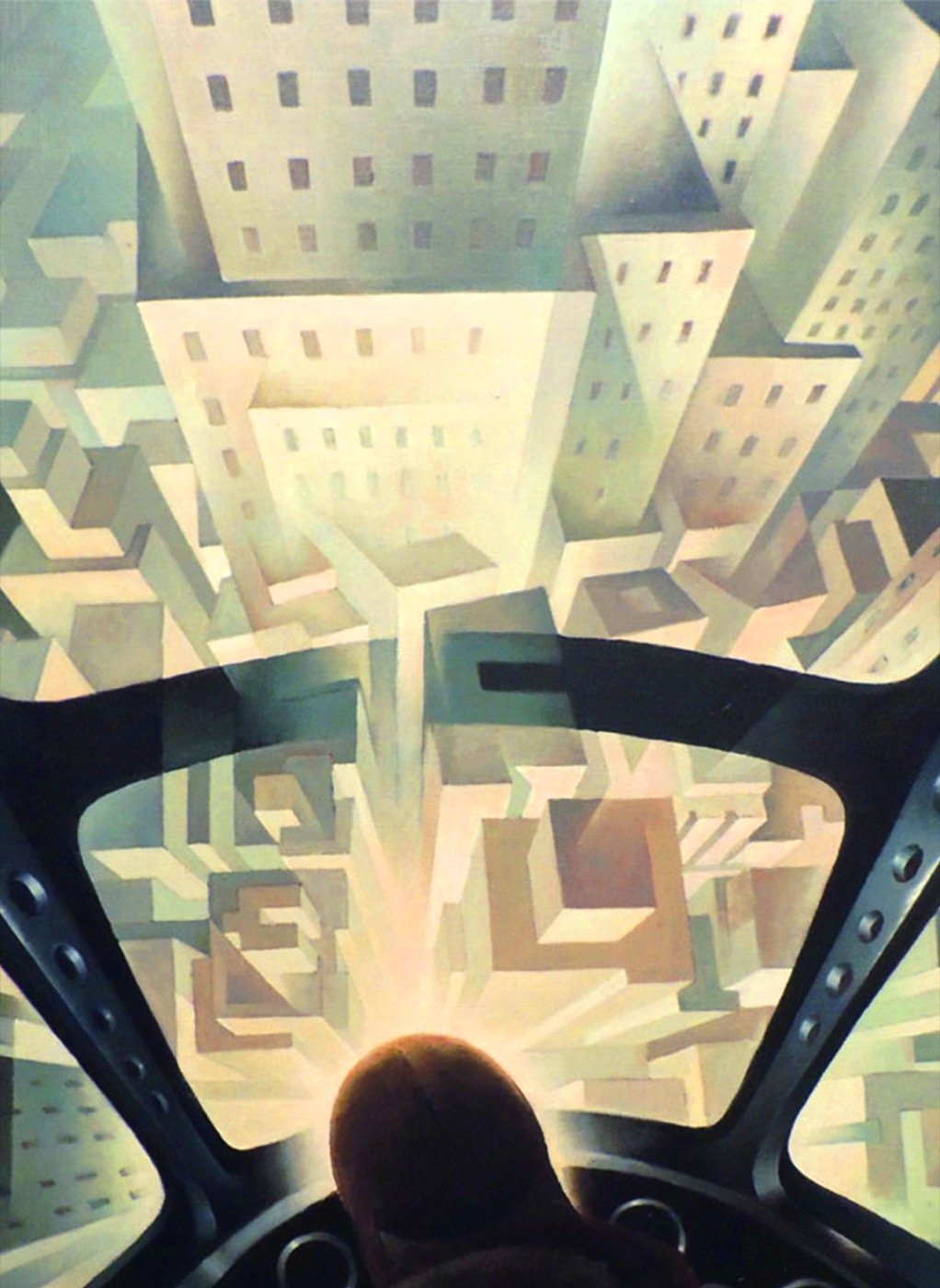
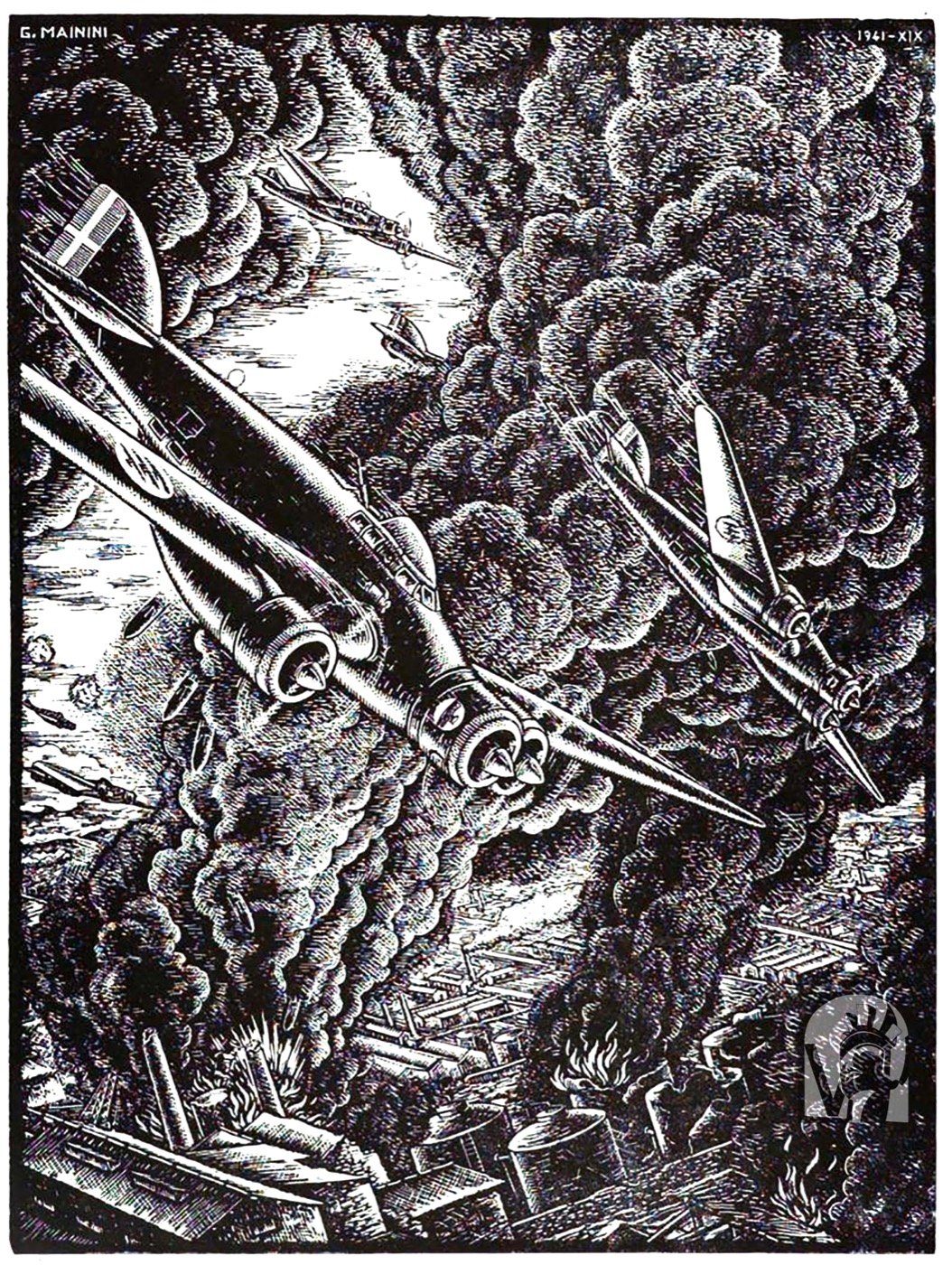
Aeropainting was a range of researches rather than one style: from Dottori’s cosmic landscapes seen from above to the vertiginous dynamics of Tullio Crali, the current’s most radical interpreter. His best-known canvas, Incuneandosi nell’abitato (1939), places the viewer inside the cockpit of an aircraft diving on a city — an experiment in perception and vertigo more than a narrative scene. Toward the end of the decade, as war approached, military aviation entered this painting with growing frequency; the works themselves document the shift.
Novecento Italiano and Margherita Sarfatti
At the opposite pole from the Futurist cult of movement stood a search for solidity and measure. The Novecento Italiano was born in Milan in 1922, when artists around the Galleria Pesaro — Anselmo Bucci, Achille Funi, Leonardo Dudreville, Emilio Malerba, Pietro Marussig, Ubaldo Oppi and Mario Sironi — gathered under the sign of what European critics called the “return to order”: after the avant-gardes, a recovery of figure, volume and the Italian tradition.
The movement’s animating force was Margherita Sarfatti, journalist and art critic, who promoted it in Italy and abroad. The great Novecento exhibition opened at the Permanente in Milan in 1926, gathering more than a hundred of the country’s best-known artists — Carrà, De Chirico, Morandi, Arturo Martini among them. Novecento was never a party nor a compulsory style; it was a strong cultural proposal that gradually lost cohesion, while Sarfatti herself, who was Jewish, was progressively marginalised and left Italy after the racial laws of 1938.
The exhibition system: Biennale, Quadriennale, syndicate shows
More than through any single style, the art of these years is best read through the system that exhibited and financed it. The Venice Biennale, founded in 1895, remained the great international showcase. Beside it the regime promoted a national review, the Quadriennale of Rome, whose first edition ran from January to August 1931 at the Palazzo delle Esposizioni: around five hundred exhibitors, and — for the first time at that scale — the possibility of applying to a jury rather than waiting for a personal invitation. The Futurists were given a room of their own.
The third channel, the most capillary, was the network of syndicate exhibitions organised from 1927 by the Fascist National Syndicate of Fine Arts at provincial, interprovincial and national level. Long neglected by scholars, these annual shows in dozens of cities are now recognised as a systematic attempt to organise the country’s entire artistic production: for most working artists, they governed access to exhibitions, public purchases and the market.
Back to the wall: Sironi and mural painting
Among the period’s programmes, the most explicit was the return to mural painting. In December 1933 Mario Sironi published the Manifesto of Mural Painting in the review La Colonna, co-signed by Massimo Campigli, Carlo Carrà and Achille Funi. Painting, the signatories argued, should leave the easel and the private market and return to the wall: a public, monumental art with a declared “social and educating function”. The individualism of “art for art’s sake”, the text stated, was over.
We report the thesis as its authors’ position — an openly regime-aligned programme, to be read as such. Real commissions followed: fresco and mosaic cycles for universities, public buildings and exhibition halls, many by Sironi himself. After 1945 this production was long removed from view or ignored; only more recent scholarship, beginning with Emily Braun’s studies, has returned to it, separating documentary and artistic value from the political story. Sironi’s graphic work is the subject of a separate piece in this magazine, Secret Sironi.
Sculpture between monument and private research
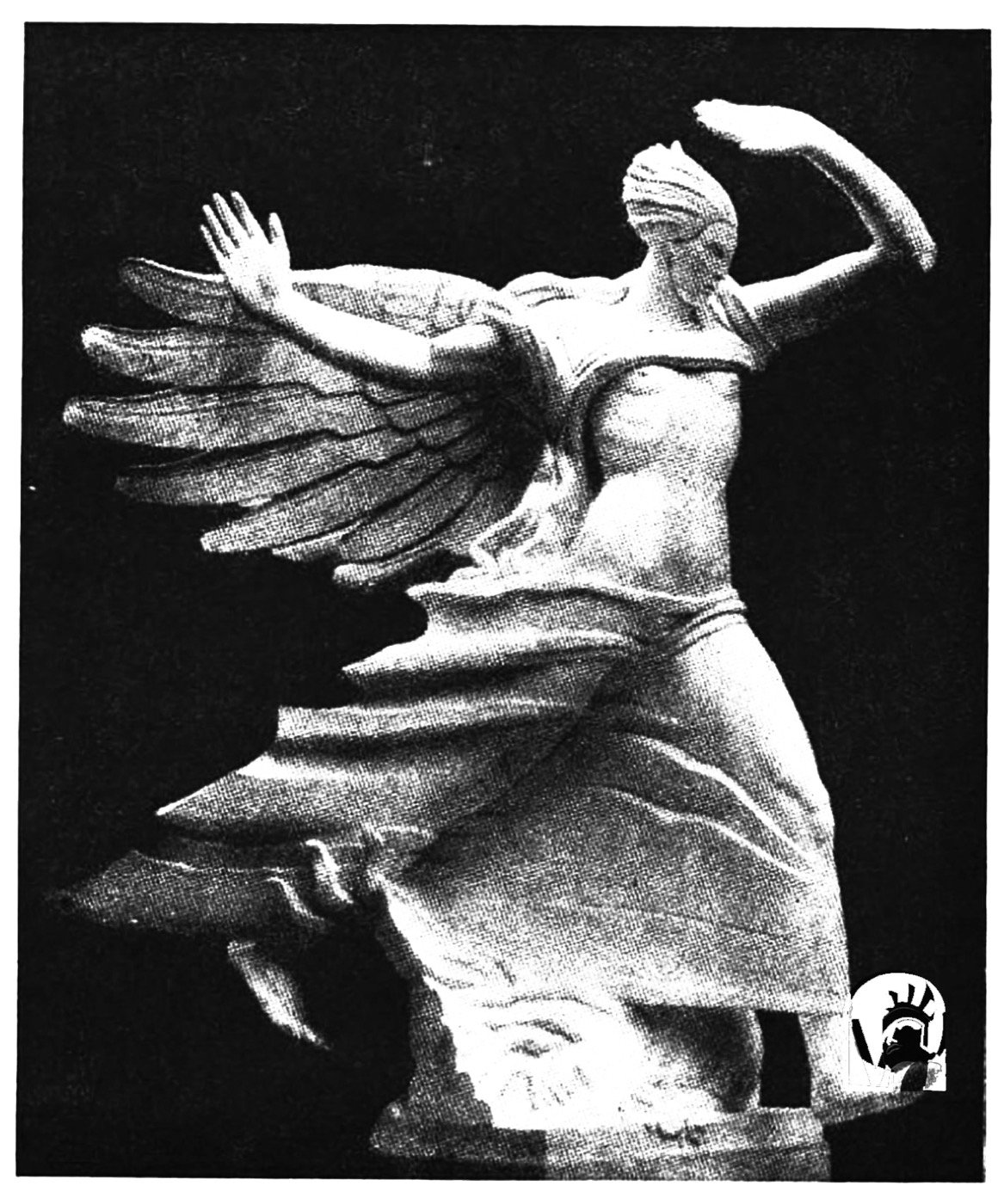
Sculpture, too, moved between two poles: the great public and commemorative statuary of monuments and squares, and a more personal, restless research that ran through the same years — Arturo Martini, and in a younger generation Marino Marini. The Genoese sculptor Eugenio Baroni (1880–1935), author of the Monument to the Thousand in Genoa, belonged to the generation caught between public commissions and private search: one of his projects, a pessimistic monument to the Italian infantryman, was rejected. Episodes like this show the period was never a compact block; alongside celebration ran tensions, refusals and researches that escaped the triumphal narrative.
After 1945
With the fall of the regime this heritage did not disappear; it entered a long shadow. Murals were covered or forgotten, compromised names left the circuit, aeropainting and Novecento were viewed with suspicion for decades, as if studying them meant rehabilitating them. Between the 1980s and the 2000s art history returned to the period with critical tools, separating analysis from apology.
Today these works sit in museums and archives that conserve and study them: the MART in Trento and Rovereto, the Galleria Nazionale d’Arte Moderna in Rome, the Museo del Novecento in Milan, the archives of the Rome Quadriennale. They belong to what scholars call difficult heritage — a heritage kept precisely because it documents a complex past. Cultural Heritage Online treats these materials as historical sources: it describes what they are, who made them and when, neither celebrating nor condemning. A companion piece documents one small town’s passage through the same years in photographs: Mogliano Veneto Between the Wars.
Sources
- S1 — Braun, Emily. Mario Sironi and Italian Modernism: Art and Politics under Fascism. Cambridge University Press, 2000. ISBN 978-0-521-48015-4.
- S2 — De Micheli, Mario. Le avanguardie artistiche del Novecento. Feltrinelli, 1986. ISBN 978-88-07-82008-3.
Spotted an error? Write to editorial@culturalheritageonline.com and we correct it the same day.