
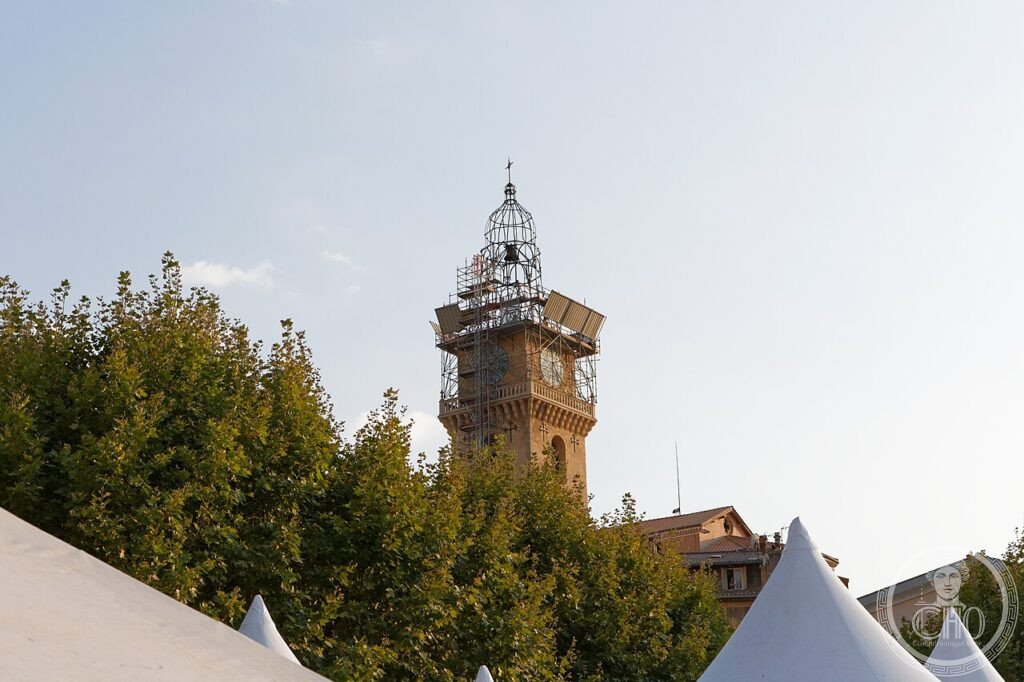
Cattedrale di Digne (1490-1500): qui riposa il vescovo che divenne il personaggio di Victor Hugo ne “I Miserabili”
Sotto l’altare maggiore riposa monsignor de Miollis, il vescovo la cui generosità leggendaria ispirò Victor Hugo per il personaggio di monsignor Myriel, il prelato che salva Jean Valjean ne “I Miserabili”.
At a glance
Digne-les-Bains’s Cathédrale Saint-Jérôme was built between 1490 and 1500 by master mason Antoine Brollion of Barcelonnette, at the initiative of Bishop Antoine de Guiramand, who from 1479 undertook to build a new church at Le Rochas, where the town’s inhabitants had regrouped around the bishop’s castle for greater security. The building only became the city’s cathedral in 1591, during the Wars of Religion, when the diocese’s original cathedral came under threat and worship was transferred to Saint-Jérôme instead. Originally a modest four-bay nave with side aisles, to which 17th-century chapels were added, the building reached its present form between 1846 and 1862, when diocesan architect Antoine-Nicolas Bailly added a further bay and gave the cathedral its current facade, deliberately styled in a 13th-century Gothic idiom despite the 19th-century date of construction. Buried beneath the high altar is Monsignor de Miollis, the historical bishop of Digne whose reputation for exceptional personal generosity and moral integrity directly inspired Victor Hugo’s creation of Monseigneur Myriel — the bishop whose act of mercy toward the ex-convict Jean Valjean sets the entire moral arc of Les Misérables in motion.
Key facts
- Construction: 1490-1500, by master mason Antoine Brollion of Barcelonnette, initiated by Bishop Antoine de Guiramand from 1479
- Cathedral status: only acquired in 1591, during the Wars of Religion, when worship was transferred here after the diocese’s original cathedral came under threat
- 19th-century facade: 1846-1862, diocesan architect Antoine-Nicolas Bailly added a bay and built the present facade in a 13th-century Gothic revival style
- Monsignor de Miollis: buried beneath the high altar; his reputation for personal generosity directly inspired Victor Hugo’s Monseigneur Myriel in Les Misérables
- Cavaillé-Coll organ: 1865, gallery organ with 21 stops across two keyboards and pedalboard, by the celebrated French organ builder Aristide Cavaillé-Coll
- Status: classified historic monument since 30 October 1906; elevated to co-cathedral status 31 July 1962
History
Digne’s medieval defensive regrouping around the bishop’s castle at Le Rochas, prompted by regional insecurity in the late 15th century, directly shaped the location and initial modest scale of the church Bishop Antoine de Guiramand commissioned there from 1479 — a building conceived first as a functional parish church for a defensively concentrated community rather than as the diocese’s principal cathedral, a status it would only acquire a century later, in 1591, when the Wars of Religion’s disruption of the original cathedral forced the transfer of episcopal worship to Saint-Jérôme instead. This origin as a secondary, initially non-cathedral church explains the relatively modest scale of the building’s original medieval fabric, later substantially enlarged through 17th-century chapel additions and, most significantly, the 1846-1862 campaign under Antoine-Nicolas Bailly that gave the cathedral both an additional structural bay and its present Gothic Revival facade — a 19th-century addition deliberately designed to evoke 13th-century Gothic forms rather than reflecting contemporary architectural fashion, part of the broader French 19th-century pattern of Gothic Revival completion and embellishment of older ecclesiastical buildings.
Monsignor de Miollis’s documented reputation for exceptional personal charity and moral seriousness during his episcopate at Digne made him sufficiently well known beyond his own diocese that Victor Hugo, researching background for Les Misérables, drew directly on accounts of the real bishop’s character and conduct in creating Monseigneur Myriel, known in the novel as Bishop of Digne — the figure whose act of forgiving and materially assisting the paroled convict Jean Valjean, despite Valjean having just stolen from him, becomes the moral turning point that redirects Valjean’s entire life and sets the novel’s central narrative arc in motion. This literary connection gives the cathedral, and specifically Miollis’s tomb beneath its high altar, a documented association with one of world literature’s most widely read and adapted novels, distinct from but complementary to the building’s own architectural and religious history.
What you see
The 19th-century Gothic Revival facade, by Antoine-Nicolas Bailly, presents the cathedral’s most visually prominent element to visitors approaching through Digne’s old town, deliberately evoking medieval Gothic forms despite its 1846-1862 construction date. Inside, the original late-15th-century nave and the 17th-century chapel additions give a sense of the building’s earlier, more modest medieval and early modern phases, while Monsignor de Miollis’s tomb beneath the high altar offers visitors the specific point of connection to the cathedral’s Les Misérables association. The 1865 Cavaillé-Coll organ, from one of 19th-century France’s most celebrated organ-building workshops, adds a further significant artistic element to the building’s later decorative history.
Practical information
- Opening hours: 1 May-30 September, Tuesday-Friday and Sunday 14:30-18:00, Saturday 10:00-12:00 and 14:30-18:00; check current-year hours before visiting outside this period
- Location: in the heart of Digne’s old town, reached through the surrounding maze of narrow streets
- Address: 355 Rue Tour de l’Église, 04000 Digne-les-Bains
Getting there
Digne-les-Bains is reachable by the scenic Train des Pignes narrow-gauge railway from Nice (approximately 3.5 hours) or by regional bus/car from Aix-en-Provence and Marseille. By car, Digne sits at the junction of several regional routes through the Alpes-de-Haute-Provence. The cathedral stands in the historic centre, walkable within the old town. GPS: 44.0921° N, 6.2360° E.
Nearby
- Cathédrale Notre-Dame du Bourg — nearby in Digne; the city’s older former cathedral, with an archaeological crypt open seasonally
- Musée Gassendi — in Digne’s centre; regional art and natural history collections
- Réserve Géologique de Haute-Provence — surrounding Digne; one of Europe’s largest geological reserves, with significant fossil sites
Sources
- Office de Tourisme Digne-les-Bains — official visitor portal (dignelesbains-tourisme.com)
- Ville de Digne-les-Bains — heritage information (dignelesbains.fr)
- Alpes de Haute Provence Tourisme — regional visitor information (tourisme-alpes-haute-provence.com)
- Wikipedia — “Cathédrale Saint-Jérôme de Digne” (fr.wikipedia.org)
Find it on the map
See this place and what’s around it →📷 Diventa un fotografo di Cultural Heritage Online
Condividi le tue foto dei luoghi: restano pubblicate con la tua firma come autore. Più vengono viste, più ti fai conoscere — e presto un concorso premierà le foto più apprezzate.
Accedi o registrati gratis per aggiungere una fotoDo you manage this place?
This page is read by travellers and heritage enthusiasts who find it on Google. Keep it accurate — and make it work for you. Free for non-profit heritage institutions.