
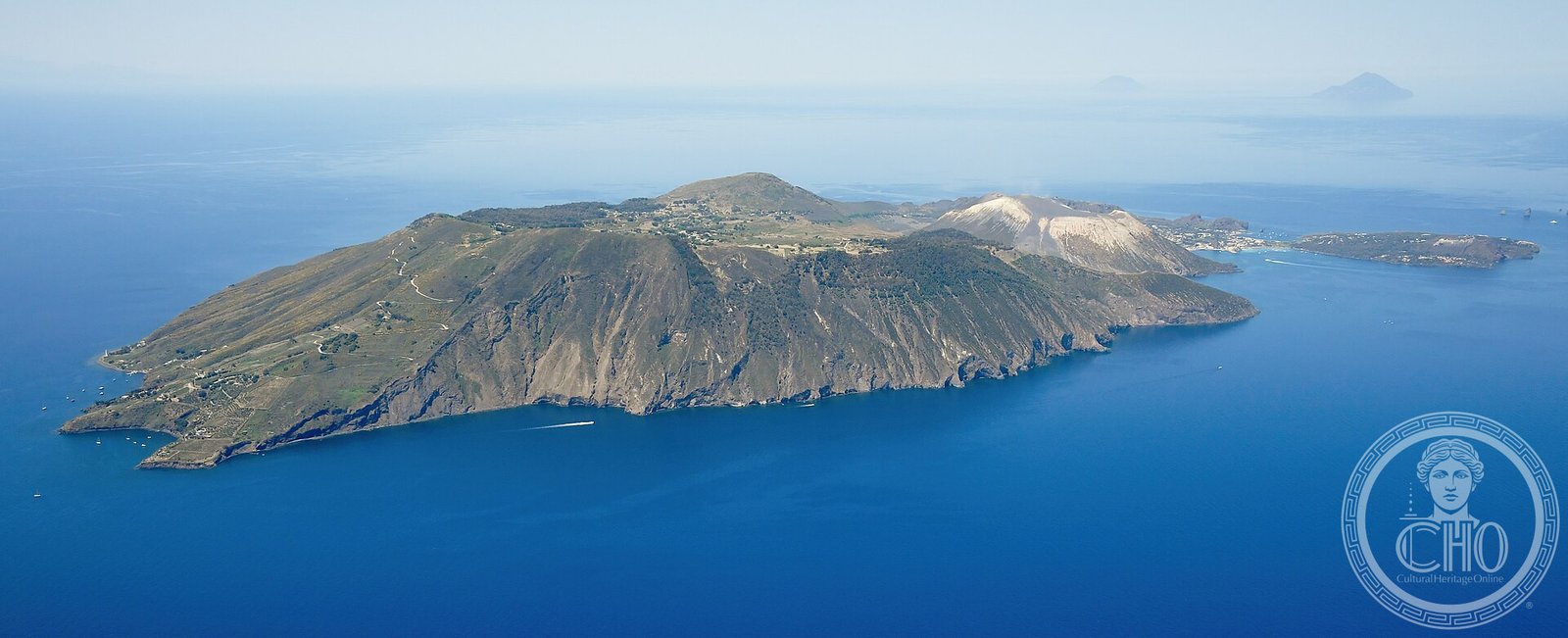
Vulcano is a small volcanic island belonging to Italy in the Tyrrhenian Sea, located at the southernmost end of the Aeolian Islands archipelago, approximately 20 km north of Sicily. The island that gave its name to the very concept of a volcano — derived from the Roman belief that its fiery interior was the forge of Vulcan, god of fire — remains one of the four active volcanoes in Italy and a world-class destination for geothermal spectacle, hot-spring bathing, and raw Mediterranean landscape.
At a glance
- Type
- Active volcanic island, part of the Aeolian Islands UNESCO World Heritage Site
- Period
- Inhabited since antiquity; active volcanic activity ongoing
- Style
- Volcanic Mediterranean landscape; Greek and Roman heritage
- Location
- Aeolian Islands, Metropolitan City of Messina, Sicily, Italy
- Coordinates
- 38.4043° N, 14.9619° E
Overview
Vulcano is a small volcanic island in the Tyrrhenian Sea, about 20 km north of Sicily, located at the southernmost end of the seven Aeolian Islands. The island contains several volcanic calderas, including one of the four active volcanoes in Italy that are not submarine. The English word “volcano” and its equivalents in many European languages derive directly from this island’s name, which the Romans associated with Vulcan’s underground forge. The island forms part of the Aeolian Islands UNESCO World Heritage Site, inscribed in 2000.
History
Greek colonists from Cnidus settled the Aeolian Islands in the sixth century BC, founding a community on the largest island (Lipari) and using Vulcano for mining of sulphur and alum — products of its geothermal activity prized throughout the ancient world. Romans inherited this tradition and propagated the myth linking the island’s subterranean fires to Vulcan’s smithy, cementing the island’s place in classical cosmology. In the nineteenth century, the Scottish entrepreneur James Stevenson operated an industrial sulphur extraction plant on the island; the last major eruption occurred in 1888–1890. In November 2021, increased volcanic activity led to the evacuation of approximately 150 people from the harbour area.
What you see
Visitors approach Vulcano through the distinctive yellow-stained Porto di Levante, where fumaroles emit sulphurous gases along the shoreline and mud pools bubble in the shadow of the Gran Cratere. The hike to the crater rim (approximately 391 m) rewards with panoramic views over the entire Aeolian archipelago on clear days. The black-sand beach at Porto di Ponente and the therapeutic mud baths at the lagoon draw bathers seeking the island’s geothermal cure tradition. The interior landscape is dramatic and almost lunar in its austerity.
Cultural significance
Vulcano’s contribution to world culture is unique: its name entered every major European language as the generic term for volcanic phenomena, making it one of the very few Italian place names to achieve this level of linguistic universality. As part of the Aeolian Islands UNESCO World Heritage Site, it is recognised as a site of outstanding universal value for volcanic geology and the ongoing geological processes it exemplifies. The island’s raw geothermal landscape continues to inspire artists, geologists, and travellers seeking the elemental forces of the natural world.
Practical information
- Address
- Vulcano, 98050 Messina ME, Italy
- Crater hike
- Allow 2–3 hours round trip; wear sturdy footwear and carry water; check current volcanic alert status before ascending
- Mud baths
- Open seasonally; sulphur stains clothing permanently — swimwear designated for mud bathing recommended
- Note
- Volcanic activity levels fluctuate; check civil protection bulletins before visiting
Getting there
Vulcano is reached by ferry and hydrofoil from Milazzo (the main gateway to the Aeolians, approximately 1 hour by hydrofoil) and from Messina, Reggio Calabria, and Naples. Regular inter-island connections also run between Vulcano and Lipari, Salina, and the other Aeolian islands. The nearest airport is Catania Fontanarossa (CTA), from which Milazzo is approximately 1.5 hours by bus or car.
Sources & resources
Find it on the map
See this place and what’s around it →📷 Become a Cultural Heritage Online photographer
Share your photos of places: they stay published under your name as the author. The more they're seen, the more you get noticed — and soon a contest will reward the most appreciated photos.
Log in or sign up free to add a photo