

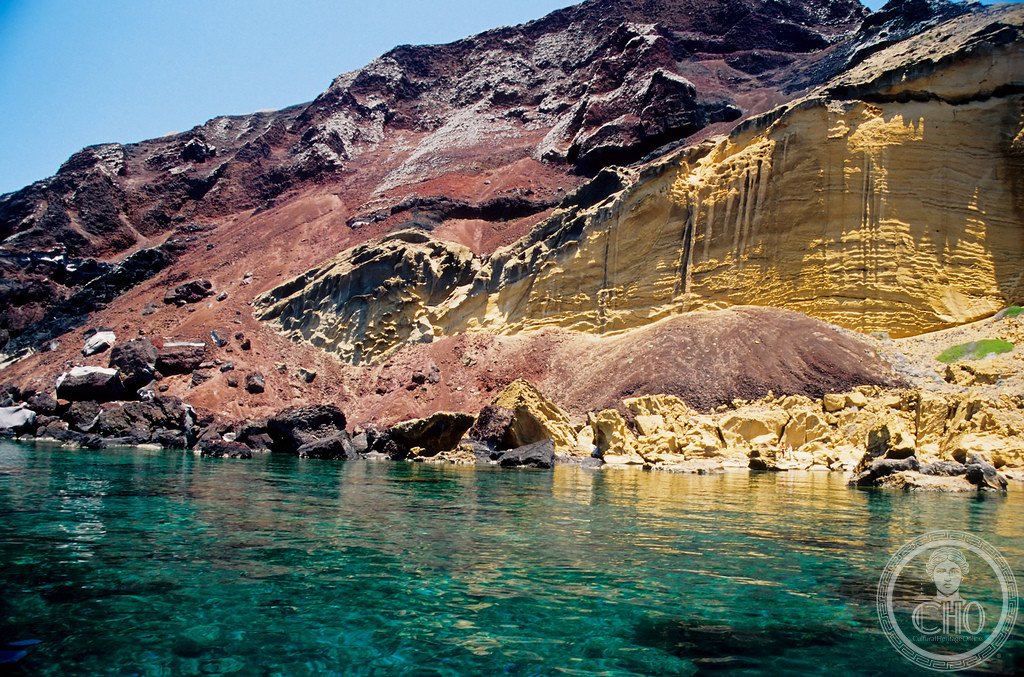
Linosa is a small volcanic island in the Pelagie Islands group, located in the Strait of Sicily between Sicily and Tunisia, forming part of the southernmost municipality of Italy. With a surface of just 5.4 square kilometres and a permanent population of fewer than 500, Linosa is one of the most remote and least-visited islands in the Italian territory, prized for its pristine marine environment, black volcanic beaches, and as a critical nesting ground for the endangered loggerhead sea turtle (Caretta caretta).
At a glance
- Type
- Volcanic island / Marine Protected Area
- Period
- Volcanic origin; formally inhabited since 1845 when the Bourbon Kingdom of the Two Sicilies established a penal colony
- Style
- Vernacular coloured houses; volcanic black beach landscape
- Location
- Pelagie Islands, Province of Agrigento, Sicily, Italy
- Coordinates
- 35.8597° N, 12.8625° E
Overview
Linosa belongs administratively to the comune of Lampedusa e Linosa, Province of Agrigento, and is part of the Riserva Naturale Orientata Isola di Linosa e Lampione — a protected natural reserve. Unlike the limestone of Lampedusa to the south, Linosa is entirely volcanic, formed by four extinct craters whose rims define the island’s topography. Its waters are considered among the clearest in the Mediterranean, with visibility exceeding 40 metres.
History
Linosa was uninhabited for most of recorded history, used only by passing fishermen and sailors as an occasional shelter. In 1845, the Bourbon King Ferdinand II established a penal agricultural colony on the island, and the first permanent settlement — a compact grid of coloured single-storey houses — dates to this period. The island’s isolation made it a repeated site of political exile and, during the 20th century, a site of internment during World War II. Following Italian unification, Linosa remained economically marginal but developed a fishing community whose descendants still populate the island today.
What you see
The village of Linosa is characterised by brightly painted low houses — each traditionally painted in a different colour combination — arranged in a Bourbon-era orthogonal grid, a striking contrast against the black volcanic rock of the surrounding landscape. The island’s three principal beaches — Pozzolana di Ponente, Pozzolana di Levante, and Faraglione — are composed of dark volcanic sand and pebbles, unique in Italy. The interior landscape of lava fields, caper plants, and extinct crater walls is explored on foot via unmarked paths. The surrounding seabed is rich with volcanic formations, gorgonian fans, and abundant marine life.
Cultural significance
Linosa is one of the most important nesting sites in the Mediterranean for the loggerhead sea turtle, with monitoring programmes active since the 1990s under the Legambiente Tartarughe project. The island’s exceptional marine biodiversity and near-pristine ecosystem have led to its inclusion in the European network of Marine Protected Areas. Its small, self-sufficient community has maintained traditional fishing practices and subsistence agriculture substantially unchanged over 150 years.
Practical information
- Address
- 92010 Linosa AG, Italy
- Access
- Ferry from Porto Empedocle (Agrigento) and Lampedusa; seasonal schedule — check Siremar/Liberty Lines official timetables
- Accommodation
- Limited; book well in advance for summer visits
- Note
- No bank or ATM on the island; bring sufficient cash
Getting there
Linosa is reached exclusively by ferry. Liberty Lines operates a service from Porto Empedocle (near Agrigento) calling at Lampedusa before Linosa; crossing times vary from 8 to 12 hours depending on the route. There is no airport on Linosa. The nearest airports are Lampedusa (LMP), reachable by ferry in 1–2 hours, and Palermo (PMO) or Catania (CTA) on the Sicilian mainland.
Sources & resources
Find it on the map
See this place and what’s around it →📷 Become a Cultural Heritage Online photographer
Share your photos of places: they stay published under your name as the author. The more they're seen, the more you get noticed — and soon a contest will reward the most appreciated photos.
Log in or sign up free to add a photo