
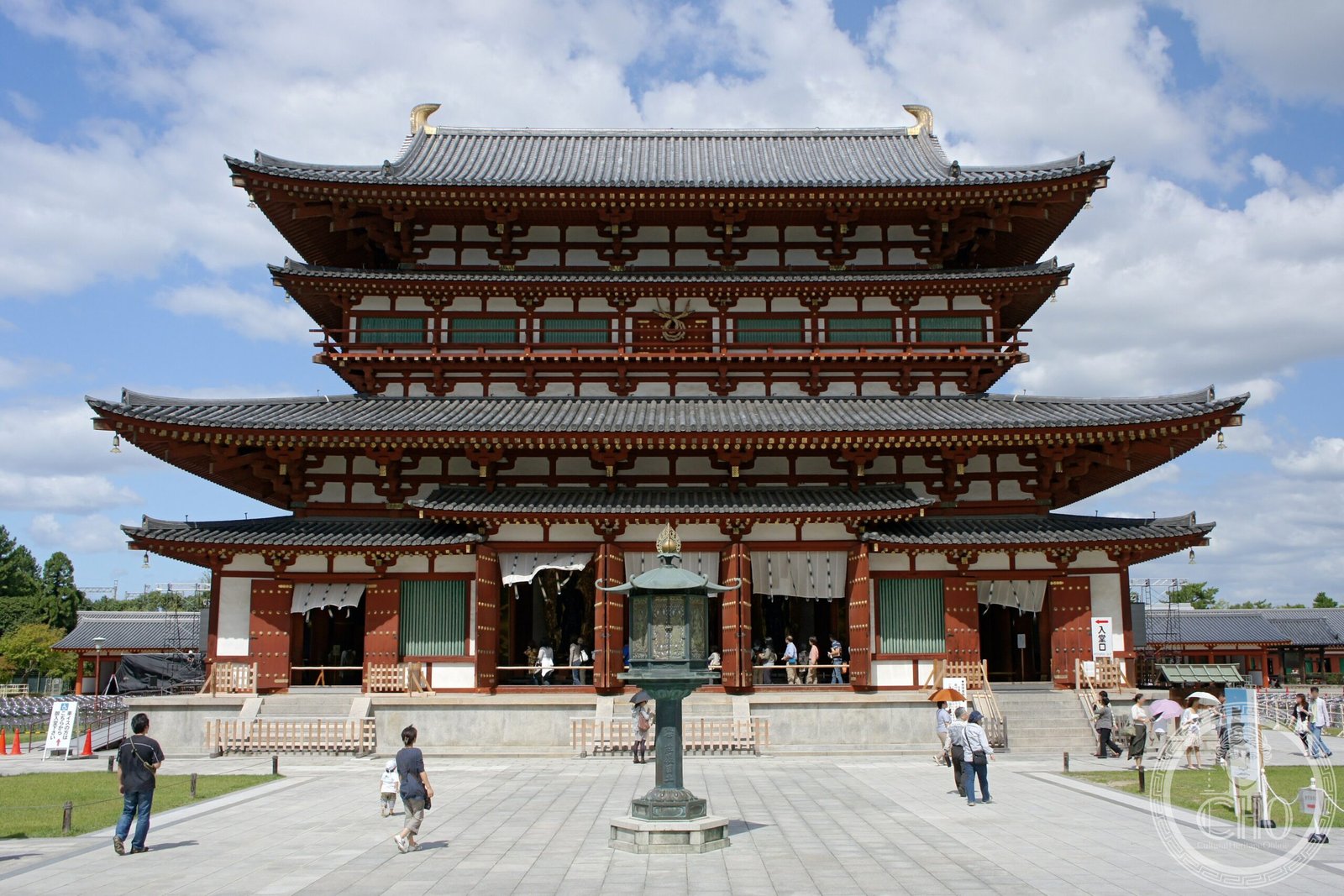
One of Japan’s most celebrated imperial Buddhist temples, Yakushi-ji served as headquarters of the Hossō school and remains a UNESCO-inscribed monument of ancient Nara’s religious and architectural legacy.
At a glance
Yakushi-ji stands as a cornerstone of Japanese Buddhist heritage. Originally constructed in the 7th century at Fujiwara-kyō, the capital relocated. The temple visible today, rebuilt in 730, is considered a meticulous reconstruction of the original design.
History
The temple was founded during Japan’s earliest Buddhist period, when the Hossō school shaped religious practice across the archipelago. Yakushi-ji numbered among Nanto’s Seven Great Temples, the most prestigious Buddhist institutions of their era.
The Medicine Buddha, Yakushi Nyorai, arrived in Japan from China in 680 and became the temple’s primary object of veneration, determining both its name and spiritual focus.
What you see
The temple complex demonstrates the architectural principles of early Buddhist Japan. Its 730 reconstruction faithfully replicated the original seventh-century design, preserving sacred geometry and spatial relationships central to Buddhist worship.
Cultural significance
Yakushi-ji embodies the integration of Buddhism into Japanese imperial culture. As headquarters of the Hossō school—one of Japan’s foundational Buddhist traditions—the temple influenced doctrine and practice for centuries. Its inclusion in the UNESCO World Heritage Site “Historic Monuments of Ancient Nara” recognizes its role in Japan’s spiritual and architectural development.
Key facts
- Country: Japan
- City: Nara
- Coordinates: 34.66835556, 135.78431111
- UNESCO World Heritage Site: Historic Monuments of Ancient Nara
- Founded: 7th century (original); rebuilt 730
- Affiliated school: Hossō Buddhism
Practical information & getting there
Yakushi-ji is accessible in Nara Prefecture. For current visiting hours, admission details, and precise directions, consult the temple’s official information or Nara Prefecture tourism resources.
Sources & resources
Find it on the map
See this place and what’s around it →📷 Become a Cultural Heritage Online photographer
Share your photos of places: they stay published under your name as the author. The more they're seen, the more you get noticed — and soon a contest will reward the most appreciated photos.
Log in or sign up free to add a photoDo you manage this place?
This page is read by travellers and heritage enthusiasts who find it on Google. Keep it accurate — and make it work for you. Free for non-profit heritage institutions.