
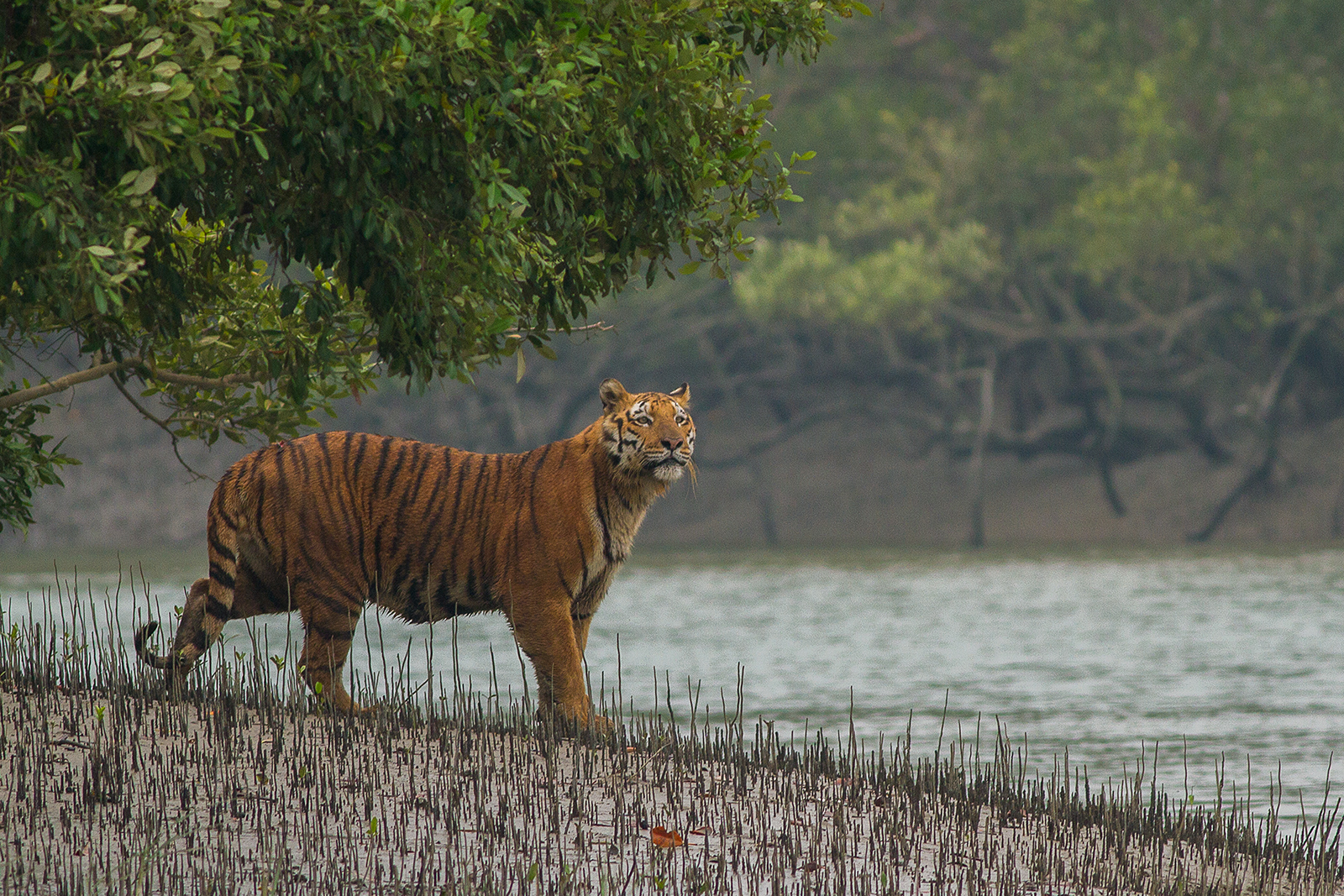
A vast mangrove wilderness spanning the Ganges Delta, the Sundarbans is one of the world’s largest reserves for the Bengal tiger and a UNESCO World Heritage Site of exceptional biodiversity.
At a glance
The Sundarbans occupies the southwestern delta region where the Ganges, Brahmaputra and Meghna rivers meet the Bay of Bengal. Dense mangrove forests dominate the landscape, interrupted by tidal creeks and channels that have long served as water routes across the Bengal region. The park extends approximately 266 kilometres from the Hugli to the Meghna river mouth, with the largest portion in Bangladesh. It remains one of Earth’s most biodiverse wetland ecosystems.
History
European forest management arrived in 1869 with the first forest division. In 1875, portions of the mangrove forests were declared reserved under the Forest Act; remaining areas followed in 1876, shifting control from civil to Forest Department administration. A formal forest division was established in 1879, headquartered in Khulna, with the first management plan written for 1893–1898.
Modern conservation designations came later. The area became the core of Sundarbans Tiger Reserve in 1973, a wildlife sanctuary in 1977, and was declared a national park on 4 May 1984. UNESCO recognition followed in 1987; the site gained Ramsar designation in 2019 and Man and Biosphere Reserve status in 2001.
What you see
The landscape is defined by its mangrove forest canopy, adapted to brackish water and tidal inundation. A complex network of tidal creeks and channels crisscrosses the delta, creating islands and waterways navigable by traditional vessels and modern boats alike. The terrain is water-logged and difficult to traverse on foot, reflecting millennia of fluvial deposition and monsoon cycles.
Cultural significance
The Sundarbans represents a frontier between human settlement and pristine wilderness. In 1911 it was described as “unexamined waste country,” excluded from census and largely unexploited. Today it stands as a global symbol of mangrove conservation and apex predator protection. The Bengal tiger’s survival depends critically on this reserve, making it a flagship site for international wildlife preservation efforts.
Key facts
- Location: West Bengal, India; Ganges Delta
- Coordinates: 21.838°N, 88.8852°E
- UNESCO World Heritage Site: inscribed 1987
- Ramsar Site: designated 2019
- Man and Biosphere Reserve: designated 2001
- National Park status: declared 1984
- Approximate extent: 266 kilometres (165 miles) east to west
Practical information & getting there
The Sundarbans are best accessed by boat from the towns of Khulna (Bangladesh) or Kolkata and Sundarbans Gateway (India). Multiple rivers and creeks offer water routes; guided tours are recommended due to tiger presence and the landscape’s complexity. The reserve operates year-round, though seasonal tides affect accessibility. Contact the Forest Department in West Bengal or local tourism operators for current conditions and permits.
Sources & resources
Find it on the map
See this place and what’s around it →📷 Become a Cultural Heritage Online photographer
Share your photos of places: they stay published under your name as the author. The more they're seen, the more you get noticed — and soon a contest will reward the most appreciated photos.
Log in or sign up free to add a photo