
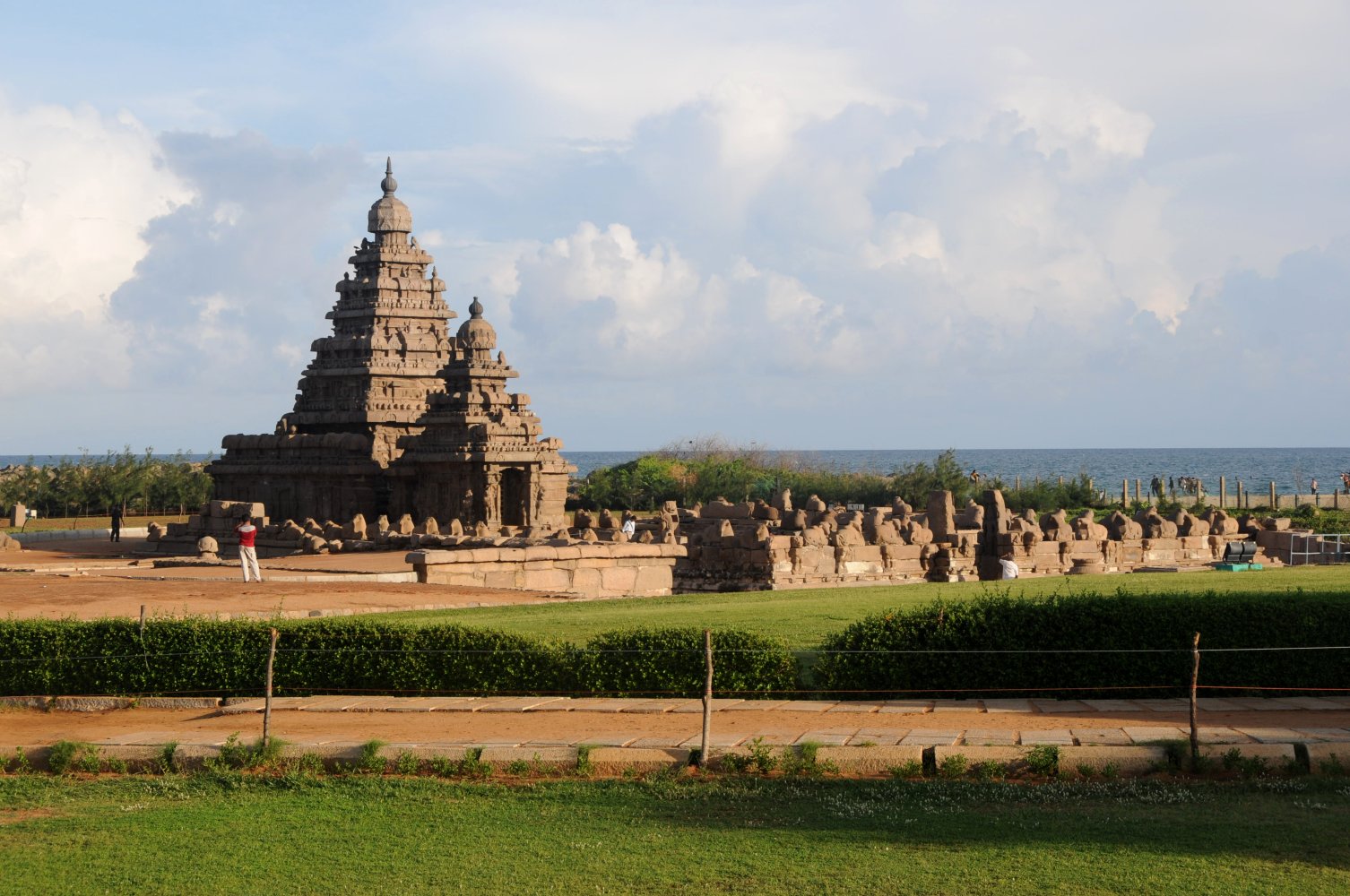
A UNESCO-protected cluster of 40 Hindu temples and rock reliefs carved during the Pallava dynasty, featuring one of the world’s largest open-air stone narratives and rare mandapa viharas inscribed in multiple Indian scripts.
At a glance
Mahabalipuram is a coastal shrine town 60 kilometres south of Chennai, home to an extraordinary assemblage of monolithic temples, cave sanctuaries, and bas-reliefs spanning the 6th through 8th centuries. The monuments showcase the architectural ambitions of the Pallava dynasty during its regional dominance.
History
Built under Pallava rule, the monuments span several phases. The ratha temples—free-standing monolithic processional chariots—were constructed between 630 and 668. Stone-cut temples followed between 695 and 722. Archaeological evidence indicates occupation and religious activity dating to the 6th century and earlier.
Colonial-era writers called the site the “Seven Pagodas.” After 1960, the monuments underwent systematic restoration and have since been managed by the Archaeological Survey of India.
What you see
The site comprises four main categories of structures. Ratha temples are carved from single granite boulders in the form of processional chariots. Mandapa viharas are cave temples with sculpted interior reliefs and detailed inscriptions in Shaivite, Shakti, Vaishnava, and other Hindu philosophical traditions, recorded in multiple Indian languages and scripts.
The most celebrated work is the Descent of the Ganges—also called Arjuna’s Penance—one of the largest open-air rock reliefs known. Stone-cut temples complete the ensemble, demonstrating sophisticated quarrying and architectural planning across generations.
Cultural significance
Mahabalipuram preserves a rare window into Pallava craftsmanship and religious patronage. The multilingual inscriptions reveal the intellectual and spiritual networks of early medieval South India. The scale and technical mastery of the rock reliefs document the evolution of Indian sculptural tradition and the enduring influence of epics like the Mahabharata on sacred art.
Key facts
- Country: India
- Location: Tamil Nadu, Coromandel Coast, Bay of Bengal
- Coordinates: 12.6167°N, 80.1917°E
- Period: 6th–8th century CE
- Monuments: approximately 40 temples and religious structures
- UNESCO World Heritage Site: yes
- Management: Archaeological Survey of India (since 1960)
Practical information & getting there
Mahabalipuram lies 60 kilometres south of Chennai via the coastal highway. The site is open to visitors year-round. For current hours, admission fees, and guided-tour arrangements, consult local tourism authorities or the Archaeological Survey of India website.
Sources & resources
Find it on the map
See this place and what’s around it →📷 Become a Cultural Heritage Online photographer
Share your photos of places: they stay published under your name as the author. The more they're seen, the more you get noticed — and soon a contest will reward the most appreciated photos.
Log in or sign up free to add a photo