
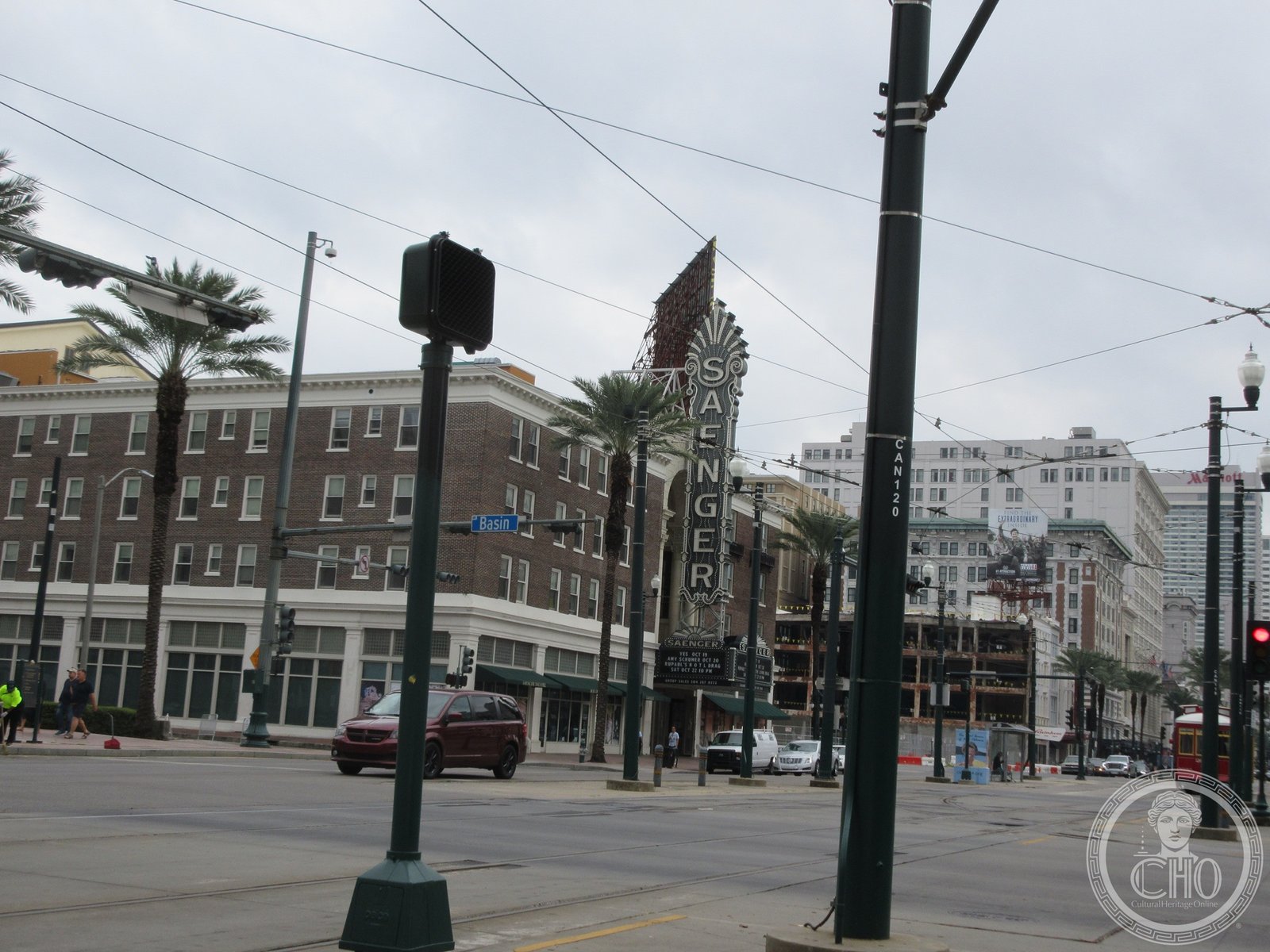
One of the grandest movie palaces of the American South, the Saenger Theatre opened in 1927 with 4,000 seats and an Italian Baroque interior that turned the experience of going to the cinema into something approaching the divine — and has been meticulously restored after Hurricane Katrina to reclaim its place as New Orleans’s premier performing arts venue.
At a glance
The Saenger Theatre at 1111 Canal Street in downtown New Orleans was opened in 1927 for the Saenger Amusement Company, a New Orleans-based theater chain. Designed by architect Emile Weil in an atmospheric style that drew on Italian Baroque ornament and the simulated-sky interior concept, the Saenger seated approximately 4,000 at its opening — making it one of the largest and most opulent movie palaces in the South. It is a National Historic Landmark and, following a major restoration after Hurricane Katrina, operates today as New Orleans’s most significant historic performing arts venue.
Key facts
- Address: 1111 Canal Street, New Orleans, LA 70112
- Opened: 1927
- Architect: Emile Weil
- Style: Atmospheric / Italian Baroque
- Original capacity: approx. 4,000 seats
- National Historic Landmark: Yes
- Current use: Concert venue, Broadway touring productions, special events
- Restoration: Reopened 2013 after Hurricane Katrina damage
History
The Saenger Amusement Company was a New Orleans enterprise that grew into one of the major regional theater chains of the early 20th century, operating venues across the Gulf South. The company commissioned Emile Weil to design a flagship theater in New Orleans that would surpass anything the city had yet seen in scale, ornament, and technological sophistication. Weil produced a building that met that brief with remarkable confidence — a Canal Street palace that combined Italian Baroque surface ornamentation with the atmospheric theater concept, creating an interior in which classical architecture and simulated sky worked together to produce an environment of total theatrical immersion.
When the Saenger opened in 1927, New Orleans was a city at the center of American musical culture — the birthplace of jazz was also a city that had long valued theatrical entertainment at a high level. The Saenger gave this tradition a building worthy of it: a 4,000-seat house whose interior ornamentation, scale, and technical equipment placed it in the first rank of American entertainment venues.
Hurricane Katrina in August 2005 caused severe flooding damage to the Saenger, closing it for nearly a decade. A major restoration campaign, completed in 2013, returned the building to use with its essential architectural character preserved — the atmospheric ceiling, the ornamental plasterwork, and the sense of Italian Baroque grandeur that Weil had created in 1927. The National Historic Landmark designation recognizes both the architectural quality and the cultural significance of the building.
What you see
The Saenger’s Canal Street facade presents a formal Italian Baroque exterior — pilasters, arched windows, and sculptural ornament organized in the classical compositional grammar that the atmospheric theater type often employed for its exterior, reserving the full exuberance of ornamental invention for the auditorium interior. The entrance lobby sets the register: richly decorated surfaces, architectural scale, and the suggestion of a different world beyond the street.
In the auditorium, the atmospheric concept is fully deployed. The ceiling is painted and lit to simulate an Italian courtyard seen at twilight, with architectural fragments — columns, towers, parapets — visible against a darkening sky that appears to deepen and recede overhead. The walls carry ornamental panels and niches whose architectural detail is derived from Italian Renaissance sources. The overall effect is immersive and deliberate: the architecture works to suspend the audience’s awareness of the real world and replace it with a fabricated environment of historical grandeur and theatrical potential.
Practical information
- Current programming: Broadway touring productions, major concerts, special events; check the Saenger’s official calendar
- Tickets: Available through the venue’s box office and major ticket platforms
- Tours: Public tours available on select dates
- Canal Street: The theater is on Canal Street, New Orleans’s widest boulevard, at the edge of the French Quarter
Getting there
The Saenger Theatre is at 1111 Canal Street in downtown New Orleans, at the intersection of Canal and North Rampart Streets — the boundary between the French Quarter and the Tremé. Louis Armstrong New Orleans International Airport (MSY) is about 12 miles west. The Canal Street streetcar runs in front of the theater and connects to the rest of the transit network. The French Quarter, Superdome, and New Orleans Museum of Art are all accessible from this central location.
Nearby
- French Quarter — the historic heart of New Orleans, beginning directly across Canal Street to the south
- Tremé — America’s oldest African American neighborhood, immediately to the north
- New Orleans Museum of Art — major regional museum in City Park, accessible by streetcar north on Canal Street
Sources
- Wikipedia, “Saenger Theatre (New Orleans)” — architect, date, capacity, NHL designation, Katrina damage and restoration
- National Historic Landmark nomination — architectural and cultural significance
- New Orleans Historic District Landmarks Commission — designation records
- Canal Street Heritage District documentation — context and architectural survey
Find it on the map
See this place and what’s around it →Record researched and written by Luigi De Marchi for Cultural Heritage Online, 2026.
📷 Become a Cultural Heritage Online photographer
Share your photos of places: they stay published under your name as the author. The more they're seen, the more you get noticed — and soon a contest will reward the most appreciated photos.
Log in or sign up free to add a photoIs this page about you?
This page is read by travellers and heritage enthusiasts who find it on Google. Tell us how you are connected to this place and we will take it from there.