
For six decades, the Paradise offered Bronx moviegoers the most extravagant Italian palazzo illusion John Eberson could conjure: a theater where the ceiling was a Mediterranean night sky and the walls were Roman garden ruins — every seat a box at the opera, price of admission twenty-five cents.
At a glance
The Loew’s Paradise Theatre at 2403 Grand Concourse opened in 1929 as one of a group of large Loew’s theaters built in the New York metropolitan area in the late 1920s. The architect was John Eberson, the Austrian-born designer who invented and perfected the “atmospheric theater” concept: a movie palace whose auditorium ceiling was painted and lit to simulate a night sky, with stars and drifting clouds, while the walls reproduced the ruins of an Italian Renaissance villa or Spanish courtyard. The Paradise’s theme was Italian Baroque, with elaborate plasterwork, statuary, and fountain features completing the illusion of sitting in an open-air courtyard under the stars. For Bronx audiences in the late 1920s and 1930s, it was the most palatial experience available for the price of a movie ticket. The building is listed on the National Register of Historic Places.
Key facts
- Address: 2403 Grand Concourse, Fordham neighborhood, Bronx, New York City
- Opened: 1929
- Architect: John Eberson
- Style: Atmospheric theater (Italian Baroque theme)
- Original capacity: Approximately 4,000 seats
- Current status: Converted to apartment building (1994); exterior largely intact
- Historic designation: National Register of Historic Places
History
John Eberson (1875–1954) was born in Austria and emigrated to the United States as a young man, eventually developing the atmospheric theater concept that became one of the most distinctive architectural innovations of the American movie palace era. The premise was simple and brilliantly theatrical: instead of decorating a theater interior in the manner of a conventional Baroque or Renaissance hall, Eberson would make the auditorium itself suggest an outdoor space — a Spanish courtyard, an Italian villa garden, an Aztec temple — with a ceiling that functioned as a fake sky, complete with projected stars and a cloud machine that drifted cumulus formations across the blue overhead. Audiences arrived from the Bronx streets and found themselves, temporarily, somewhere else entirely.
The Paradise, with its Italian Baroque theme, was among Eberson’s most ambitious executions of the concept. The Loew’s Corporation was his client, and the theater was part of a group of large metropolitan Loew’s houses built in the late 1920s that set a new standard for movie palace scale in the New York area. The Grand Concourse had been completed as a major Bronx boulevard in 1909, modeled on Parisian precedents, and by the 1920s it was lined with some of the most prestigious apartment buildings in the borough. The Paradise anchored a stretch of the Concourse that was, in the late 1920s and 1930s, one of the most architecturally ambitious commercial streets in New York City.
The theater served as a first-run movie house through the mid-twentieth century before declining attendance led to subdivision in 1972 and eventual closure in 1994. The building was then converted to apartment use, a process that altered the famous interior. The exterior, including the lobby entrance and the principal facade on the Concourse, remains largely intact and is recognizable as a Loew’s-era movie palace. The building’s National Register listing acknowledges both its architectural significance and its place in the cultural history of the Bronx.
What you see
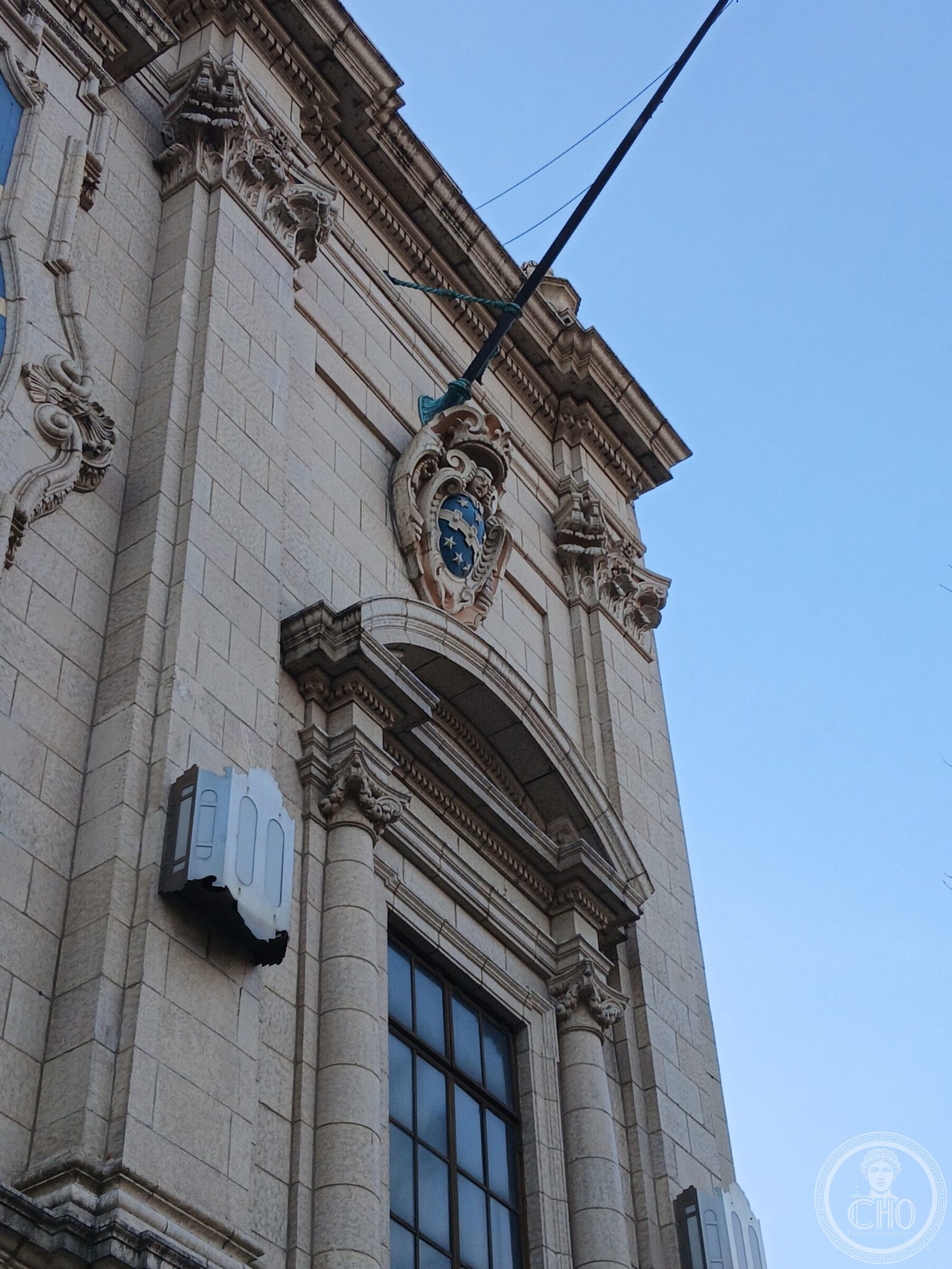
The facade on Grand Concourse is a layered Italian Baroque composition in cream-colored terra cotta, with ornamental cartouches, pilasters, and arched window forms rising to a decorative parapet. The entrance bay is elaborately framed, with the characteristic Loew’s signage positions incorporated into the design. The facade retains most of its original ornamental character despite later alterations to the building’s use.
The Grand Concourse itself provides the ideal context for the building: the wide, tree-lined boulevard that runs the length of the Bronx from Manhattan to Yonkers is flanked by a remarkable concentration of Art Deco apartment buildings from the 1920s and 1930s, many of them in pristine condition. Walking the Concourse near the Paradise is a survey of the architectural ambitions of a borough that expected to be taken seriously, and the theater is among the most articulate expressions of that ambition. The surviving lobby spaces, where accessible, preserve some of the ornamental vocabulary that once extended through the full interior.
Practical information
- Current status: Residential apartment building; interior not publicly accessible
- Exterior: Freely visible from Grand Concourse sidewalk at all times
- Best approach: Walk the Grand Concourse from Fordham Road northward or southward to see the building in its Art Deco boulevard context
- Historic designation: National Register of Historic Places
Getting there
Loew’s Paradise Theatre is at 2403 Grand Concourse in the Fordham neighborhood of the Bronx. The nearest subway stations are Fordham Road (4 and D trains) at Jerome Avenue and Fordham Road, about three blocks west of the theater. The D train also stops at Kingsbridge Road (about four blocks north) and at 183rd Street (about four blocks south), all with easy walking connections to the Concourse. From Manhattan, the 4 or D trains to Fordham Road take approximately 30-40 minutes. The Bronx Museum of the Arts is a few blocks south on the Concourse.
Nearby
- Art Deco apartment buildings, Grand Concourse — the boulevard is lined with some of the finest Art Deco apartment architecture in New York, particularly in the blocks between Fordham Road and Mosholu Parkway
- Bronx Museum of the Arts (1961/renovated 2006) — the Bronx’s main contemporary art museum, a few blocks south on the Concourse at 165th Street
- Poe Cottage, Poe Park — the preserved cottage where Edgar Allan Poe lived from 1846 to 1849, a short walk north on the Concourse at Kingsbridge Road
- New York Botanical Garden — one of the great botanical gardens of the world, accessible by Metro-North to the Botanical Garden station or by the B or D train to Bedford Park Boulevard
Sources
- Wikipedia: Loew’s Paradise
- National Register of Historic Places nomination documentation
- New York City Landmarks Preservation Commission files
- Gray, Christopher, “Streetscapes: Loew’s Paradise”, New York Times
Find it on the map
See this place and what’s around it →📷 Become a Cultural Heritage Online photographer
Share your photos of places: they stay published under your name as the author. The more they're seen, the more you get noticed — and soon a contest will reward the most appreciated photos.
Log in or sign up free to add a photoIs this page about you?
This page is read by travellers and heritage enthusiasts who find it on Google. Tell us how you are connected to this place and we will take it from there.