
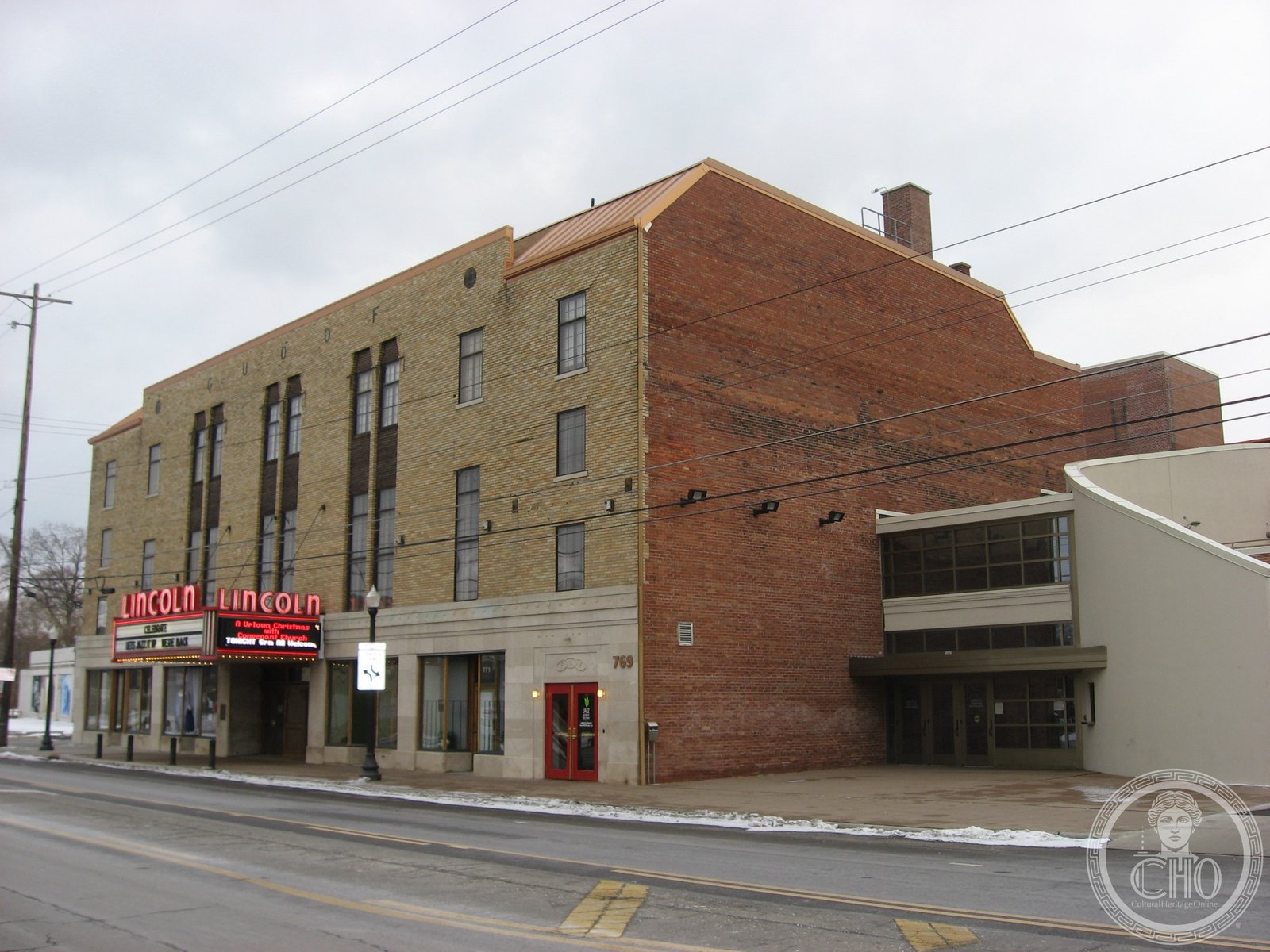
Built in 1928 to serve Columbus’s African American community during the era of segregation, the Lincoln Theatre is now a restored Art Deco landmark at the heart of the King-Lincoln-Bronzeville cultural district.
At a glance
The Lincoln Theatre stands at 769 East Long Street in Columbus, Ohio—in the King-Lincoln-Bronzeville neighborhood that was, during the first half of the 20th century, the center of Black cultural life in the city. Built in 1928 and designed with a clean Art Deco façade, the Lincoln served audiences excluded from the segregated downtown theaters, hosting jazz and blues luminaries alongside local vaudeville performers. After years of decline, the theater was fully restored and reopened in 2009 as a performing arts venue and cultural hub for the neighborhood’s ongoing revitalization.
Key facts
- Opened: 1928
- Address: 769 East Long Street, Columbus, Ohio
- Style: Art Deco
- Original audience: African American community (segregation era)
- Listed on: National Register of Historic Places
- Restored and reopened: 2009
- Current operator: Short North Stage / community performing arts venue
History
Columbus in 1928 was a rapidly growing Midwestern city whose downtown theater district — dominated by the Ohio Theatre (1928) and the Palace Theatre (1926) — was effectively closed to Black audiences. The King-Lincoln-Bronzeville neighborhood on East Long Street developed in response: a self-contained commercial and cultural district serving the African American community with its own restaurants, hotels, barbershops, and theaters. The Lincoln Theatre was the neighborhood’s premier entertainment venue, presenting touring jazz and blues acts in addition to vaudeville and film.
The theater’s Art Deco design—geometric terracotta ornament, a vertical marquee, a clean façade with strong horizontal banding—reflected the progressive aesthetic that African American architects and business owners embraced in the 1920s as an expression of modernity and civic ambition. Among the performers who appeared at the Lincoln were figures central to the development of American jazz and blues during the Great Migration era. As desegregation and urban renewal reshaped Columbus in the second half of the 20th century, the neighborhood and theater declined. A sustained preservation and restoration effort, completed in 2009, returned the Lincoln to service as a cultural asset for both the neighborhood and the city.
What you see
The East Long Street façade is a disciplined Art Deco composition: terracotta ornament in geometric floral patterns frames the entrance, a vertical marquee projects over the sidewalk, and horizontal courses of contrasting masonry create the characteristic Deco interplay of vertical thrust and horizontal restraint. The design is more sober than the Spanish Colonial or atmospheric theaters of the era—it reads as the statement of a community that chose to invest in civic permanence rather than escapist fantasy.
Inside, the auditorium retains elements of the 1928 interior—plasterwork side panels, the curved balcony front, and the proportions of the original proscenium. The restoration updated mechanical systems and seating while preserving the decorative fabric. The lobby is compact and well-detailed, with period tilework and metalwork that survived the long decades of underuse.
Practical information
- Open for ticketed performances and community events; check venue schedule
- Part of the King-Lincoln-Bronzeville cultural district on East Long Street
- Free street parking on Long Street; neighborhood lots nearby
- Accessible entrance on East Long Street
- The neighborhood is best experienced in combination with the nearby Mount Vernon Avenue commercial corridor
Getting there
The Lincoln Theatre is at 769 East Long Street in Columbus’s Near East Side, approximately 1 mile east of the Ohio Statehouse. By car, take I-670 to Exit 4B (Fourth Street) and head east on Long Street. The COTA bus system serves the East Long Street corridor. John Glenn Columbus International Airport (CMH) is approximately 7 miles east via I-670. Amtrak service to Columbus is not available; the nearest Amtrak stations are Cincinnati (~100 miles southwest, Cardinal route) and Cleveland (~145 miles north).
Nearby
- Ohio Theatre — the 1928 Spanish Baroque theater on East Broad Street, restored and operated by CAPA, approximately 1 mile west; the premiere performing arts venue of Columbus and a National Historic Landmark
- Palace Theatre — the 1926 Thomas Lamb–designed picture palace on West Broad Street, also operated by CAPA, approximately 1 mile west
- Mount Vernon Avenue corridor — the historic commercial spine of the King-Lincoln-Bronzeville neighborhood, one block north of Long Street; undergoing continued revitalization with galleries, restaurants, and community businesses
Sources
- National Register of Historic Places nomination, Lincoln Theatre, Columbus, Ohio
- Columbus Landmarks Foundation, King-Lincoln-Bronzeville historic documentation
- Ohio History Connection, statewide historic theater records
- Wikipedia: Lincoln Theatre (Columbus, Ohio)
Find it on the map
See this place and what’s around it →Record researched and written by Luigi De Marchi for Cultural Heritage Online, 2026.
📷 Become a Cultural Heritage Online photographer
Share your photos of places: they stay published under your name as the author. The more they're seen, the more you get noticed — and soon a contest will reward the most appreciated photos.
Log in or sign up free to add a photoIs this page about you?
This page is read by travellers and heritage enthusiasts who find it on Google. Tell us how you are connected to this place and we will take it from there.