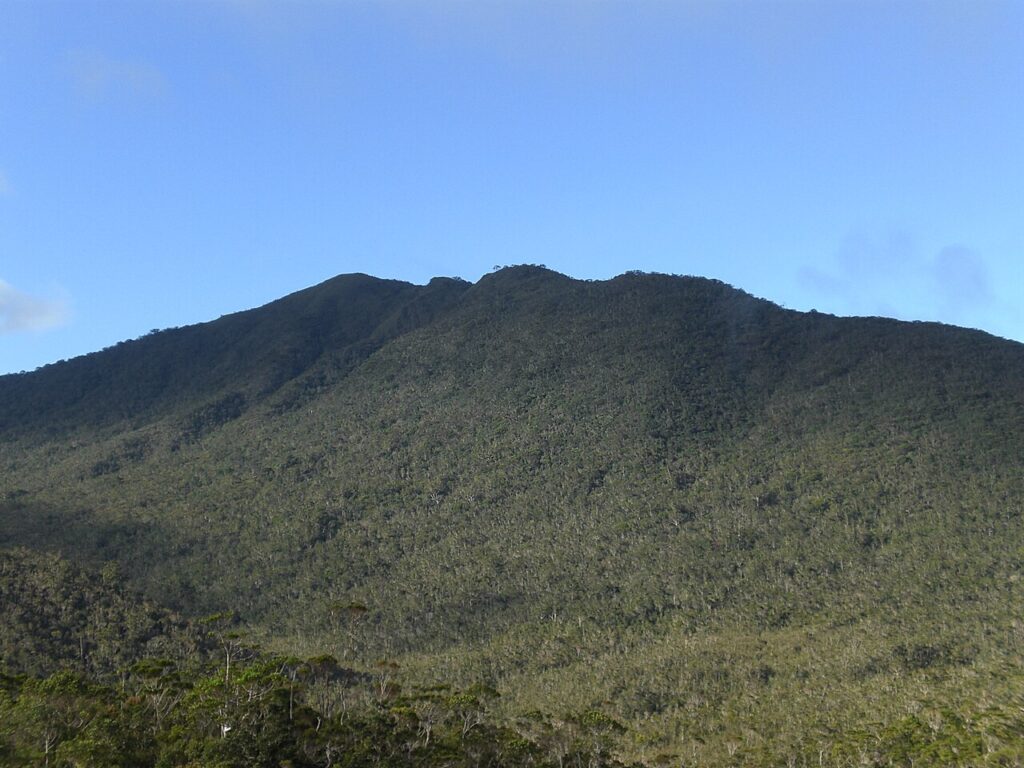
The nearest World Heritage site to Mount Hamiguitan Range Wildlife Sanctuary is the Baroque Churches of the Philippines, 615 km away in a straight line. Tubbataha Reefs Natural Park lies 738 km away, and Puerto-Princesa Subterranean River National Park is 885 km distant. Mount Hamiguitan itself is a natural property in Davao Oriental, Philippines, inscribed in 2014 for its complete mountain ecosystem and exceptional endemism.
The World Heritage sites within reach of Mount Hamiguitan
The distances below are straight lines between the reference points that UNESCO publishes for each property, measured to the nearest component of a serial site. They show what is geographically close, not the travel time by road or sea.
| Site | Country | Distance | Inscribed | Type |
|---|---|---|---|---|
| Baroque Churches of the Philippines | Philippines | 615 km | 1993 | Cultural |
| Tubbataha Reefs Natural Park | Philippines | 738 km | 1993 | Natural |
| Puerto-Princesa Subterranean River National Park | Philippines | 885 km | 1999 | Natural |
| Rock Islands Southern Lagoon | Palau | 905 km | 2012 | Mixed |
| Kinabalu Park | Malaysia | 1055 km | 2000 | Natural |
Read together, these sites trace the archipelago’s natural and colonial heritage. The three closest are all in the Philippines, representing the country’s most significant expressions of Spanish Baroque architecture and its most pristine coral and karst ecosystems. The two most distant, in Palau and Malaysian Borneo, extend that picture across the Sulu Sea, where similar marine and mountain environments have produced distinct World Heritage values.
A mountain ridge with five forest habitats
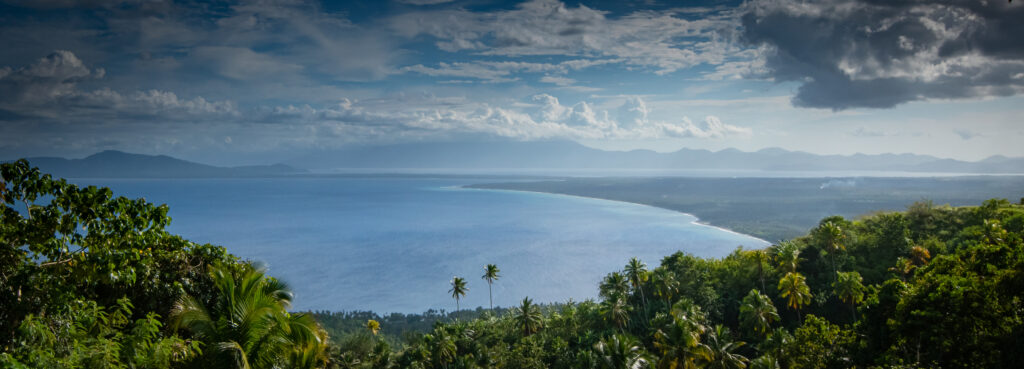
Mount Hamiguitan Range Wildlife Sanctuary forms a north-south mountain ridge on the Pujada Peninsula, within a corridor of high biodiversity in eastern Mindanao. Its elevation ranges from 75 m to 1,637 m above sea level, a difference that creates a series of ecosystems shaped by dissimilar soil and climate conditions. The property is home to 1,380 species, 341 of which are endemic to the Philippines.
The site’s vertical zonation begins with an agro-ecosystem and remnants of dipterocarp forest in the lower elevations, which house some 246 plant species. Above that, the dipterocarp forest ecosystem between 420 m and 920 m is characterised by large trees and supports 418 plant and 146 animal species. Higher still, montane and mossy forests shelter numerous mosses, lichens and epiphytes, as well as the Hamiguitan hairy-tailed rat and the Philippine pygmy fruit bat.
Eight species found nowhere else on Earth
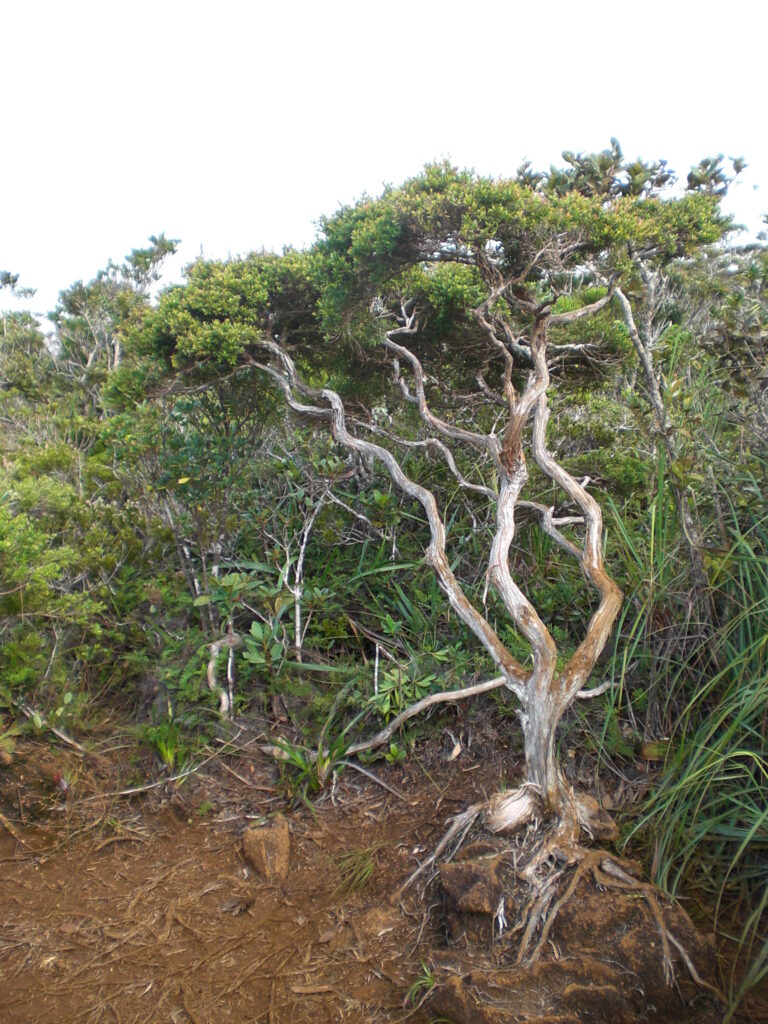
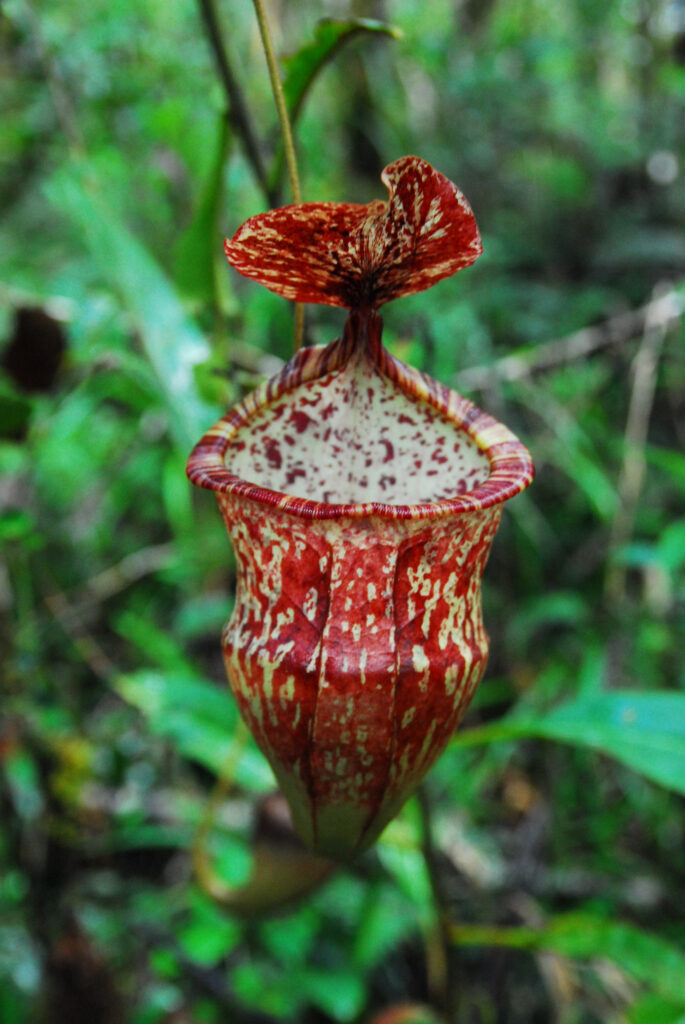
UNESCO’s case for inscription rests on the property’s exceptional endemism. Eight species are found only at Mount Hamiguitan. Among them are the pitcher plant Nepenthes hamiguitanensis and the butterfly Delias magsadana, both confined to the mossy-pygmy forest that crowns the summit between 1,160 and 1,200 m. That fragile tropical “bonsai” forest is a unique natural layer where trees survive in miniature form under adverse conditions.
The sanctuary also provides critical habitat for the iconic Philippine eagle and Philippine cockatoo, both critically endangered. Its high level of endemicity is exemplified by amphibians, of which 75% are endemic, and reptiles, of which 84% are endemic. UNESCO notes that scientists believe more globally unique species may await discovery in the area.
Managing a protected area across three local governments
The property straddles two municipalities and one city in Davao Oriental Province: San Isidro, Governor Generoso and the City of Mati. It totals 16,923 ha with a buffer zone of 9,729 ha. The site is protected through the Philippines’ National Integrated Protected Areas System (NIPAS), and several layers of national and provincial legislation prohibit logging, mining, and exploration for energy resources inside its boundaries.
A dedicated management board directs protection work under a plan approved in 2011. The Protected Area Superintendents Office carries out that plan alongside “Bantay Gubat” personnel from the three local governments, who conduct regular monitoring and patrols over the core and buffer zones. Local and indigenous communities living on the periphery take part in management, and their ways of life are built on respect for the environment and careful use of resources.
Frequently Asked Questions
Which UNESCO World Heritage sites are near Mount Hamiguitan?
Baroque Churches of the Philippines is 615 km away by straight line, Tubbataha Reefs Natural Park 738 km, and Puerto-Princesa Subterranean River National Park 885 km, all within the Philippines. Rock Islands Southern Lagoon in Palau is 905 km away, and Kinabalu Park in Malaysia is 1055 km.
Why was Mount Hamiguitan Range Wildlife Sanctuary inscribed?
It was inscribed in 2014 under criterion (x) for being an intact and highly diverse mountain ecosystem in a significant biogeographic region of the Philippines, with a large number of endemic and globally threatened species across five distinct forest habitats.
How many endemic species does Mount Hamiguitan have?
The sanctuary is home to 1,380 species, of which 341 are endemic to the Philippines. Eight species are found nowhere else except Mount Hamiguitan, including the pitcher plant Nepenthes hamiguitanensis and the butterfly Delias magsadana.
How high is Mount Hamiguitan Range Wildlife Sanctuary?
The property has an elevation range of 75 m to 1,637 m above sea level. The summit is crowned by the fragile mossy-pygmy forest, which grows between 1,160 m and 1,200 m elevation and is found nowhere else in the world in that form.
Sources
- UNESCO World Heritage Centre — Mount Hamiguitan Range Wildlife Sanctuary (inscribed 2014). https://whc.unesco.org/en/list/1403/
- UNESCO World Heritage Centre — Baroque Churches of the Philippines (inscribed 1993). https://whc.unesco.org/en/list/677/
- UNESCO World Heritage Centre — Tubbataha Reefs Natural Park (inscribed 1993). https://whc.unesco.org/en/list/653/
- UNESCO World Heritage Centre — Puerto-Princesa Subterranean River National Park (inscribed 1999). https://whc.unesco.org/en/list/652/
- IUCN World Heritage Outlook — Mount Hamiguitan Range Wildlife Sanctuary. https://worldheritageoutlook.iucn.org/node/1183
Spotted an error? Write to [email protected] and we correct it the same day.