
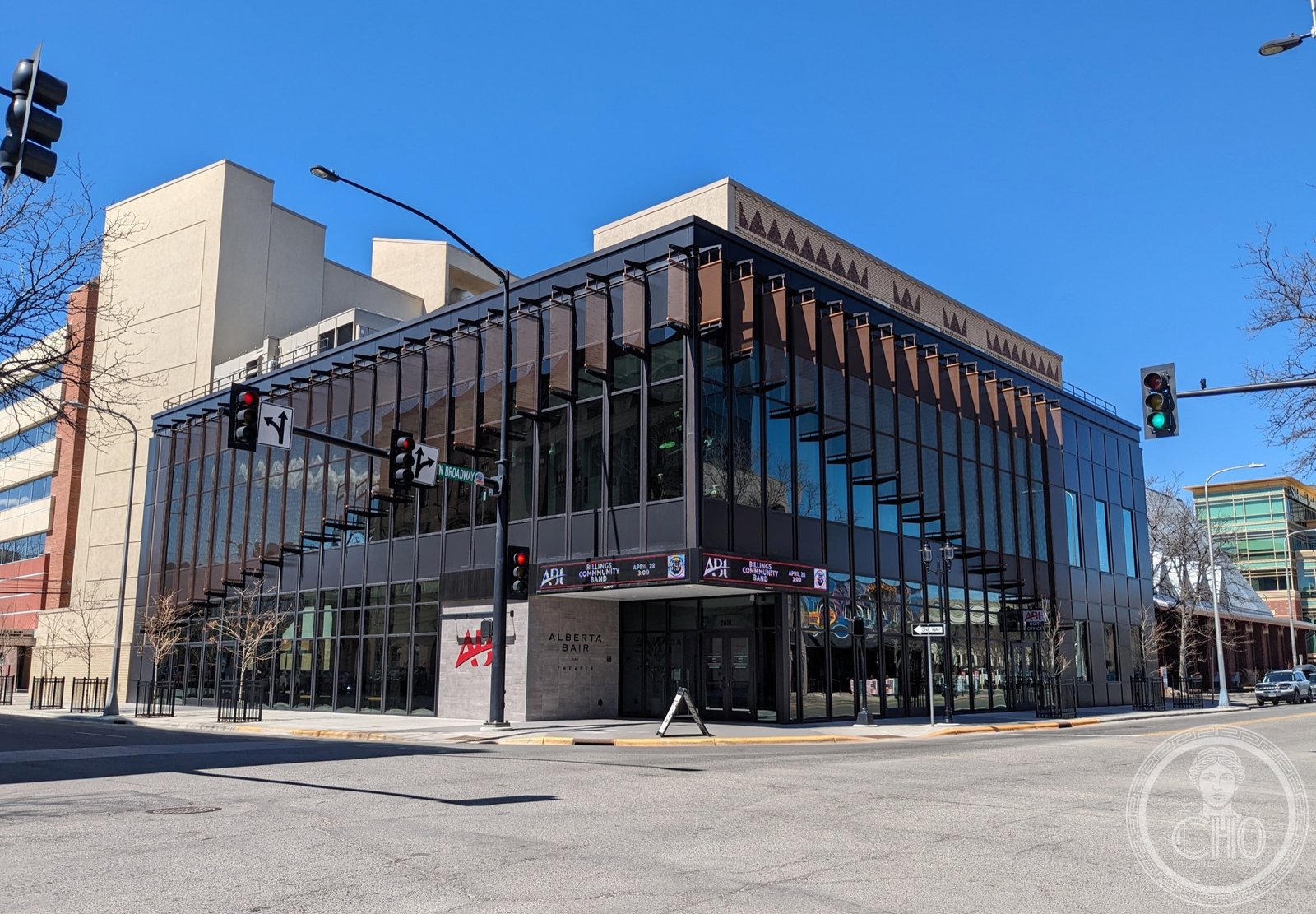
On 3rd Avenue North in downtown Billings, the Alberta Bair Theater has been the cultural heart of the largest city in Montana since it opened in 1931 as the Fox Theatre — an Art Deco movie palace that has outlasted its cinema origins to become the primary performing arts venue on the high plains, serving a region whose vastness makes every gathering at its stage a minor miracle of collective will.
At a glance
The Alberta Bair Theater at 2801 3rd Avenue North is the finest Art Deco theater in Montana and the anchor of Billings’s performing arts community. Opened in 1931 as the Fox Theatre, one of the Fox chain’s regional movie palaces designed to bring first-class entertainment to cities across the American West and Midwest, it served Billings throughout the great decades of cinema and live performance before transitioning to nonprofit arts organization status. Named in honor of Alberta Bair, a Billings philanthropist whose family support made the theater’s continuation possible, it now operates as the primary home of the Billings Symphony Orchestra and Chorale and the main venue for touring Broadway productions, concerts, and performing arts events in the greater Yellowstone region.
Key facts
- Address: 2801 3rd Avenue North, Billings, MT 59101
- Opened: 1931 as the Fox Theatre
- Renamed: Alberta Bair Theater
- Named for: Alberta Bair, Billings philanthropist
- Style: Art Deco
- Resident company: Billings Symphony Orchestra and Chorale
- Designation: National Register of Historic Places
History
Billings in 1931 was the commercial and agricultural hub of the Yellowstone River valley — a city that had grown with the Northern Pacific Railroad and the cattle, sheep, and sugar beet trades of the surrounding high plains. Its position as the largest city in Montana gave it a gravitational pull across a vast sparsely populated region: people traveled long distances to shop, do business, and attend entertainment events in Billings, making it a regional capital of a kind that smaller cities can rarely aspire to.
The Fox Theatre was built into this environment by the Fox Film Corporation’s theater chain, which operated movie palaces in cities across the country, bringing its standard of ornate design and first-class facilities to regional markets that might otherwise have gone without. The 1931 building brought Art Deco architecture and a first-class movie palace experience to Montana’s largest city, giving Billings residents access to the same quality of entertainment environment as much larger cities.
The theater’s transition from cinema to live performing arts followed the pattern of the great American movie palaces: the rise of suburban multiplexes eroded the audience for single-screen downtown cinemas, and the Fox eventually closed as a commercial theater. A community preservation effort, supported significantly by the Bair family’s philanthropic engagement, transformed the building into the Alberta Bair Theater for the Performing Arts. The renamed theater has since built a distinguished reputation as the cultural institution of the greater Yellowstone region, hosting the Billings Symphony as well as touring companies from the major performing arts circuits.
What you see
The 3rd Avenue North facade presents the Alberta Bair’s Art Deco character with the confidence of the Fox chain’s standard design program: ornamental terra cotta, vertical emphasis, and decorative panels that establish the building’s identity on Billings’s commercial street. The marquee, a signature element of the movie palace tradition, continues to announce events to the downtown streetscape as it has since 1931.
The auditorium interior has been adapted for symphonic and theatrical performance while retaining the essential character of the Art Deco design. The sight lines, acoustic treatment, and stage facilities serve the full range of the theater’s programming — from intimate chamber performances to full orchestral concerts to touring Broadway-scale productions — in a room that makes Billings feel less isolated from the world’s great cultural currents than the surrounding landscape might suggest.
Practical information
- Events: Billings Symphony Orchestra and Chorale season, touring Broadway, concerts; check albertabairtheater.org for schedule
- Downtown Billings: The Alberta Bair anchors a compact walkable downtown with restaurants, bars, and hotels; 3rd Avenue North is in the heart of the commercial district
- Parking: Downtown parking garages and street parking available; the theater is easily accessible from downtown hotels
Getting there
Billings is the largest city in Montana and the commercial hub of the northern Great Plains, at the junction of Interstate 90 and Interstate 94. Billings Logan International Airport (BIL) is 2 miles north of downtown and provides connections to Denver, Salt Lake City, Seattle, and other major hubs. Amtrak does not serve Billings; the nearest stations on the Empire Builder are Havre (195 miles northwest) and Minot (350 miles east). The Alberta Bair Theater is in the heart of Billings’s compact downtown, within walking distance of most downtown hotels.
Nearby
- Yellowstone Art Museum — the principal art museum in Montana, housed in a former county jail facility and focused on contemporary art of the American West; several blocks from the Alberta Bair in downtown Billings
- Rimrocks — the dramatic sandstone rimrock cliffs that rise above the city to the north, a defining feature of the Billings landscape visible from downtown; Rim Drive along the top provides panoramic views of the Yellowstone valley
- Pompeys Pillar National Monument — 28 miles east of Billings on the Yellowstone River, a sandstone butte bearing the carved signature of William Clark of the Lewis and Clark Expedition (dated July 25, 1806), the only physical evidence of the expedition remaining on the landscape
- Little Bighorn Battlefield National Monument — 65 miles southeast of Billings, the site of the 1876 Battle of the Little Bighorn where Lakota, Cheyenne, and Arapaho warriors defeated Lieutenant Colonel George Armstrong Custer and the 7th Cavalry; one of the most historically significant and interpreted sites in the American West
Sources
- National Register of Historic Places, Alberta Bair Theater nomination
- Alberta Bair Theater, institutional history
- Montana Historical Society architectural records
- Billings Gazette archives — theater history coverage
- Billings Symphony Orchestra, institutional history
Find it on the map
See this place and what’s around it →📷 Become a Cultural Heritage Online photographer
Share your photos of places: they stay published under your name as the author. The more they're seen, the more you get noticed — and soon a contest will reward the most appreciated photos.
Log in or sign up free to add a photoDo you manage this place?
This page is read by travellers and heritage enthusiasts who find it on Google. Keep it accurate — and make it work for you. Free for non-profit heritage institutions.