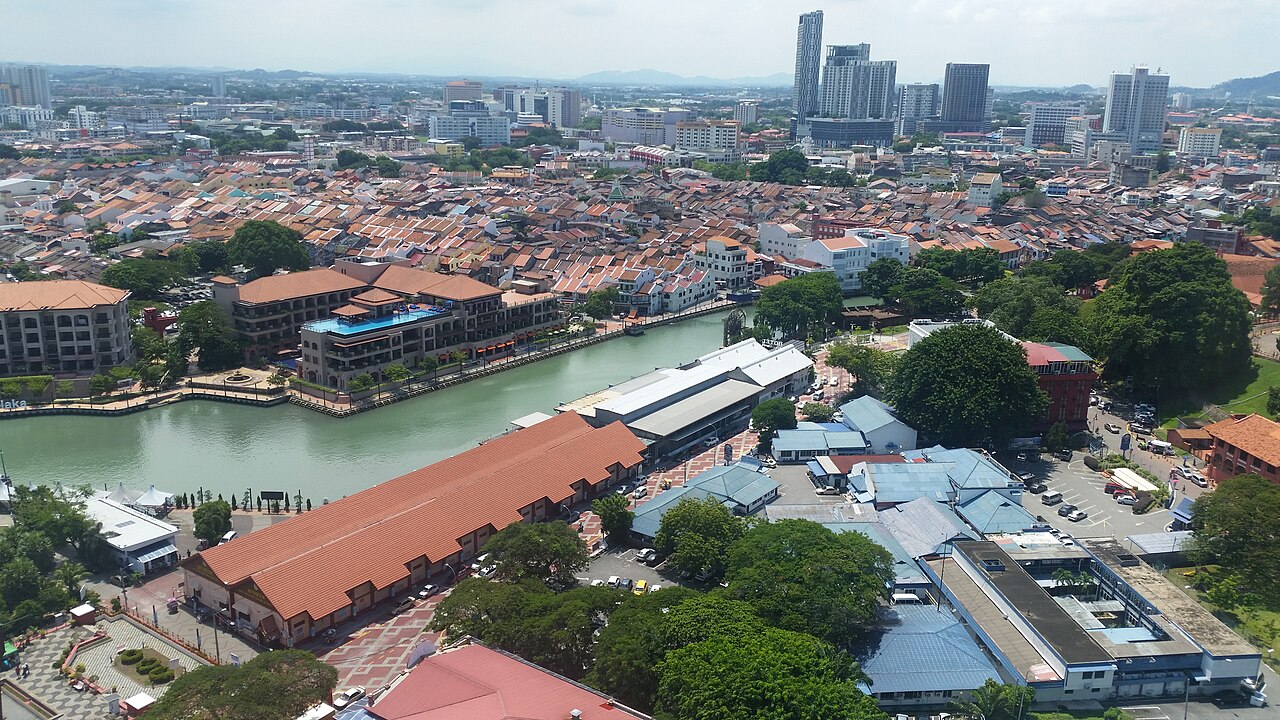
The closest World Heritage property to Melaka and George Town is the Archaeological Heritage of the Lenggong Valley, 76 km away in Malaysia. Within 200 km are the Forest Research Institute Malaysia Forest Park Selangor (135 km) and the Singapore Botanic Gardens (198 km). Melaka and George Town themselves were inscribed together in 2008 as historic cities developed over 500 years of trading and cultural exchange in the Straits of Malacca.
The World Heritage sites within reach of Melaka and George Town
The distances below are straight lines between the reference points that UNESCO publishes for each property. They indicate what is close, not driving times, which depend on roads, borders and the Strait of Malacca itself.
| Site | Country | Distance | Inscribed | Type |
|---|---|---|---|---|
| Archaeological Heritage of the Lenggong Valley | Malaysia | 76 km | 2012 | Cultural |
| Forest Research Institute Malaysia Forest Park Selangor | Malaysia | 135 km | 2025 | Cultural |
| Singapore Botanic Gardens | Singapore | 198 km | 2015 | Cultural |
| Wat Phra Mahathat Woramahawihan, Nakhon Si Thammarat | Thailand | 335 km | 2026 | Cultural |
| Ombilin Coal Mining Heritage of Sawahlunto | Indonesia | 355 km | 2019 | Cultural |
| Tropical Rainforest Heritage of Sumatra | Indonesia | 397 km | 2004 | Natural |
Read together, the closer properties trace a long arc of human use and transformation along the Strait of Malacca. The Lenggong Valley holds evidence of human presence stretching back close to 2 million years, among the oldest outside Africa. The Forestry Institute and Singapore Gardens, by contrast, show deliberate interventions in tropical landscapes: the first began in the 1920s on degraded tin-mining land, the second became a scientific centre for rubber cultivation research from 1875.
Melaka’s 15th-century sultanate and the early European periods
UNESCO’s description of the property distinguishes the two cities by the phases of history each preserves. Melaka demonstrates the early stages of the story, originating in the 15th-century Malay sultanate. Its government buildings, churches, squares and fortifications then carry the imprint of the Portuguese and Dutch periods that began in the early 16th century. Together these layers record the shift from a regional Malay polity to a European-controlled colonial port.
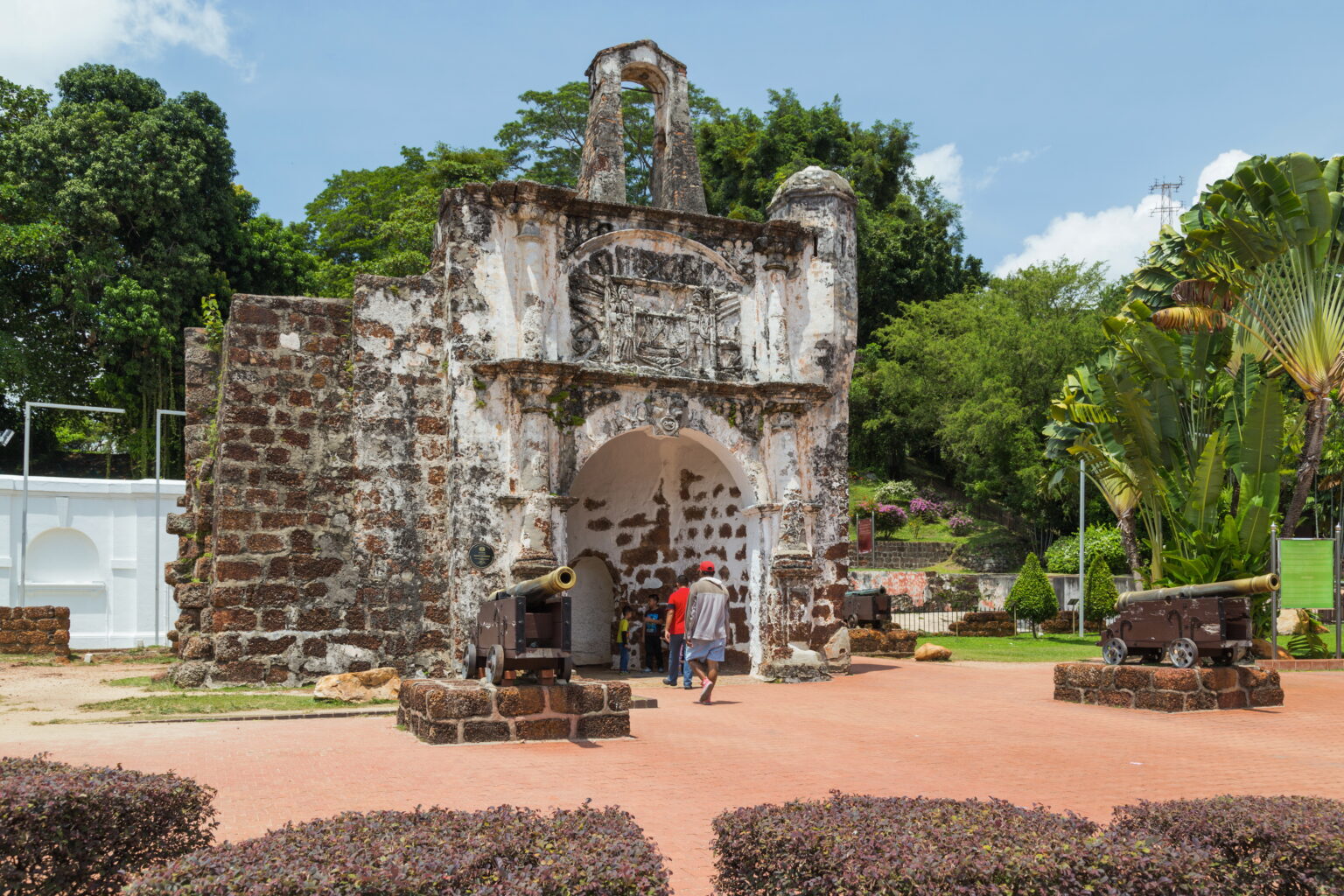
The inscription rests on the claim that no other urban centres along the Strait retain their historic cores as completely as these two cities do. The nominated areas hold a multi-cultural living heritage that descends from trade routes linking Britain and Europe with the Middle East, the Indian subcontinent, the Malay Archipelago and China. In Melaka this is expressed in religious buildings of different faiths, ethnic quarters, languages, festivals, food and daily life, all concentrated in a historic core that still functions as a trading town rather than as a museum reconstruction.
George Town and the British era from the end of the 18th century
George Town carries the later part of the shared narrative. Its residential and commercial buildings are the physical evidence of the British period that began at the end of the 18th century. The two cities are considered complementary: Melaka carries the Malay, Portuguese and Dutch layers, while George Town shows what a Straits trading port became under British administration, with its distinctive shophouses and townhouses adapted to a different colonial economy.
Criteria (ii), (iii) and (iv) were all judged to apply. The justification notes that both towns show different stages of development and successive changes over a long span of time, making them complementary examples of multi-cultural trading towns. The shophouse and townhouse ranges are described as exceptional, and the property is credited with a unique architecture, culture and townscape without parallel anywhere in East and South Asia.
Why the two cities were inscribed together
The World Heritage Committee did not inscribe Melaka and George Town as separate properties. A single listing covers both historic cities, on the grounds that they form a continuous testimony to the same process: the forging of trading ports from Malay, Chinese and Indian cultures meeting three successive European colonial powers over almost 500 years. Each left imprints on architecture, urban form, technology and monumental art.
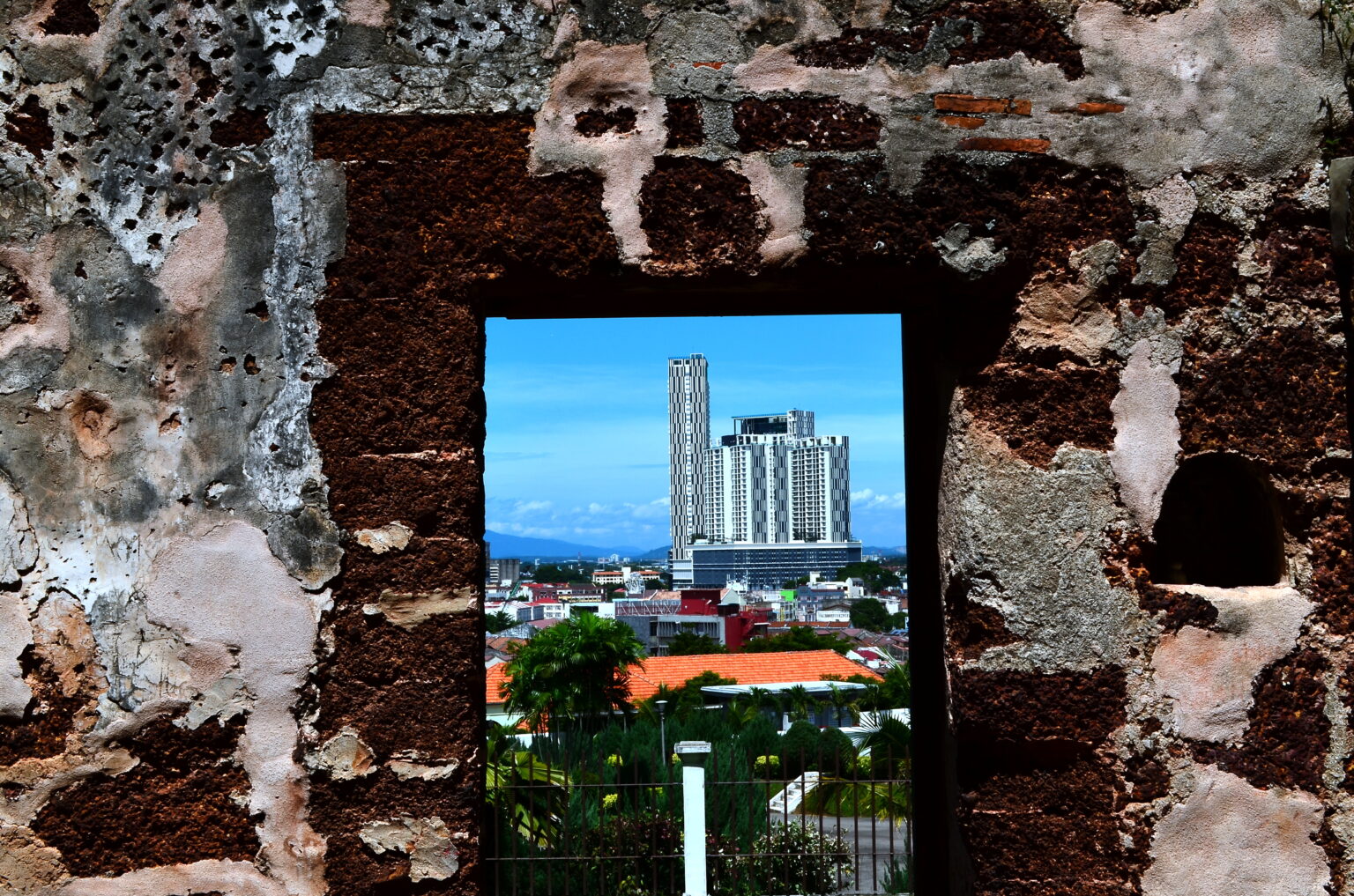
The official evaluation also records a note of caution that remains relevant. The integrity and authenticity of the nominated areas were considered adequate, and both towns were found to exhibit a generally acceptable state of conservation. The statement adds, however, that efforts are required to ensure the conservation of shophouses. That single sentence in the inscription record points to the main long-term management challenge for both historic cores.
Frequently Asked Questions
Which UNESCO World Heritage sites are near Melaka and George Town?
The nearest is the Archaeological Heritage of the Lenggong Valley, 76 km away in Malaysia. Forest Research Institute Malaysia Forest Park Selangor is 135 km away and the Singapore Botanic Gardens is 198 km away. All distances are straight lines between UNESCO reference points, not road times.
When were Melaka and George Town inscribed on the World Heritage List?
They were inscribed together in 2008 as a single cultural property covering both historic cities of the Straits of Malacca. The listing was made under criteria (ii), (iii) and (iv), which recognise the multi-cultural trading tradition and the unique architecture and townscape it produced.
Why are Melaka and George Town listed as one World Heritage property?
They are considered complementary. Melaka demonstrates the 15th-century Malay sultanate and the Portuguese and Dutch periods from the early 16th century, while George Town represents the later British era that began at the end of the 18th century with a different set of residential and commercial buildings.
What makes the architecture of Melaka and George Town exceptional?
UNESCO highlights the exceptional range of shophouses and townhouses, which show many building types and stages of development, some originating in the Dutch or Portuguese periods. The mixture of Malay, Chinese, Indian and European influences created a townscape with no parallel in East and South Asia.
Sources
- UNESCO World Heritage Centre — Melaka and George Town, Historic Cities of the Straits of Malacca. https://whc.unesco.org/en/list/1223/
- UNESCO World Heritage Centre — Archaeological Heritage of the Lenggong Valley. https://whc.unesco.org/en/list/1396/
- UNESCO World Heritage Centre — Forest Research Institute Malaysia Forest Park Selangor. https://whc.unesco.org/en/list/1734/
- UNESCO World Heritage Centre — Singapore Botanic Gardens. https://whc.unesco.org/en/list/1483/
- UNESCO World Heritage Centre — Tropical Rainforest Heritage of Sumatra. https://whc.unesco.org/en/list/1167/
Spotted an error? Write to [email protected] and we correct it the same day.