
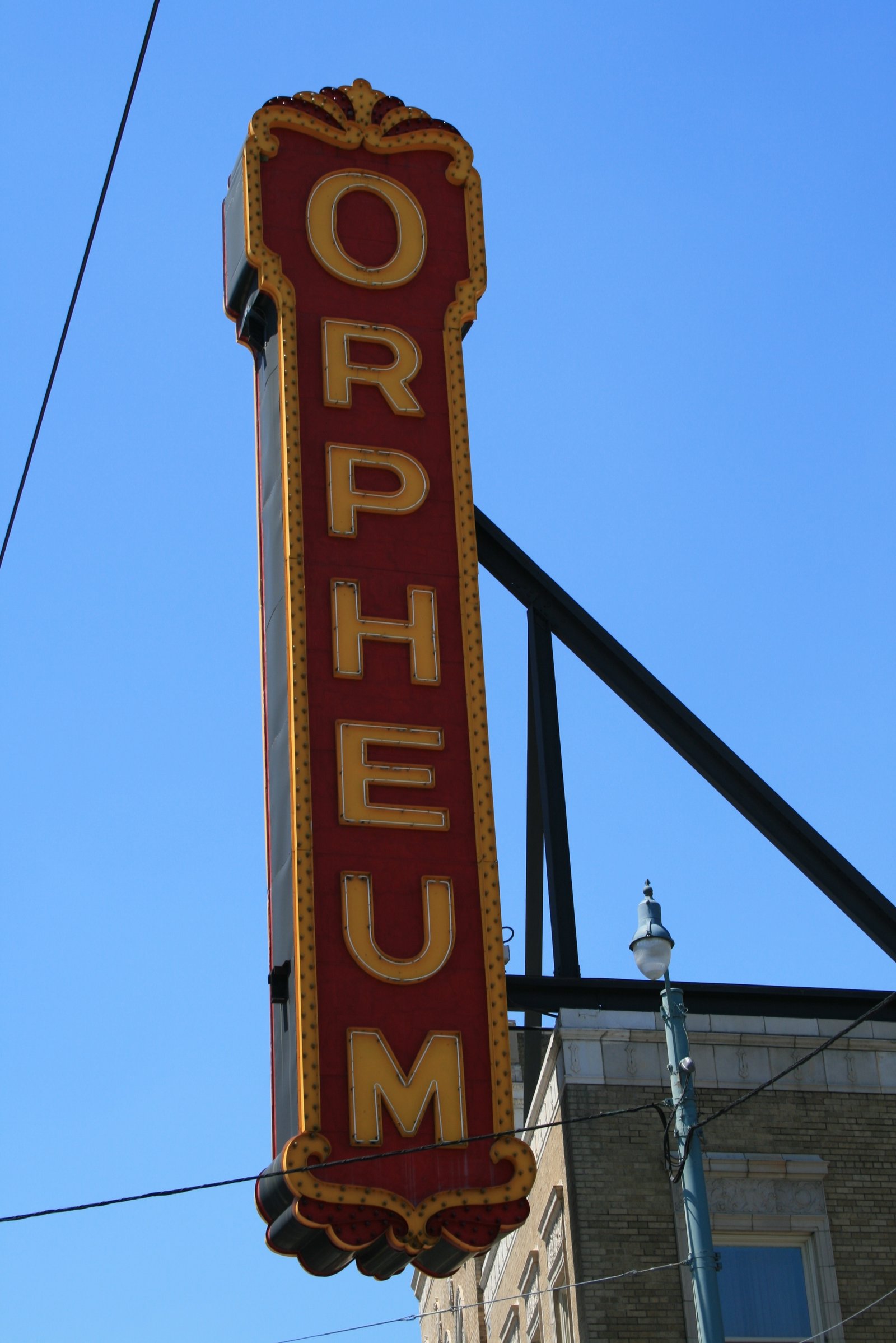
Memphis’s grand movie palace has survived a fire, the decline of the picture house era, and decades of urban change to become the city’s most beloved performance venue.
At a glance
The Orpheum Theatre opened on South Main Street in Memphis in 1928, rising from the ashes of its predecessor, which had burned five years earlier. Designed by the Chicago firm of Rapp & Rapp, the pre-eminent movie palace architects of the era, it brought the full vocabulary of the American picture palace to Memphis: a lavish French Baroque-inspired interior with gilded plasterwork, crystal chandeliers, and an atmosphere of studied grandeur. On the exterior, Art Deco geometry frames the entrance and illuminated marquee. The building is listed on the National Register of Historic Places and remains an active performance venue, anchoring the South Main Arts District and programming Broadway touring productions, classical concerts, and film screenings to audiences who fill its original house.
Key facts
- Location: 203 S. Main Street, Memphis, Tennessee
- Opened: 1928 (second Orpheum; first opened 1890, burned 1923)
- Architect: Rapp & Rapp, Chicago
- Style: French Baroque Revival interior; Art Deco exterior and marquee
- Capacity: approximately 2,100 seats (post-renovation)
- Function: Broadway touring shows, concerts, film screenings
- Status: National Register of Historic Places
History
The Orpheum circuit was one of the most prestigious vaudeville and film exhibition chains in America, and its 1928 Memphis house was built to match that reputation. Rapp & Rapp — the Chicago brothers C.W. and George Rapp, whose firm designed the Chicago Theatre (1921), numerous Paramount houses, and dozens of other major cinemas across the country — brought to Memphis the same design principles they applied to their finest buildings: an interior so rich in ornament and atmosphere that the act of entering it was itself part of the entertainment. The 1928 Orpheum opened with first-run films and vaudeville acts, drawing audiences from across Shelby County to a South Main Street that was at the time one of Memphis’s primary entertainment and commercial corridors.
The theatre’s mid-century history followed the arc common to American movie palaces: competition from suburban multiplexes reduced attendance, ownership changed hands repeatedly, and by the 1970s the building faced the threat of demolition. A preservation campaign led by the Memphis Development Foundation ultimately saved it, and the Orpheum was restored and reopened in 1984 as a Broadway touring venue and community performance space. The restoration returned the interior to something close to its 1928 condition — the chandeliers rehung, the plasterwork repaired, the original stage and backstage machinery preserved. The Orpheum today is the principal Broadway venue for Memphis and one of the most intact surviving examples of the picture palace in the South.
What you see
The Orpheum’s South Main Street facade presents an Art Deco geometry of flat brick surfaces and a canopied marquee in polished metal and neon, with geometric ornamental panels flanking the entrance. The exterior is restrained relative to the explosion of ornament that greets visitors inside. The lobby introduces the building’s dominant material language: gilded plasterwork, patterned carpet, and the quality of light that comes from chandeliers designed to suggest wealth without ostentation.
The auditorium is the centrepiece. Its ceiling rises above an orchestra and balcony plan seating approximately 2,100, with the sight lines designed for both film and live performance. Box seats frame either side of the proscenium in the French Baroque manner — gilded, arched, draped. The chandelier that dominates the ceiling is the auditorium’s defining visual element: massive, crystal, and illuminated to fill the space with a warm density of light. The backstage has been maintained in working order, capable of handling full Broadway touring productions with their elaborate stage machinery and set changes.
Practical information
- Hours: open for ticketed performances; box office open during event days
- Tours: building tours are periodically offered; check the theatre’s website
- Time needed: allow 30 minutes before performances for lobby and exterior
- Note: the theatre has an established “ghost” — Mary, reportedly a young girl who haunts the building — which is part of local Memphis lore and occasionally referenced in programming
Getting there
The Orpheum is at 203 S. Main Street in the South Main Arts District of downtown Memphis, two blocks from the Mississippi riverfront. The MATA trolley (Main Street line, when operating) runs directly past the entrance. From Memphis International Airport, the drive downtown takes approximately twenty minutes. The Peabody Hotel is a ten-minute walk north along Main Street.
Nearby
- Beale Street — Memphis’s historic blues entertainment corridor, a few blocks northeast
- National Civil Rights Museum / Lorraine Motel — significant civil rights landmark, five minutes on foot
- Sterick Building (1929) — Memphis’s Art Deco skyscraper, visible from downtown
Sources
- National Register of Historic Places nomination file, Orpheum Theatre, Memphis, Tennessee
- Memphis Development Foundation, restoration documentation (1984)
- Orpheum Theatre Group, official history and building records
Find it on the map
See this place and what’s around it →📷 Become a Cultural Heritage Online photographer
Share your photos of places: they stay published under your name as the author. The more they're seen, the more you get noticed — and soon a contest will reward the most appreciated photos.
Log in or sign up free to add a photoIs this page about you?
This page is read by travellers and heritage enthusiasts who find it on Google. Tell us how you are connected to this place and we will take it from there.