Myanmar has two UNESCO World Heritage Sites. Bagan (inscribed 2019), the most significant, is an archaeological zone covering approximately 40 km² on the dry central plain of Myanmar, containing over 2,000 surviving Buddhist temples, pagodas, and monasteries from the eleventh to thirteenth centuries CE — the largest concentration of Buddhist monuments in the world. The Pyu Ancient Cities (inscribed 2014) preserve three walled cities of the Pyu civilisation, predecessors of the Bamar people, dated between the second century BCE and the ninth century CE. Both sites are accessible from Naypyidaw, the purpose-built capital, by domestic flight or overland. From Cultural Heritage Online.
Bagan Archaeological Zone 250 km northwest of Naypyidaw — 45 min by domestic flight or 4 hr by road
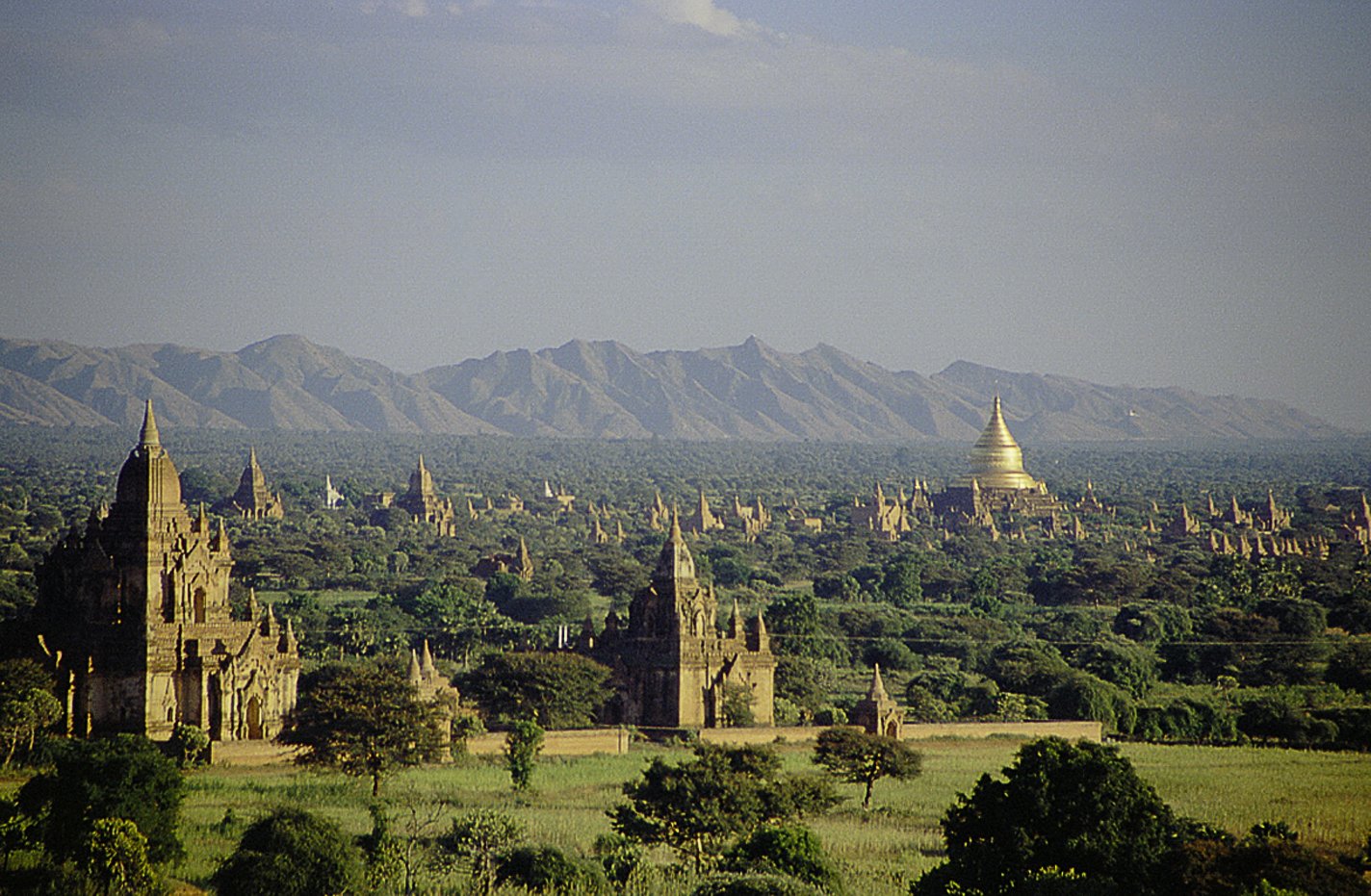
Bagan was the capital of the Pagan Kingdom (849–1297 CE) during its golden age between approximately 1044 and 1287 CE, when the kingdom unified much of present-day Myanmar and Theravada Buddhism became the state religion. During the approximately 250 years of active construction (primarily under King Anawrahta, who conquered the Mon kingdom in 1057 and imported Mon artisans and Buddhist scholars, and his successors), approximately 10,000 temples and religious structures were built across the Bagan plain. Of these, approximately 3,500 survive in some form; of these, approximately 2,000 are substantial standing structures. The sheer concentration of Buddhist monumental architecture over a 40 km² plain — visible from any elevated point as a continuous field of spires — is without comparison anywhere in the world.
The most significant individual structures include Ananda Temple (circa 1090 CE, one of the finest surviving Pagan-period temples, with four large gilt Buddha images at the cardinal points), Dhammayangyi Temple (the largest in Bagan, famous for the extraordinarily precise brickwork of its massive walls), Htilominlo Temple (1218 CE, three storeys), Sulamani Temple (circa 1183 CE, one of the best-preserved), and the Shwezigon Pagoda (begun by Anawrahta circa 1059, completed under his son Kyansittha circa 1087) — considered the prototype of the Burmese stupa. The inscription ceremony in 2019 came after a long delay caused by the Myanmar government’s unilateral construction of poorly designed replica structures within the site.
Pyu Ancient Cities Sri Ksetra: 165 km northwest of Naypyidaw — 2.5 hr by road
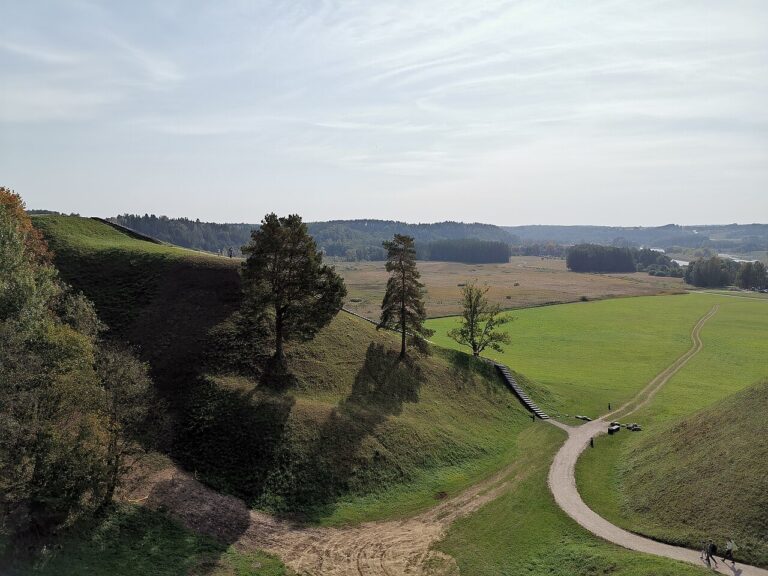
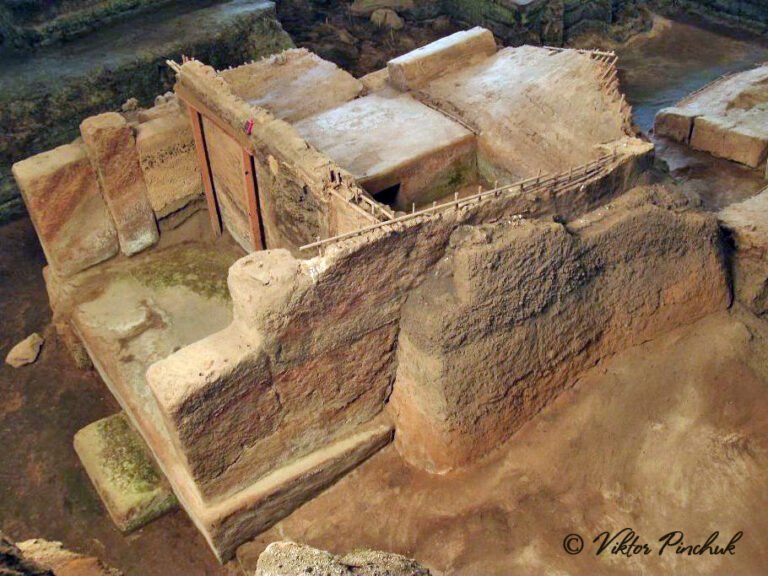
The Pyu Ancient Cities encompasses three walled cities of the Pyu civilisation: Sri Ksetra (near Pyay, 165 km northwest of Naypyidaw), Beikthano (near Taungdwingyi), and Halin (near Shwebo in northern Myanmar). The Pyu were a Tibeto-Burman people who inhabited the Irrawaddy Valley from at least the second century BCE, built the first urban centres in present-day Myanmar, practised both Buddhism and Hinduism, and maintained extensive trade contacts with India, China, and Southeast Asian maritime networks. The Pyu civilisation was destroyed by Nanzhao (in present-day Yunnan, China) raids in the ninth century CE. Sri Ksetra, the largest of the three cities, has circular earthen walls enclosing approximately 30 km² and contains Buddhist brick stupas still standing to significant height, including the Bawbawgyi Stupa (circa sixth century CE). UNESCO inscribed the site in 2014.
Getting there from Naypyidaw: Bagan: domestic flights from Naypyidaw (NPT) to Nyaung U Airport (Bagan, NYU), approximately 45 minutes; or approximately 4 hours by road northwest. Sri Ksetra (Pyu): approximately 165 km northwest by road from Naypyidaw (2.5 hours). Naypyidaw has its own airport with domestic connections to all major Myanmar cities. Allow: Minimum 2 full days for Bagan; 1 day for Sri Ksetra. Best for: Buddhist monumental architecture; Southeast Asian antiquity; temple landscape photography.
Frequently Asked Questions
How many UNESCO World Heritage Sites does Myanmar have?
Two: the Pyu Ancient Cities (inscribed 2014, cultural) and Bagan (inscribed 2019, cultural). Myanmar also has several sites on the Tentative List, including the Inle Lake cultural landscape, the Hkakabo Razi mountain complex, and several other Buddhist heritage sites. The long delay in Bagan’s inscription — the site was first submitted for consideration in the 1990s — was caused by the Myanmar government’s construction of poorly designed modern replica stupas within the heritage zone, a practice that UNESCO required to be stopped and reversed before the inscription could proceed.
Why did the Bagan period end and what destroyed many of the temples?
The Pagan Kingdom ended in 1297 following Mongol invasions that began under Kublai Khan in 1277 and culminated in the sacking of Bagan in 1287. The population dispersed from the city, which was thereafter only a pilgrimage destination rather than an inhabited centre. Many temples fell into disrepair over the following centuries; approximately 7,000 of the original 10,000 structures have been lost to the elements, brick robbing, and the major 1975 earthquake, which damaged approximately 2,000 monuments. UNESCO and the Myanmar government have worked to document and selectively restore the most significant surviving structures. A major additional earthquake in August 2016 damaged several hundred monuments.
What is Naypyidaw and why was it built?
Naypyidaw (“Seat of Kings”) is the purpose-built capital of Myanmar, constructed in the central dry zone of the country and officially inaugurated in 2006 as a replacement for the former capital Yangon (Rangoon). The decision to move the capital was made by the military junta led by Senior General Than Shwe, and the reasons given — including a more central location, security from a potential amphibious attack on coastal Yangon, and the strategic advantages of a new city built from scratch — were not universally accepted as complete explanations. Naypyidaw is famous for its massive scale (wider than most capital cities), its nearly empty 20-lane highways, its very low population density relative to its footprint, and its elaborate presidential compounds and ministry buildings. The city has gradually gained population as the government apparatus has relocated there, but remains significantly less busy than Yangon.
What happened to Myanmar’s heritage after the 2021 military coup?
The military coup of February 2021 — which overthrew the elected government of Aung San Suu Kyi and the National League for Democracy — triggered an ongoing civil war and humanitarian crisis with significant consequences for Myanmar’s cultural heritage. Armed conflict has damaged or destroyed heritage structures in several parts of the country; looting of archaeological sites has reportedly increased due to the collapse of heritage protection agencies; and international cultural exchange and heritage cooperation programmes have been suspended or severely curtailed. UNESCO has expressed concern about the situation of Myanmar’s World Heritage Sites and has maintained monitoring contacts with local counterparts where possible.
Sources
- S1 — Stadtner, Donald M. Ancient Pagan: Buddhist Plain of Merit. River Books, 2005. ISBN 978-974-9863-02-2.
- S2 — Moore, Elizabeth H. Early Landscapes of Myanmar. River Books, 2007. ISBN 978-974-9863-31-2.
Spotted an error? Write to editorial@culturalheritageonline.com and we correct it the same day.