Paramaribo holds a remarkable distinction: it is itself a UNESCO World Heritage Site, inscribed for a colonial urban landscape that exists nowhere else in the Americas. Within a few hours by road or air, a second inscription — one of the world’s most pristine tropical rainforest reserves — completes a journey of remarkable contrasts. From Cultural Heritage Online.
Historic Inner City of Paramaribo City centre — on foot
The Historic Inner City of Paramaribo was inscribed by UNESCO in 2002 for an architectural achievement that is, by any measure, unusual in the colonial world: an entire city centre built almost entirely of wood. When Dutch colonisers established Paramaribo as the capital of their Surinamese territory in the seventeenth century, they replicated the urban planning conventions of the Netherlands — a regular grid of streets, public squares, administrative buildings along the waterfront — but substituted the masonry of European tradition with the local tropical hardwoods available in vast quantities along the Suriname River. The result is a historic core of white-painted timber buildings that has survived, with remarkable integrity, into the present day.
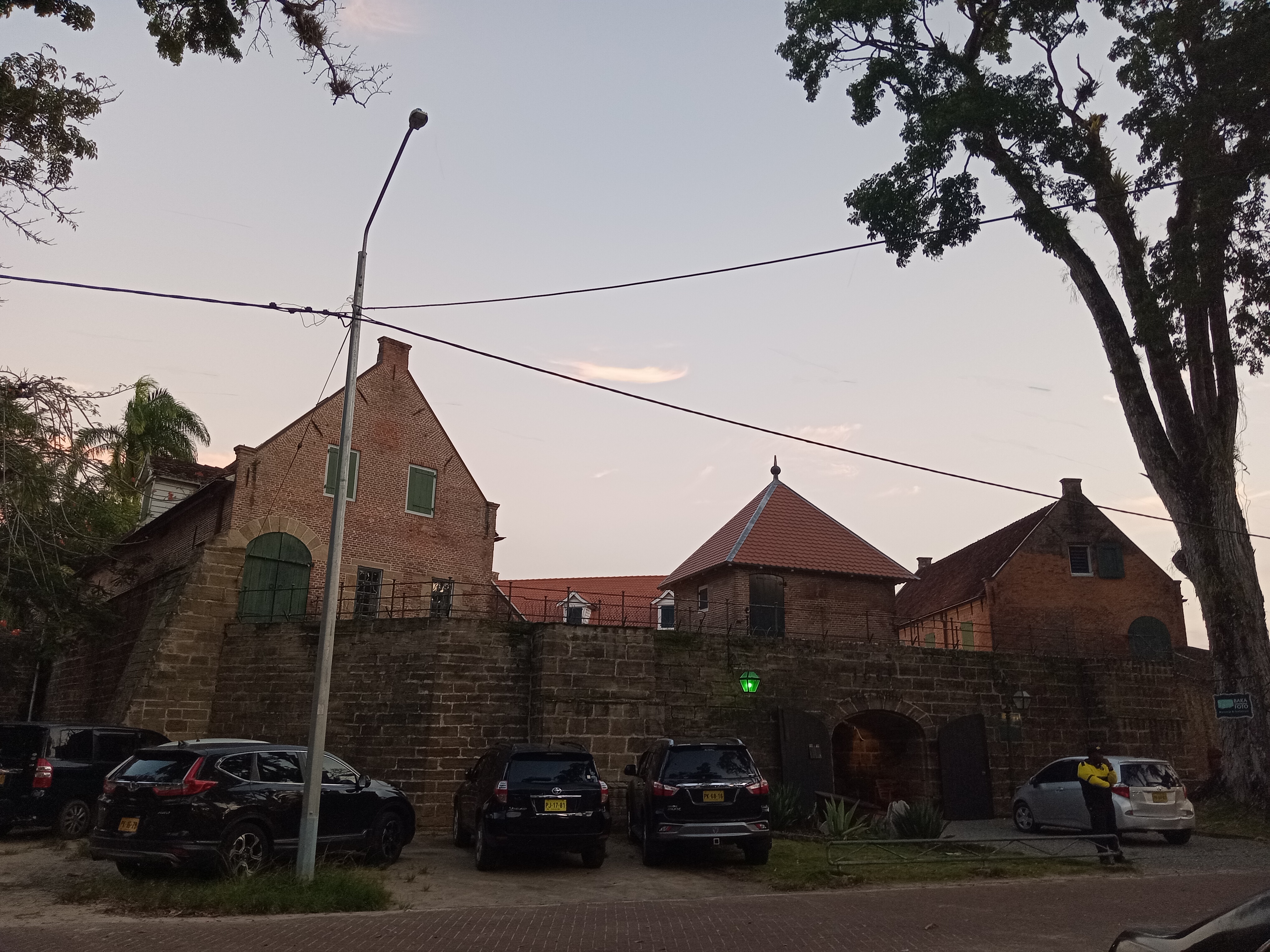
The evidence of this heritage concentrates in a walkable area along the west bank of the Suriname River. Fort Zeelandia, begun by the French in the early seventeenth century and taken by the Dutch in 1667, anchors the northern end of the historic zone; its distinctive pentagonal earthwork enclosure and red-brick outbuildings now house a national museum. South of the fort, the Presidential Palace — a stately white wooden mansion set in formal gardens on Independence Square, used as the Governor’s residence from 1730 — faces the broad esplanade that opens toward the river. Inland, the streets of the historic centre are lined with colonial townhouses whose deep verandas, louvred shutters, and painted wooden facades represent a creolised Dutch vernacular that evolved over two centuries of cultural contact.
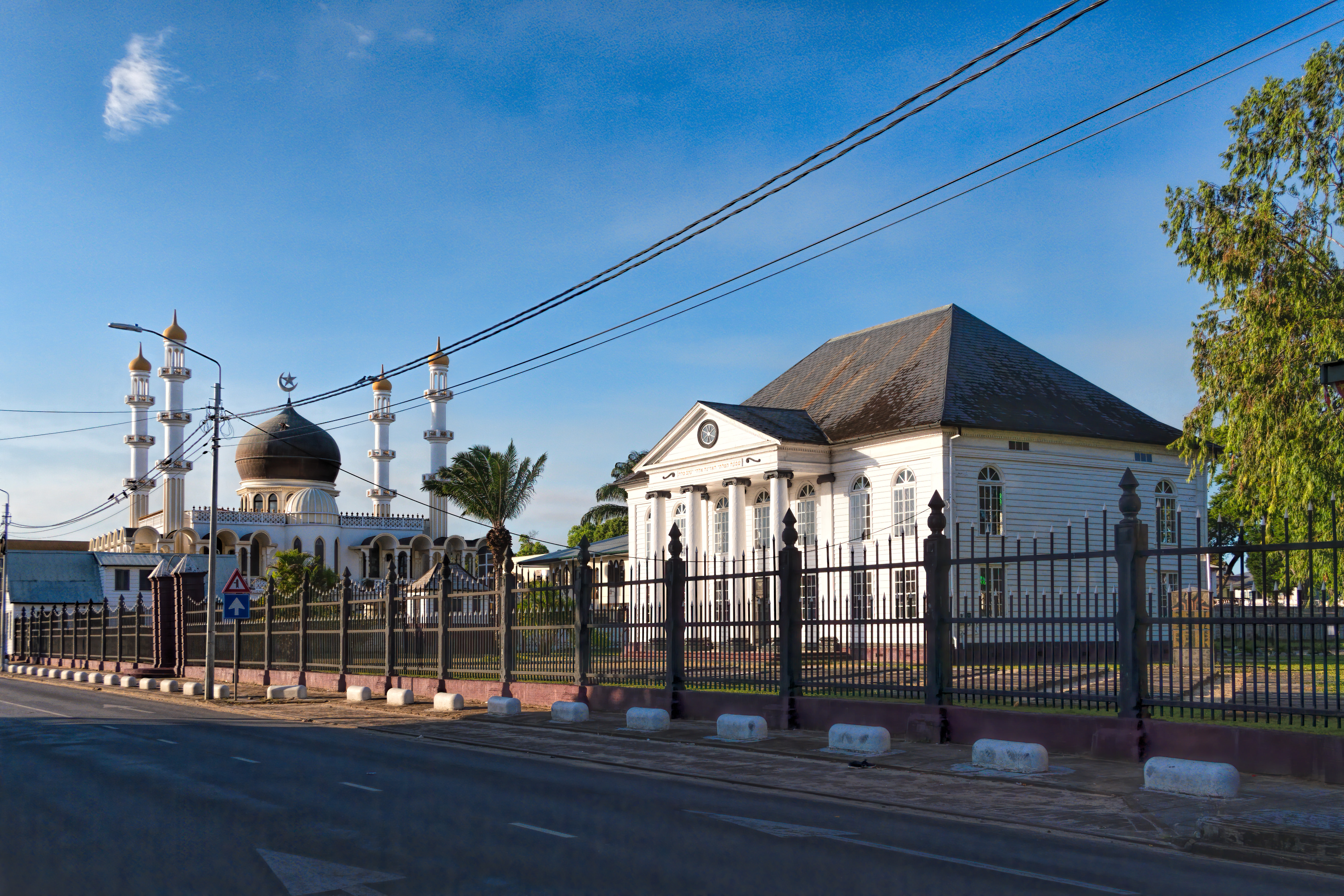
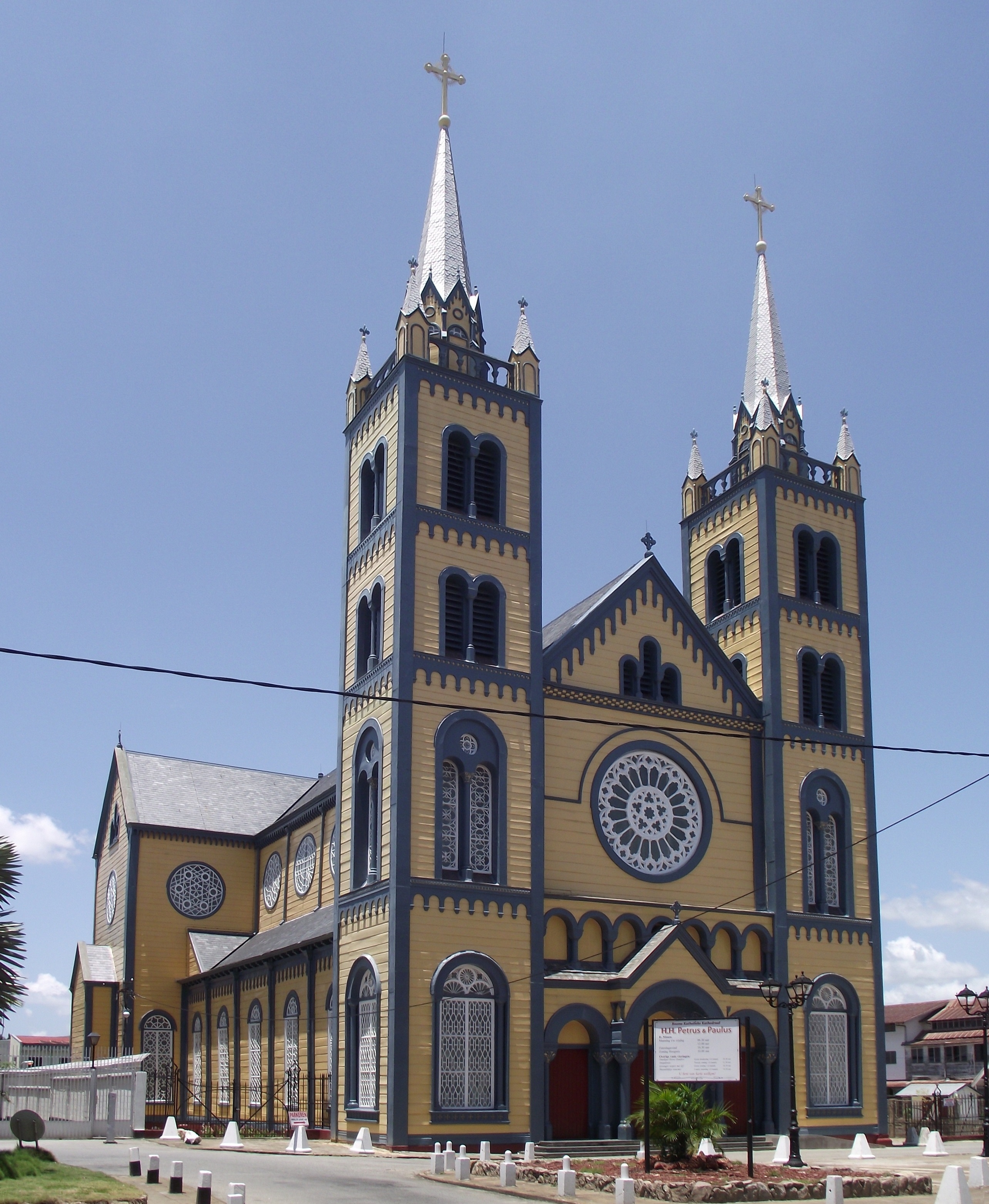
Two buildings on Keizerstraat have become globally recognised as symbols of coexistence. The Neveh Shalom Synagogue — built by the Sephardic Jewish community that settled in Suriname from the seventeenth century — and the Keizerstraat Mosque stand on the same block, separated by a few metres. The proximity is not accidental: it reflects the long-established reality of Paramaribo as a city where Creole, Javanese, Hindustani, Maroon, Indigenous, Chinese, Jewish, and European communities have coexisted for generations. The third landmark of extraordinary scale is the Cathedral of Saints Peter and Paul, completed in 1885: at 44 metres high and constructed entirely from timber — with no masonry structural element — it ranks among the largest wooden buildings in the Western Hemisphere and remains an active place of worship.
Getting there: The historic core is walkable from central Paramaribo; most sites are within fifteen minutes on foot of Independence Square. Allow: Half a day for the inner city circuit; a full day if visiting the fort museum. Best for: Architecture enthusiasts, travellers interested in colonial history, and anyone drawn to the study of religious and cultural coexistence.
Central Suriname Nature Reserve 260 km south — 4 hr by 4WD or 1 hr charter flight
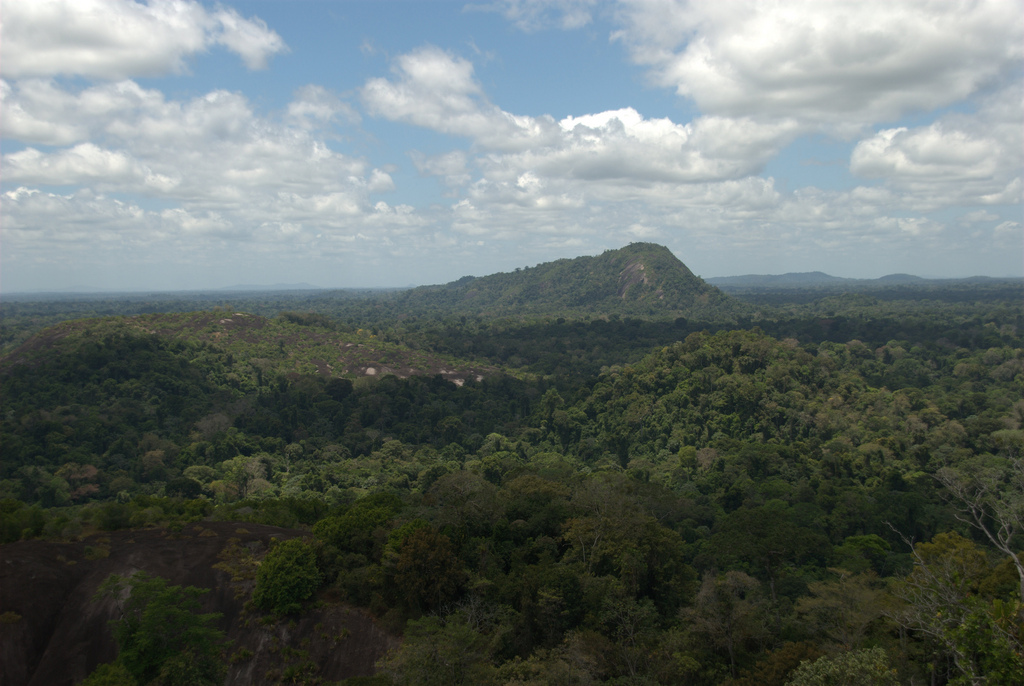
Inscribed in 2000, the Central Suriname Nature Reserve is one of the largest protected areas of tropical rainforest on Earth, covering 1.6 million hectares of the central Surinamese highlands. It encompasses the entire undisturbed watershed of the Coppename River — a catchment that has never been subjected to industrial logging, road-building, or large-scale agricultural conversion. UNESCO recognised it for the outstanding integrity of its biodiversity: approximately 5,000 flowering plant species, 400 recorded bird species, and large populations of mammals that have become rare or extinct across much of lowland South America, including giant river otters, giant anteaters, tapirs, and eight primate species.
Access is what has preserved the reserve’s exceptional condition. There are no roads into the interior. Visitors reach the outer edges by four-wheel drive on unpaved tracks that take roughly four hours from Paramaribo, or by chartered light aircraft in approximately one hour. Further penetration requires travel by dugout canoe along the Coppename and its tributaries, or on foot through primary forest. This inaccessibility is not incidental to the inscription: the reserve’s Outstanding Universal Value rests precisely on the fact that its ecosystems function without human interference. The granite inselbergs of the central highlands — including Mount Voltzberg, a near-vertical dome that rises above the forest canopy — add a geological dimension to the biodiversity interest and are the destination for the most committed multi-day expeditions.
Given the logistics, a visit to the Central Suriname Nature Reserve is not a day trip. Most itineraries combine at least two nights in or near the buffer zone, typically at community-run lodges operated by Saramaka Maroon or Indigenous Trio communities who hold territorial knowledge of the area. This is not simply a practical arrangement: the Maroon communities of the Surinamese interior have maintained a relationship with the forest ecosystem for three centuries, and the cultural landscape of the reserve cannot be understood independently of their presence.
Getting there: 4WD vehicle approximately 4 hours from Paramaribo, or 1-hour charter flight from Johan Adolf Pengel International Airport; onward travel by river canoe. No private vehicles beyond the perimeter tracks. Allow: Minimum 3 days for a meaningful visit; 5–7 days for interior access. Best for: Wildlife and birding specialists, adventure travellers, researchers, and those interested in Maroon cultural heritage.
Frequently Asked Questions
How many UNESCO World Heritage Sites are near Paramaribo?
Suriname has two UNESCO World Heritage Sites, and both are accessible from Paramaribo. The first is the Historic Inner City of Paramaribo itself, inscribed in 2002, which surrounds visitors the moment they enter the old colonial quarter along the Suriname River. The second is the Central Suriname Nature Reserve, inscribed in 2000, located approximately 260 kilometres south of the city — reachable in four hours by four-wheel drive or one hour by charter flight.
Is the Historic Inner City of Paramaribo worth a full day?
Most visitors allocate at least half a day for the core circuit: Fort Zeelandia and its museum, Independence Square and the Presidential Palace, the Cathedral of Saints Peter and Paul, and the famous block on Keizerstraat where the synagogue and mosque stand side by side. A full day allows time to explore the residential streets of the historic zone, where wooden colonial houses in various states of preservation give a clearer sense of the urban fabric as a whole.
When is the best time to visit Paramaribo and the Central Suriname Nature Reserve?
Suriname has two dry seasons: February to April, and August to November. Both are preferable for travel, particularly for the journey to the Central Suriname Nature Reserve, where unpaved road conditions deteriorate significantly during the wet seasons (May to July and December to January). The historic city of Paramaribo is accessible year-round, though the equatorial climate means rain is possible at any time; the relatively compact geography of the inner city makes it manageable regardless of weather.
What makes the architecture of Paramaribo’s historic centre unique?
The distinction is structural and material: in a colonial world where European powers almost universally built their administrative buildings and churches in stone or brick, the Dutch colonists of Suriname constructed an entire city centre in tropical hardwood, principally purple heart and other timbers harvested locally. The buildings follow Dutch architectural conventions — the proportions, the roof profiles, the street layouts — but the material is entirely South American. This combination, produced over two centuries of building by a community of extraordinary ethnic diversity, is what UNESCO recognised as an outstanding example of the fusion of European planning and South American building traditions.