

Three UNESCO World Heritage Sites lie within reach of Sydney — one within the city itself, one a 90-minute train journey into ancient eucalyptus wilderness, and one a two-hour flight across the Tasman Sea to a strictly controlled volcanic island. From Cultural Heritage Online.
Sydney Opera House Within Sydney — Bennelong Point
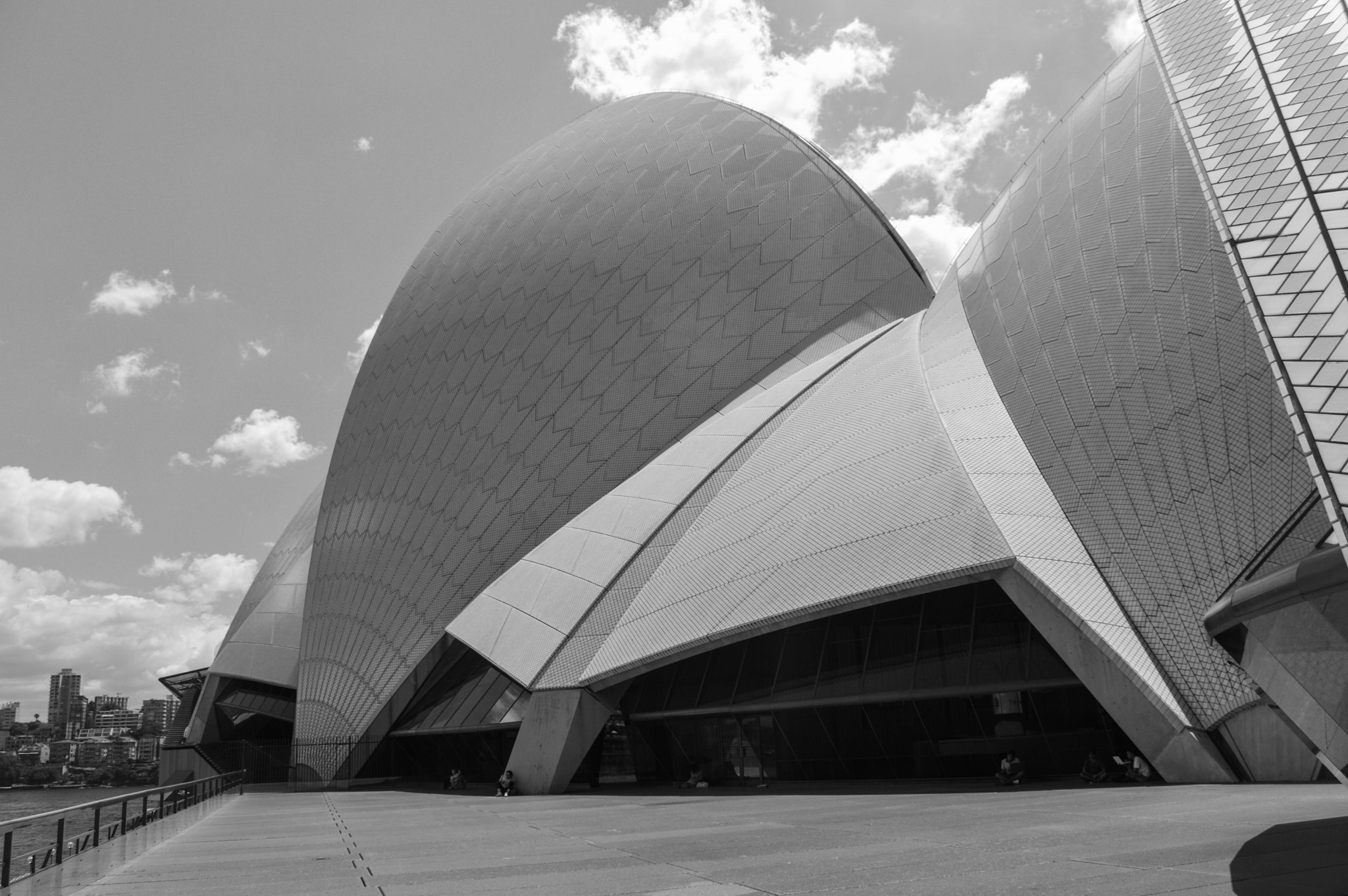
The Sydney Opera House sits on Bennelong Point in Sydney Harbour, its interlocking shell vaults visible from the ferry, from the Harbour Bridge, and from the ridge of the Royal Botanic Garden. Inscribed by UNESCO in 2007, it is one of the few buildings of the twentieth century to earn that designation — and among the youngest properties on the World Heritage List at the time of inscription.
Danish architect Jørn Utzon won the international design competition in 1957 with a scheme that no structural engineer of the day knew how to build. The resolution came through a geometric insight: every shell surface is a triangle cut from a single sphere of radius 75.2 metres, which made prefabrication viable. Construction ran from 1959 to 1973. Utzon resigned in 1966 following a breakdown in his relationship with the New South Wales government, and the interior — the Concert Hall, Opera Theatre, Drama Theatre, and Playhouse — was completed by a team of Australian architects without him. He never returned to see the finished building.
The roof is clad in over one million Swedish-made Höganäs ceramic tiles in two tones — off-white and cream — laid in chevron patterns that shift between matte and gloss depending on the angle of sunlight. UNESCO cited the building’s revolutionary contribution to both structural engineering and architectural form as the basis for inscription.
Getting there: Ferry from Circular Quay (3 min) or 12-minute walk from Wynyard Station. Allow: 1–3 hours for a guided tour; longer for a performance. Best for: Architecture enthusiasts, first-time visitors, evening performance-goers.
Greater Blue Mountains Area 80 km west — 1.5 hr by train or road
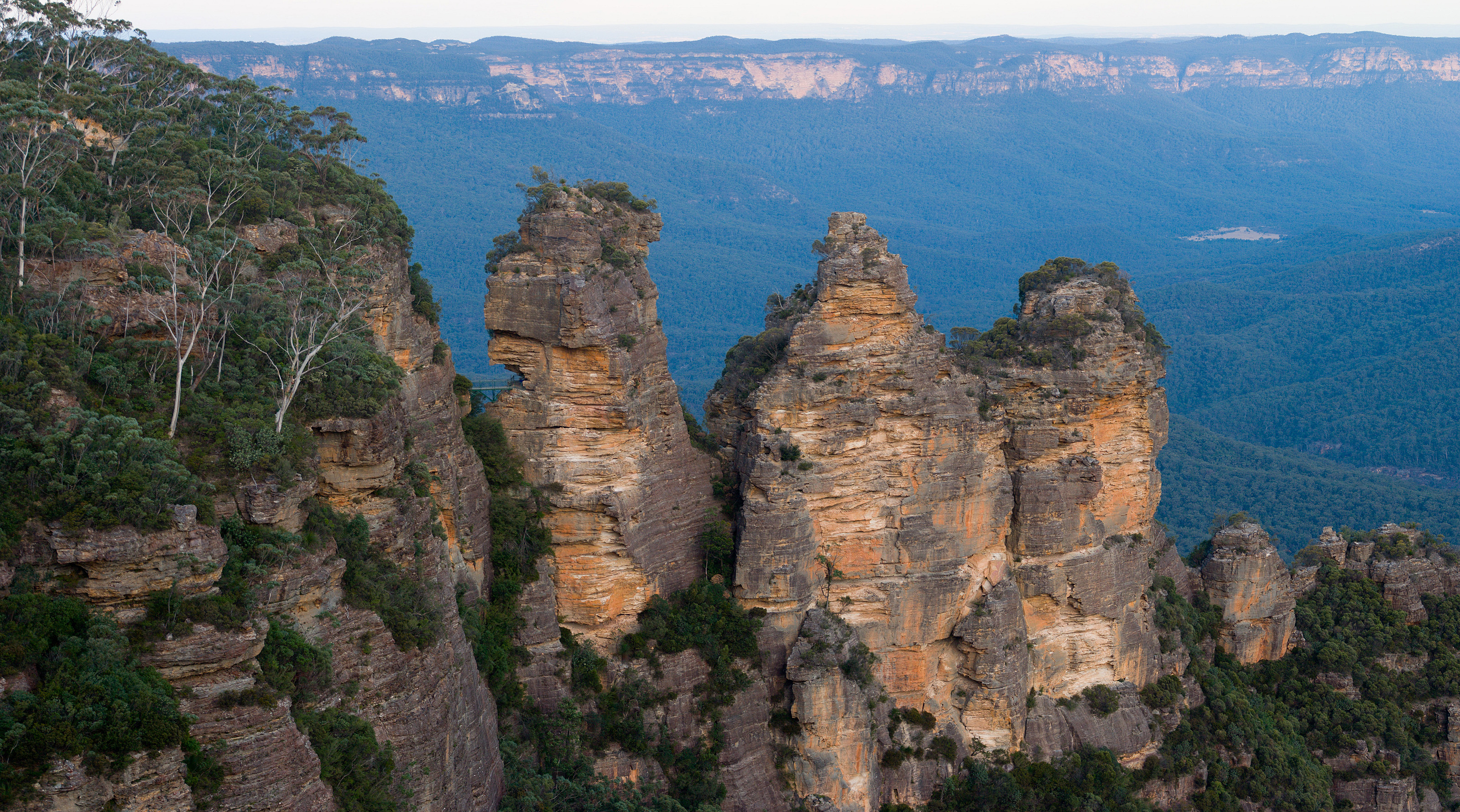
The Greater Blue Mountains Area covers 1,030,000 hectares of sandstone escarpments, gorges, heath, and dense eucalyptus forest stretching west of Sydney. UNESCO inscribed it in 2000, primarily for what it represents scientifically: 91 of Australia’s approximately 900 eucalyptus species occur within the inscribed boundary, making the area one of the most significant repositories of eucalypt biodiversity on Earth. The blue haze that gives the mountains their name is a real optical effect — a fine mist of aromatic oils released by billions of eucalyptus leaves, which scatters short-wavelength light.
The escarpment is visible on clear days from Sydney’s western suburbs. Within the inscribed area, the Three Sisters — three sandstone pillars rising to approximately 1,000 metres above sea level at Katoomba — form the most visited viewpoint, with Echo Point providing an unobstructed panorama across the Jamison Valley. The Jenolan Caves, reached via a winding road from Katoomba, are among the oldest open cave systems in the world at around 340 million years. Aboriginal cultural sites, including rock engravings and axe-grinding grooves, are present throughout the area and form part of the inscription’s outstanding universal value.
The Blue Mountains were not easily penetrated by early European settlers: the three explorers Gregory Blaxland, William Lawson, and William Charles Wentworth made the first crossing recorded by colonists in 1813, following ridgelines rather than valleys. The railway reached Katoomba in 1867, and by the early twentieth century the town had become a resort destination for Sydney residents seeking cooler air.
Getting there: Direct train from Central Station to Katoomba (approximately 2 hours); by road via the Great Western Highway (80 km, 1.5 hr). Allow: A full day minimum; two days to include Jenolan Caves. Best for: Walkers, naturalists, day-trippers from Sydney.
Lord Howe Island Group 700 km northeast — 2 hr domestic flight
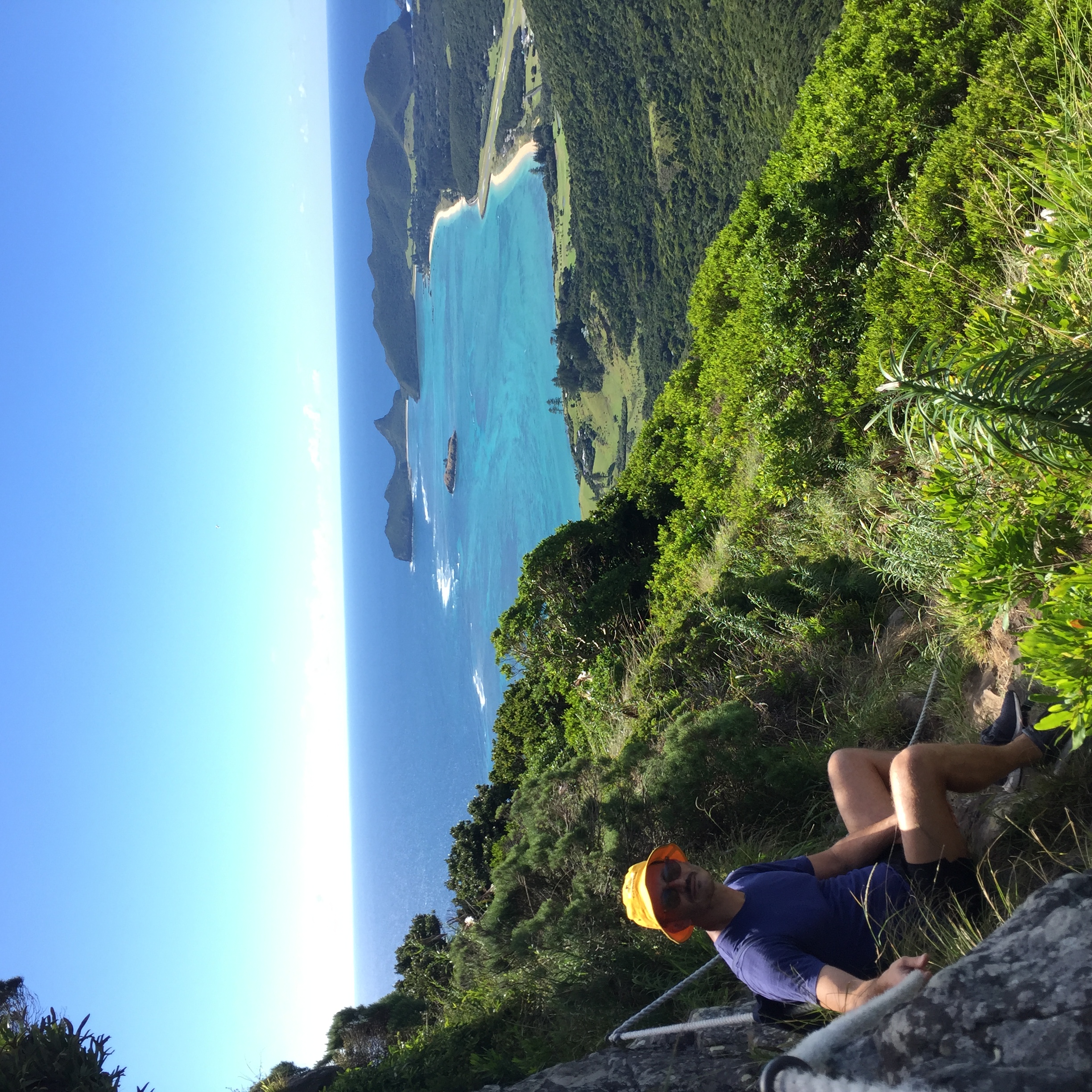
Lord Howe Island was inscribed in 1982 as one of Australia’s first World Heritage properties, recognised for its outstanding natural beauty and its scientific value as an intact oceanic island ecosystem. The island is small — 7 kilometres long and 2 kilometres wide — and visitor numbers are capped by regulation at 400 at any time, a figure that has kept its character largely unchanged since the nineteenth century. About 75 percent of the island’s land area remains natural habitat.
The island is volcanic in origin, formed by hotspot activity approximately 6.9 million years ago, and lies in the Tasman Sea at the convergence of warm and cool ocean currents. This position sustains one of the world’s southernmost coral reef ecosystems, with over 500 species of fish recorded in the surrounding waters. Twenty-three kilometres south of the main island, the sea stack of Balls Pyramid rises 562 metres from the ocean surface — the tallest volcanic sea stack in the world. The island is also the sole habitat of the Lord Howe Island stick insect, a species once thought extinct and rediscovered on Balls Pyramid in 2001.
Lord Howe was uninhabited when first sighted in 1788 by officers aboard HMS Supply. Permanent settlement began in 1834, and the island’s isolation produced a community that supplied passing whalers with provisions. Today fewer than 400 permanent residents live alongside the capped tourist population; bicycles are the primary mode of transport, and the pace of the island reflects a degree of quiet that is increasingly rare in the Pacific.
Getting there: Qantas domestic flights from Sydney (approximately 2 hours); seats are limited and should be booked well in advance. Allow: A minimum of 5 nights to justify the journey; 7–10 days is typical. Best for: Marine naturalists, birdwatchers, divers, travellers seeking genuine remoteness.
Frequently Asked Questions
How many UNESCO World Heritage Sites are near Sydney?
Three UNESCO World Heritage Sites are accessible from Sydney: the Sydney Opera House (inscribed 2007), within the city at Bennelong Point; the Greater Blue Mountains Area (inscribed 2000), 80 kilometres west by train or road; and the Lord Howe Island Group (inscribed 1982), 700 kilometres northeast by domestic flight.
Can you visit the Blue Mountains and the Opera House in one day from Sydney?
Yes, though the combination is full. An early train to Katoomba, a few hours at Echo Point, and a return to the city by late afternoon leaves time for an evening tour or performance at the Opera House. If you want to venture beyond the Echo Point lookout into the valley trails, a dedicated day for each site is more comfortable.
When is the best time to visit Lord Howe Island?
The island is open year-round, but the most settled weather falls between October and May. Summer (December–February) brings warm sea temperatures suitable for snorkelling and diving on the coral reef. The island closes to visitors briefly in winter for maintenance periods; check with operators before booking. Given the visitor cap, flights and accommodation sell out months in advance regardless of season.
Why did Jørn Utzon leave the Sydney Opera House before it was finished?
Utzon resigned in February 1966 following an escalating conflict with the new New South Wales Minister for Public Works, Davis Hughes, over design authority, fee payments, and the direction of the interior fit-out. The dispute was political as much as technical: a change of state government in 1965 brought in an administration that sought tighter control over the project and its budget. Utzon left Australia and never returned. His contribution was formally recognised by the building’s UNESCO inscription, which explicitly noted his role as the foundation of its outstanding universal value.
Sources
- S1 — Drew, Philip. The Masterpiece: Jørn Utzon: A Secret Life. Hardie Grant Books, 1999. ISBN 978-1-86498-047-9.
- S2 — Macqueen, Andy. The Blue Mountains: A History of Exploration. Andy Macqueen, 1993. ISBN 978-0-646-13658-5.
Spotted an error? Write to editorial@culturalheritageonline.com and we correct it the same day.
.jpeg)

