Belarus holds four UNESCO World Heritage Sites, and three are within a day’s reach of Minsk: a Gothic castle that outlasted empires, a Baroque palace surrounded by five distinct landscape parks, and one of Europe’s last primeval forests. From Cultural Heritage Online.
Mir Castle Complex 100 km southwest — 1.5 hr by road
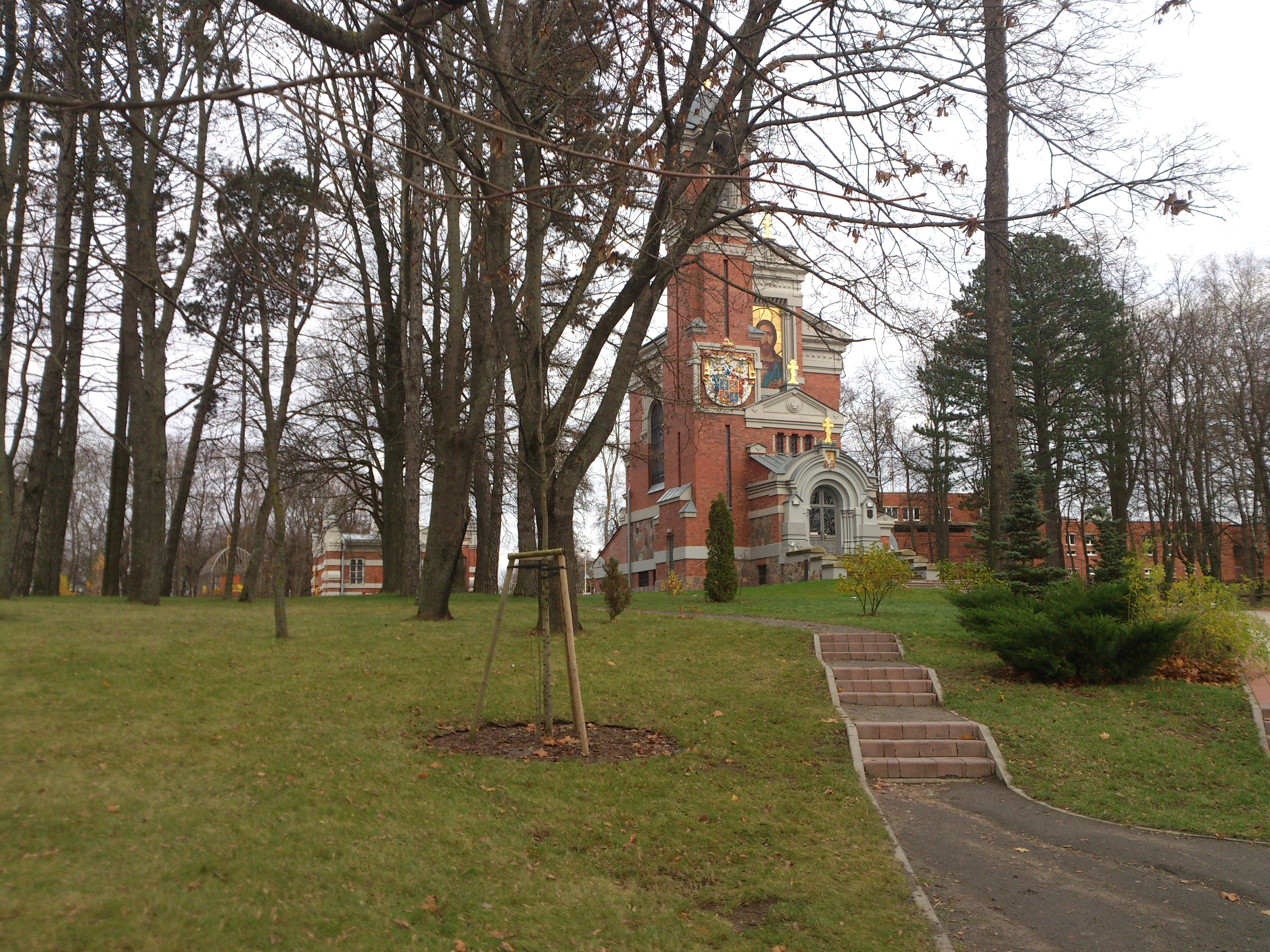
Mir Castle stands on a low rise above an artificial lake, its five asymmetric towers and brick curtain walls built by the Grand Duchy of Lithuania in the early 16th century. The original Gothic structure passed to the Radziwiłł family in 1568, who extended it southward and eastward with Renaissance-style residential wings, importing Italian architectural detailing that sits in pointed contrast to the rougher defensive masonry beneath it. The lake, the English-style landscape garden, and a formal parterre were all added by the Radziwiłłs during their long tenure of the estate.
The castle’s history is one of repeated interruption. Napoleon’s forces damaged it badly during the 1812 campaign, and it stood as a deliberate romantic ruin for much of the 19th century before partial restoration work began under the Svyatopolk-Mirsky family, who added the neo-Gothic chapel that now serves as the family mausoleum. UNESCO inscribed the complex in 2000 for its outstanding value as a crossroads of Gothic, Renaissance, and Baroque architectural traditions within a single fortified compound. Today the interior houses a hotel and a museum tracing the castle’s multiple lives.
Getting there: Marshrutka (shared minibus) from Minsk Central Bus Station to Mir, approximately 1.5 hours; taxis and private transfers also available. Allow: 3–4 hours including the garden and lake circuit. Best for: Visitors with an interest in medieval military architecture and the history of the Polish-Lithuanian Commonwealth.
Architectural, Residential and Cultural Complex of the Radziwill Family at Nesvizh 130 km southwest — 2 hr by road
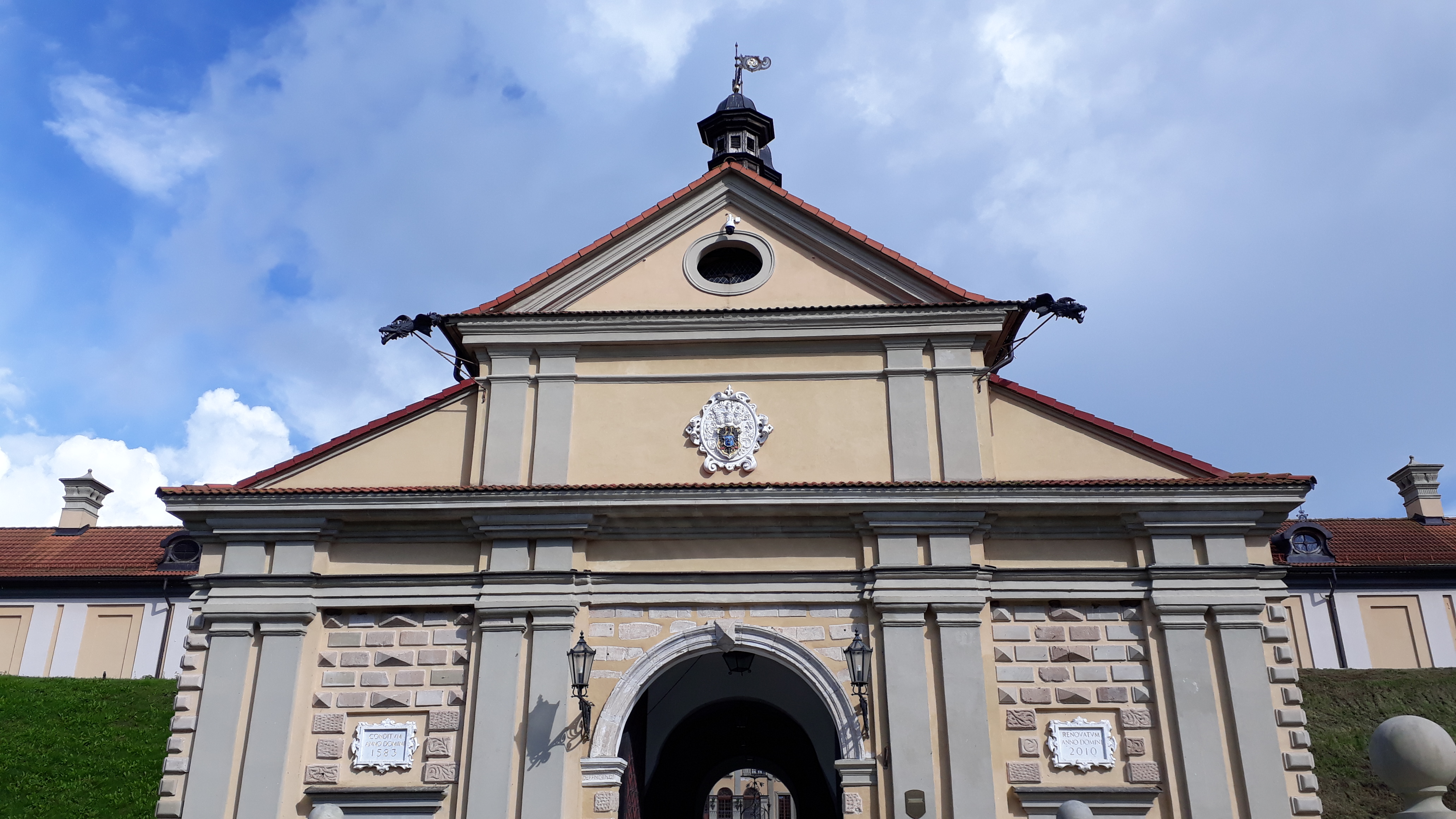
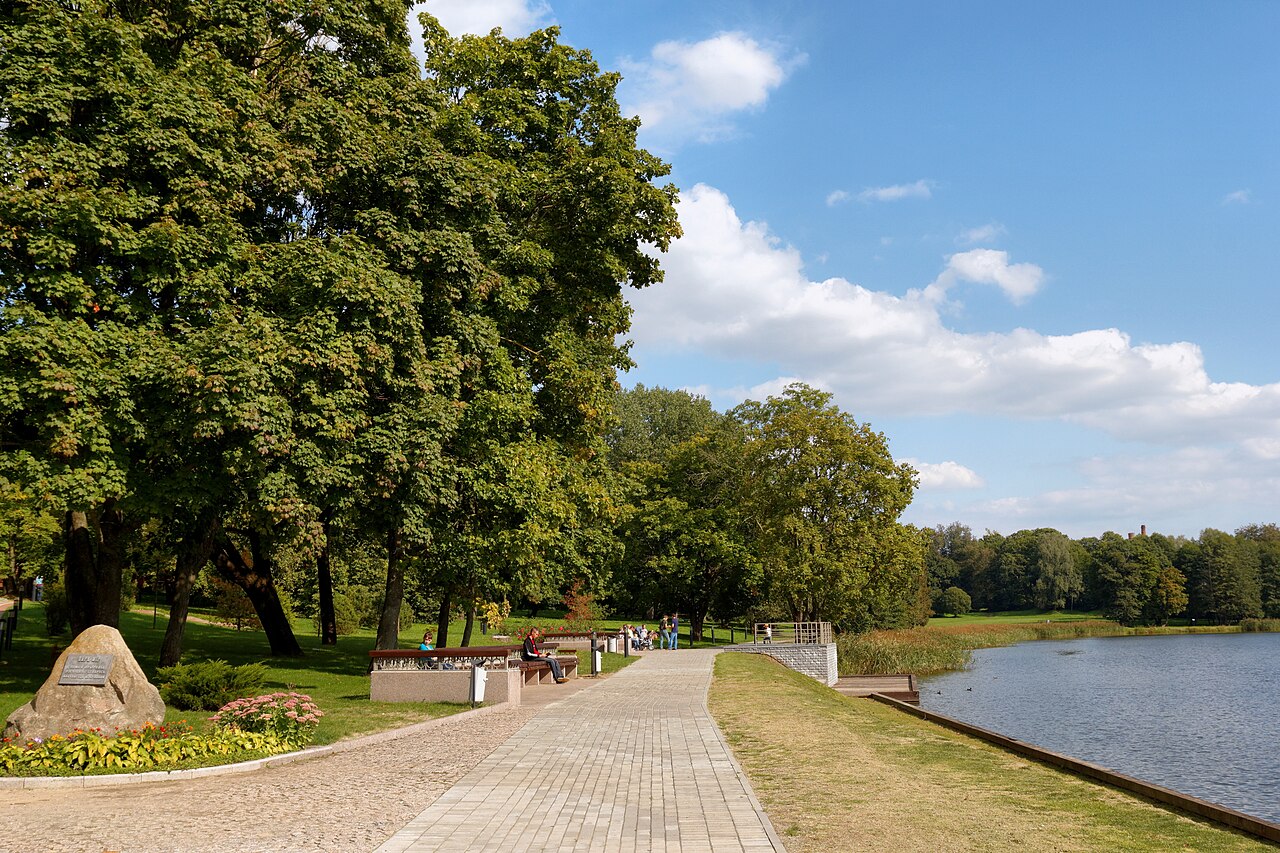
Nesvizh was the seat of the Radziwiłł dynasty, the most powerful magnate family in the Polish-Lithuanian Commonwealth, for over three centuries. The main palace was first built in the 1580s and rebuilt in Baroque form from 1583 onward, with subsequent modifications leaving it a layered record of aristocratic taste across multiple generations. Unlike the military austerity of Mir, Nesvizh was always primarily a residence: the complex includes five landscape parks arranged in contrasting historical styles — English, French, Japanese — spread around a system of defensive earthworks and water features.
The Corpus Christi Church, completed in 1593 and attached to the palace grounds, is considered the oldest Baroque church in the territory of the former Polish-Lithuanian Commonwealth. Beneath it lies the mausoleum of the Radziwiłł family, containing sarcophagi spanning generations of the dynasty. The church’s façade and interior frescoes were completed by Italian architects brought in by the family, making Nesvizh one of the earliest points of contact between Italian Baroque and the architectural culture of the eastern borderlands. UNESCO inscribed the complex in 2005.
Nesvizh is 30 kilometres from Mir, making a combined day trip from Minsk straightforward with a private car or organised tour. The two sites are often visited together precisely because they represent the two faces of the same dynasty: Mir as fortress, Nesvizh as dynastic capital.
Getting there: Direct bus from Minsk to Nesvizh (approximately 2 hours), or combined with Mir via private car or day tour. Allow: 3–4 hours for the palace, church, and at least two of the five parks. Best for: Travellers interested in Baroque architecture, aristocratic history, and landscape garden design.
Białowieża Forest 350 km west — 4–4.5 hr by road
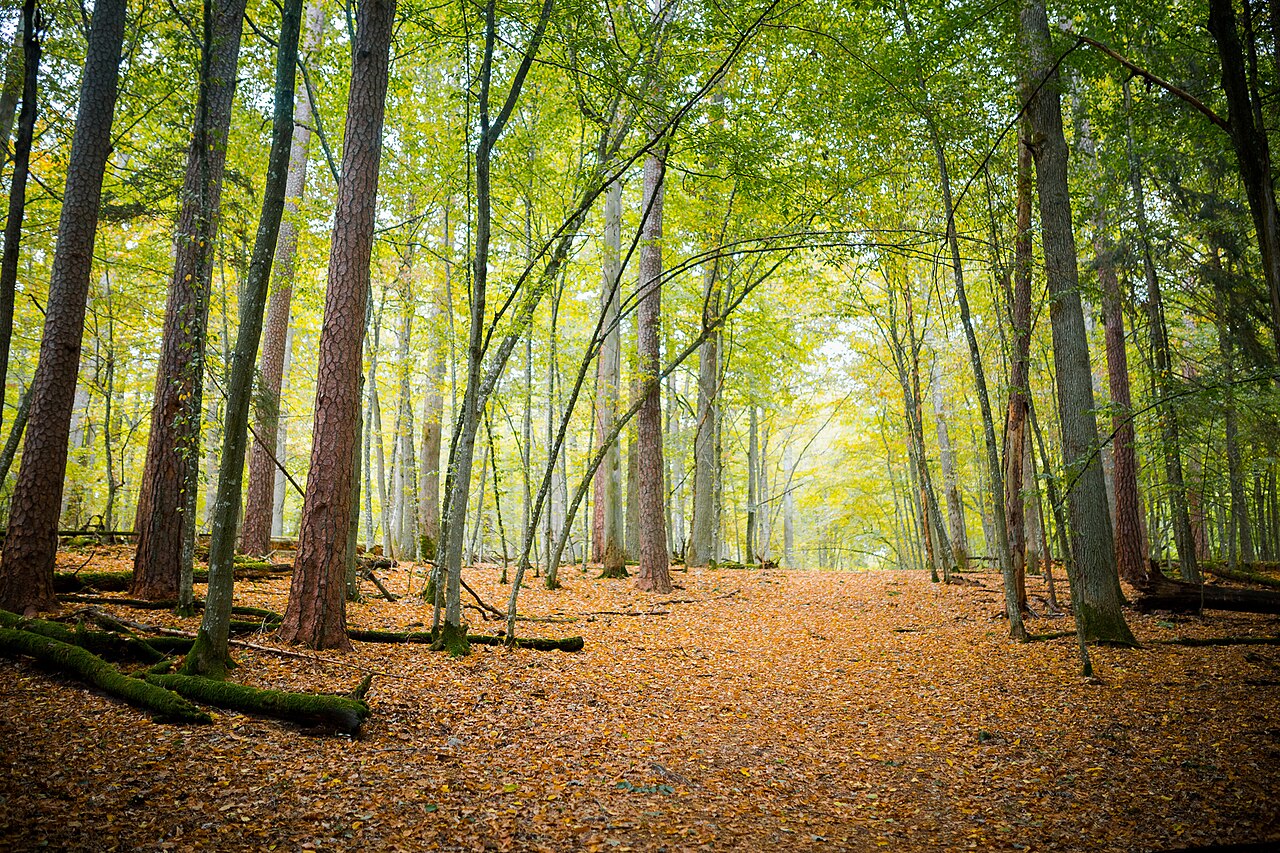
Białowieża Forest — known in Belarusian as Belavezhskaya Pushcha — is the last remaining example of the primeval lowland forest that once covered the whole of the European plain. The ecosystem is not a managed woodland but a self-regulating forest in which dead trees remain standing or lying for decades, creating conditions for species that have vanished from every other managed forest on the continent. Oaks, lime, hornbeam, ash, and spruce reach dimensions here that have not been seen in Central European forests since the medieval clearing of the lowlands.
The forest gained international attention through its most visible resident: the European bison (Bison bonasus), the largest land mammal in Europe. The species was hunted to extinction in the wild — the last wild individual was killed in the Caucasus in 1927 — and reintroduced to Białowieża from captive stock beginning in 1952. The Belarusian portion of the forest, which is the larger of the two national sections (the other being in Poland), now supports a stable bison population and trees recorded at up to 600 years old. UNESCO first inscribed the forest in 1979, making it one of the earliest natural World Heritage Sites in Europe; the trans-boundary designation with Poland was formalised in 1992.
The distance from Minsk makes this a two-day excursion rather than a day trip. The Belarusian side is managed as a national park (Belavezhskaya Pushcha National Park), with guided forest walks, a bison reserve enclosure, and accommodation inside the park boundary.
Getting there: 4–4.5 hours by car from Minsk via Brest highway; direct bus connections exist but are slow (6+ hours). Overnight stays within the park are recommended. Allow: Minimum 1 night; 2 nights to explore both the strict reserve zone and the wider forest on foot. Best for: Nature travellers, wildlife photographers, and those interested in European ecological history.
Frequently Asked Questions
How many UNESCO World Heritage Sites are near Minsk?
Belarus has four UNESCO World Heritage Sites in total. Three are accessible from Minsk: Mir Castle Complex (inscribed 2000), the Architectural, Residential and Cultural Complex of the Radziwill Family at Nesvizh (2005), and Białowieża Forest (1979, trans-boundary with Poland). The fourth Belarusian site, the Struve Geodetic Arc, is a network of survey points across eleven countries and not a destination in the conventional sense.
How do I get from Minsk to Mir Castle?
Shared minibuses (marshrutki) depart regularly from Minsk Central Bus Station and reach the town of Mir in approximately 1.5 hours. From the bus stop in Mir, the castle is a short walk. A private taxi or hired car takes the same time and allows more flexibility, particularly if combining Mir with Nesvizh on the same day. Direct bus services from Minsk to Nesvizh also exist, with a journey time of around 2 hours.
Can I visit Mir Castle and Nesvizh in one day?
Yes, with a private car or organised day tour. The two sites are 30 kilometres apart, and a focused visit to each — two to three hours at Mir, two to three hours at Nesvizh — is manageable within a single long day from Minsk. Public transport between the two towns requires changing buses and consumes considerably more time, making a shared taxi or tour the practical option for a combined visit.
What is the historical connection between Mir Castle and Nesvizh?
Both sites were owned and shaped by the Radziwiłł family, the dominant magnate dynasty of the Polish-Lithuanian Commonwealth. Mir served primarily as a fortified stronghold and was acquired by the Radziwiłłs in 1568; Nesvizh was developed from the same decade as their primary residence and dynastic seat. The two properties thus represent complementary functions within a single aristocratic estate spread across the landscape of what is now western Belarus. Together they document the ambitions and cultural reach of a family that, at its peak, controlled territory larger than many European kingdoms.