

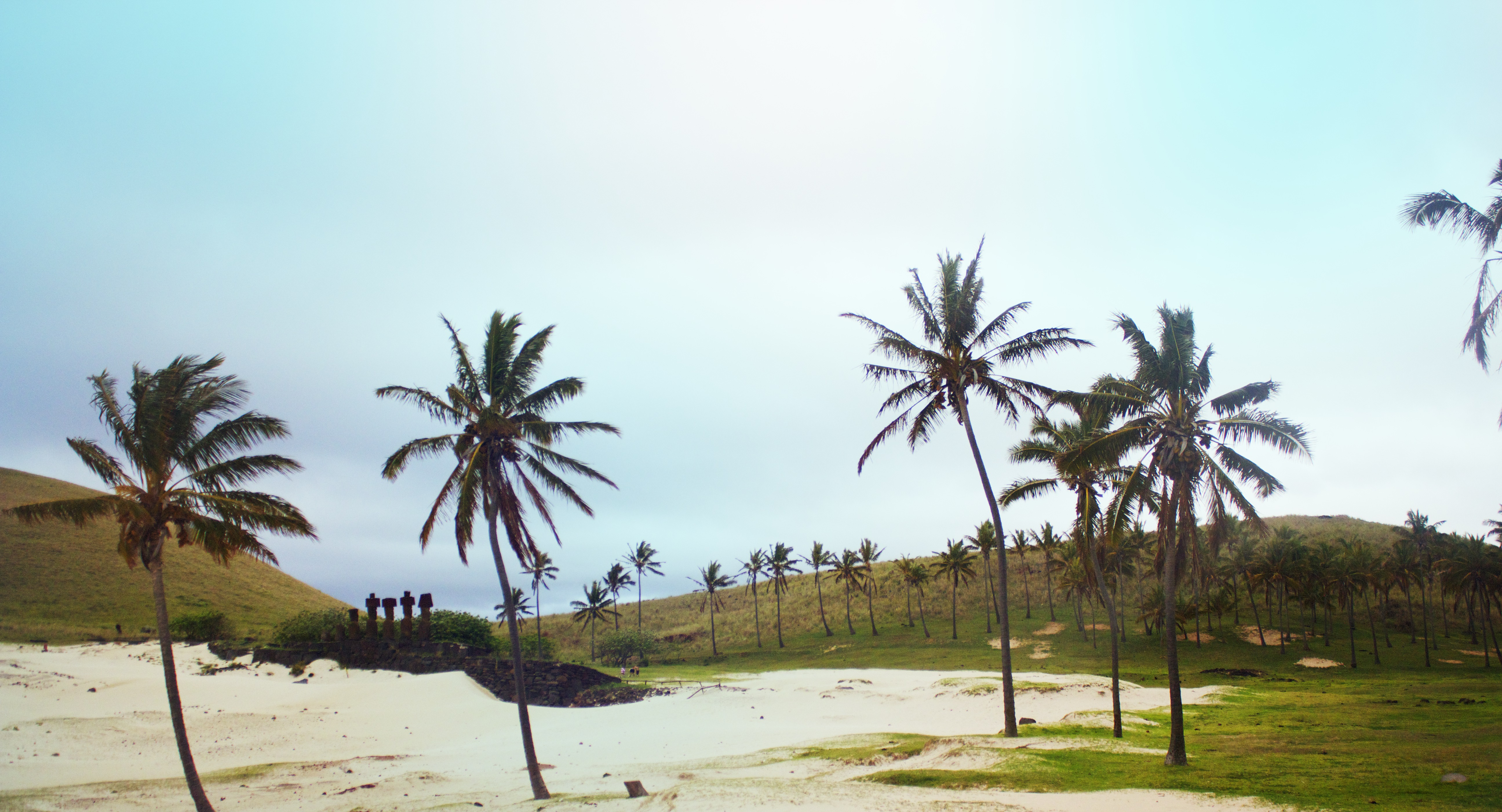
Santiago is the gateway to two of Chile’s UNESCO World Heritage Sites — the remarkably preserved Andean company town of Sewell, reachable in under two hours, and the remote volcanic island of Rapa Nui, 3,700 kilometres out into the Pacific. From Cultural Heritage Online.
Sewell Mining Town 85 km southeast — 2 hr by road + guided tour
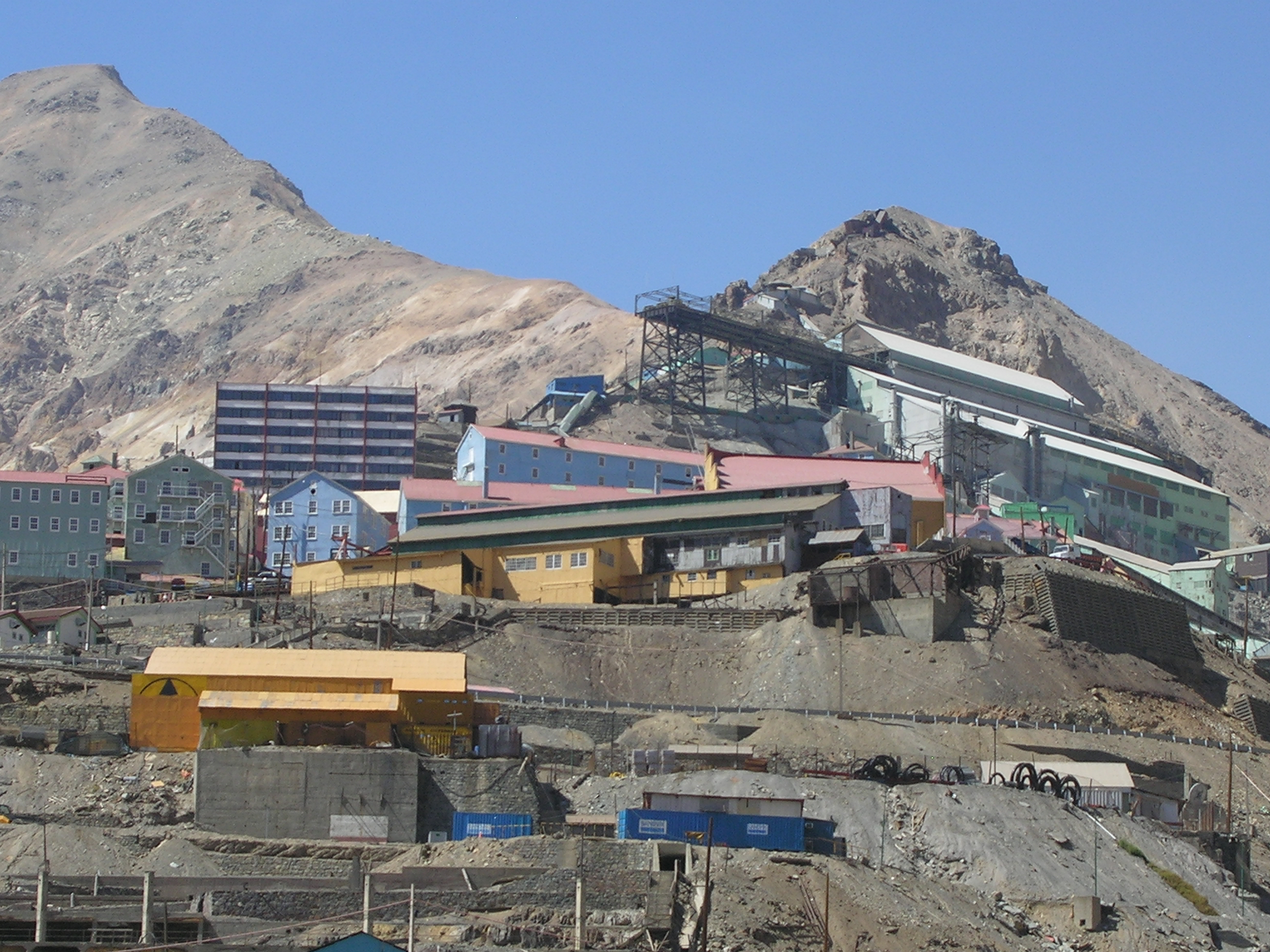
Sewell sits at 2,000 metres on a steep Andean ridge above the El Teniente copper mine, 85 kilometres southeast of Santiago near the city of Rancagua. The Braden Copper Company began building the settlement in 1905 to house workers at what would become the world’s largest underground copper mine. Because the terrain made road construction impractical, the entire town was served by a single mountain railway — every person, every bag of cement, every loaf of bread arrived by train. The absence of roads is the reason Sewell looks the way it does: instead of streets, the settlement climbs the ridge on a continuous staircase, the colourful wooden buildings stepping upward in tight, angular rows.
At its peak in the mid-twentieth century, Sewell housed around 15,000 people in a self-contained world that included a hospital, cinema, school, and sports facilities — all of it suspended in alpine silence far above the valley. Operations wound down after 1967 as workers were relocated to Rancagua, and the town was effectively abandoned by 1977. What remains is a near-complete industrial settlement frozen in time: the company store, the casino, the workers’ barracks, the engineering workshops. The El Teniente mine below continues to operate, which makes Sewell the rare case of an inhabited industrial landscape whose residential layer has been preserved as heritage while the productive layer keeps running.
UNESCO inscribed Sewell in 2006 as an outstanding example of a company town and as evidence of the social organisation of an isolated industrial community in an extreme environment. Access is strictly controlled: the site is reached only via guided tours, which depart from Rancagua and use the historic railway or road transport arranged by tour operators.
Getting there: Santiago to Rancagua by train (45 min, frequent departures from Estación Central) or car (A-5 motorway, 85 km); guided tours from Rancagua to Sewell run by CODELCO-authorised operators; transfers by bus up the mountain road. Allow: Full day from Santiago, including transfer time and a 3–4 hr guided tour on site. Best for: Industrial heritage enthusiasts, architecture travellers, and those interested in early twentieth-century social history.
Rapa Nui National Park (Easter Island) 3,700 km west — 1 hr domestic flight from Santiago
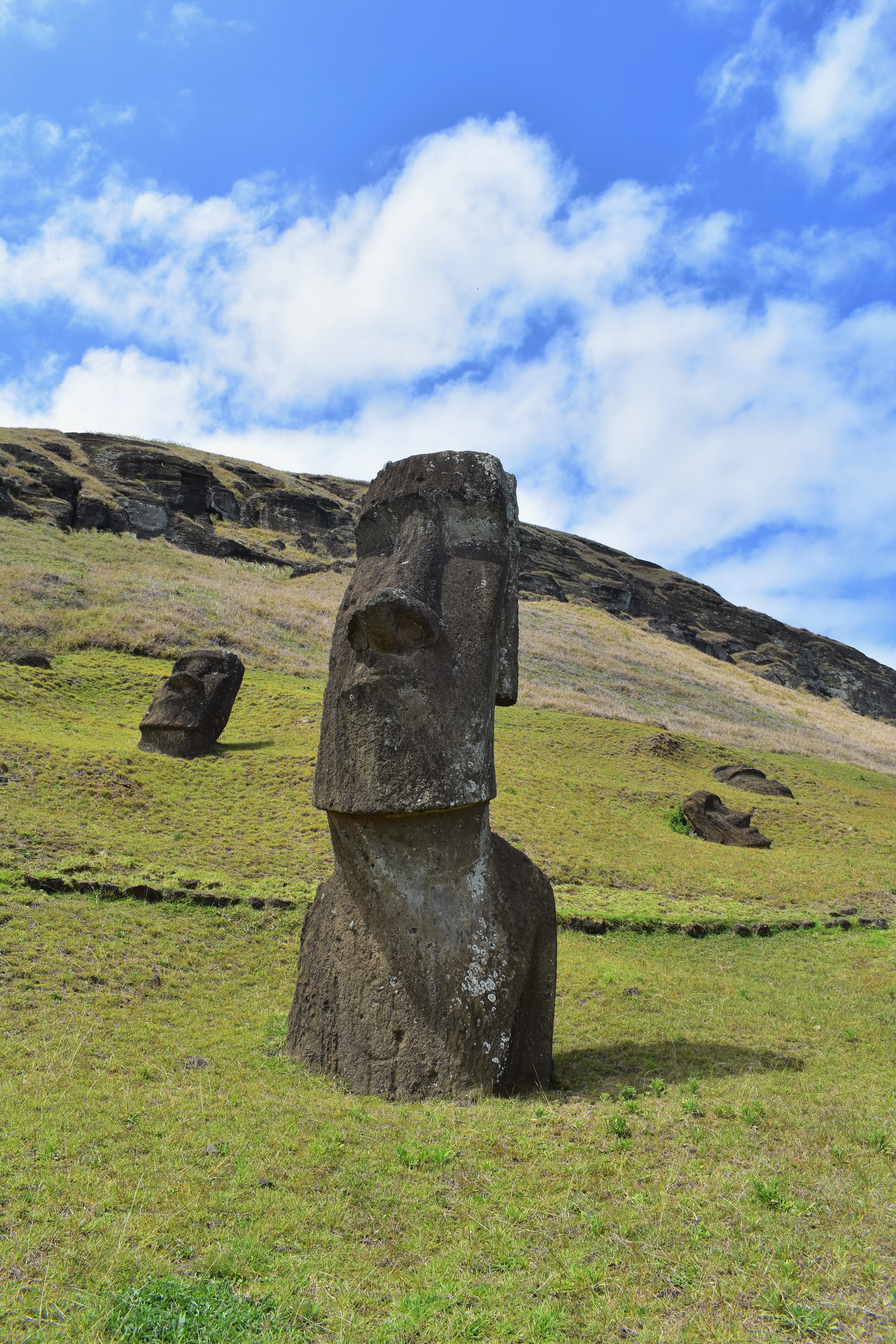
Rapa Nui lies in the southeastern Pacific Ocean at one of the most remote points of permanent human habitation on earth. The island covers roughly 163 square kilometres and is of volcanic origin, formed by three principal shield volcanoes. Between approximately 1250 and 1500 AD, the Rapa Nui people carved more than 900 monolithic statues — moai — from the compressed volcanic ash of the Rano Raraku quarry and transported them across the island to ceremonial platforms called ahu that line the coastline. The largest standing moai reaches 10 metres in height and weighs 82 tonnes; the process by which the Rapa Nui moved these figures across the terrain without wheeled vehicles or draft animals remains a subject of active research.
The Rano Raraku quarry is the most revealing single site on the island: roughly 400 moai remain here, at various stages of completion, still embedded in the hillside from which they were carved. The finished figures were never moved; when the carving tradition ceased abruptly — likely in connection with societal collapse, resource depletion, and subsequent European contact from 1722 — the quarry was simply left as it stood. Elsewhere on the island, the Orongo ceremonial village perches on the rim of the Rano Kau volcanic crater. Orongo was the site of the birdman cult, a competitive annual ritual that replaced the earlier moai tradition and involved retrieving the first egg of the sooty tern from a small islet offshore. The village’s stone houses and carved petroglyphs survive intact.
UNESCO inscribed Rapa Nui National Park in 1995, recognising the cultural landscape as a unique and outstanding testimony to a living culture with no parallel elsewhere. The national park covers most of the island, and access to some platforms and the quarry area is managed by the Ma’u Henua indigenous community, which administers the site under an agreement with the Chilean state.
Getting there: LATAM Airlines operates daily direct flights from Santiago (SCL) to Mataveri International Airport (IPC) on Easter Island; flight time approximately 5–5.5 hr. All tourism on the island is concentrated in the single town of Hanga Roa. Allow: Minimum 4 days to cover the main sites without rushing; 6–7 days is more comfortable. Best for: Travellers with a strong interest in Pacific archaeology, Indigenous cultural heritage, and extreme geography; also suits those who want a complete change of register from mainland South America.
Frequently Asked Questions
How many UNESCO World Heritage Sites are near Santiago?
Two UNESCO sites are directly accessible from Santiago: Sewell Mining Town (inscribed 2006), located 85 km southeast, and Rapa Nui National Park (inscribed 1995), reached by a domestic flight of approximately five hours. Chile also has the Humberstone and Santa Laura Saltpeter Works (2005) in the far north near Iquique, and the historic quarter of Valparaíso (2003), 120 km northwest of Santiago.
How do I visit Sewell Mining Town from Santiago?
Sewell is not open for independent visits. Access requires a guided tour authorised by CODELCO, the Chilean state copper company that owns the site. Tours depart from Rancagua, which is 45 minutes from Santiago by commuter train or about one hour by car. The tour itself lasts 3–4 hours on the ridge. A full-day excursion from Santiago is realistic; operators can be booked in advance online or through tour agencies in Santiago or Rancagua.
When is the best time to visit Rapa Nui and can I combine it with Sewell?
Rapa Nui is mild year-round, with the warmest and driest months running from December through March; February hosts the Tapati Rapa Nui cultural festival, which draws large crowds but offers an extraordinary cultural experience. A practical itinerary combines Sewell as a day trip from Santiago before or after a 4–6 day stay on Easter Island, since both depart from the capital. The two sites are so different in character — industrial Andean heritage versus Pacific Island archaeology — that visiting them in sequence makes for a genuinely varied itinerary.
Who built the moai on Easter Island, and why did they stop?
The moai were carved by the Rapa Nui people, the Polynesian inhabitants of the island, between roughly 1250 and 1500 AD. The statues are believed to have represented deified ancestors, with their spiritual power directed inland toward the communities they were erected to protect. Production appears to have ceased abruptly before the island’s population declined sharply — a collapse attributed to a combination of deforestation, soil erosion, inter-group conflict, and the disruptions brought by European contact beginning in 1722. The Rano Raraku quarry, with 400 unfinished moai still embedded in the hillside, stands as a direct record of that cessation.
Sources
- S1 — Collier, Simon, and William F. Sater. A History of Chile, 1808–2002. Cambridge University Press, 2004. ISBN 978-0-521-82749-2.
- S2 — Fischer, Steven Roger. Island at the End of the World: The Turbulent History of Easter Island. Reaktion Books, 2005. ISBN 978-1-86189-282-9.
Spotted an error? Write to editorial@culturalheritageonline.com and we correct it the same day.



.jpg)