
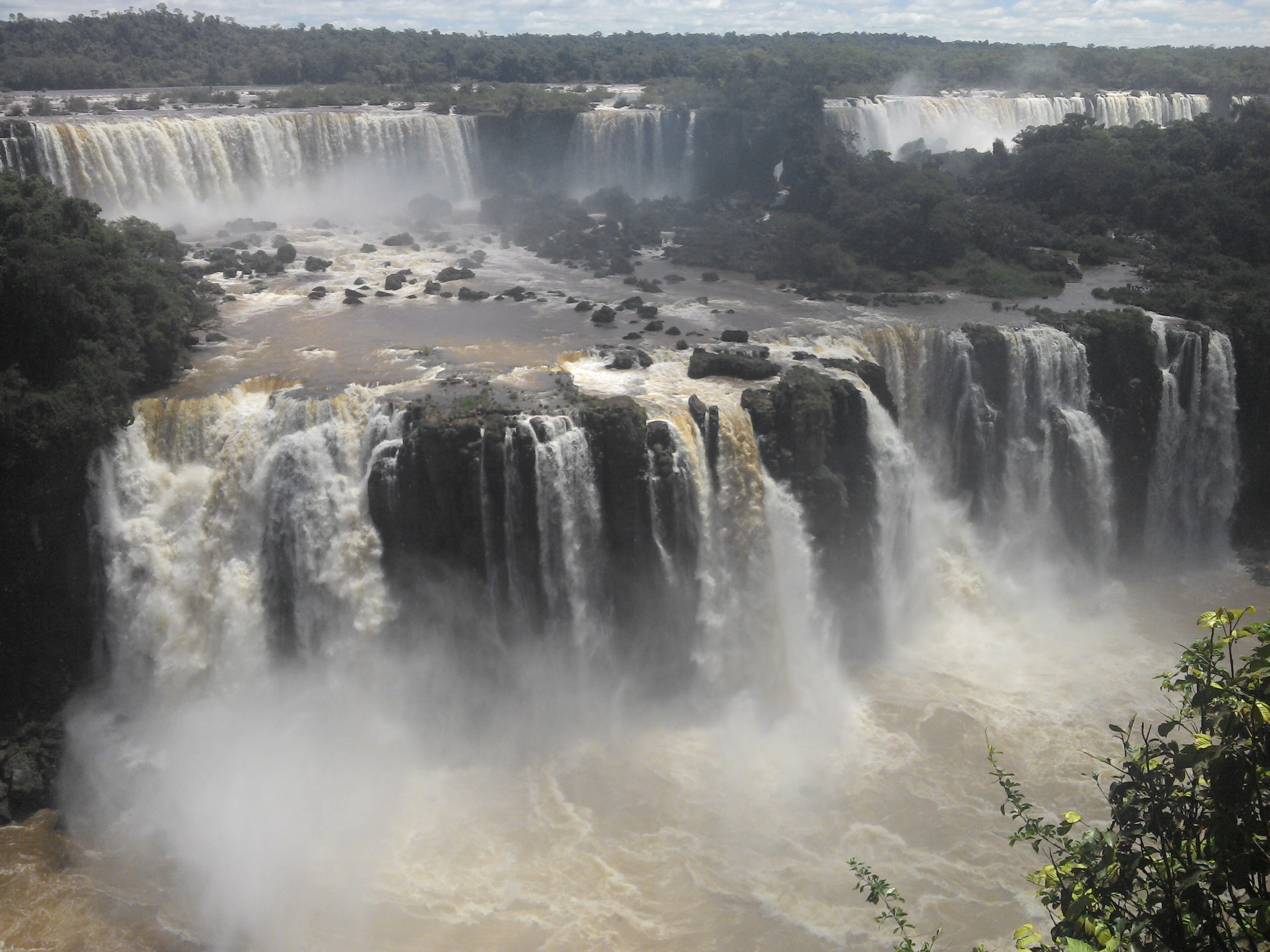
Argentina holds two UNESCO World Heritage Sites within reach of Buenos Aires: Iguazu National Park to the north, where 275 waterfalls form the largest such system on earth, and the Jesuit Block and Estancias of Córdoba, a colonial ensemble whose oldest university has operated without interruption since 1613. From Cultural Heritage Online.
Iguazu National Park 1,300 km north · 2 hr by domestic flight
Iguazu National Park was inscribed by UNESCO in 1984 for its exceptional natural significance: the Iguazu River, crossing the border between Argentina and Brazil, drops over a basalt escarpment in a system of 275 individual falls spread across nearly 3 kilometres of jungle. The scale is disorientating in the best way — you hear it before you see it, a low sustained roar audible from the town of Puerto Iguazú, 5 kilometres away, and the spray lifts high enough to sustain a permanent arc of rainbows above the gorge.
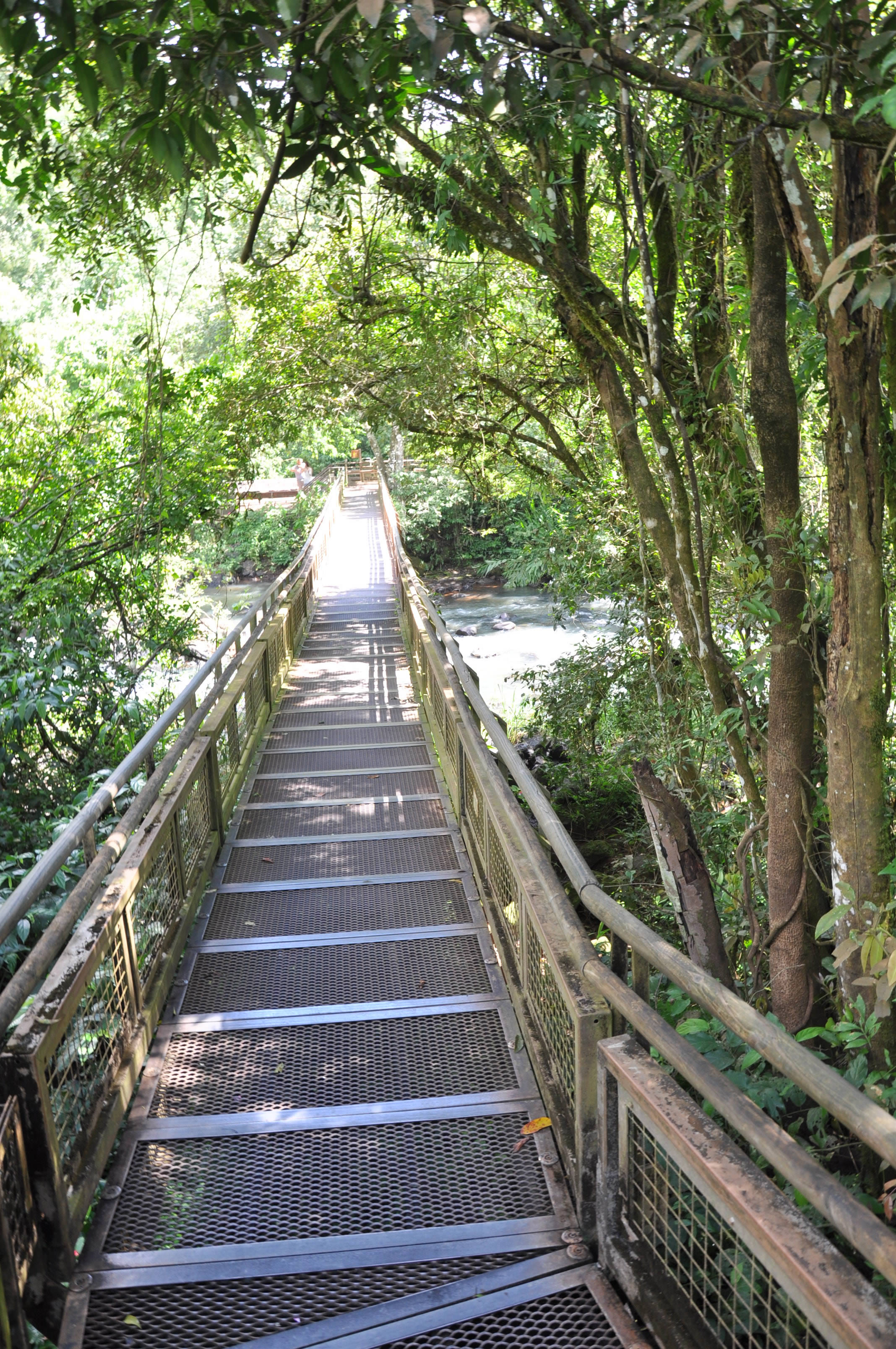
The centrepiece is the Devil’s Throat (Garganta del Diablo), a U-shaped chasm where 14 cascades converge and the water disappears into a perpetual white curtain of mist. The Argentine side places you at the edge, on elevated walkways that extend above the rim; the Brazilian side, also UNESCO-inscribed since 1986, offers the panoramic view from across the canyon and is reachable in a day trip. Between the two perspectives, the falls reveal themselves from above and below, from inside the spray and from a safe distance, and no single angle is definitive.
The surrounding Atlantic Forest — semi-deciduous subtropical jungle — is itself the reason the park exists. Toucans, coatis, and giant swifts that nest behind the curtain of falling water are routine sightings on the circuit trails. The ecosystem here is under pressure from surrounding agricultural land, which makes the protected corridor of the park all the more critical to preserve.
Getting there: Domestic flights from Buenos Aires Aeroparque or Ezeiza to Puerto Iguazú (Cataratas del Iguazú Airport), approximately 2 hours; Aerolíneas Argentinas and LATAM operate multiple daily services. The park entrance is 18 km from the airport by taxi or remis. Allow: Minimum 2 full days to cover both the Upper and Lower Circuits and the Devil’s Throat walkway without rushing. Best for: Nature travellers, photographers, and anyone combining a visit with the Brazilian side for the full panoramic perspective.
Jesuit Block and Jesuit Estancias of Córdoba 750 km northwest · 1 hr by domestic flight or 8-9 hr by bus
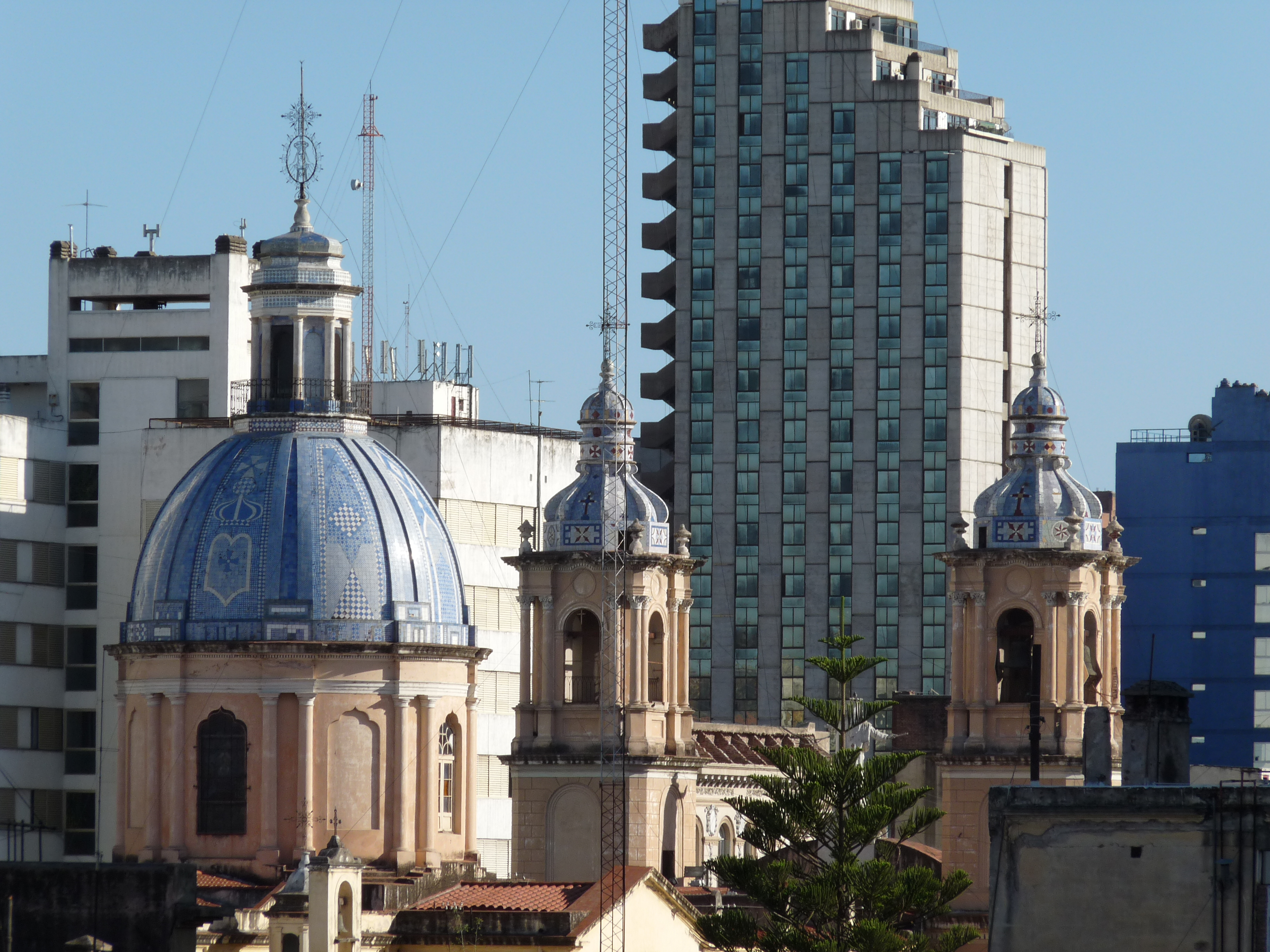
UNESCO inscribed the Jesuit Block and the five Jesuit Estancias of Córdoba in 2000, recognising an intact colonial system that is unlike anything else in the Americas. The Block itself sits in the historic core of Córdoba city: three buildings built and operated by the Society of Jesus between the early seventeenth century and their expulsion from Spanish territories in 1767. The Iglesia de la Compañía, constructed between 1645 and 1676, has a vaulted ceiling of Paraguayan cedar modelled on the Gesù in Rome — a detail that becomes striking only when you stand beneath it and register the scale of the timber, fitted without a single nail using traditional Guaraní joinery. Next to it, the Universidad Nacional de Córdoba, founded in 1613, is the oldest university in Argentina and one of the oldest in the Americas still in continuous operation.
The five estancias — Alta Gracia, Jesús María, Santa Catalina, Caroya, and La Candelaria — were functional farms established across the Sierras de Córdoba to generate income for the Córdoba college. Each one has a church, residential quarters, and agricultural structures in a state of preservation that reflects the abrupt halt of Jesuit activity in 1767 rather than gradual decline. Alta Gracia is the most visited, partly because the house where the young Ernesto Guevara grew up is a short walk from the estancia church. Santa Catalina, the most remote, retains its baroque church façade and a sense of deliberate isolation.
Taken together, the Jesuit Block and the estancias document a colonial economic and educational network that operated for a century and a half across a defined geographic territory. The architecture is understated by the standards of Spanish colonial baroque — practical, durable, built to last rather than to impress — which is itself the point.
Getting there: Domestic flights from Buenos Aires Aeroparque to Córdoba Airport (Ingeniero Aeronáutico Ambrosio L.V. Taravella), approximately 1 hour; frequent daily services. The Jesuit Block is walkable from the city centre; the estancias require a rental car or day tours from Córdoba (Alta Gracia is 36 km south, Santa Catalina 75 km north). Long-distance buses from Retiro station in Buenos Aires reach Córdoba in 8–9 hours overnight, a practical option if time allows. Allow: 1 full day for the Jesuit Block plus Alta Gracia; 2 days to cover all five estancias. Best for: Travellers interested in colonial history, Jesuit heritage, and the architecture of the Spanish Americas.
Frequently Asked Questions
How many UNESCO World Heritage Sites are near Buenos Aires?
Two UNESCO World Heritage Sites are accessible from Buenos Aires: Iguazu National Park (inscribed 1984), which contains the Iguazu Falls on the Argentina-Brazil border, and the Jesuit Block and Jesuit Estancias of Córdoba (inscribed 2000), a colonial university and network of five farming estates in the Sierras de Córdoba. Buenos Aires itself has no inscribed UNESCO properties, though the Manzana de las Luces historic block appears on Argentina’s Tentative List.
How do you get from Buenos Aires to Iguazu Falls?
The most practical option is a domestic flight from Buenos Aires Aeroparque (Jorge Newbery) or Ezeiza international airport to Puerto Iguazú (Cataratas del Iguazú Airport), taking approximately 2 hours. Aerolíneas Argentinas and LATAM both operate multiple daily services. The park entrance is 18 kilometres from the airport by taxi or remis. There are also long-distance buses from Retiro station, but the journey takes roughly 18 hours; this is only practical as an overnight option. Most visitors allow 2 full days at the falls to cover the main circuits and the Devil’s Throat walkway.
What is the best time of year to visit Iguazu Falls and the Jesuit Estancias?
Iguazu Falls can be visited year-round, but water volume — and therefore spectacle — peaks between November and March, the rainy season in the subtropical north. This period is also hotter and more humid; the falls themselves generate their own microclimate of permanent mist regardless of season. The drier months from April to September are cooler and more comfortable for walking the circuits. The Jesuit Estancias of Córdoba are best visited between April and October, when the high-altitude Sierras de Córdoba have mild temperatures; the summer months (December to February) are warm and can be crowded with Argentine domestic tourists.
What makes the Jesuit Estancias of Córdoba historically significant?
The Jesuit Estancias represent a self-contained colonial system that operated from the early 1600s until the expulsion of the Jesuits from Spanish territories in 1767. The five farms — Alta Gracia, Jesús María, Santa Catalina, Caroya, and La Candelaria — were established specifically to fund the University of Córdoba, the oldest in Argentina. The university, the Jesuit Church (Iglesia de la Compañía), and the Colegio Máximo form the Jesuit Block in the city centre. Together they document how the Society of Jesus built an integrated economic, educational, and religious network across a colonial territory, and the abruptness of the 1767 expulsion means many structures survive largely as they were left.



.jpg)
_2008-11-16.jpg)