In 1930, in Stuttgart, precision model builder Johannes Graupner founded a specialized workshop supplying scale drawings, balsa wood, and construction materials for gliders and model aircraft. Growing from interwar Swabian craft traditions into an international legend, Graupner Modellbau popularized radio-controlled (RC) flight across the globe, introducing generations of engineers, pilots, and hobbyists to the aerodynamics of flight through iconic kits like the Amigo, the Cirrus, and groundbreaking multichannel transmitters.
The Stuttgart Workshop: Balsa, Silk, and Interwar Aerodynamics (1930–1945)
In interwar Germany, enthusiasm for aviation swept through youth clubs and technical universities, spurred by the glider soaring experiments on the Wasserkuppe mountain. In 1930, Johannes Graupner (1896–1953) recognized that aspiring model aeronauts lacked standardized, high-quality timber and mathematically accurate plans. Setting up his workshop in Stuttgart, Graupner began importing lightweight South American balsa wood, precision-cutting wing ribs, and publishing scale model construction blueprints.
By producing complete pre-cut kit boxes containing silk covering paper, dope lacquer, and calibrated lead ballast, Graupner transformed model aviation from a frustrating trial-and-error hobby into a rigorous, scientifically grounded discipline.
The Radio Control Revolution: Kirchheim unter Teck and Global Skies
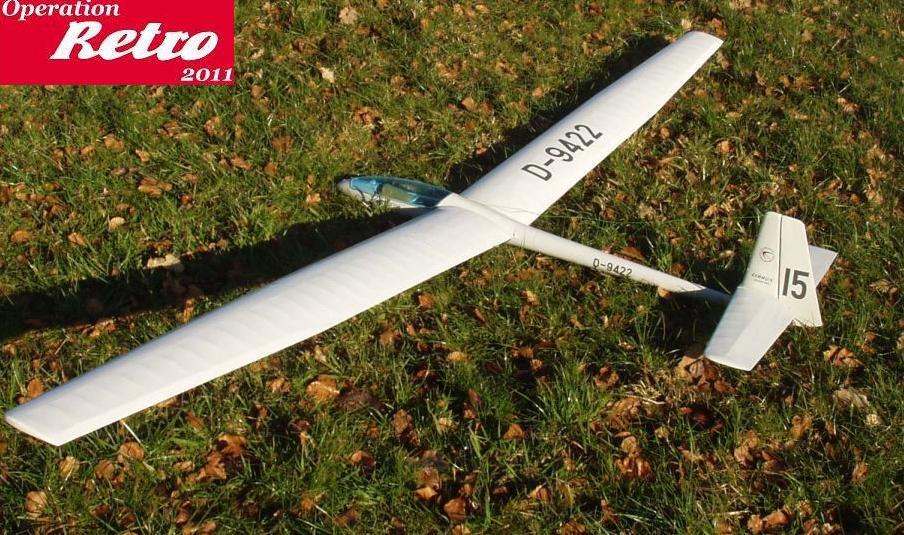
Relocating to Kirchheim unter Teck in 1953 under the energetic leadership of the founder’s son, Hans Graupner, the firm catalyzed the modern radio control revolution. Graupner introduced the Bellamatic servo and Variophon audio-tone modular transmitters in the late 1950s, followed in 1969 by the legendary Cirrus sailplane—the first production RC glider to incorporate fiberglass-reinforced resin fuselage components.
For millions around the globe, Graupner kits were the spark that ignited lifetime careers in aerospace engineering, automotive design, and commercial aviation, cementing Johannes Graupner’s 1930 Swabian workshop as an immortal monument to flight in miniature.
L'officina meccanica: utensileria, precisione tecnica e costruzioni in miniatura
Immagini d'archivio storico dell'Istituto Luce che testimoniano l'officina meccanica di precisione, la cura manuale degli ingranaggi e l'arte della costruzione tecnica di precisione. (Fonte: Archivio Storico Istituto Luce Cinecittà)
Interactive 360° Street View: Graupner Historical Headquarters & Aviation Modeling Center
Historical Location: Henriettenstraße 96, 73230 Kirchheim unter Teck, Baden-Württemberg, Germany (Coordinates: 48.643, 9.4475)
Territorial Map & Location Overview
Sources
- S1 — Graupner, Hans. Graupner Modellbau: Eine Unternehmensgeschichte. Kirchheim unter Teck, 2000. ISBN 978-3-00-006232-2.
- S2 — Retzlaff, Christian. Faszination Modellflug: Geschichte und Technik. GeraMond, 2008. ISBN 978-3-7654-7332-6.
Spotted an error? Write to editorial@culturalheritageonline.com and we correct it the same day.