
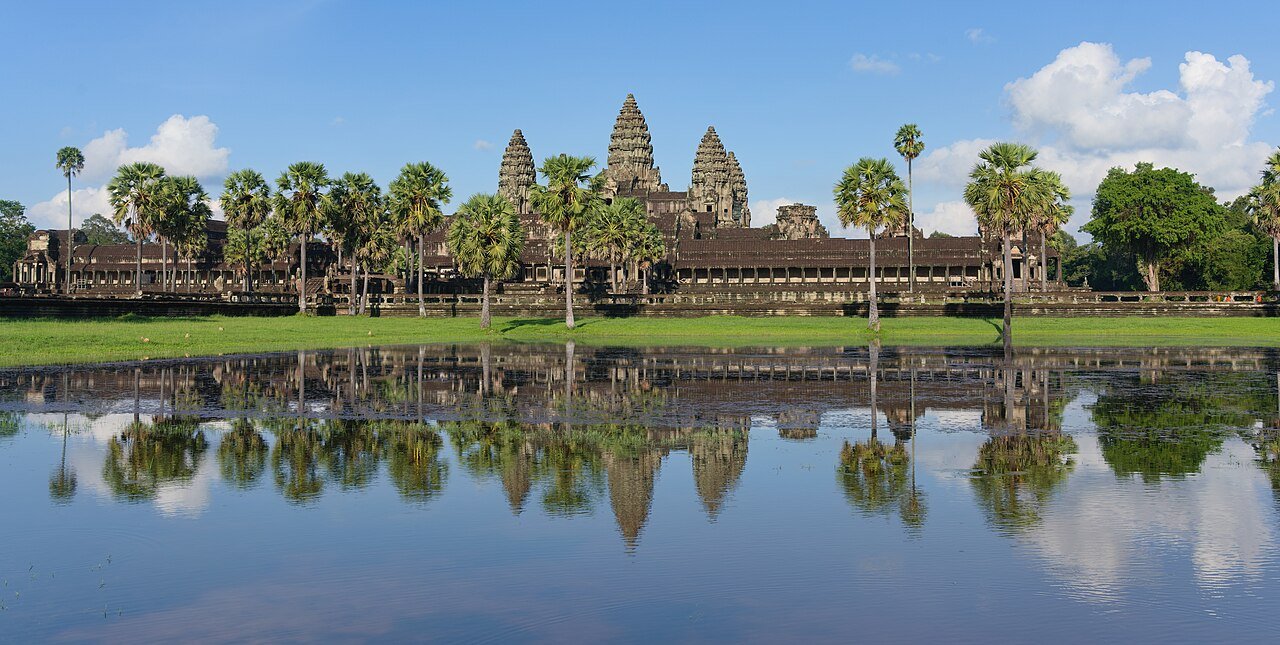
Siem Reap sits at the edge of one of the densest concentrations of monumental architecture ever built. Within a ten-minute tuk-tuk ride lies Angkor Wat, the largest religious monument on earth. A two-hour drive to the north-east reaches Koh Ker, a short-lived royal capital whose stepped pyramid once challenged Angkor’s supremacy. Another hour further still, a sandstone temple perches on a 525-metre cliff at Cambodia’s border with Thailand. Together these three UNESCO World Heritage Sites make Siem Reap one of the most historically significant bases anywhere in South-East Asia. This guide covers all three, with honest travel times and practical notes for each. From Cultural Heritage Online.
Angkor Archaeological Park 10–30 min from Siem Reap
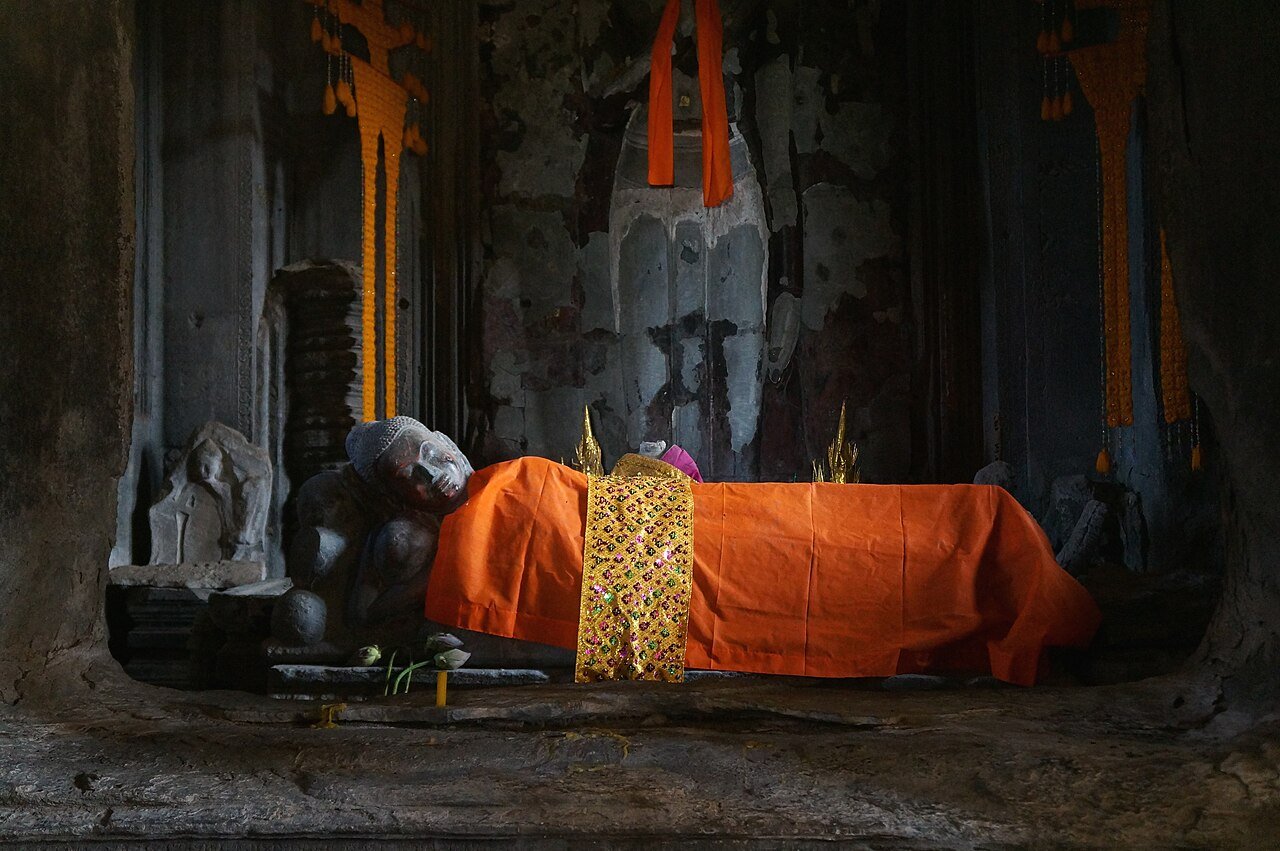
Inscribed in 1992, Angkor Archaeological Park covers 40,100 hectares of former Khmer capital across the Cambodian plain. The empire that built it, centred here between the 9th and 15th centuries, sustained an urban population scholars estimate at between 750,000 and one million people — making Angkor arguably the largest pre-industrial city on earth. Its hydraulic infrastructure was equally extraordinary: an engineered network of reservoirs, canals, and moats regulated the monsoon floodplain well enough to keep that population fed for centuries. The park contains more than 1,000 temples and structures, ranging from modest brick towers to the 200-hectare enclosure of Angkor Thom. Angkor Wat itself, built between 1113 and 1150 under King Suryavarman II and dedicated to Vishnu, remains the single largest religious monument ever constructed. Its five towers, draped in bas-reliefs that run for nearly 800 metres, are best seen in the grey hour before sunrise when the stone reads darkest against the sky. The park was briefly placed on the Danger List in 1992, then removed in 2004 after coordinated restoration work by more than a dozen countries.
Getting there: Tuk-tuk from central Siem Reap to Angkor Wat is 10 minutes; Angkor Thom, 20 minutes. Pre-purchased passes are required — one-day or multi-day passes are available at the official Angkor Enterprise ticket office on the road to the park. The park closes at 17:30. Allow: One full day for the core circuit (Angkor Wat, Angkor Thom, Bayon, Ta Prohm); three days to cover the outer temples. Best for: Anyone with even a passing interest in architectural history — the scale and quality of the stone carving at Angkor are unlike anything else in the world.
Koh Ker Archaeological Site of Ancient Lingapura 2 hrs from Siem Reap
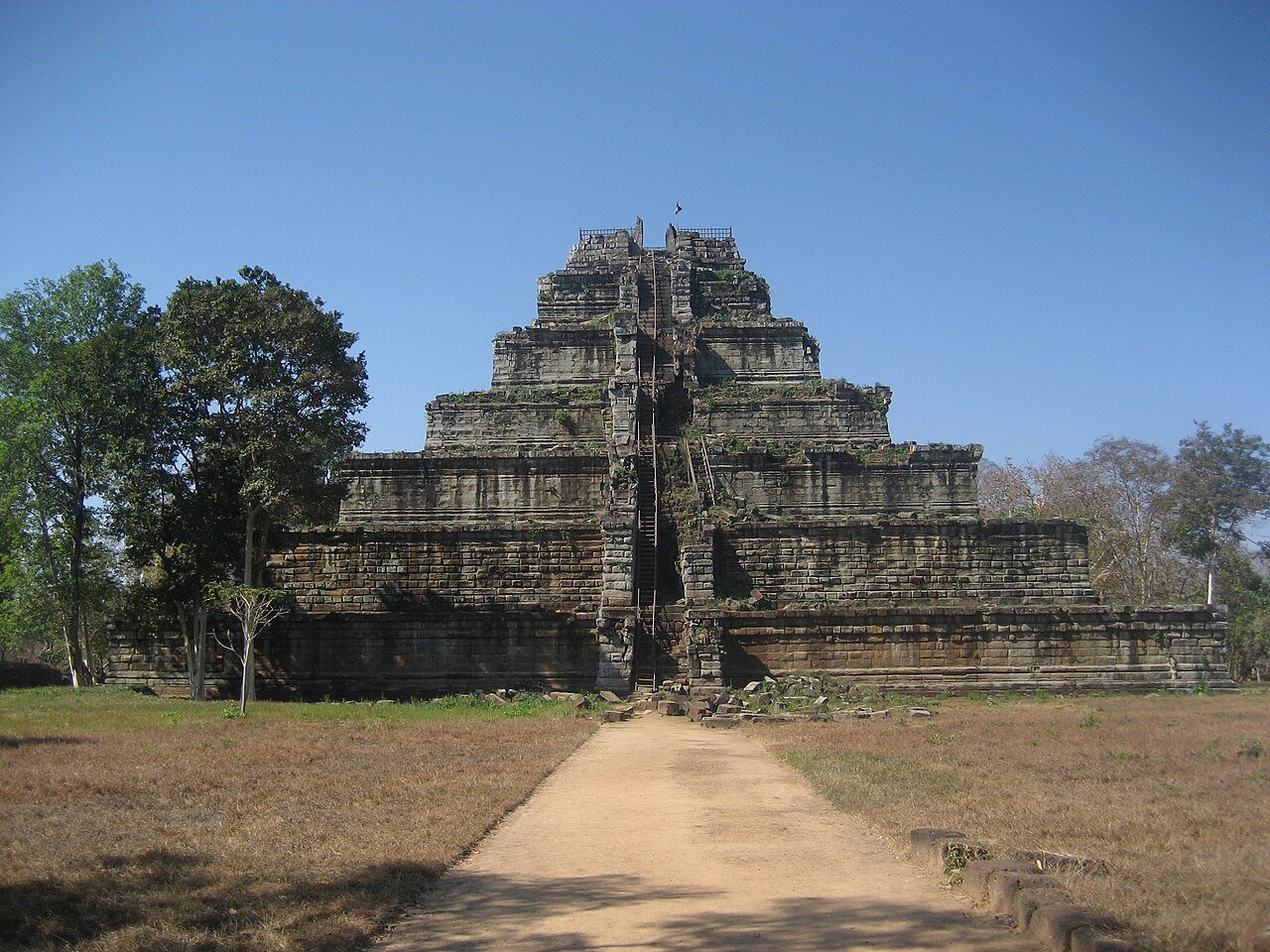
For sixteen years between 928 and 944 CE, Koh Ker — known in ancient inscriptions as Lingapura, City of Lingas — served as the sole capital of the Khmer Empire. King Jayavarman IV relocated the court here from Angkor, launching an ambitious programme that produced approximately 40 temples and a vast water reservoir within little more than a decade. The site’s centrepiece is Prasat Thom, a seven-tiered sandstone pyramid measuring 62 metres on each side at its base and rising 36 metres — a form unique in Khmer architecture and almost certainly the king’s state temple. Over 180 sanctuaries spread across a protected area of 81 square kilometres, though only a fraction is currently open to visitors: demining operations cleared more than 300,000 square metres of contaminated land before and after the site’s UNESCO inscription in September 2023, Cambodia’s fourth World Heritage property. The surviving sculpture carved here in the Koh Ker style — figures characterised by a charged physicality rare in Khmer art — can be seen in major museums worldwide, many looted during decades of conflict. Walking among the remaining towers, half-consumed by the forest, the site feels genuinely remote in a way Angkor no longer can.
Getting there: Koh Ker is 120 km north-east of Siem Reap — approximately two hours by minibus or private car. Day trips are offered by tour operators in Siem Reap. Private transport gives more flexibility; the road is sealed for most of the route. Allow: 3–4 hours on site; combine with nearby Beng Mealea if doing a long day. Best for: Visitors who want a quieter, more atmospheric contrast to Angkor — and who appreciate the rarity of a site still being revealed by demining and excavation.
Temple of Preah Vihear 3 hrs from Siem Reap
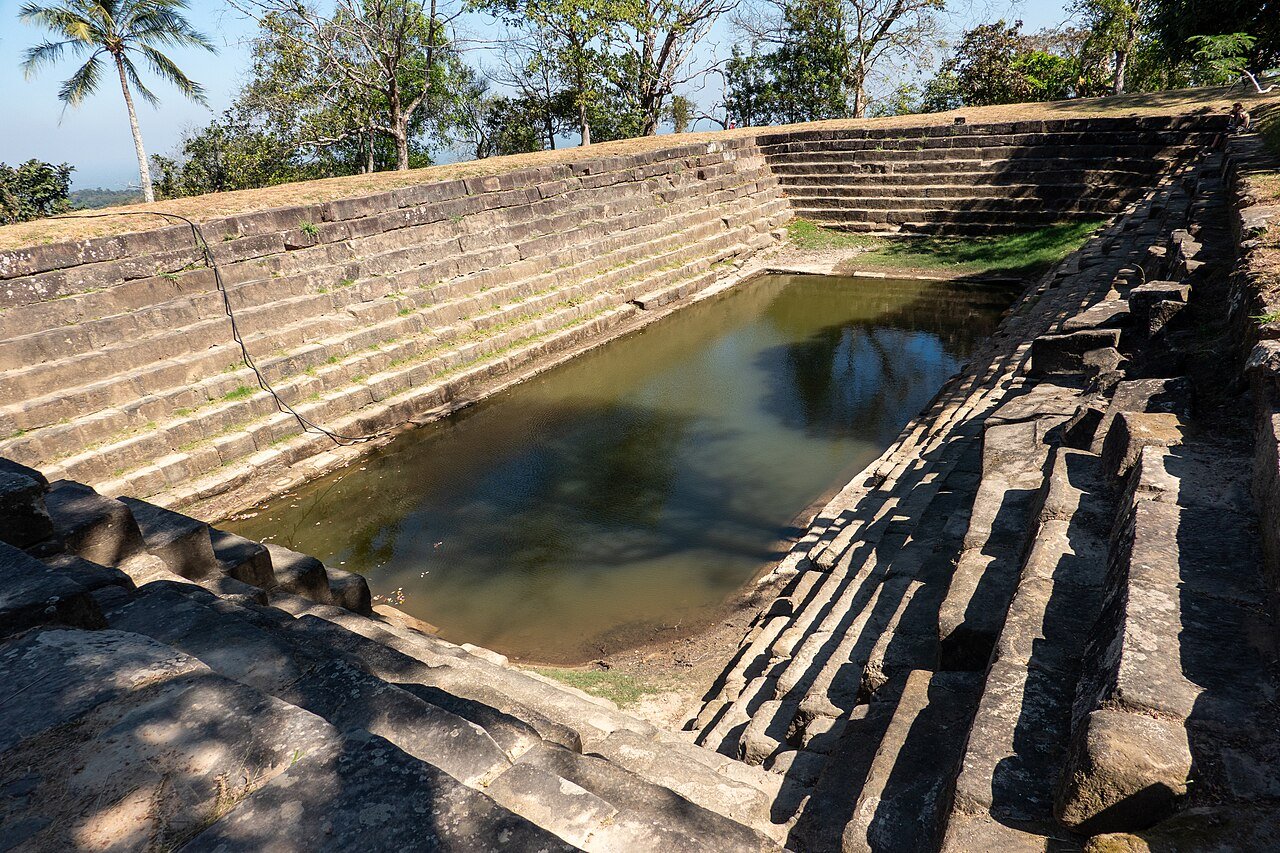
Preah Vihear occupies a position that makes it unlike any other Khmer monument: a sequence of sanctuaries, galleries, and processional causeways laid along an 800-metre axis on a 525-metre cliff in the Dângrêk Mountains, with a vertical drop to the Cambodian plain visible from every vantage point. The earliest structures here date to the 10th century, but the temple reached its present form primarily under Suryavarman I (1006–1050) and Suryavarman II (1113–1150), the same king who began Angkor Wat. UNESCO inscribed the site in 2008, recognising it as an outstanding example of Khmer religious architecture and the integration of a monumental complex with its natural setting. The wind off the escarpment is constant and the stone retains its heat into evening; the views across the northern Cambodian plain on a clear day carry beyond any reasonable expectation. The temple’s ownership was contested in a series of rulings by the International Court of Justice — 1962 and again 2013 — that affirmed Cambodian sovereignty. Access from the Cambodian side, via a road completed in 2003, now provides the main route for visitors arriving from Siem Reap.
Getting there: Approximately 200 km north of Siem Reap — three hours by car. Private transport is required; no reliable public minibus connects directly. Allow extra time for the ascent and security formalities at the site entrance. Allow: 2–3 hours at the temple itself, plus travel time; a very long day from Siem Reap, or combine with an overnight in the provincial town of Preah Vihear. Best for: Visitors with a particular interest in Khmer religious architecture and those willing to accept that the journey is part of the experience.
Frequently Asked Questions
How many UNESCO World Heritage Sites are there near Siem Reap?
There are three UNESCO World Heritage Sites accessible from Siem Reap: Angkor Archaeological Park (inscribed 1992), Koh Ker Archaeological Site of Ancient Lingapura (inscribed 2023), and the Temple of Preah Vihear (inscribed 2008). All three are in Cambodia’s northern provinces, within a 200-kilometre radius of the city.
Which UNESCO site is closest to central Siem Reap?
Angkor Archaeological Park is the closest, reachable by tuk-tuk in 10 to 30 minutes depending on which part of the park you are visiting. Angkor Wat itself is roughly 6 kilometres from central Siem Reap along a direct road. The next closest site, Koh Ker, is 120 kilometres away and takes approximately two hours by car.
Do I need a visa to visit Cambodia, and what documents are required for Angkor?
Most nationalities require a visa for Cambodia, available as a tourist e-visa online before travel or on arrival at major border crossings and Siem Reap International Airport. Angkor Archaeological Park requires a separate entrance pass — a one-day, three-day, or seven-day Angkor Pass purchased from the Angkor Enterprise ticket office on the park access road. The pass is not included in any hotel or tour package and must be bought in person with a photograph taken on site. Passes are checked at every major temple entrance.
What is the best season to visit the Siem Reap UNESCO sites?
The dry season from November to April is the most comfortable time to visit. Temperatures are lower and rain is infrequent, making long days at Angkor and the drive to Koh Ker or Preah Vihear more manageable. November and December offer the best combination of cooler air and green, post-monsoon vegetation. The wet season (May to October) brings heavy afternoon rain and high humidity, though Angkor sees fewer crowds in the shoulder months of May and October, and the moats fill to their designed levels, which affects the look of the site considerably.

.jpg)
.jpg)
.jpg)
