Two UNESCO World Heritage Sites sit within 90 km of Islamabad, spanning 2,500 years of civilisation — from a Buddhist city that rivalled Alexandria in scholarly prestige to a 16th-century Afghan fortress that never fell to a siege. Both are day-trip distance from the capital. From Cultural Heritage Online.
Taxila 35 km northwest · 45 min by road
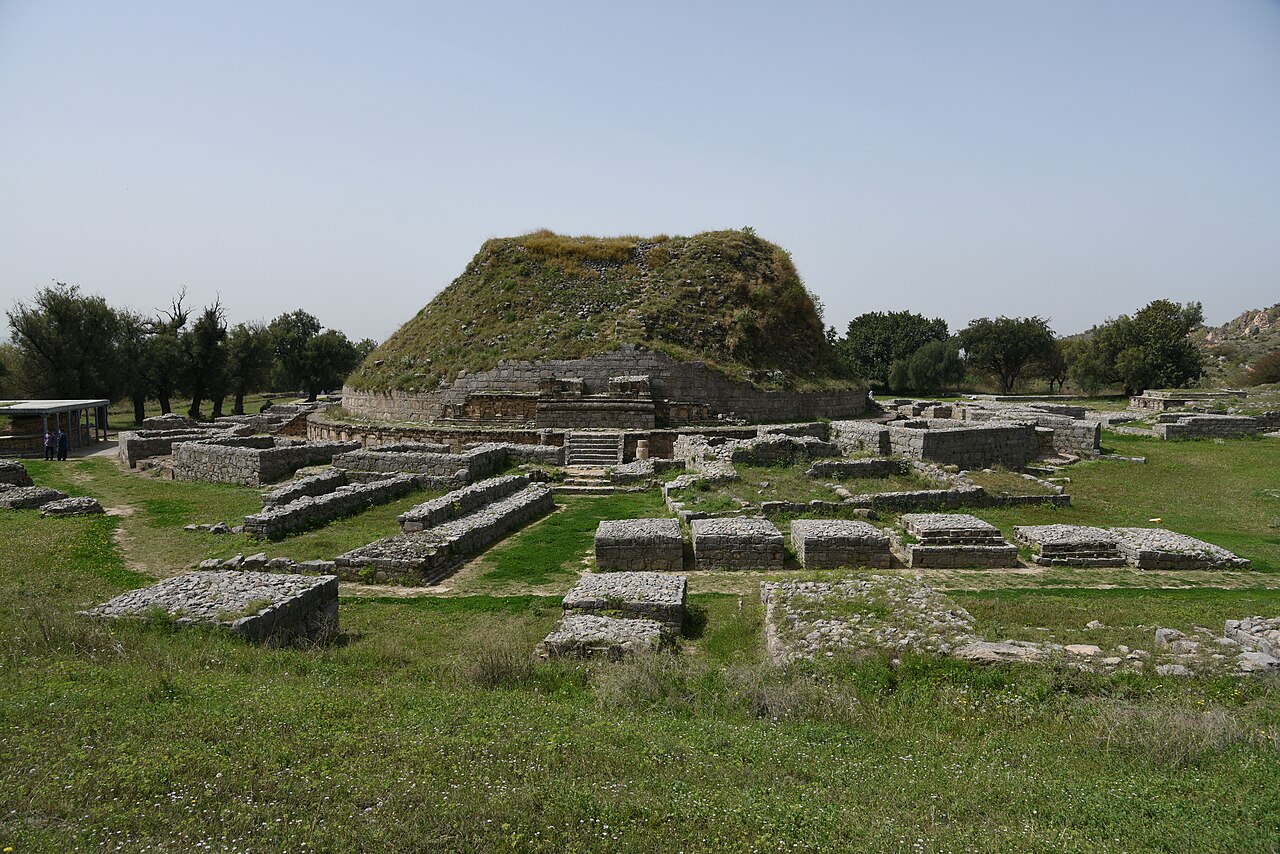
Taxila is not a single site but a layered sequence of three cities built one after another across a thousand years, inscribed by UNESCO in 1980 as one of the most important Buddhist urban centres of the ancient world. The earliest, Bhir Mound, dates from around 600 BC and grew under Achaemenid Persian and then Mauryan rule; its irregular, densely packed street plan has been excavated and backfilled. Walk the perimeter today and the ground tells almost nothing of what lies beneath.
The second city, Sirkap, is the most legible on the ground. Founded by Bactrian Greek rulers in the 2nd century BC, its grid of straight streets follows a Hippodamian plan — the same rational geometry that shaped Hellenistic cities from Antioch to Alexandria. The Apsidal Temple and, above all, the Temple of Jandial stand at either end of this grid. Jandial is the only known Greek-style temple in the entire Indian subcontinent: two Ionic columns, a pronaos, and a naos aligned with the strict formality of a structure that would not have looked out of place in Athens.
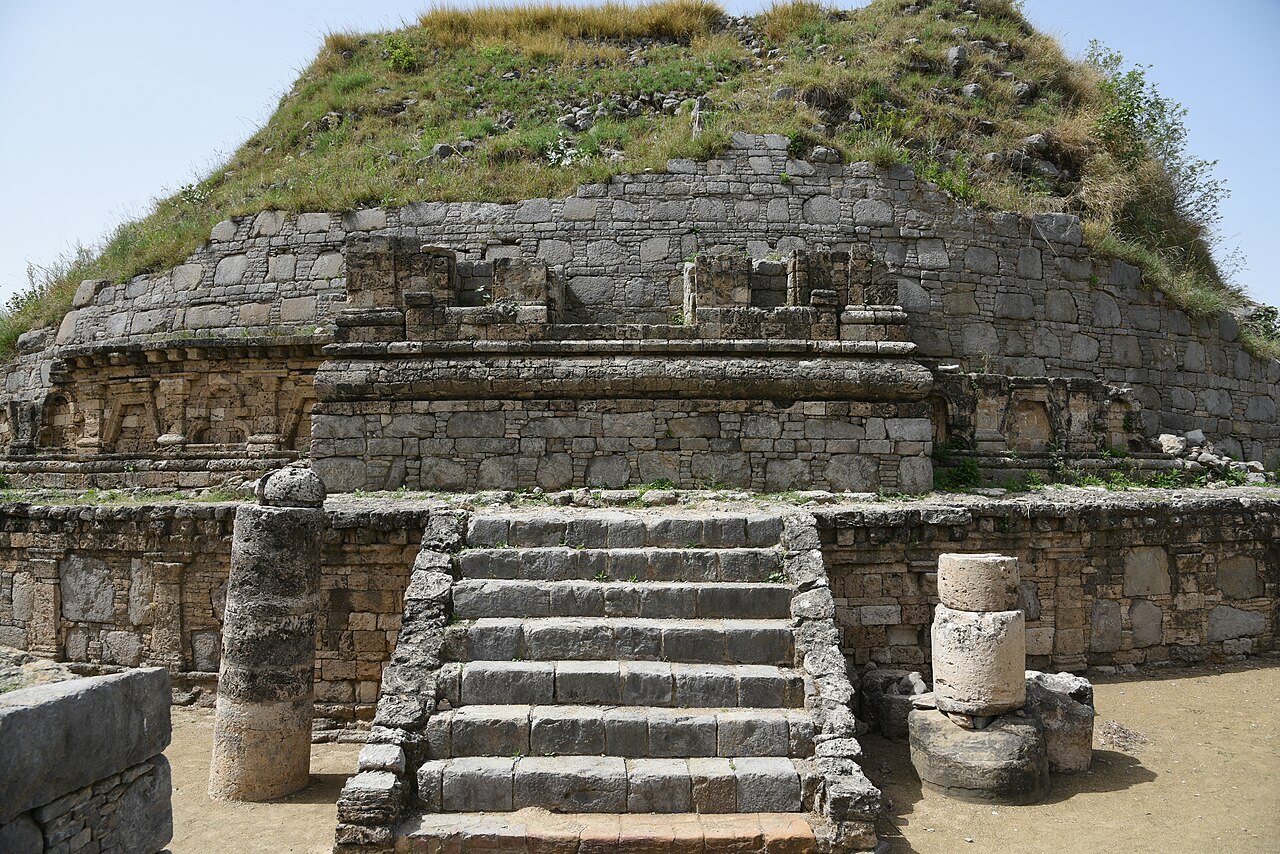
The third city, Sirsukh, was raised by the Kushans in the 2nd century AD and is largely unexcavated beneath open farmland — a reminder of how much remains undisturbed here. The anchor of any visit, however, is the Dharmarajika Stupa: a pilgrimage monument attributed to Emperor Ashoka in the 3rd century BC, its drum rising three metres from a wide terrace ringed by the low stone walls of monastic cells. Sun-bleached and very quiet on a weekday morning, the stupa radiates the particular calm of places that have been considered sacred without interruption for over two millennia. The Taxila Museum, a short drive away, houses an outstanding collection of Gandhara Buddhist sculpture — grey schist reliefs in which Hellenistic drapery and distinctly South Asian iconography coexist in a visual language found nowhere else on earth.
Getting there: 35 km northwest of Islamabad via the Grand Trunk Road (GT Road / N-5); approximately 45 minutes by car or taxi. Regular Daewoo and APTMA buses depart from Rawalpindi’s Saddar area to Taxila. Allow: A full day to cover Dharmarajika, Sirkap, Jandial, and the museum without rushing. Best for: Archaeology enthusiasts, Buddhist heritage travellers, history of the Hellenistic world, photographers.
Rohtas Fort 90 km east near Jhelum · 1.5 hr by road

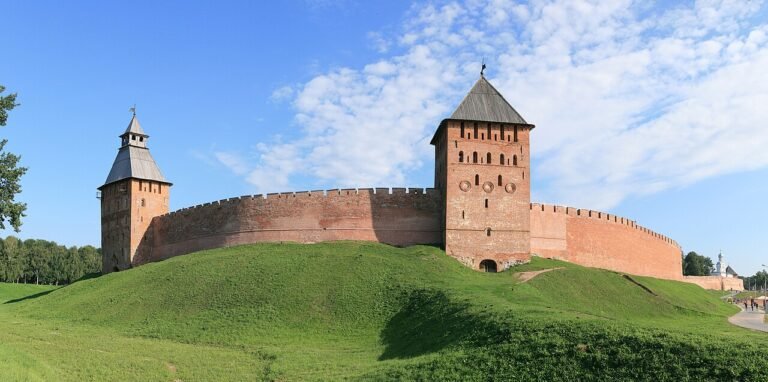
Rohtas Fort was built with deliberate speed and deliberate intimidation. Sher Shah Suri, the Afghan ruler who wrested northern India from the Mughal Emperor Humayun in 1540, ordered its construction the following year as a garrison to prevent Humayun’s return from Persia and to subdue the local Potohar Gakhar tribe. It was completed — extraordinarily — between 1541 and 1543: a 4.3-kilometre perimeter wall, twelve monumental gates, and interior structures all raised in barely two years. UNESCO inscribed it in 1997 as an outstanding example of early Muslim military architecture in South Asia.
The scale only registers on foot. The walls are thick enough to walk along the top in places, and the bastions project outward at intervals, designed to allow defenders to fire along the face of the wall at approaching attackers. The Sohail Gate, on the northern side, is the most celebrated: a double-arched entry flanked by semi-circular towers, with calligraphic panels above the arch and recessed niches in the spandrels. The Langar Khani Gate, to the south, preserves the massive wooden doors that were once standard across all twelve entrances. Inside the enclosure, the Shahi Mosque — compact, elegant, built for the garrison’s daily prayers — stands in marked contrast to the overwhelming militarism of everything surrounding it.
The fort’s most striking historical fact is also its most counterintuitive: it was never taken by siege. Designed to be impregnable, it proved exactly that — and when the Mughal Empire eventually reasserted itself under Akbar after Sher Shah’s death, Rohtas changed hands not through battle but by negotiation. A structure built entirely to project the threat of force avoided force for its entire active life.
Getting there: 90 km east of Islamabad on the M-2 motorway toward Lahore, exit near Dina / Jhelum, then local road to Rohtas village; approximately 1.5 hours by car. No direct public bus; shared vans from Jhelum city run to the fort area. A private car or pre-arranged taxi from Islamabad is the most practical option. Allow: 3–4 hours to walk the main gates, the perimeter sections, and the Shahi Mosque at a reasonable pace. Best for: Mughal-Sultanate period history, military architecture, travellers combining with a Punjab road trip.
Frequently Asked Questions
How many UNESCO World Heritage Sites are near Islamabad?
Two UNESCO World Heritage Sites are accessible as day trips from Islamabad: Taxila, inscribed in 1980 as one of the great Buddhist cities of the ancient world, and Rohtas Fort, inscribed in 1997 for its exceptional early Muslim military architecture. Both lie within 90 km of the capital.
How do you get from Islamabad to Taxila?
Taxila is 35 km northwest of Islamabad, roughly 45 minutes by car along the Grand Trunk Road (N-5). Buses and vans depart regularly from Rawalpindi’s Saddar area. A taxi or ride-share from central Islamabad is the easiest option if you want to visit multiple sites within Taxila in a single day without time pressure.
Can you visit both Taxila and Rohtas Fort in one trip?
Not comfortably in a single day — the two sites are 125 km apart in opposite directions from Islamabad, and each deserves at least half a day on its own. Taxila makes the better standalone day trip from the capital. Rohtas Fort pairs naturally with Jhelum or as a stop on the Islamabad–Lahore corridor if you are travelling east by car.
What makes Taxila unique among ancient sites in Pakistan?
Taxila’s distinctiveness lies in its cultural layering. Three successive cities — Bhir Mound (Achaemenid/Mauryan), Sirkap (Bactrian Greek), and Sirsukh (Kushan) — occupy the same landscape and span roughly a millennium of occupation. Sirkap contains the only confirmed Greek-style temple in the Indian subcontinent, and the Taxila Museum holds Gandhara sculpture that fuses Greek figural conventions with Buddhist iconography in a way found nowhere else. The site was a major centre of Buddhist learning before Nalanda and drew scholars from across Central Asia.
Sources
- S1 — Marshall, John. A Guide to Taxila. Cambridge University Press, 1960. ISBN 978-0-521-05677-9.
- S2 — Dani, Ahmad Hasan. Peshawar: Historic City of the Frontier. Sang-e-Meel Publications, 1995. ISBN 978-969-35-0554-2.
Spotted an error? Write to editorial@culturalheritageonline.com and we correct it the same day.