

Hanoi is the most practical base in Vietnam for reaching UNESCO-listed landscapes of exceptional scale. Within a half-day by road and boat, two of Southeast Asia’s most photographed natural sites come within reach — and one of the oldest continuously occupied imperial complexes in the region stands inside the city itself. This guide covers all three sites, including honest travel times and what to expect on arrival. From Cultural Heritage Online.
Ha Long Bay Complex 3 hrs 30 min from Hanoi

Ha Long Bay entered the UNESCO World Heritage List in 1994, with the inscription extended to cover the Bái Tử Long sector in 2000. The bay holds approximately 1,969 islands and islets across roughly 1,553 square kilometres of the Gulf of Tonkin, the vast majority of them uninhabited limestone karsts shaped over 500 million years of geological process. The tallest formations rise more than 100 metres from the water. At dawn, before the day-cruise flotillas move out, the bay settles into something close to silence: the only sound is the low hull-knock of wooden junks rocking at anchor, and the mist sits so low that the island peaks appear to float. UNESCO recognised the site for its outstanding karst topography and the exceptional aesthetic value of the seascape. It also acknowledged the bay’s rich marine biodiversity, which includes coral reefs, mangroves, and roughly 1,000 species of fish. Most visitors arrive on overnight cruises departing from Ha Long City pier, which allows time on the water in the early morning and late afternoon — the two periods when light and atmosphere are at their most striking.
Getting there: Ha Long Bay is approximately 160 km east of Hanoi. Limousine bus services (The Sinh Tourist, Hoàng Long, and similar operators) depart central Hanoi hotels and reach Ha Long City pier in 3 hours 30 minutes to 4 hours depending on traffic. The pier is the embarkation point for all bay cruises. A faster alternative is the Hải Phòng expressway combined with the new Vân Đồn expressway, which some private transfers use. Seaplanes from Noi Bai International Airport reach the bay in approximately 45 minutes but at significantly higher cost. Allow: A minimum of 2 days (one overnight cruise) to experience the bay beyond the immediate pier area; 3 days for the extended Bái Tử Long zone. Day trips exist but reach only the outer, most crowded sector. Best for: Visitors with at least two nights to spend away from Hanoi; kayaking through cave arches; early-morning photography from the cruise deck.
Trang An Landscape Complex, Ninh Binh 2 hrs from Hanoi
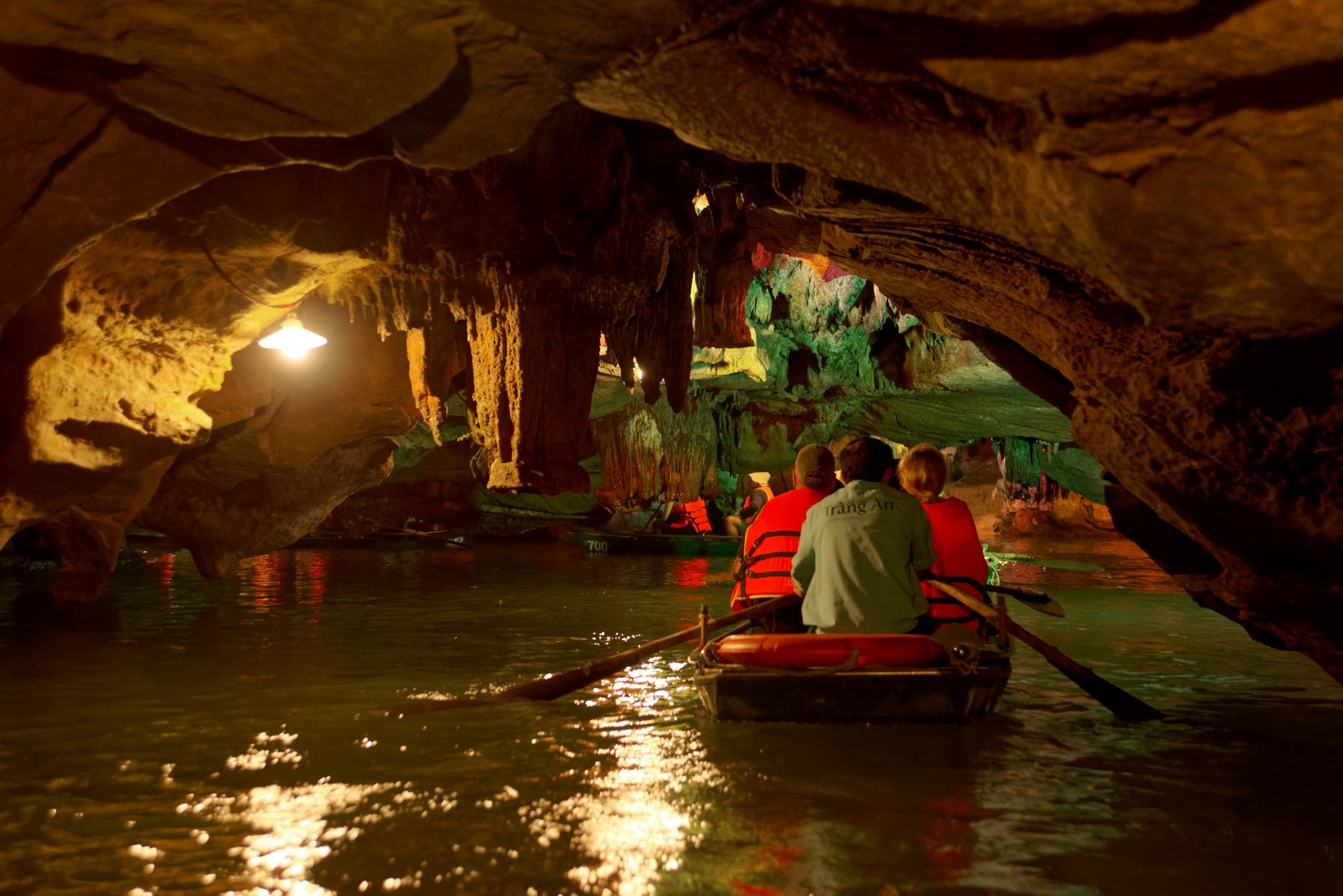
Inscribed in 2014, Trang An is Vietnam’s first and only mixed UNESCO World Heritage Site, recognised simultaneously for its natural and cultural values. The complex covers 6,172 hectares of limestone karst terrain in Ninh Binh Province, threaded by rivers and enclosed valleys that were isolated enough to shelter human habitation dating back at least 30,000 years — excavations of the cave systems have yielded stratified archaeological layers running from the Late Pleistocene through the Holocene. The landscape was also the seat of the Đinh and Early Lê dynasties in the tenth century CE, when the area around Hoa Lư served as Vietnam’s first independent capital. The boat journey through Trang An operates on flat-bottomed sampans rowed by local boatpeople using their feet, a technique specific to the region. The route passes through a sequence of water-level tunnels cut through karst ridges, emerging each time into enclosed valley pools edged with vertical rock and subtropical forest. The air inside the tunnels is cool and faintly damp, the passage narrow enough that the limestone presses close on both sides.
Getting there: Trang An is approximately 100 km south of Hanoi. Express buses (Ninh Binh Express, open-tour coaches) depart from Mỹ Đình or Giáp Bát bus terminals and reach Ninh Binh town in around 2 hours. From Ninh Binh town, a taxi or xe ôm (motorbike taxi) covers the 12 km to the Trang An boat dock in around 20 minutes. Train services from Hanoi station also reach Ninh Binh in approximately 2 hours. Allow: 3 to 4 hours for the standard sampan circuit; a full day if also visiting Hoa Lư ancient capital (7 km from the boat dock) or Bái Đính Pagoda. Best for: A manageable day trip from Hanoi; visitors interested in the intersection of geological landscape and early Vietnamese dynastic history; those who prefer natural quiet over the larger-scale cruise operations at Ha Long Bay.
Imperial Citadel of Thang Long, Hanoi City centre
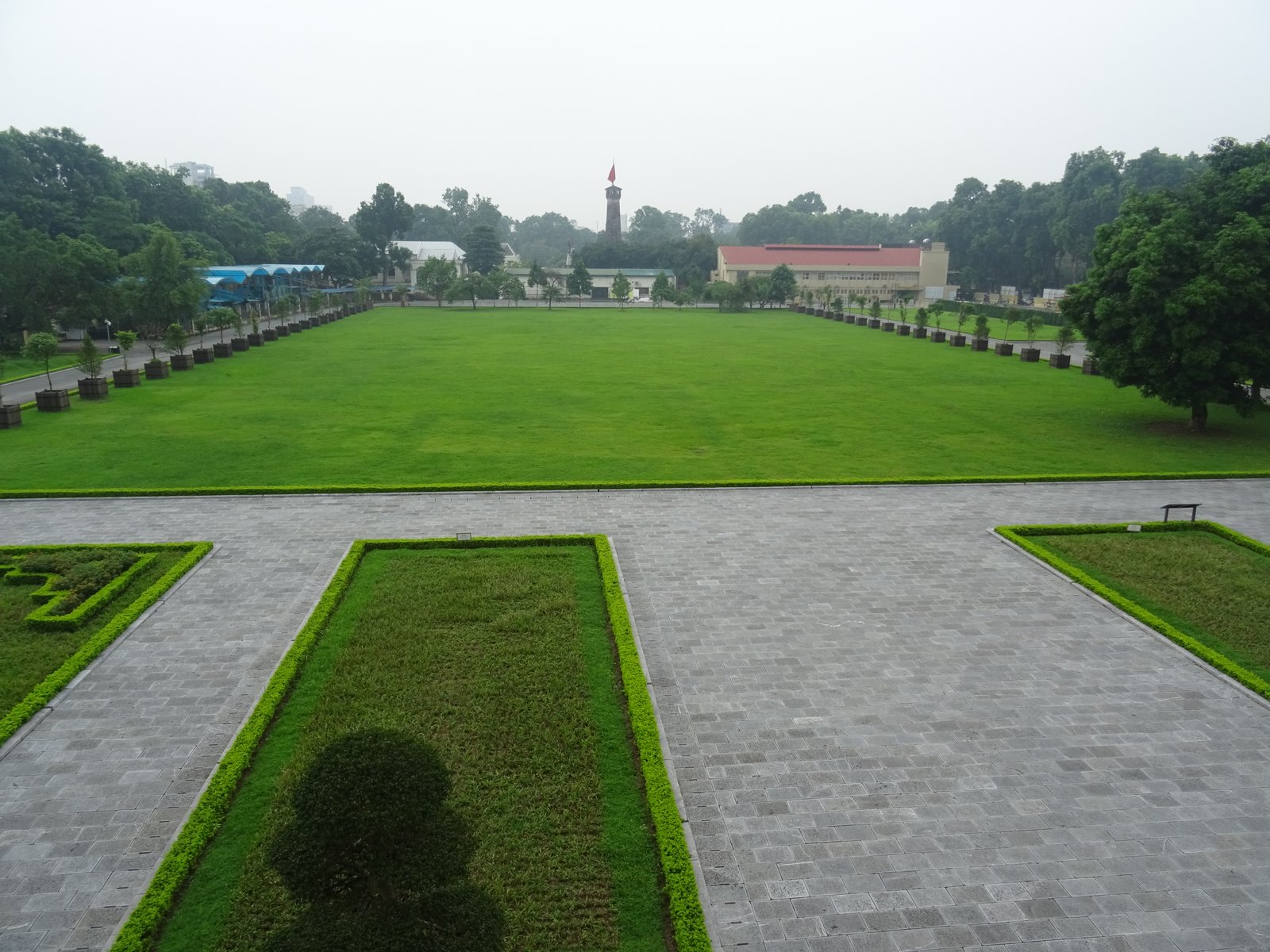
The Imperial Citadel of Thang Long was inscribed by UNESCO in 2010, recognised as an exceptional testament to the political and cultural development of the Vietnamese state over more than thirteen centuries. The site was founded in 1010 CE by Emperor Lý Thái Tổ of the Lý Dynasty, who chose the location after observing a golden dragon rising from the water — hence the name Thăng Long, “rising dragon”. The citadel served as the political centre of successive dynasties including the Lý (1009–1225), Trần (1225–1400), and Lê (1428–1788), and its layers reflect distinct periods of construction, destruction, and rebuilding across that span. The Đoan Môn gate, which dates to the Lê Dynasty period, remains the most complete surviving original structure; it faces south across a wide courtyard toward the Kính Thiên ceremonial palace platform, where only the dragon-carved stone staircase survives above ground. Below the surface, the Hoàng Diệu archaeological site — opened to the public from 2004 onwards — reveals foundations, ceramic debris, and imperial artefacts in stratified layers that archaeologists are still excavating. The scale of the underground deposit is exceptional even by regional standards.
Getting there: The citadel is located in Ba Đình District, central Hanoi, approximately 1.5 km west of Hoan Kiem Lake. Metro Line 2 (currently under construction; check operational status before travel) will serve Bát Đàn station nearby. In the interim, the site is accessible by taxi, Grab, or a 15-minute walk from the Old Quarter. The main entrance is at 19C Hoàng Diệu Street. Allow: 1.5 to 2 hours for the above-ground structures and the Hoàng Diệu archaeological zone. Guided audio tours are available at the ticket desk. Best for: Visitors with an afternoon between other Hanoi sightseeing; those interested in dynastic Vietnamese history and the long archaeological record of the site; combines well with the nearby Vietnam Military History Museum and Ho Chi Minh Mausoleum complex.
Frequently Asked Questions
How many UNESCO World Heritage Sites are near Hanoi?
There are three UNESCO World Heritage Sites accessible from Hanoi. The Imperial Citadel of Thang Long lies within the city itself. Ha Long Bay — inscribed in 1994 and extended in 2000 — is approximately 160 km east, reached in 3 hours 30 minutes by road and then by boat. The Trang An Landscape Complex in Ninh Binh Province, inscribed in 2014, is approximately 100 km south, reachable in around 2 hours by bus or train.
Which UNESCO site is closest to central Hanoi?
The Imperial Citadel of Thang Long is inside the city, roughly 1.5 km from Hoan Kiem Lake in the Ba Đình District. Its main entrance is at 19C Hoàng Diệu Street. No inter-city travel is required. Trang An in Ninh Binh is the closest site beyond the city limits, at around 100 km south — feasible as a day trip by bus or train.
When is the best time of year to visit Ha Long Bay and Trang An?
The driest and most reliable period is October through April, when northeast monsoon conditions keep skies clear and humidity moderate. March and April offer warm temperatures and the lowest chance of rain. The summer months of June through August bring higher humidity, occasional typhoons in the Gulf of Tonkin, and the possibility of cruise cancellations at Ha Long Bay during storm warnings. Trang An is less affected by sea weather but can be crowded during Vietnamese public holidays, particularly Tết in late January or early February.
Do visitors to Vietnam need a visa to reach these sites?
Vietnam offers visa-free entry to citizens of a growing number of countries for stays of up to 45 days (as of 2024), including most EU member states, the United Kingdom, and South Korea. Citizens of the United States, Canada, and Australia require either an e-visa (obtainable online before travel) or a visa on arrival letter. Entry requirements change periodically; the official Vietnam Immigration Department website should be consulted before booking. All three sites — Ha Long Bay, Trang An, and the Imperial Citadel — charge separate site entrance fees payable in Vietnamese dong on arrival.
Sources
- S1 — Logan, William S. Hanoi: Biography of a City. University of New South Wales Press, 2000. ISBN 978-0-86840-443-1.
- S2 — Do, Quang Hung. The Heritage of Thang Long Imperial Citadel. The Gioi Publishers, 2010. ISBN 978-604-77-0036-3.
Spotted an error? Write to editorial@culturalheritageonline.com and we correct it the same day.



.jpg)
.jpg)

