
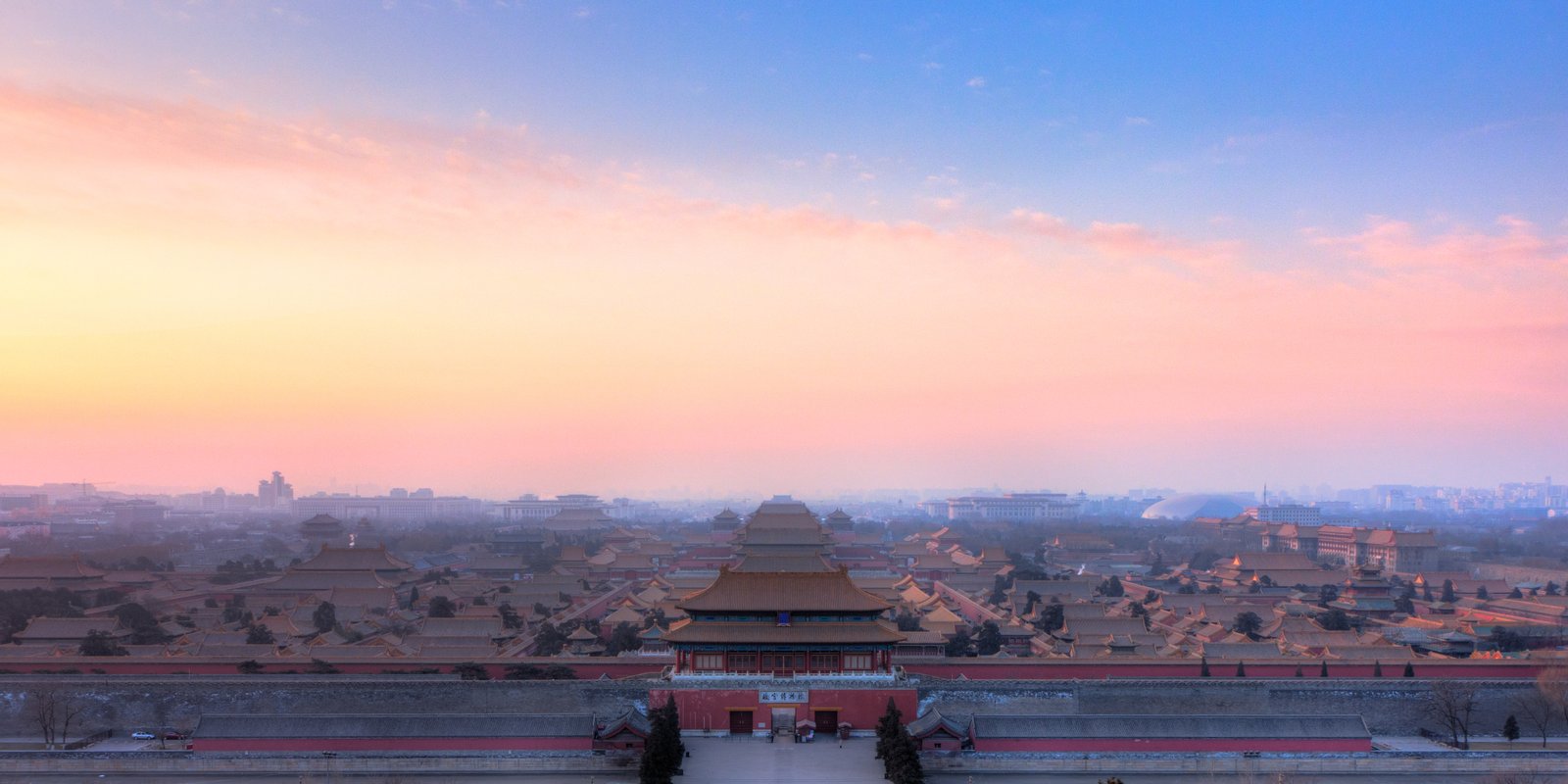
Beijing holds an unmatched concentration of UNESCO World Heritage Sites for a single metropolis: six inscriptions within or immediately outside its boundaries, spanning imperial palaces, sacred temples, a summer retreat built across a man-made lake, the longest defensive structure on earth, and a dynastic necropolis chosen according to feng shui principles. No other city on the planet clusters monuments of this scale, this age, and this institutional variety within a day’s reach. This guide covers five of those inscriptions with verified transport times, practical visit lengths, and sourced historical facts. From Cultural Heritage Online.
Imperial Palace — Forbidden City City centre
The Yongle Emperor — third ruler of the Ming dynasty, who relocated the imperial capital from Nanjing to Beijing — ordered construction of the palace complex in 1406. More than a million workers completed it in 1420, and it served as the seat of Chinese imperial power without interruption until 1924, housing 24 emperors across the Ming and Qing dynasties. The scale is genuinely difficult to absorb from ground level: 72 hectares enclosed by a 7.9-metre city wall and a 52-metre-wide moat, containing 980 surviving structures and 8,886 bays of rooms. The Hall of Supreme Harmony at the complex’s ceremonial heart rises 30 metres above three stacked marble terraces, its nine-by-five-bay proportion encoding numerological authority into every timber joint. Yellow-glazed roof tiles — a colour reserved for imperial use — catch the morning light as visitors cross the outer courts, creating a continuous warm register that no photograph fully translates. UNESCO inscribed the site in 1987 under the designation “Imperial Palaces of the Ming and Qing Dynasties in Beijing and Shenyang.”
Getting there: City centre — Metro Line 1 or Line 5 to Tiananmen East or Tiananmen West station; the Meridian Gate (main entrance) is a short walk north. Allow: 3–4 hours for the central axis plus key side halls; add 1 hour for the Clock Exhibition or Treasure Gallery. Best for: First-time visitors to Beijing, architectural history, imperial China narrative.
Temple of Heaven 4 km south — 20 min by Metro
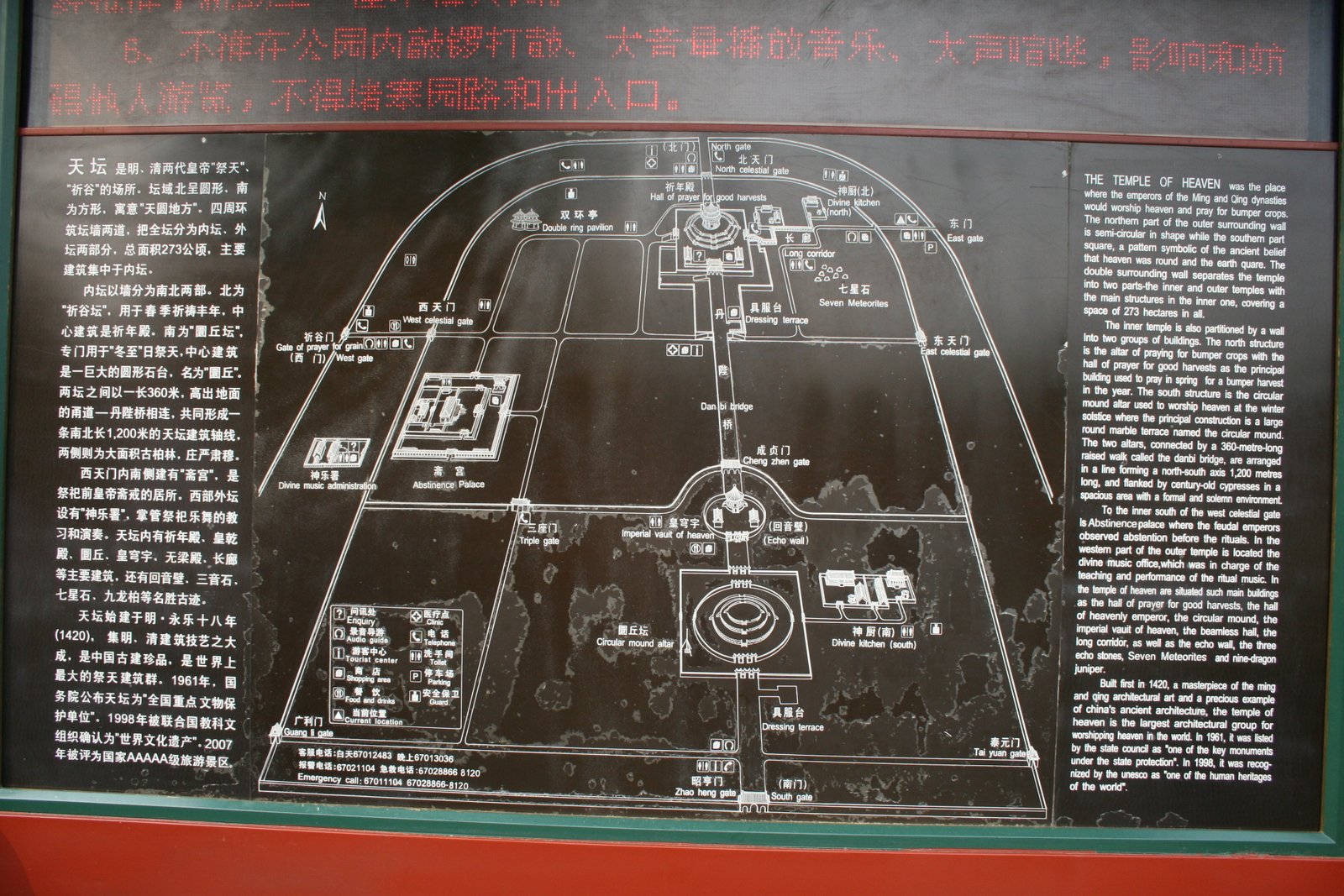
The Yongle Emperor began the Temple of Heaven in 1406 alongside the Forbidden City and completed it by 1420. The complex served a single, precise function: it was where successive Ming and Qing emperors conducted annual ceremonies to pray for good harvests and communicate with heaven. The ritual obligation lasted until 1912. Everything in the design articulates cosmological thinking. Three circular structures sit on square bases — heaven (circle) above earth (square) — across a site of 267 hectares, making the park larger than the Forbidden City by a factor of nearly four. The Hall of Prayer for Good Harvests stands 38 metres tall and 36 metres in diameter, its entire timber frame assembled without a single metal nail, resting on a triple marble terrace. Four inner pillars represent the seasons; twelve middle pillars represent the months; twelve outer pillars the hours of the day. The dark blue glazed roof tiles, visible from outside the walls on a clear morning, are the single most distinctive colour signal in Beijing’s southern skyline. UNESCO inscribed the site in 1998, calling it “a masterpiece of architecture and landscape design.”
Getting there: Metro Line 5 to Tiantan Dongmen station; the East Gate is the closest entrance. Approximately 4 km south of the Forbidden City — walkable or by taxi. Allow: 2 hours for the main ritual axis; arrive early to see retired residents practising tai chi on the park paths. Best for: Architectural symbolism, quiet park atmosphere, combination with the Forbidden City on the same day.
Summer Palace 15 km north-west — 40 min by Metro
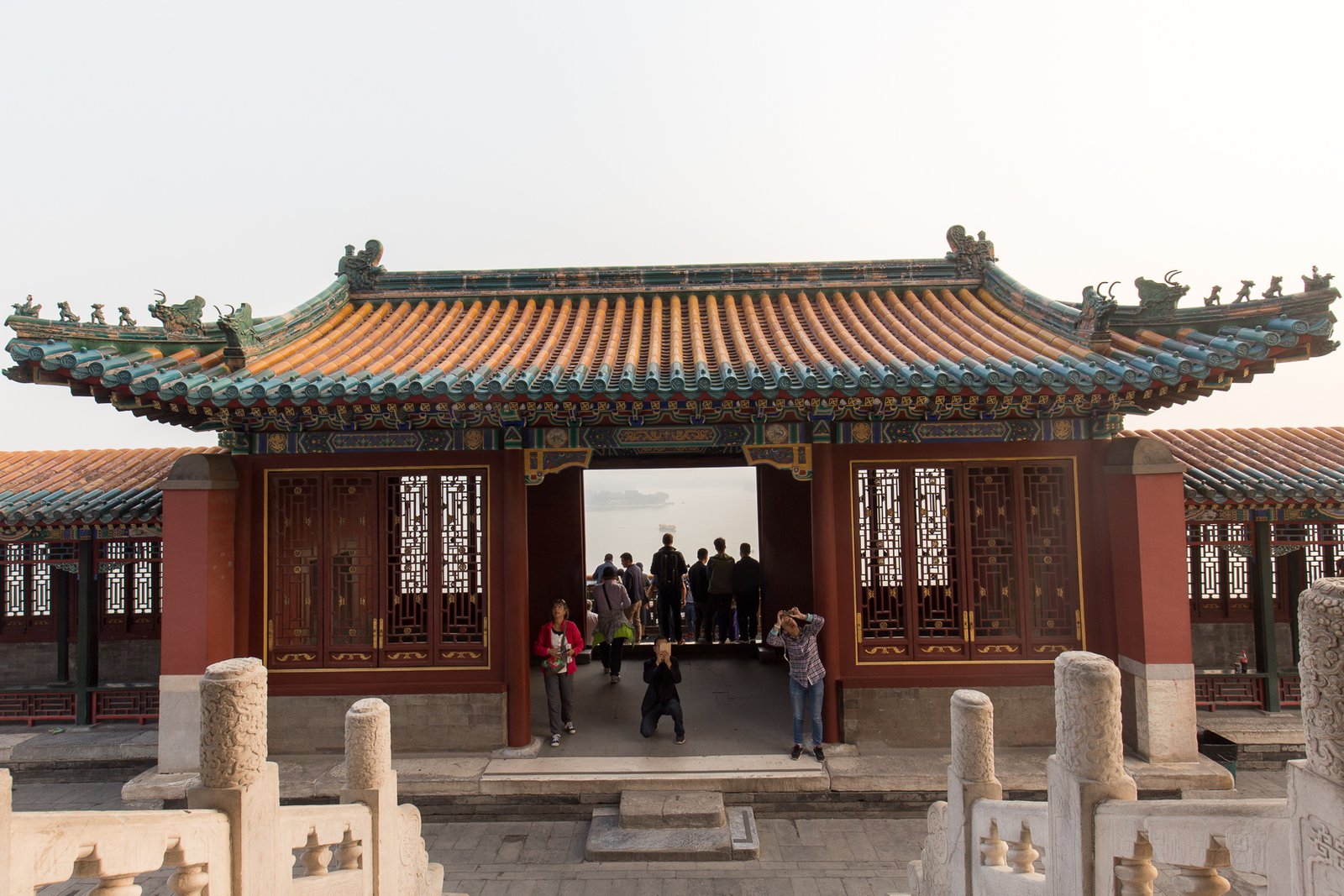
The complex now known as the Summer Palace — Yiheyuan in Mandarin, “Garden of Preserving Harmony” — began as the Qingyiyuan, or “Gardens of Clear Ripples,” completed in 1764 under the Qianlong Emperor. It was looted and burned by Anglo-French forces in 1860, rebuilt between 1884 and 1895 by Empress Dowager Cixi, and renamed to its present form in 1888. The 297-hectare site is approximately three-quarters water: Kunming Lake, which is entirely man-made, was excavated during Qianlong’s reign and the displaced soil used to build 60-metre Longevity Hill. The Tower of Buddhist Incense — 41 metres tall, raised on eight ironwood pillars — sits on an axis above the lake that reads as a single vertical statement from the southern shore. The 728-metre Long Corridor running along the northern lakefront is the largest painted gallery in the world, its 14,000 panels covering landscapes, mythology, and narrative scenes in continuous sequence under a covered wooden walkway. The Seventeen-Arch Bridge across Kunming Lake stretches 150 metres, anchoring the visual geography of the east shore. UNESCO inscribed the site in 1998 as “a masterpiece of Chinese landscape garden design.”
Getting there: Metro Line 4 to Beigongmen (North Palace Gate) station — the most direct entry point. Taxis and DiDi from central Beijing take 30–45 minutes depending on traffic. Allow: 3 hours minimum; a full circuit of the lake by hired rowboat adds another hour and a different perspective on the tower’s relationship to the water. Best for: Landscape garden design, imperial garden history, half-day excursion from the city centre.
Great Wall of China at Badaling 80 km north-west — 1 hr 30 min by train
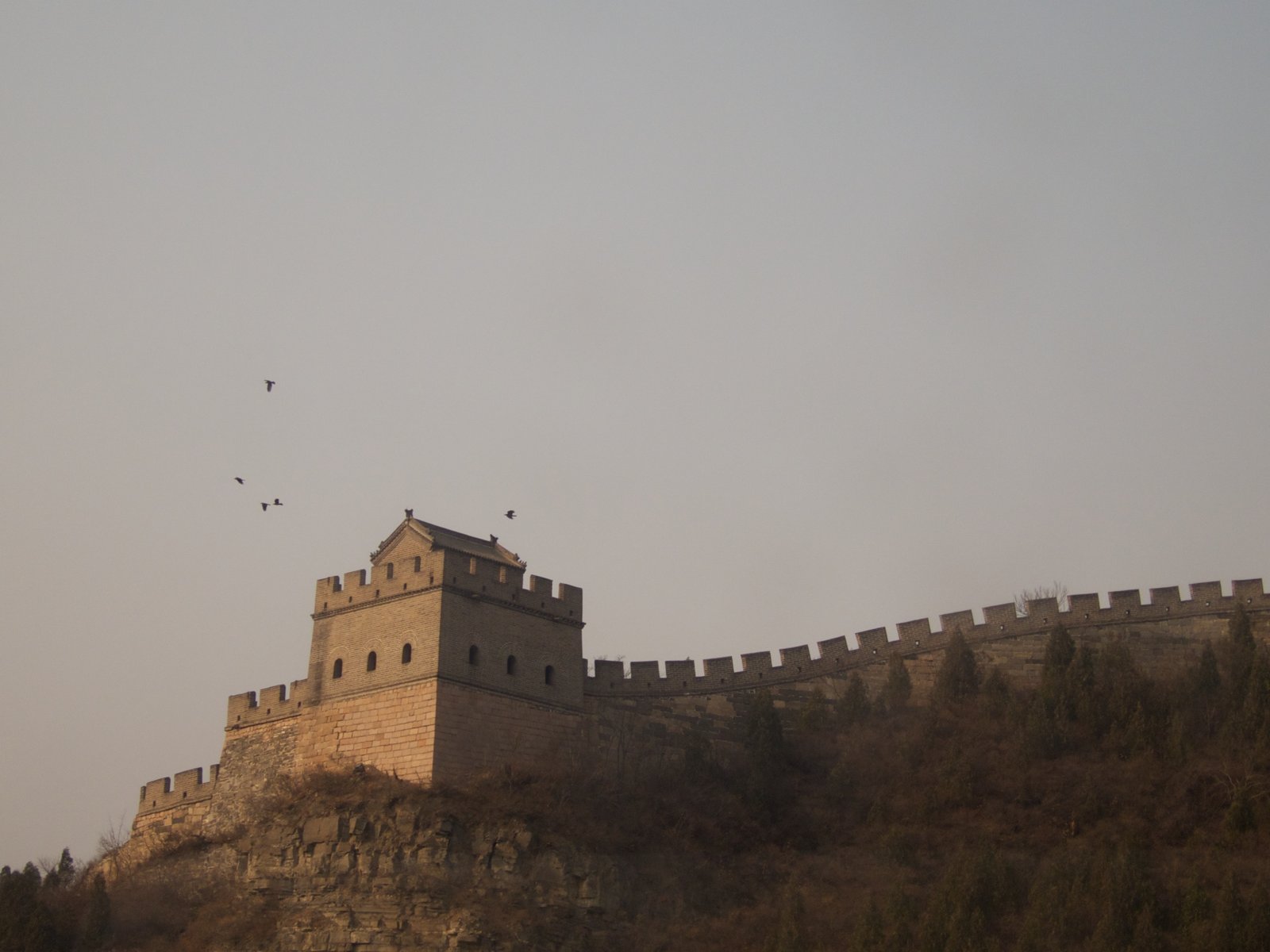
The Badaling section of the Great Wall was constructed in 1504–1505 during the Ming dynasty to fortify the Juyongguan Pass, the principal northern gateway to Beijing. Ming engineers built the wall here in dressed granite and fired brick — materials that distinguished the Ming rebuild from earlier earthen versions — and set watchtowers at intervals of roughly 500 metres along the ridge. The highest point above Badaling Pass, at Beibalou tower, reaches approximately 1,015 metres above sea level. When the site opened to tourism in 1957, it became the first section of the Great Wall accessible to the public, and it remains the most visited; it hosted the urban road cycling circuit during the 2008 Summer Olympics. The wall follows the natural ridge with a sureness that reads as geological from a distance. Up close the stone underfoot shows centuries of foot traffic ground into the surface, and wind through the crenellations on exposed towers produces an audible low note on cold mornings. UNESCO inscribed the Great Wall of China as a whole — a construction that runs more than 20,000 kilometres across fourteen provinces — in 1987.
Getting there: S2 suburban train from Huangtudian station (Line 13/8 interchange), journey approximately 1 hour 30 minutes; or high-speed train on the Beijing–Zhangjiakou line direct to Badaling station (approximately 40 minutes from Beijing North). A cable car operates to the north section from the visitor area. Allow: 3–4 hours to walk a meaningful stretch of wall; crowds are significantly lighter on weekday mornings outside Chinese national holidays. Best for: First encounter with the Wall near Beijing, combined with Ming Tombs as a full-day excursion.
Ming Tombs — Changling 50 km north — 1 hr 30 min by Metro + bus
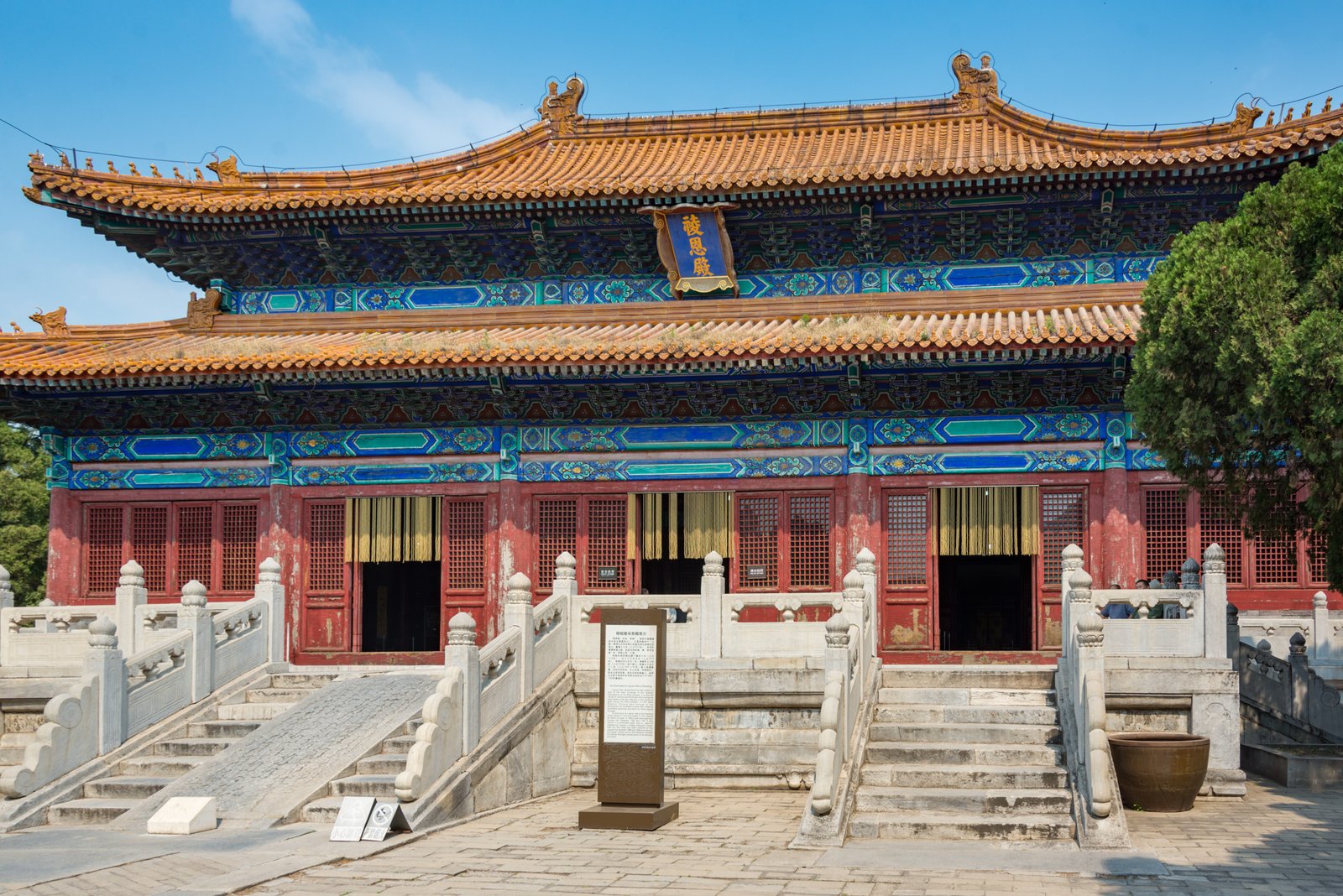
Thirteen of the sixteen Ming emperors are buried in a necropolis selected by the Yongle Emperor himself on the southern slope of Tianshou Mountain, approximately 42 kilometres north of central Beijing. The site was chosen according to feng shui principles to deflect inauspicious influences from the north; mountains on three sides and a river channel to the south form the required protective configuration. The Yongle Emperor was the first to be buried here, interred in Changling — the largest mausoleum in the complex — in 1424, accompanied by Empress Renxiaowen. Changling’s central hall, the Lingen Hall, is supported by 32 massive NanMu timber columns, a wood valued for its resistance to rot and its warm amber scent that still rises faintly in enclosed spaces. The Spirit Way leading into the complex runs for 7 kilometres and is lined with stone statues of guardian animals and officials in paired formation — camels, elephants, lions, and qilin among them — each carved from a single block of marble. The complex spans 40 square kilometres across the valley. UNESCO inscribed the site in 2000 under “Imperial Tombs of the Ming and Qing Dynasties.”
Getting there: Metro Line 8 to Zhuxinzhuang, then a shuttle bus to the tombs area (approximately 45 minutes total from central Beijing by metro, plus the bus). Most visitors combine this with Badaling as a full-day excursion: north from Beijing in the morning, Wall first, tombs in the afternoon. Allow: 2 hours for Changling and the Spirit Way; add 1 hour if visiting the excavated Dingling vault. Best for: Ming dynasty history, funerary architecture, Spirit Way stone sculpture, combined Great Wall day trip.
Frequently Asked Questions
How many UNESCO World Heritage Sites are near Beijing?
Beijing and its immediate surroundings contain six UNESCO World Heritage inscriptions — the highest concentration for any single city in the world. These are: the Imperial Palace (Forbidden City), the Temple of Heaven, the Summer Palace, the Great Wall of China (with Badaling as the closest accessible section), the Ming Tombs, and the Peking Man Site at Zhoukoudian. All six can be reached within two hours of the city centre.
Which UNESCO site is closest to central Beijing?
The Temple of Heaven is the closest major inscription to the historic centre, lying approximately 4 kilometres south of the Forbidden City and reachable in around 20 minutes via Metro Line 5. The Forbidden City itself sits at the geographical heart of the old imperial city and is arguably the most central heritage site of all, accessible directly from Tiananmen Square.
Do visitors need a visa to enter China, and how should they pay at heritage sites?
Most international visitors require a Chinese visa in advance, though China has expanded its visa-free arrangements with several countries as of 2024–2025 — check current requirements from your national authority before travel. Inside Beijing, the Transportation IC smart card (or the newer digital equivalents linked to WeChat Pay or Alipay) works on all Metro lines and buses and is the most practical payment method; most heritage sites now accept mobile payment at ticket windows alongside cash, but foreign credit cards have limited acceptance at ticket counters.
What is the best season to visit Beijing’s heritage sites?
Late September through early November (autumn) is broadly regarded as the most comfortable season: temperatures are mild, air quality tends to be better than summer, and the deciduous trees around the Summer Palace and Ming Tombs turn amber and red. Spring (April–early May) is a viable alternative, though sandstorms can reduce visibility in March. Summer brings school-holiday crowds and high humidity; the Badaling Great Wall in particular can be intensely crowded on Chinese national holidays (Golden Weeks in May and October), and early weekday mornings are strongly preferable for those trips.
Sources
- UNESCO World Heritage List — Imperial Palaces of the Ming and Qing Dynasties (inscribed 1987)
- UNESCO World Heritage List — Temple of Heaven (inscribed 1998)
- UNESCO World Heritage List — Summer Palace (inscribed 1998)
- UNESCO World Heritage List — Great Wall (inscribed 1987)
- UNESCO World Heritage List — Imperial Tombs of the Ming and Qing Dynasties (inscribed 2000)


.jpg)
_(32145827356).jpg)
.jpg)
.jpg)