
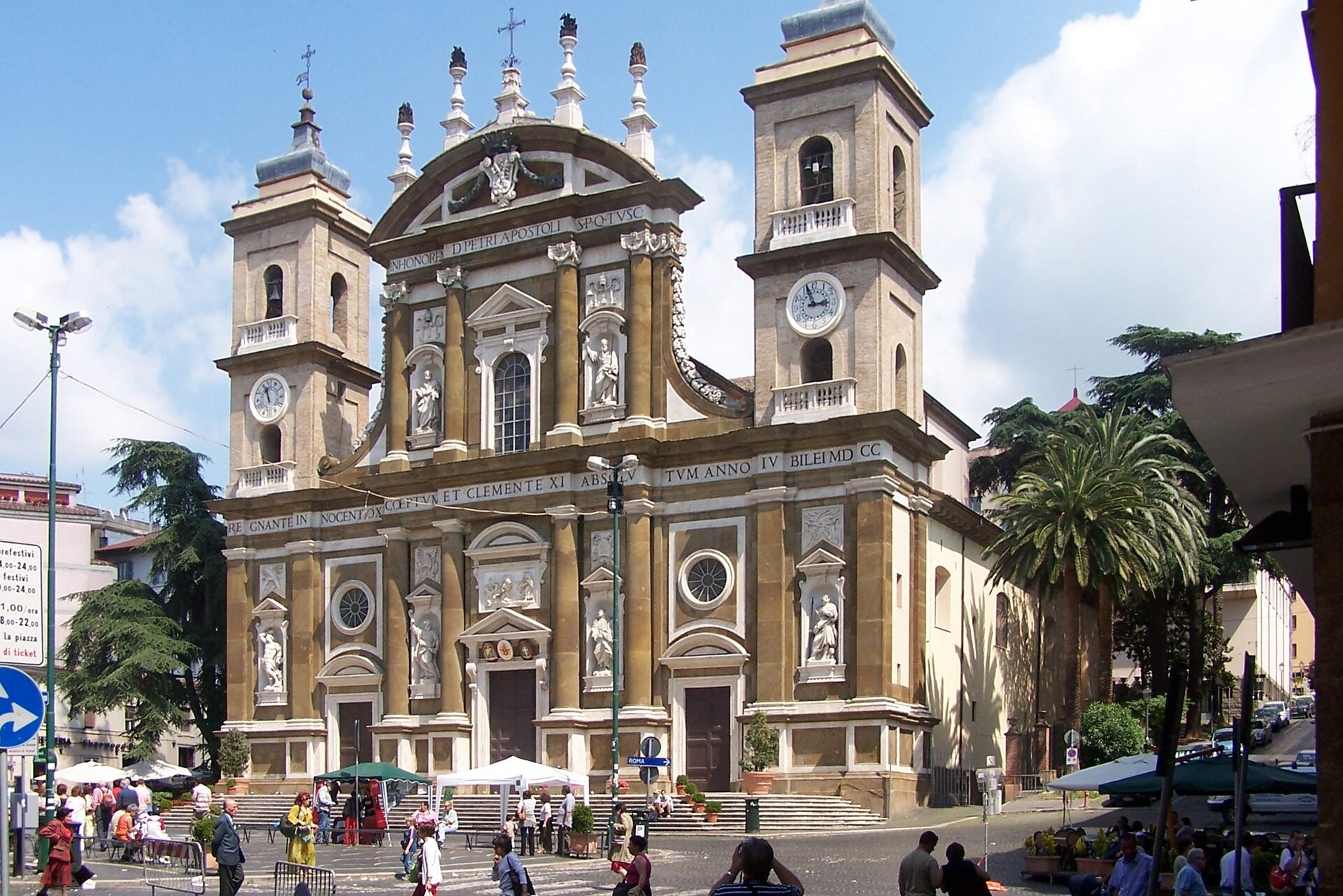
A medieval town southeast of Rome that rose to prominence after the destruction of Tusculum, inheriting the region’s diocesan authority and preserving layers of Roman settlement beneath its historic streets.
At a glance
Frascati emerged as a significant urban center in the high Middle Ages, transformed from a minor settlement into a thriving town following the fall of nearby Tusculum. The shift of ecclesiastical power to Frascati marked a turning point in the region’s medieval history.
History
The earliest documented reference to Frascati appears in 9th-century papal records preserved in the Liber Pontificalis, which describe it as a small urban agglomeration. Its trajectory changed dramatically in 1191 with the destruction of Tusculum, a rival settlement that had dominated the region. Residents displaced by Tusculum’s fall migrated to Frascati, swelling its population and elevating its status.
The episcopal see—the seat of religious authority—transferred from Tusculum to Frascati following this event, institutionalizing the town’s new prominence. The name itself may derive from local tradition, possibly referring to branches (frascati in Italian) used as timber or to construct temporary shelters in the aftermath of Tusculum’s destruction.
What you see
Frascati’s urban fabric reflects medieval foundation and organization. Archaeological excavations have revealed Roman-era structures beneath the medieval town, offering glimpses into layers of habitation spanning centuries.
Cultural significance
The town holds importance as a case study in medieval urban succession—how political upheaval and the decline of one settlement enabled the rise of another. Its acquisition of diocesan authority underscores the medieval Church’s role in shaping regional hierarchies and settlement patterns.
Key facts
- Address: Piazza G. Marconi 3, 00044 Frascati (Roma)
- Coordinates: 41.80804482154007, 12.679767608642578
- Telephone: 06 941841
- Official website: https://www.comune.frascati.rm.it/
- First documented mention: 9th century
- Diocesan seat transferred from Tusculum: 1191
Practical information
Opening hours and ticket prices change through the year, so we do not republish them here: the current ones are on comune.frascati.rm.it. What does not change is where it is: Piazza G. Marconi 3, 00044, at 41.80804482154007, 12.679767608642578.
Getting there
Frascati is located approximately 30 kilometers southeast of Rome in the Castelli Romani hills. Regional rail and bus services connect the town to central Rome; check schedules in advance.
See the place
Sources & resources
Find it on the map
See this place and what’s around it →Historical events at this place (2)
📷 Become a Cultural Heritage Online photographer
Share your photos of places: they stay published under your name as the author. The more they're seen, the more you get noticed — and soon a contest will reward the most appreciated photos.
Log in or sign up free to add a photo