
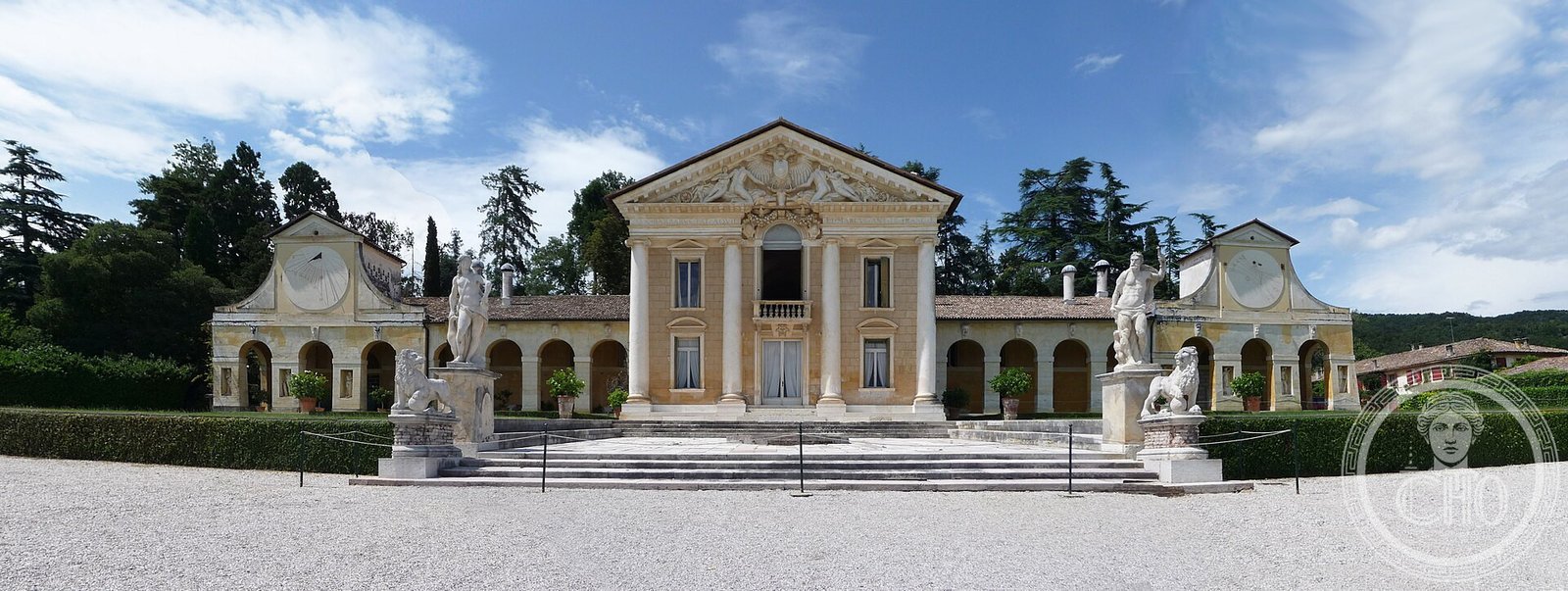
Andrea Palladio’s masterwork of Renaissance architecture and landscape design, graced with Paolo Veronese’s magnificent frescoes and set within the Venetian countryside.
At a glance
Villa Barbaro stands as a pinnacle of sixteenth-century Venetian domestic architecture. Palladio transformed a medieval family palace into an intellectual retreat, combining classical proportions with practical elegance. The villa’s design reflects the humanist ideals of its original patrons and remains one of the architect’s most celebrated works.
History
Palladio built Villa Barbaro between 1554 and approximately 1560 for the humanist scholar Daniele Barbaro and his brother Marcantonio, an ambassador to the Venetian Republic. The commission transformed the family’s existing medieval palace into a sophisticated country residence suited to artistic study and intellectual contemplation. The Barbaro brothers sought a setting that would honor both classical learning and refined living. Paolo Veronese subsequently adorned the interior with an extraordinary cycle of frescoes, creating one of the Renaissance’s greatest artistic collaborations between architect and painter.
What you see
The villa exemplifies Palladian design principles: symmetry, proportion, and harmonious integration with the landscape. The central block features a loggia and portico reflecting Venetian Renaissance style, while outbuildings frame the composition. A small Palladian temple, visible within the complex, extends the architectural statement across the grounds. Veronese’s frescoes animate the interior spaces with allegorical figures, mythological scenes, and trompe-l’oeil effects that dissolve boundaries between painting and architecture.
Cultural significance
Villa Barbaro represents the zenith of Venetian villa culture, where wealth, learning, and artistic patronage converged. UNESCO recognized its universal value in 1996, inscribing it alongside other Palladian villas of the Veneto as a masterpiece of Renaissance thought and practice. The collaboration between Palladio’s architecture and Veronese’s decoration established a model of integrated design that influenced European taste for centuries.
Key facts
- Address: Via Cornuda, 7, 31010 Maser (Treviso)
- Constructed: 1554–1560 (circa)
- Architect: Andrea Palladio
- Frescoes: Paolo Veronese
- Patrons: Daniele Barbaro and Marcantonio Barbaro
- UNESCO World Heritage: 1996
- Coordinates: 45.8118338, 11.9768907
- Phone: 0423 923004
- Website: https://www.villadimaser.it/
Practical information
The villa is open to visitors; consult the official website for current opening hours and admission prices. Photography and dress codes may apply inside. The grounds and surrounding landscape merit exploration.
Getting there
Villa Barbaro is located in Maser, in the province of Treviso in the Veneto region. The site is accessible by car or public transport from Venice and other Veneto towns. Contact the villa directly for parking and specific travel directions.
See the place
Sources & resources
Find it on the map
See this place and what’s around it →📷 Become a Cultural Heritage Online photographer
Share your photos of places: they stay published under your name as the author. The more they're seen, the more you get noticed — and soon a contest will reward the most appreciated photos.
Log in or sign up free to add a photoDo you manage this place?
This page is read by travellers and heritage enthusiasts who find it on Google. Keep it accurate — and make it work for you. Free for non-profit heritage institutions.