
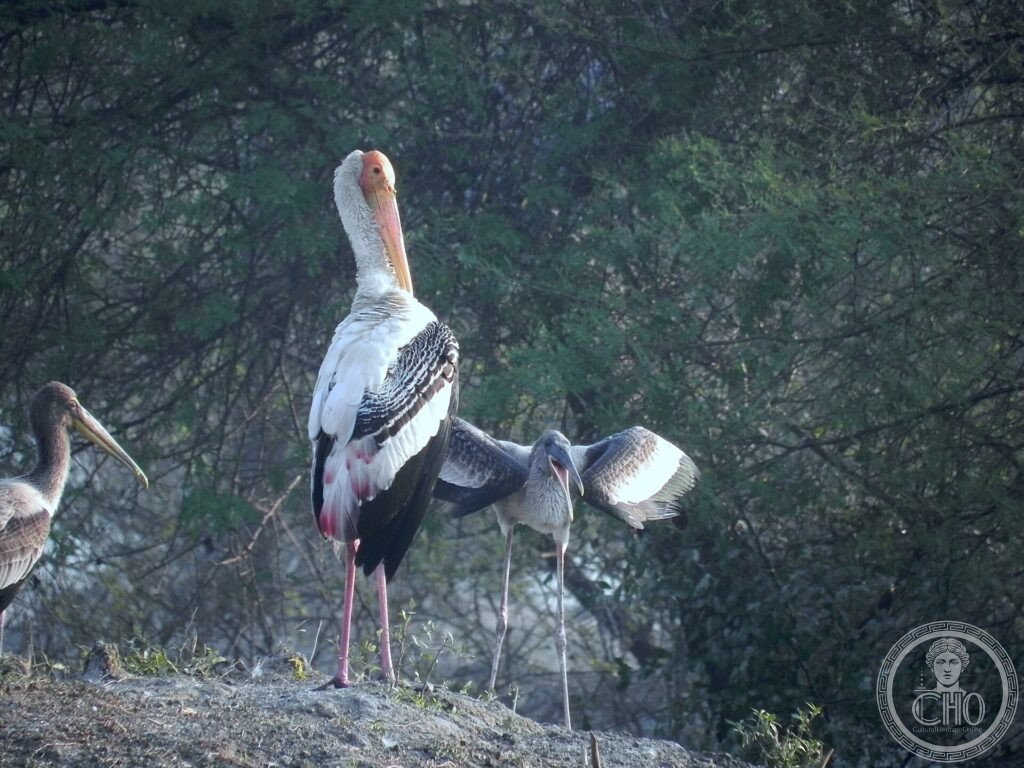
Nato come riserva di caccia di un maharaja, oggi è uno dei più importanti santuari di uccelli dell’Asia. Ogni inverno le zone umide di Keoladeo, presso Bharatpur, accolgono migliaia di aironi, cicogne, anatre e svassi, e un tempo persino le rarissime gru siberiane. Un mosaico d’acqua, canneti e foresta nel cuore arido del Rajasthan.
At a glance
Keoladeo National Park, near Bharatpur in Rajasthan, is one of Asia’s most important bird sanctuaries. A man-made mosaic of shallow lakes, marsh, woodland and grassland created by the rulers of Bharatpur as a hunting reserve, it now hosts thousands of resident and migratory birds — herons, storks, ducks, cranes and many more — especially in winter, when waterfowl arrive from across Eurasia. Once a wintering ground for the rare Siberian crane, it was inscribed by UNESCO in 1985.
Key facts
- UNESCO: World Heritage since 1985 (Keoladeo National Park)
- Bird sanctuary: one of the richest waterbird sites in Asia
- Man-made wetland: created as a hunting reserve by the Bharatpur rulers
- Migratory haven: thousands of waterfowl winter here
- Siberian crane: a former wintering ground for the rare crane
- Setting: a green wetland in the dry plains of eastern Rajasthan
History
The wetland was shaped in the 19th century when the Maharaja of Bharatpur dammed and flooded a natural depression to create a duck-shooting reserve, which became famous for its lavish hunts. Protected from the early 20th century and made a national park, its purpose was reversed: the same waters that once drew hunters now shelter the birds.
Fed by monsoon rains and canals, the marshes attract huge breeding colonies of storks, herons, egrets and cormorants, and in winter migratory ducks, geese and waders from Central Asia and Siberia. The celebrated Siberian cranes that once wintered here have not returned in recent years, but Keoladeo remains a place of global importance for birds, recognised by UNESCO in 1985.
What you see
Tracks and paths — explored on foot, by bicycle or cycle-rickshaw — wind among the shallow lakes and woodland, past trees crowded with the nests of storks and herons and waters dotted with ducks, spoonbills, ibises and kingfishers. In winter the birdlife is at its richest.
Beyond the birds, the park shelters deer, nilgai, jackals and pythons, a green oasis in the dry Rajasthan plain.
Practical information
- Park: entry ticket; explored on foot, by bicycle or cycle-rickshaw
- Best time: winter (November–February) for migratory birds
- Time needed: half a day or more
- Note: bring binoculars; a guide helps with bird identification
Getting there
Keoladeo is on the edge of Bharatpur, in eastern Rajasthan, India, about 55 km west of Agra and within reach of Jaipur and Delhi by road and rail. GPS: 27.16° N, 77.52° E.
Nearby
- Agra — the Taj Mahal and Fatehpur Sikri, to the east
- Fatehpur Sikri — the UNESCO Mughal city nearby
- Bharatpur — the town and its palace
Sources
- UNESCO World Heritage Centre — “Keoladeo National Park” (ref. 340)
- Rajasthan Forest Department — official body
- Encyclopaedia Britannica — Bharatpur
Find it on the map
See this place and what’s around it →📷 Become a Cultural Heritage Online photographer
Share your photos of places: they stay published under your name as the author. The more they're seen, the more you get noticed — and soon a contest will reward the most appreciated photos.
Log in or sign up free to add a photo