
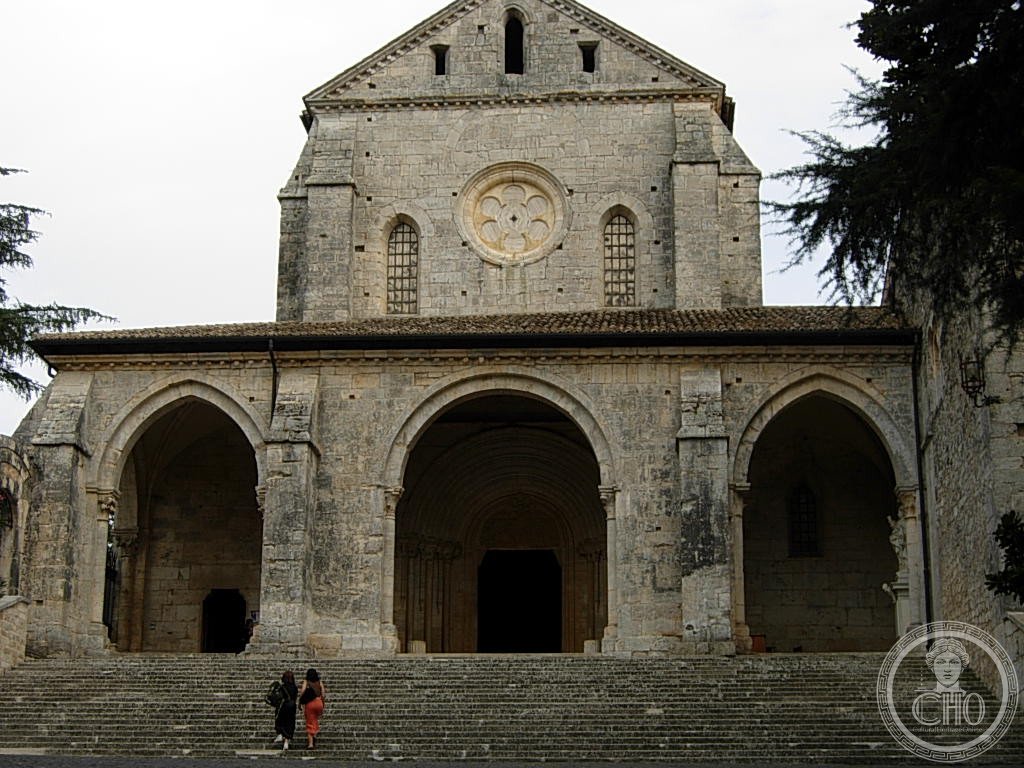
Abbazia di Casamari (1035/1217): il Complesso Cistercense Più Integro d'Italia nella Valle del Melfa
Se Fossanova è il prototipo del gotico cistercense in Italia, Casamari ne è la versione più intatta: chiesa, chiostro, sala capitolare, refettorio e ala dei conversi sono ancora lì, quasi esattamente come i monaci di Citeaux li lasciarono nel 1217, e una comunità viva li abita e li mantiene producendo vino, olio e liquori secondo ricette tramandate per secoli.
At a glance
Casamari Abbey stands in the valley of the Melfa river, 8 km from Veroli (Frosinone), in the limestone hills of the Ciociaria region of southern Lazio. A Benedictine community was established here in 1035; in 1203 it was transferred to the Cistercian reform and received monks from Fossanova to impose the new observance. The church, consecrated in 1217, is the masterpiece: the plan replicates the Bernardine model of Clairvaux (square east end, single nave, transepts with square chapels) but the proportions are subtly adjusted for the flatter Italian limestone topography. Unlike Fossanova, which has lost some of its ancillary buildings, Casamari retains the complete monastic range: the chapter house with its ribbed vaulting on slender columns, the warming room, the lay brothers' refectory, the cellars, and the monks' infirmary. The active Cistercian community produces Casamari wine (white and red from local Ciociaria grapes), olive oil, honey, and the herbal liqueur Centerba, sold in the abbey shop.
Key facts
- Founded: Benedictine from 1035; Cistercian from 1203 (monks from Fossanova); church consecrated 1217; one of two early Cistercian abbeys in Lazio (see also Fossanova)
- Architecture: the most complete Cistercian complex in Italy; church + cloister + chapter house + warming room + refectory + lay brothers' wing all survive intact; Gothic ribbed vaulting throughout; Cistercian austerity: no figurative sculpture, no polychrome glass
- Museum: Museo dell'Abbazia di Casamari; ancient sculpture, coins, parchments, liturgical objects, Cistercian art; one of the best small monastic museums in central Italy
- Products: wine (DOC Ciociaro), olive oil, honey, Centerba herbal liqueur, propolis; all sold in abbey shop; annual production about 50,000 bottles of wine
- Today: active Cistercian community; monastic offices open to public (Vespers at 17:30 recommended); guided tours; abbey shop and pharmacy (farmacia monastica)
History
The origin story of Casamari is connected to the ancient church of Santa Maria on the site, which tradition associated with Gaius Marius (157–86 BC), the Roman general — hence “Casa di Mario” (Marius' house) corrupted to Casamari. The Benedictine community established in 1035 maintained the existing church until 1203, when Pope Innocent III transferred it to the Cistercians: a community of monks arrived from Fossanova to impose the new observance and rebuild the monastery from scratch. The new church was built between 1203 and 1217, following the Cistercian model precisely. The speed of construction — 14 years for a full church and monastic range — testifies to the efficiency of the Cistercian building system and the support of the papacy.
The abbey's history is less eventful than Montecassino's: no major destructions, no dramatic sieges. Its importance was as a centre of agricultural production and monastic stability in the Ciociaria, a region that for centuries had no other significant cultural institution. The Napoleonic suppression of 1810 dispersed the community briefly, but the monks returned in 1814. The 19th and 20th centuries saw careful restoration of the monastic buildings, preserving their medieval character.
What you see
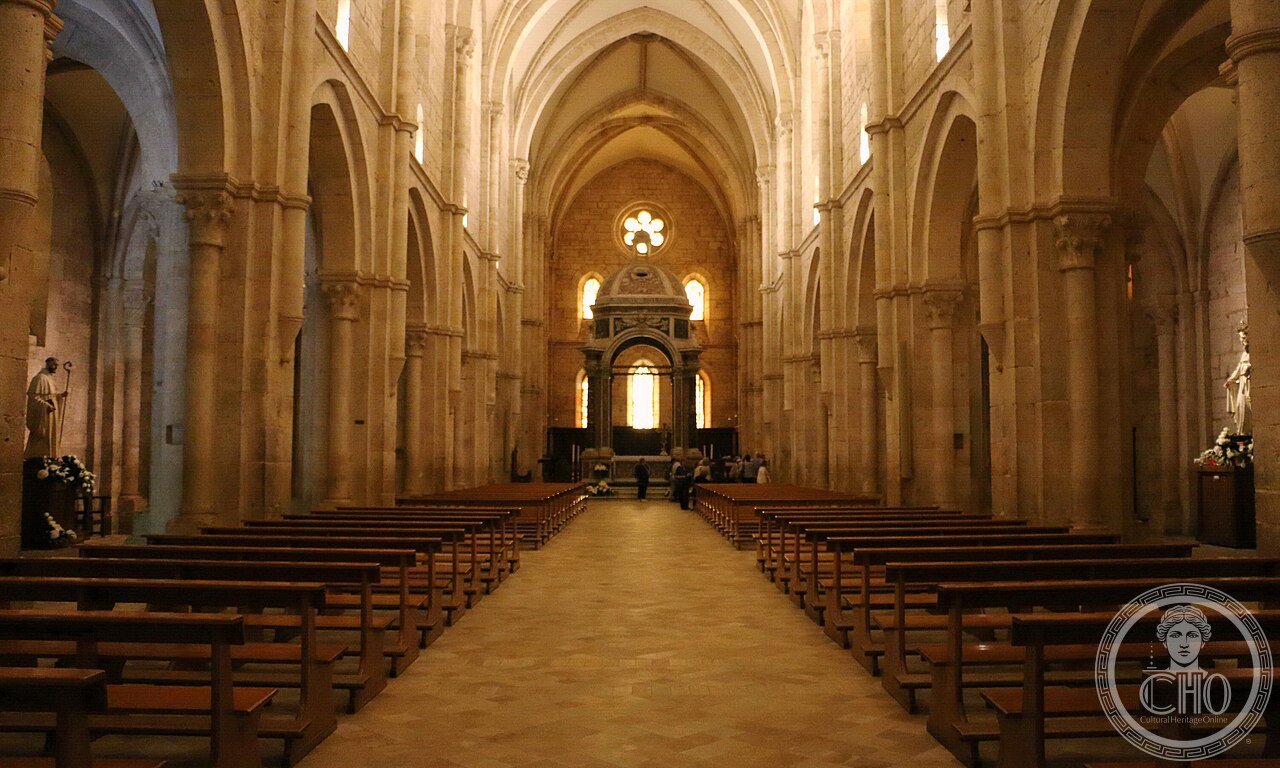
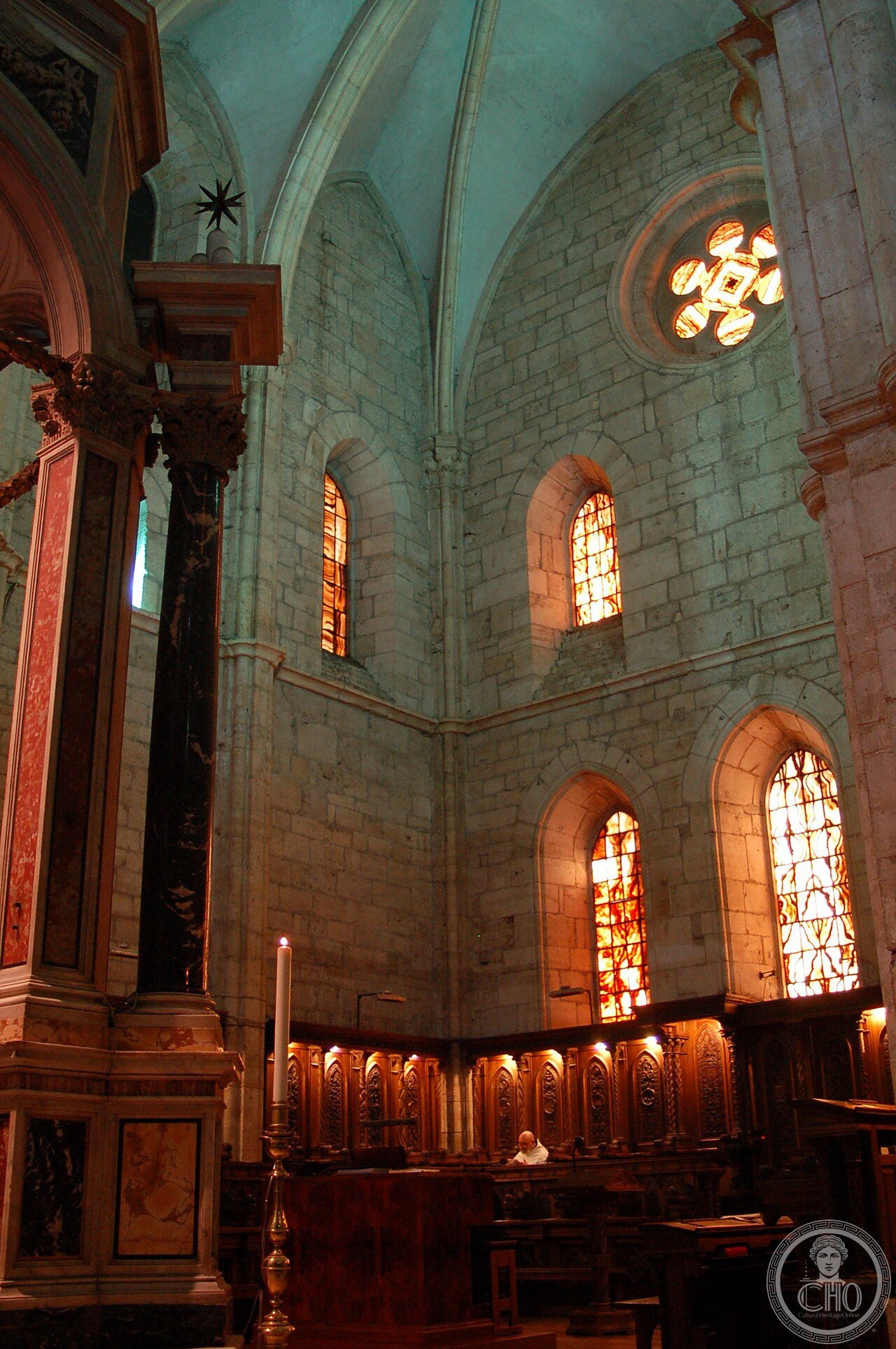
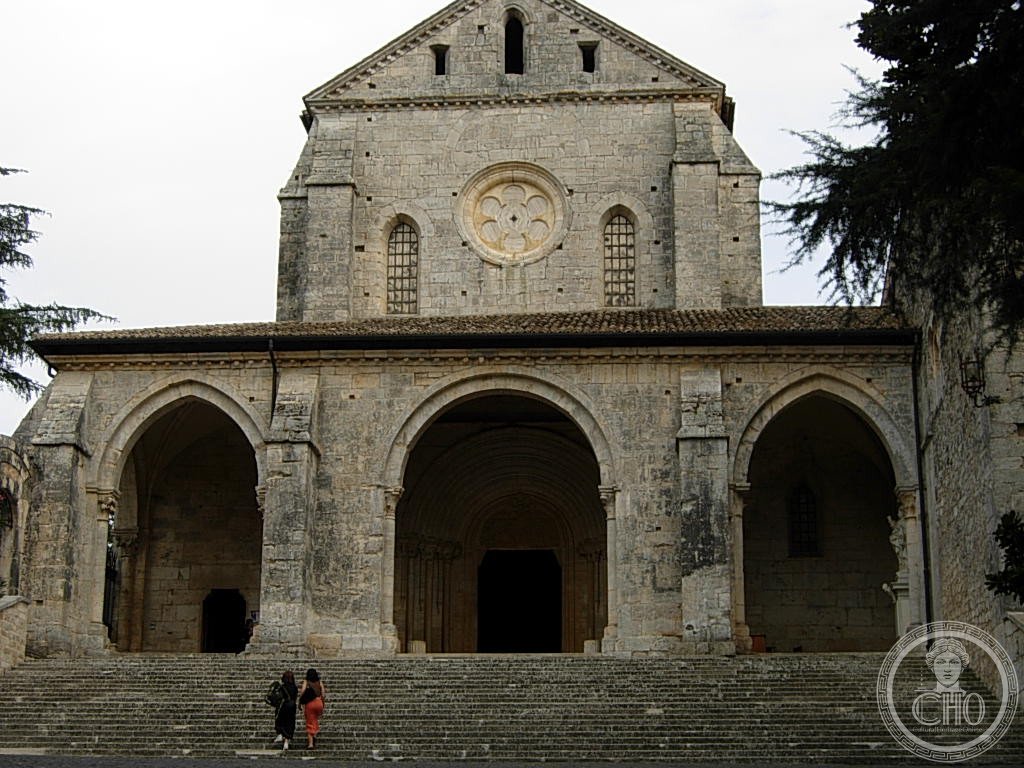
The approach to Casamari through the Melfa valley is dramatically different from Fossanova: the abbey is set at the foot of a hill rather than in a plain, and the limestone facade appears suddenly around a curve in the road, its Gothic portico of three arches framing a simple rose window. The interior of the church follows the Bernardine plan precisely: a single nave of six bays, square transepts with two chapels each, a square presbytery. The proportions of Casamari are slightly heavier than Fossanova, the stone a warmer local limestone rather than Fossanova's grey tufa. The cloister, reached from the south transept, is one of the most serene spaces in Italian Romanesque-Gothic: 24 bays with twin columns, some Romanesque and some with early-Gothic capitals. The chapter house, off the east walk, has seven bays of ribbed vaulting on four free-standing columns. The museum, in a wing of the monastery, displays medieval sculpture, coins from the Ciociaria, and liturgical objects spanning eight centuries.
Practical information
- Opening hours: Mon–Sat 09:00–12:00 and 14:30–17:00; Sun 10:00–12:00 and 14:30–17:00; closed during religious services
- Museum: open during abbey hours; small entrance fee
- Abbey shop: open daily 09:00–12:30 and 14:00–18:00; wine, olive oil, liqueurs, honey
- Time needed: 1–1.5 hours
Getting there
By car from Frosinone (25 km north-west): SS214 toward Veroli, then local road to Casamari (signs from Veroli). By car from Rome (130 km south-east): A1 to Frosinone exit. No regular public transport; taxi from Veroli or Frosinone. GPS: 41.7556° N, 13.4797° E.
Nearby
- Veroli — 8 km north-west; ancient hilltop town (city walls, Roman theatre fragments, medieval churches); Museo Civico; local Ciociaria cuisine
- Fossanova — 70 km south-west; the first Cistercian abbey in Italy (1135), model for Casamari; site of Thomas Aquinas's death
- Montecassino — 50 km south-east; the founding Benedictine abbey of Western monasticism; Allied war cemetery
Sources
- Wikipedia — “Casamari Abbey” (en.wikipedia.org/wiki/Casamari_Abbey)
- Abbazia di Casamari — casamari.it (official website, history and museum)
- Kinder, T.N., Cistercian Europe, Kalamazoo 2002 (chapter on Casamari and Fossanova)
Find it on the map
See this place and what’s around it →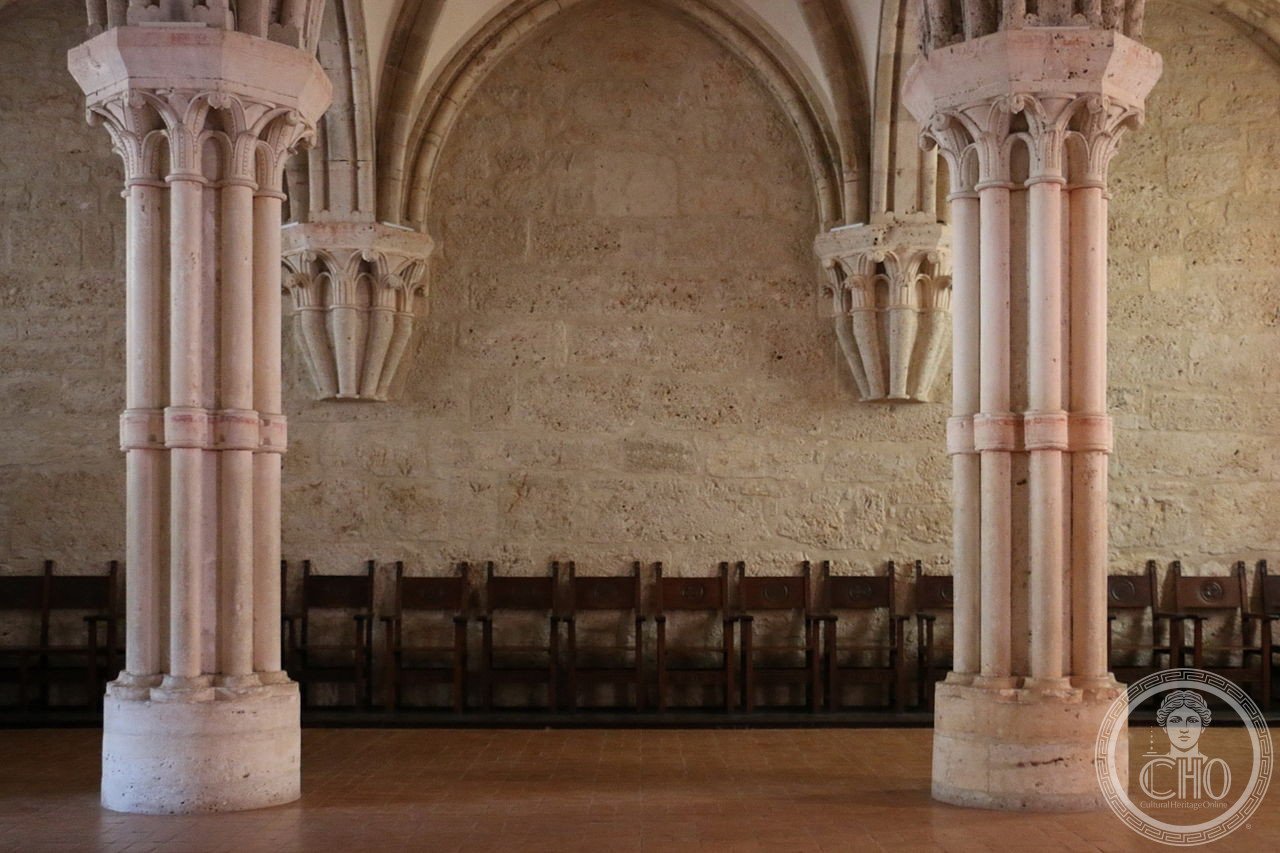
📷 Diventa un fotografo di Cultural Heritage Online
Condividi le tue foto dei luoghi: restano pubblicate con la tua firma come autore. Più vengono viste, più ti fai conoscere — e presto un concorso premierà le foto più apprezzate.
Accedi o registrati gratis per aggiungere una foto