
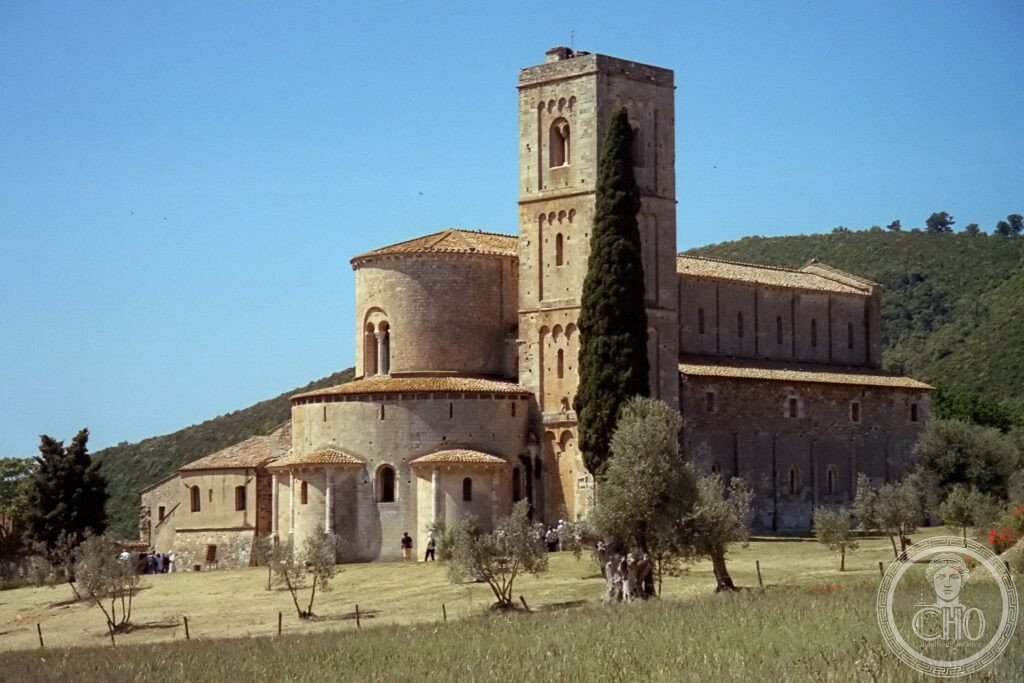
In the silent valley below Castelnuovo dell’Abate, the eastern alabaster that cuts the windows of the apse turns translucent when the sun comes in from the north — the light the monks were after in the twelfth century, the same light the faithful come for today during the lauds sung in Gregorian chant.
At a glance
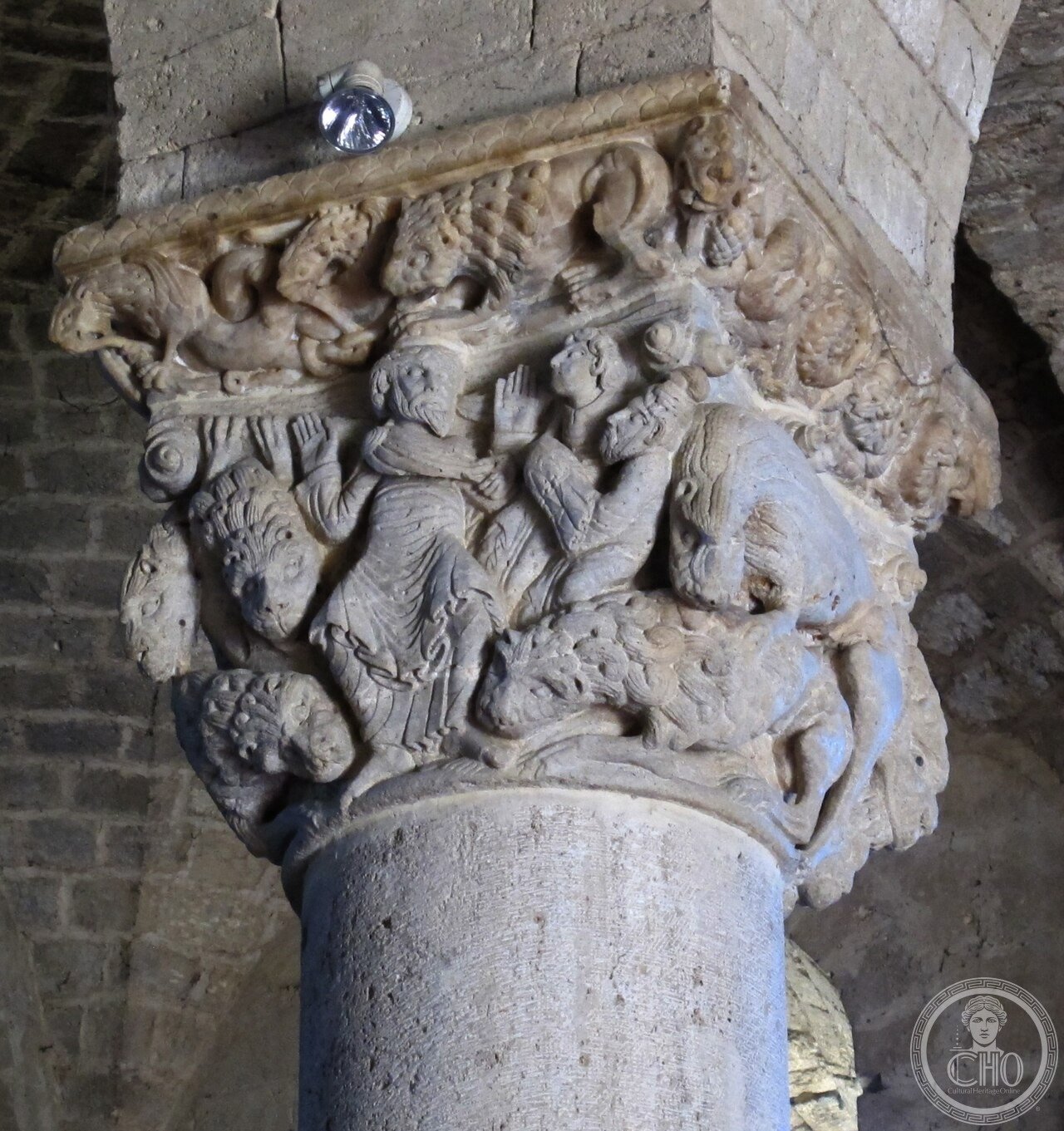
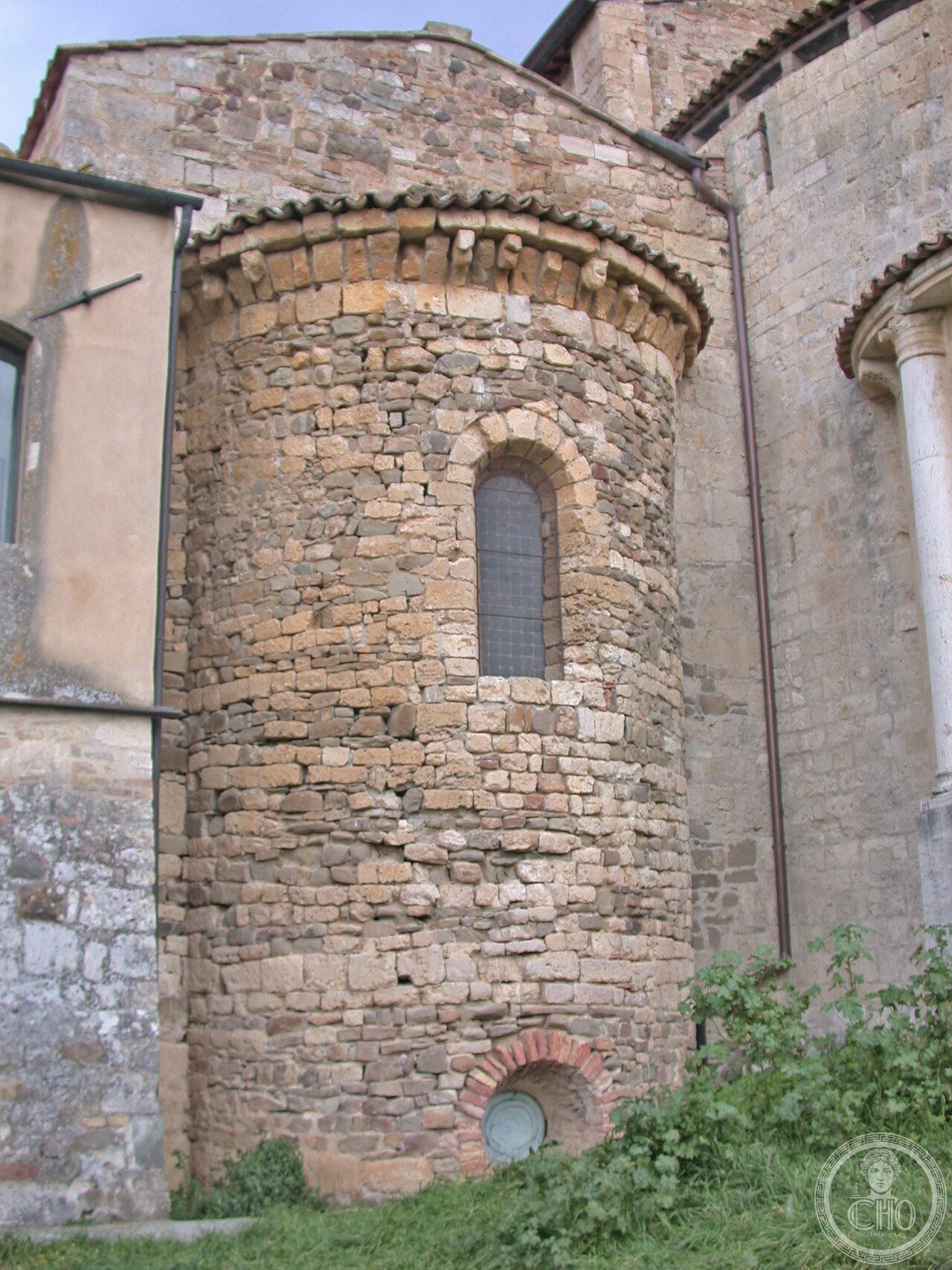
Sant’Antimo Abbey stands in a valley below the hilltop village of Castelnuovo dell’Abate, 9 km south of Montalcino in the Sienese hills. The abbey was traditionally said to have been founded by Charlemagne in 781 on his return from the Lombard wars; historical records confirm a monastic community here from the late 9th century. The existing Romanesque church was built in the 12th century — scholars debate exactly when, between 1118 and 1152 — and shows unmistakeable French influence: the three-apse east end, the ambulatory with radiating chapels, and the carved capitals depicting Daniel in the Lions’ Den and the story of Herod are in the style of the Cluniac architecture of Burgundy, not of the local Lombard-Romanesque tradition. The church is built partly in travertine limestone and partly in a translucent onyx alabaster from the near-East, which suffuses the interior with a warm golden light in the afternoon and a cool grey-blue light in the morning. A Premonstratensian community sang the liturgy of the hours here in Gregorian chant from 1979 until 2015; the abbey is now cared for by the Archdiocese of Siena-Montalcino, and liturgy and chant continue without a resident monastic community.
Key facts
- Foundation legend: traditionally attributed to Charlemagne, 781 AD; historically confirmed from the 9th century.
- Present church: 12th century (c. 1118–1152); Romanesque with strong French Cluniac influence.
- Architectural distinctives: ambulatory with radiating chapels (unique in Tuscany at this date); onyx alabaster windows in the apse (from the Near East); carved capitals (Daniel in the Lions’ Den; Herod’s Feast).
- Stone: travertine limestone (local) and onyx alabaster (imported from the Near East or Franken).
- Gregorian chant: a Premonstratensian community sang the daily office here 1979-2015; today the church hosts liturgy and chant events under the Archdiocese, with no resident monks.
- Location: in the same valley as the Brunello di Montalcino vineyards; the landscape of cypresses, vines and limestone hills is classic southern Tuscany.
History
The abbey of Sant’Antimo claims to trace to Charlemagne himself; a diploma of 813 records a gift of land to the community “of Sant’Antimo” from Louis the Pious, which corroborates a foundation in the late 8th or early 9th century. The abbey grew wealthy in the 10th and 11th centuries through gifts of land from local Lombard and then Sienese families, reaching the peak of its medieval power in the 12th century when the present church was built. The French-inflected architecture of the ambulatory and radiating chapels suggests either a French building master hired for the project or a patron with strong Cluniac connections — both were possible in a region that saw heavy Cluniac influence through the Via Francigena, the pilgrim road from Canterbury to Rome that passed through Siena and close to Montalcino.
The abbey was suppressed in 1462 by Pius II (who needed to fund the Diocese of Montalcino) and lay abandoned for centuries. It was the French writer Stendhal who “rediscovered” it in his Promenades dans Rome (1829), describing the alabaster windows and the morning light in the apse with extraordinary precision. Throughout the 19th and 20th centuries, a series of restoration campaigns stabilised the fabric. A Premonstratensian community settled here in 1979 and restored the sung liturgy, but left in 2015 for Saint-Michel de Frigolet in Provence; the abbey, now under the Archdiocese of Siena-Montalcino, still draws visitors for its architecture and for liturgical music in the resonant stone interior.
What you see
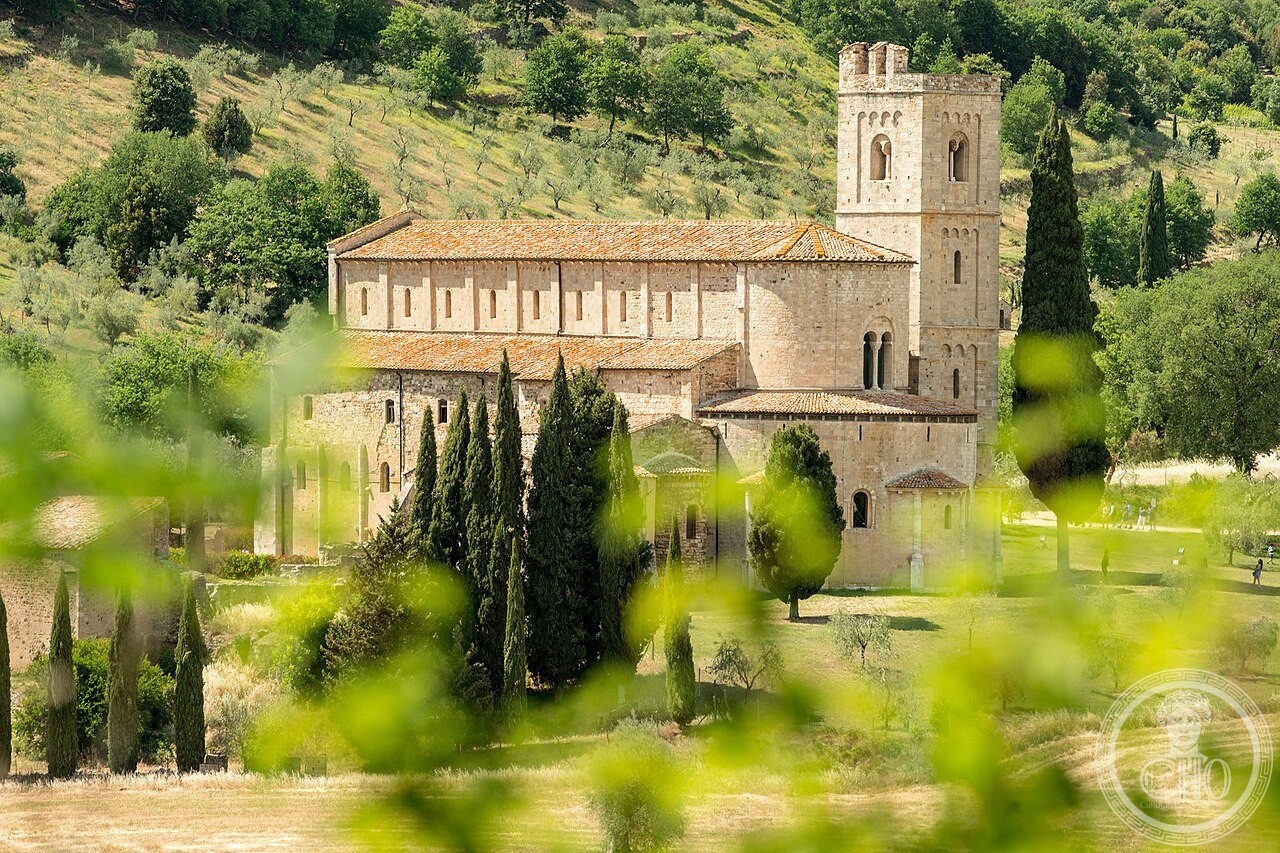
The approach from the road is one of the most beautiful in Tuscany: the church appears in the valley below, pale travertine against the dark cypresses, the three apses of the east end reading clearly from a distance. The interior is a single continuous space of remarkable quality — the ambulatory wraps around the apse at the east end, giving a sense of depth and movement that no Italian Romanesque church north of this point achieves at the same date. The carved capitals are the great specific ornamental achievement: the capital of Daniel in the Lions’ Den shows the prophet standing serenely between two rampant lions of remarkable volume and energy, the mane carved in tight spirals; the Herod capital shows the banquet scene with figures that have a narrative psychological complexity entirely out of the ordinary for provincial Romanesque work.
The alabaster windows in the apse are the most otherworldly element: the stone is translucent enough to transmit light, not transparent enough to pass images. In the morning, when the sun strikes the north-west windows, the interior fills with a diffuse golden light that is the effect that the builders were seeking — a light that comes from everywhere and nowhere, without shadow, perfectly adapted to contemplative prayer.
Practical information
- Opening hours: church open daily 10:30–12:30 and 15:00–18:30 approximately.
- Gregorian chant: the church hosts Mass and sung liturgy; check antimo.it for the current schedule of services and chant.
- Admission: free; voluntary donation.
- Best time: early morning for the alabaster light and Lauds; late afternoon for Vespers and the golden-hour landscape.
- Time needed: 45 minutes to 1 hour for the church; budget time to sit for Vespers.
Getting there
By car from Montalcino (9 km south); follow signs to Castelnuovo dell’Abate, then 1 km into the valley. By bus from Montalcino (Siena Mobilità, limited service to Castelnuovo). GPS: 42.9858° N, 11.4748° E.
Nearby
- Montalcino — the hilltop wine town producing Brunello di Montalcino, 9 km north; Fortezza medievale and civic museum.
- Pienza — the ideal Renaissance city of Pius II (who suppressed the abbey in 1462), 25 km north-east.
- Monte Amiata — the extinct volcano dominating the southern Sienese landscape, 20 km south.
Sources
- Wikipedia — “Abbey of Sant’Antimo” (en.wikipedia.org/wiki/Abbey_of_Sant%27Antimo).
- Richard Krautheimer, Early Christian and Byzantine Architecture, Penguin, 1965 (ambulatory type).
- Stendhal, Promenades dans Rome, 1829 (alabaster window description).
- Norbertine Community of Sant’Antimo — liturgy calendar (antimo.it).
Find it on the map
See this place and what’s around it →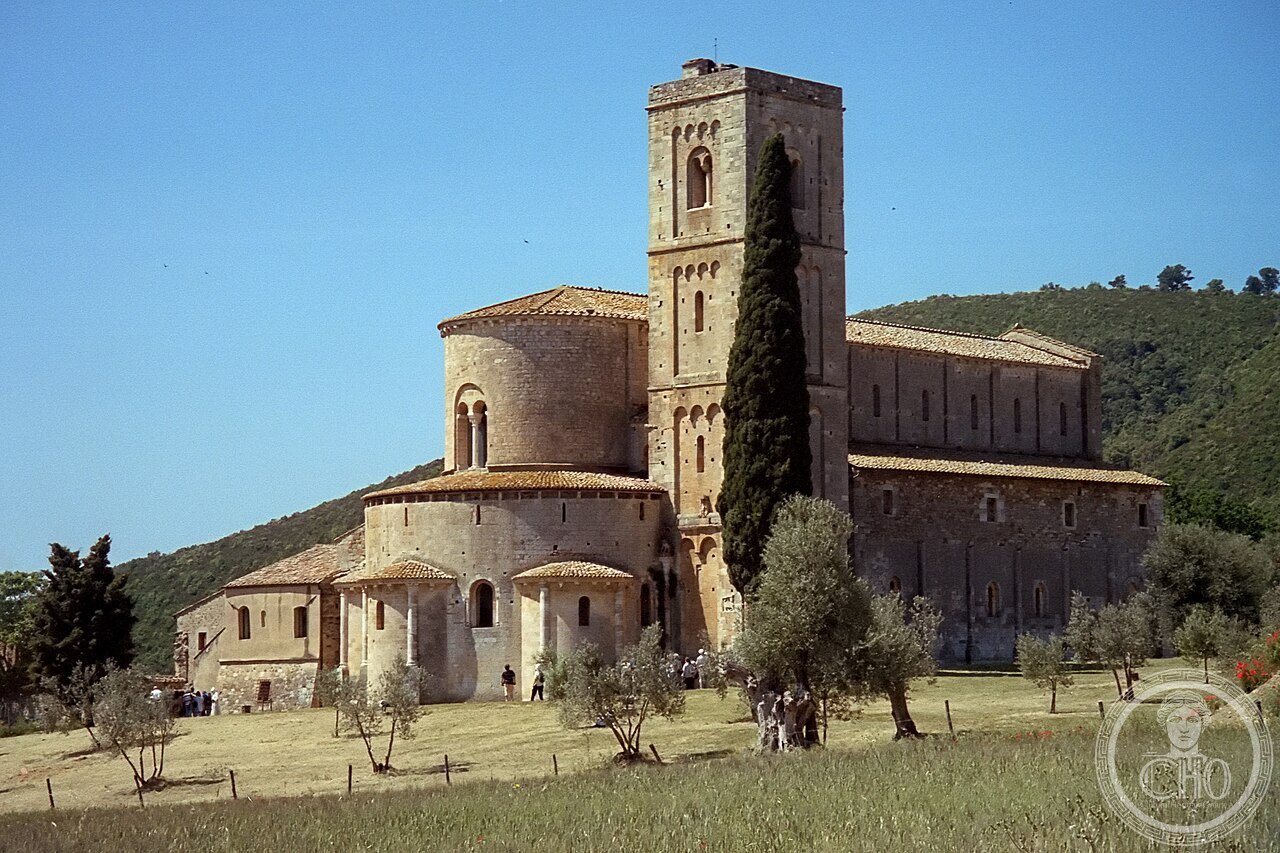
📷 Become a Cultural Heritage Online photographer
Share your photos of places: they stay published under your name as the author. The more they're seen, the more you get noticed — and soon a contest will reward the most appreciated photos.
Log in or sign up free to add a photoIs this page about you?
This page is read by travellers and heritage enthusiasts who find it on Google. Tell us how you are connected to this place and we will take it from there.