
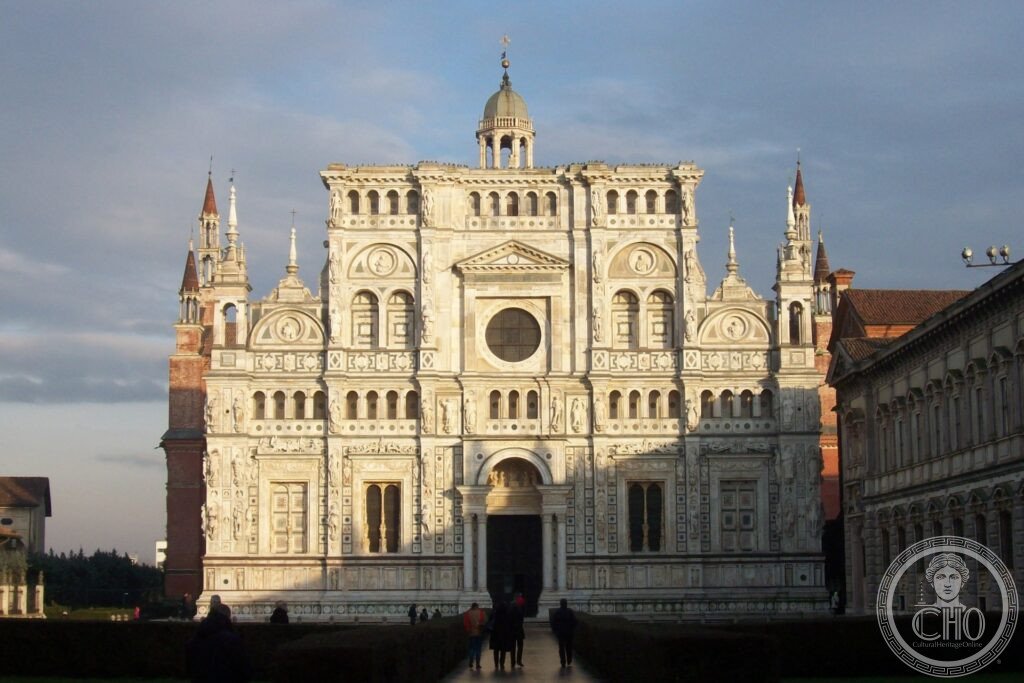
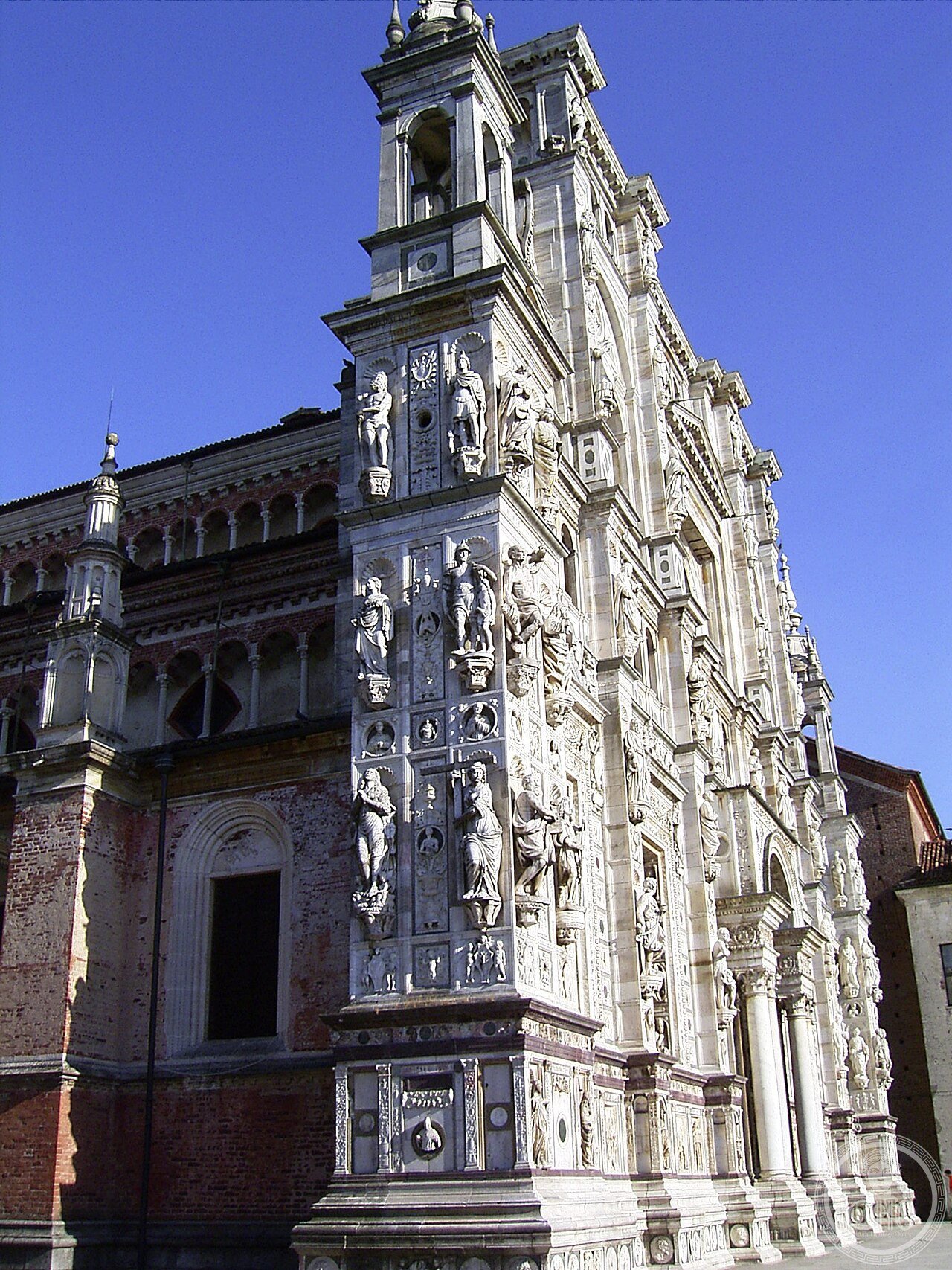
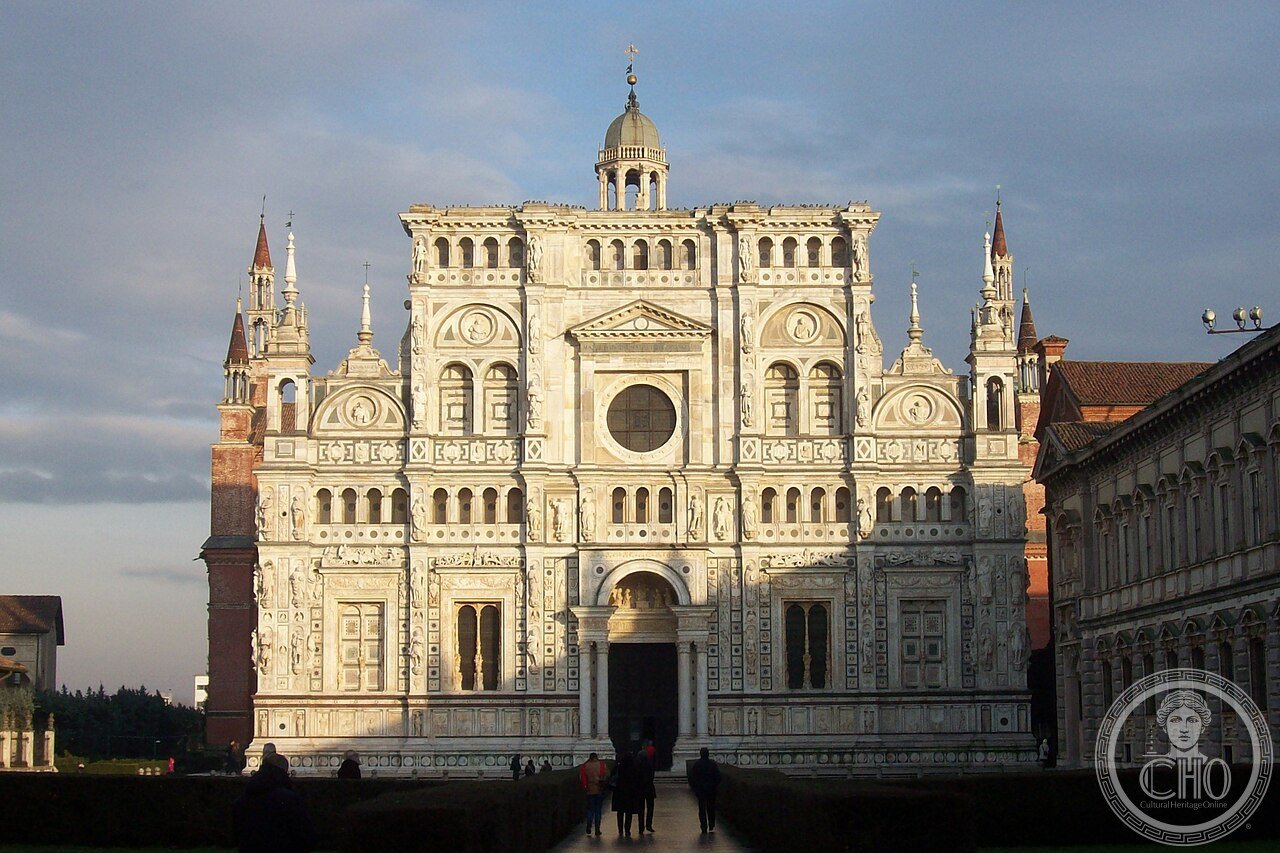
Gian Galeazzo Visconti fondò la Certosa nel 1396 come mausoleo personale — la facciata fu completata un secolo dopo, quando c'erano già due generazioni di marmorari lombardi a competere per ogni centimetro di superficie con pinnacoli, medaglioni, statue e trafori.
At a glance
The Certosa di Pavia (Charterhouse of Pavia) is a Carthusian monastery complex 8 km north of Pavia in the Po plain of Lombardy. Founded in 1396 by Gian Galeazzo Visconti, the first Duke of Milan, as a mausoleum for the Visconti family, it is one of the largest and most decorated late-Gothic and early-Renaissance buildings in Italy. Construction lasted over a century: the Gothic nave was built 1396–1452; the Renaissance transept and crossing 1450–1497; the marble facade — the most exuberant example of Lombard Renaissance decorative marble work — was begun in 1473 and never quite completed, with the uppermost register left unfinished. The Certosa contains exceptional frescoes by Bergognone (1488–1494), sculptures by Giovanni Antonio Amadeo, and the Renaissance tomb of Ludovico il Moro and Beatrice d’Este — one of the finest tomb monuments of 15th-century Italy. Cistercian monks still live in the Certosa and maintain it as an active monastery open to visitors.
Key facts
- Founded: 1396 by Gian Galeazzo Visconti (1351–1402), 1st Duke of Milan, as the Visconti dynastic mausoleum
- Order: Carthusian; later transferred to Cistercians; currently Cistercian monks in residence
- Architecture: Lombard Gothic nave (1396–1452) + early Renaissance transept and dome; marble facade begun 1473, never fully completed
- Facade: by Benedetto Briosco and Giovanni Antonio Amadeo (c. 1473–1499); white, pink and grey Candoglia marble; intricate bas-relief panels, roundels, candelabra, statues
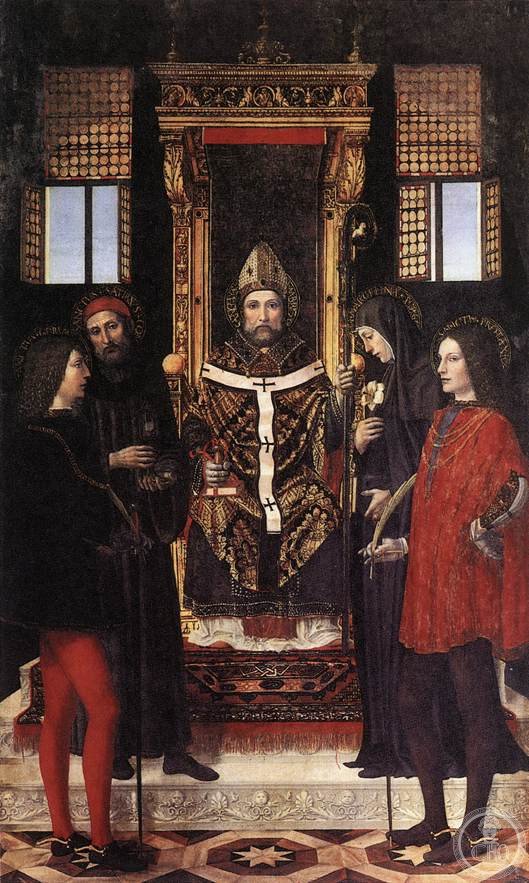
- Frescoes: Bergognone, 1488–1494, in the nave and lateral chapels — among the finest examples of Lombard late-Gothic fresco painting
- Tombs: Gian Galeazzo Visconti (marble sarcophagus); Ludovico il Moro and Beatrice d’Este (1497, Cristoforo Solari) — one of the great Renaissance tomb pairs
History
Gian Galeazzo Visconti laid the foundation stone of the Certosa on 27 August 1396, the feast day of Saint Ambrose, Milan’s patron. His ambition was double: to create the most magnificent mausoleum in Italy (surpassing even the Scaligeri tombs at Verona and the Angevin tombs at Naples) and to bind the Visconti dynasty to the prestige of a major monastic foundation. He imported marble from the Candoglia quarries in the Val d’Ossola — the same marble used for Milan Cathedral, which he had also initiated — and engaged the best Lombard architects of the period.
Gian Galeazzo died in 1402, before the building was anywhere near complete, and construction continued under his successors. The Sforza who replaced the Visconti in 1450 continued the patronage: Francesco Sforza commissioned the Renaissance crossing and transept, and Ludovico il Moro — the most famous and most tragic of the Sforza dukes — commissioned Cristoforo Solari to carve the joint tomb monument for himself and his wife Beatrice d’Este, who had died in childbirth in 1497. When Ludovico was captured by the French in 1500 and imprisoned for life in the Loches dungeon, the tomb was completed without him. Today it is in the south transept — two recumbent marble figures of extraordinary refinement, Beatrice in youth and Ludovico in ducal armour.
What you see
The long approach from the car park gives the best view of the relationship between the Gothic nave (completed first, visible on the sides) and the Renaissance facade (begun 70 years later, covering the western end). The facade is a composition of almost overwhelming richness: three portals, two levels of relief panels (stories from the Old and New Testament, Visconti family history), rows of saints and Doctors of the Church in niches, a frieze of medallion portraits of Roman emperors alternating with Visconti dukes, and above it all a zone of unfinished Renaissance tabernacles that gives the upper register a strangely raw quality compared to the density of the lower two-thirds.
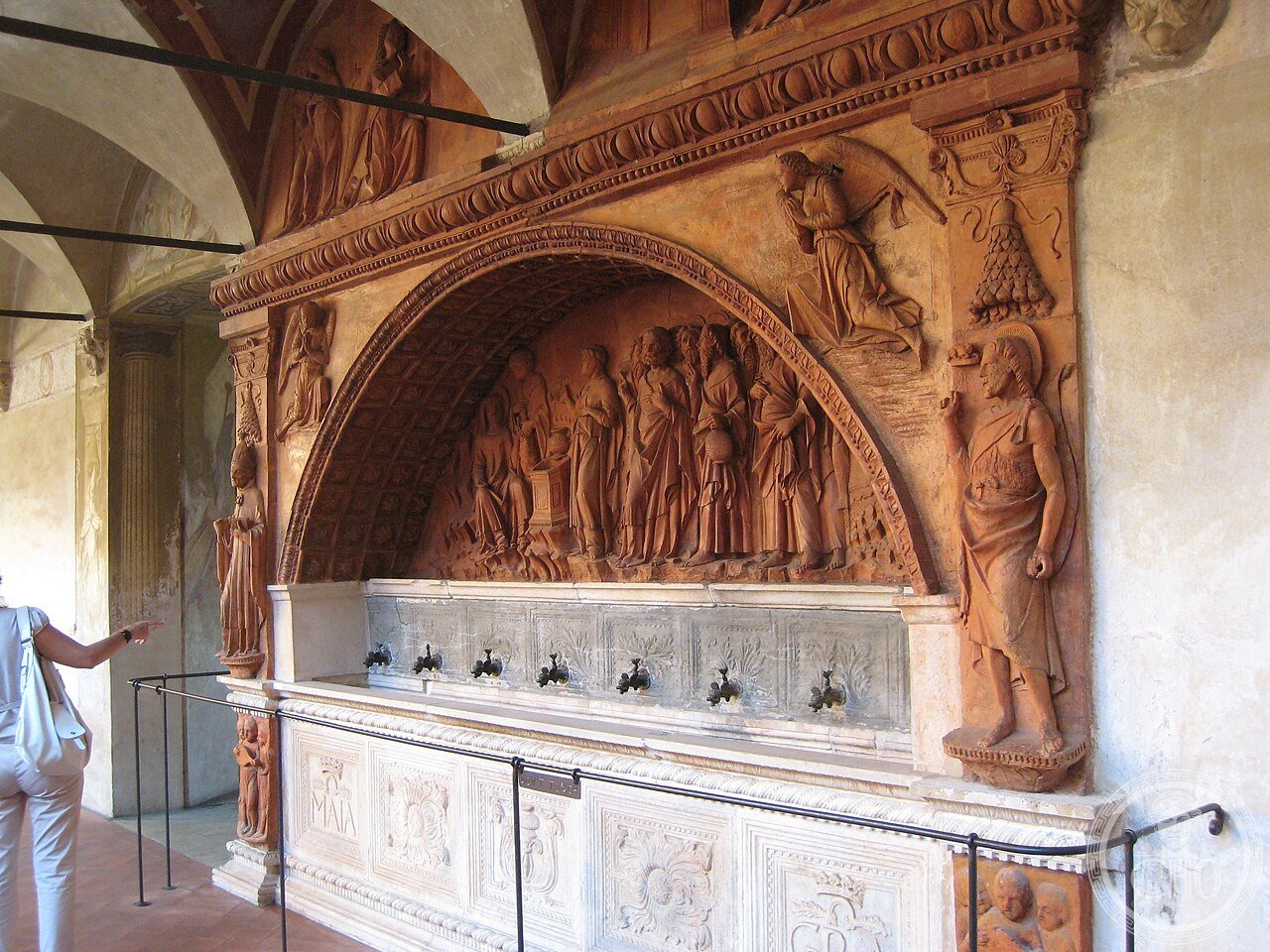
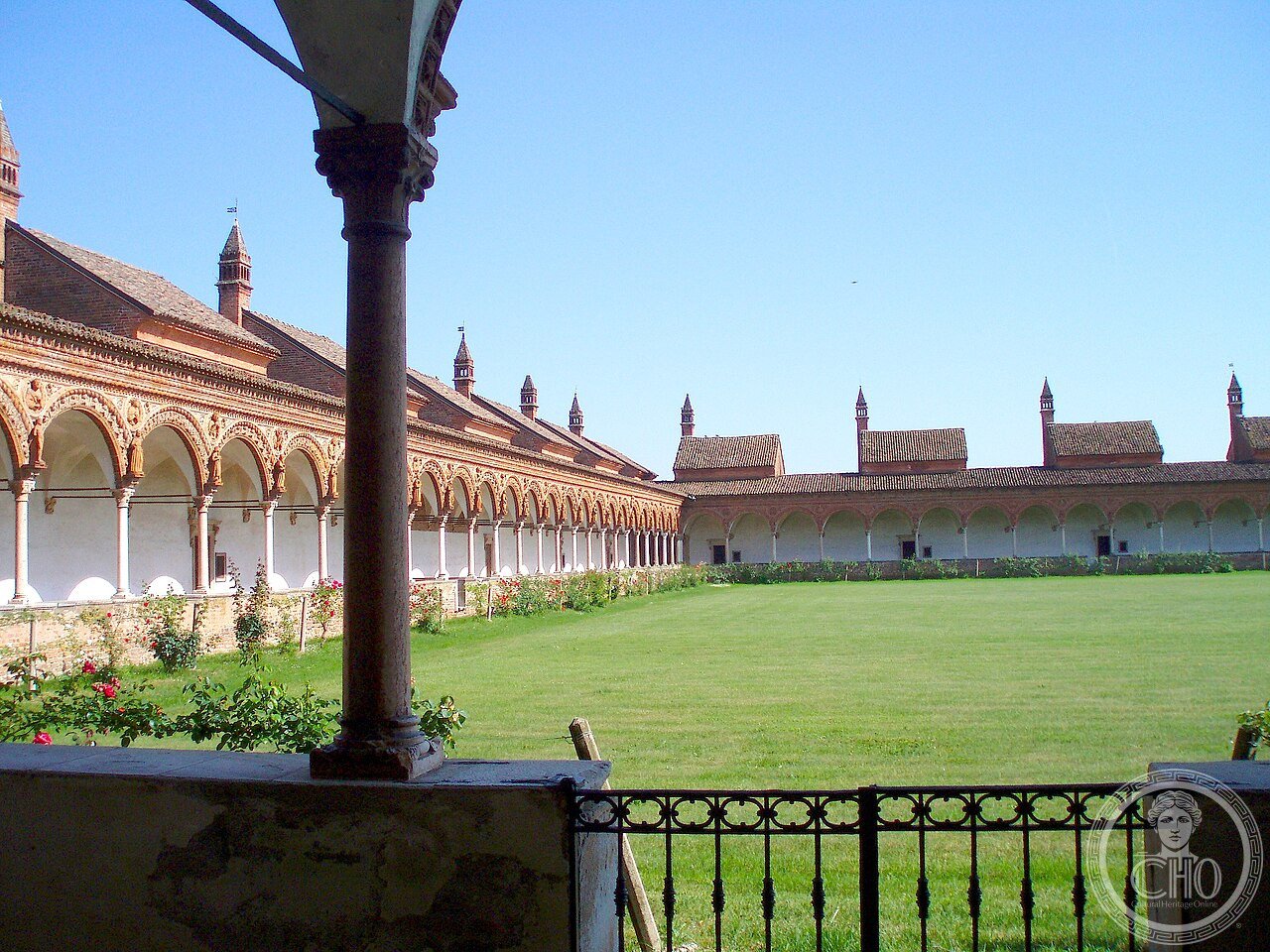
Inside, the Gothic nave leads through to the crossing under the Renaissance dome over the crossing — the transition from Gothic to Renaissance geometry is abrupt and deliberate. Bergognone’s frescoes in the nave chapels, with their calm tonality of pale blue, grey and warm ochre, are among the most serene examples of Lombard art. The two cloisters behind the church — the Small Cloister with terracotta decoration and the Great Cloister with its 24 monks’ cells opening onto a vaulted arcade — give a direct experience of the Carthusian monastic way of life.
Practical information
- Opening hours: Tuesday–Sunday 09:00–11:30 and 14:30–17:30 (winter); 09:00–11:30 and 14:30–18:00 (summer); closed Mondays and major feast days
- Admission: free; voluntary donation requested; guided tours available (in Italian, French, English)
- Dress code: shoulders and knees covered; the monks are in residence and will request compliance
- Photography: permitted in the church and cloisters; not in the sacristy or monk areas
- Time needed: 1.5–2 hours for full visit including cloisters
Getting there
By bus from Pavia train station (lines to Certosa di Pavia village, 8 km); by car from Milan (30 km south) via the SS35 or A7 motorway exit Bereguardo. GPS: 45.2601° N, 9.1545° E.
Nearby
- Pavia — the medieval university city with its covered bridge (Ponte Coperto) and San Michele Maggiore basilica, 8 km south
- Milan Cathedral (Duomo) — the companion project to the Certosa, from the same patron, same marble quarries and same Lombard craftsmen tradition, 30 km north
- Abbazia di Viboldone — Humiliate monastery with 14th-century frescoes, 15 km north-east on the road to Milan
Sources
- Wikipedia — “Certosa di Pavia” (en.wikipedia.org/wiki/Certosa_di_Pavia)
- Luke Syson and Dora Thornton, Objects of Virtue: Art in Renaissance Italy, British Museum Press, 2001
- Official Certosa website (certosa.pavia.it)
- Evelyn Welch, Art and Authority in Renaissance Milan, Yale University Press, 1995
Find it on the map
See this place and what’s around it →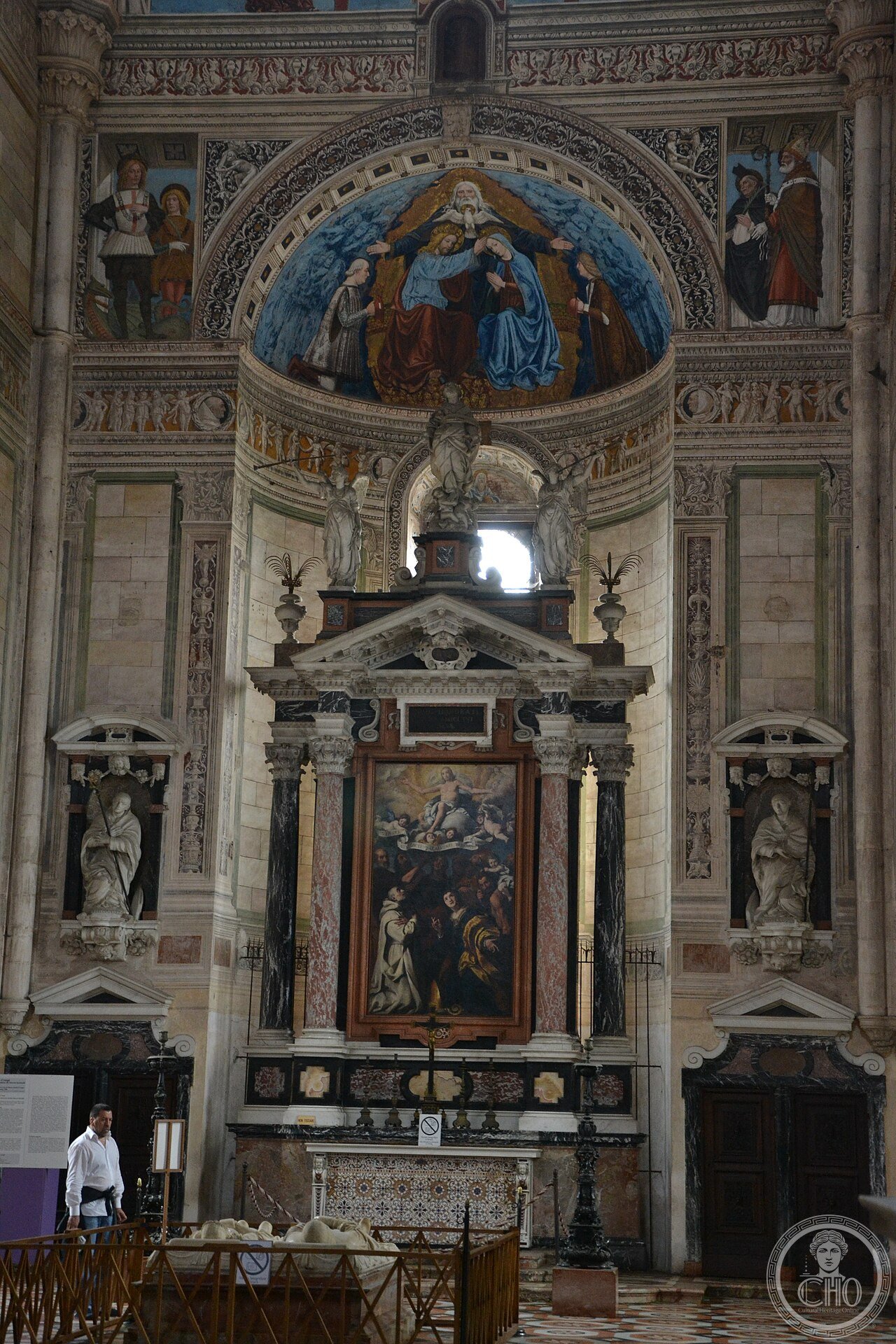
📷 Become a Cultural Heritage Online photographer
Share your photos of places: they stay published under your name as the author. The more they're seen, the more you get noticed — and soon a contest will reward the most appreciated photos.
Log in or sign up free to add a photoDo you manage this place?
This page is read by travellers and heritage enthusiasts who find it on Google. Keep it accurate — and make it work for you. Free for non-profit heritage institutions.