
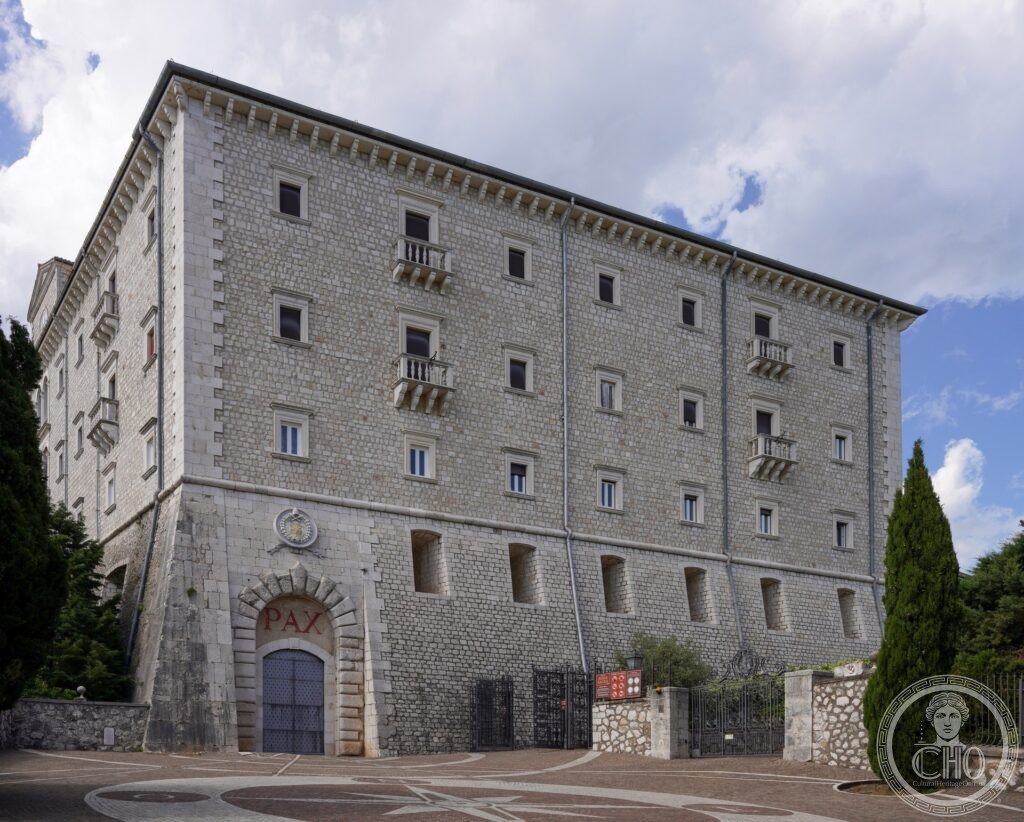
Abbazia di Montecassino (529): la Culla del Monachesimo Occidentale e la Rocca Distrutta per la Quarta Volta nel 1944
Benedetto da Norcia fece qui il suo primo oratorio sopra le rovine di un tempio di Apollo nel 529 d.C. — l'abbazia fu distrutta quattro volte (Longobardi, Saraceni, terremoto, bombe del 1944) e quattro volte ricostruita: la quinta Montecassino che vediamo oggi risale al 1956.
At a glance
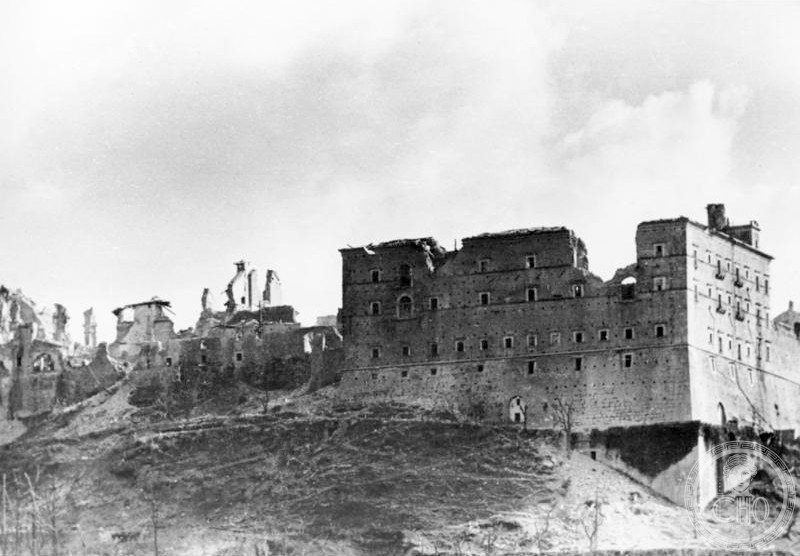
Monte Cassino Abbey stands on the summit of Monte Cassino (516 m) above the town of Cassino in southern Lazio, 130 km south-east of Rome. It was founded by Saint Benedict of Norcia in 529 AD, over the ruins of a temple to Apollo, and became the founding house of the Benedictine Order and the place where Benedict wrote the Regula Monachorum — the Rule of Saint Benedict — that would govern monastic life throughout the Western Church for the next fifteen centuries. The abbey was destroyed four times: by the Lombards in 577, by the Saracens in 883, by an earthquake in 1349, and by Allied bombing on 15 February 1944, when 1,400 tonnes of bombs reduced the entire complex to rubble in one afternoon. It was rebuilt between 1949 and 1956 on the original Baroque floor plan and reconsecrated by Pope Paul VI in 1964. The Basilica and the great Bramante-influenced cloister are the most impressive elements of the rebuilt abbey; the crypt holds the tomb of Saint Benedict and his twin sister Saint Scholastica.
Key facts
- Founded: 529 AD by Saint Benedict of Norcia (c. 480–547); on the site of a temple to Apollo above the ancient town of Casinum
- Rule of Saint Benedict: the Regula Monachorum was written at Montecassino c. 540; it became the dominant rule of Western monasticism for 1,500 years
- Destructions: 577 (Lombards); 883 (Saracens/Arabs); 1349 (earthquake); 15 February 1944 (Allied bombing)
- Rebuilding: reconstruction 1949–1956 to Baroque plan; reconsecrated by Pope Paul VI 24 October 1964
- WWII context: German forces used Monte Cassino as an observation post; the Allies bombed the abbey believing it to be occupied (it was not); the Battle of Monte Cassino (January–May 1944) was one of the costliest battles of the Italian Campaign
- Today: active Benedictine monastery; open to visitors; major pilgrimage destination
History
Benedict of Norcia arrived at the hill above Casinum around 529, after spending years as a hermit at Subiaco. He demolished the temple of Apollo that stood on the summit, built an oratory over it dedicated to Saint Martin, and gathered the monks who would live according to his Rule. The Rule of Saint Benedict, finalised around 540, was not the only monastic rule in circulation — the Irish and Gallic traditions had their own — but its balance of prayer, work and study, its humane treatment of monks, and its administrative practicality made it the preferred model first of the Carolingian reform of the 9th century, then of the Cluniac and Cistercian movements of the 11th and 12th centuries.
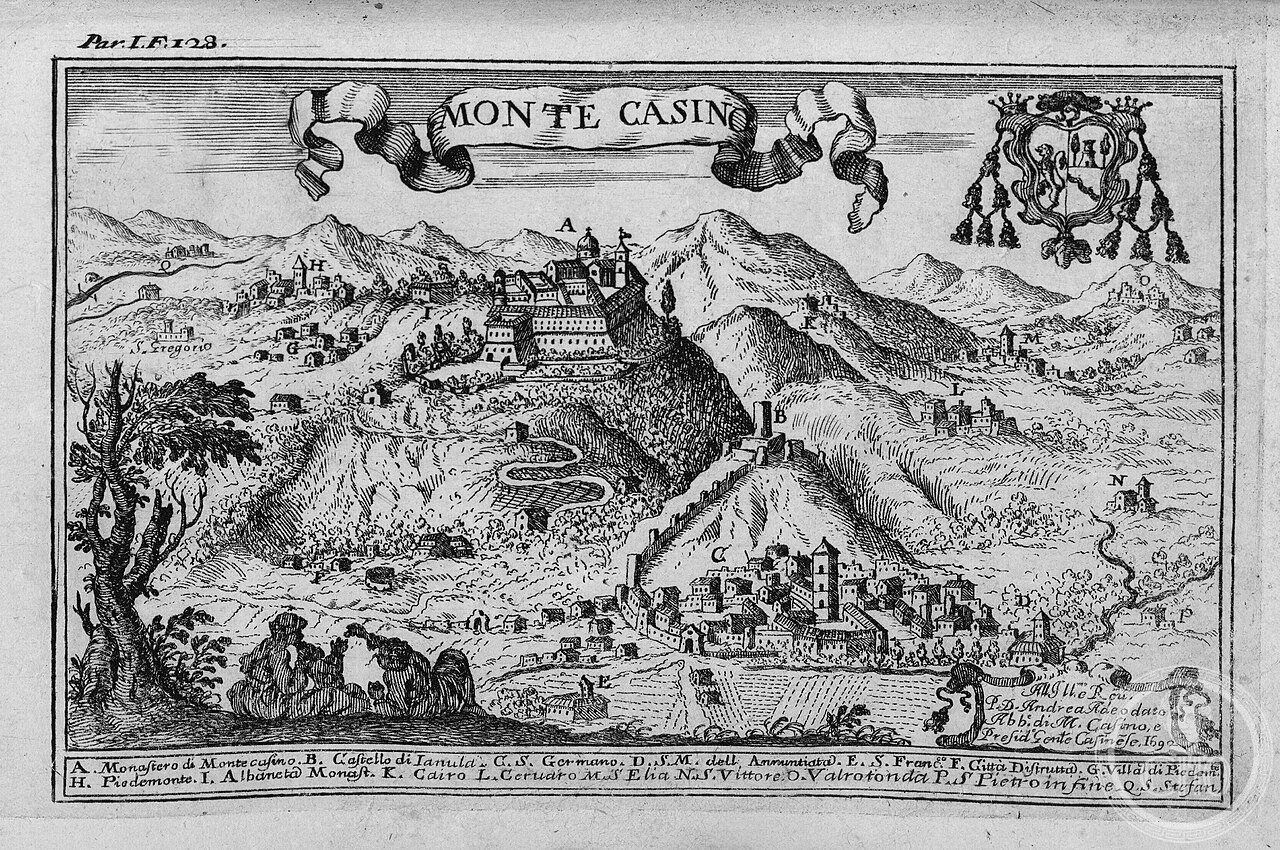
The abbey’s fortunes mapped the history of southern Italy. The Lombards destroyed it in 577; the monks fled to Rome, taking Benedict’s original Rule and a portable copy of the text. The Saracen raid of 883 destroyed it again; the rebuilding of the 10th century produced the great Romanesque church and the scriptorium that made Montecassino a major centre of manuscript production, art, and scholarship — the Montecassino scriptorium developed the distinctive Beneventana script used throughout southern Italy and created illuminated manuscripts of European importance. The earthquake of 1349 collapsed much of the structure; the subsequent rebuilding created the Baroque complex that would last until 1944.
The bombing of 15 February 1944 destroyed a structure that had taken five centuries to accumulate. Allied commanders believed the Germans were using the abbey as an observation post; the German Army maintained that they had respected its neutrality. The debate continues; what is documented is that the bombing killed about 230 Italian civilians who had taken shelter in the abbey, and that the Germans subsequently did occupy the ruins as a defensive position. The Battle of Monte Cassino lasted until 18 May 1944, when Polish troops of the II Polish Corps finally took the hill. The rebuilt abbey was reconsecrated in 1964.
What you see
The approach by road winds up the southern face of Monte Cassino through hairpin bends to a car park below the abbey walls. The main entrance passes through a series of linked atria modelled on the original Baroque design: the Loggia del Paradiso, the Atrio della Ricreazione, and the Great Cloister (Chiostro dei Benefattori) — a double-height porticoed space with statues of the popes and abbots of the Benedictine tradition in the upper arcade. The Basilica occupies the highest point of the complex: a large Baroque nave rebuilt in 1949–56 in the style of the pre-war original, with mosaics by Filippo Rossi that reproduce the decorative programme of the destroyed church.
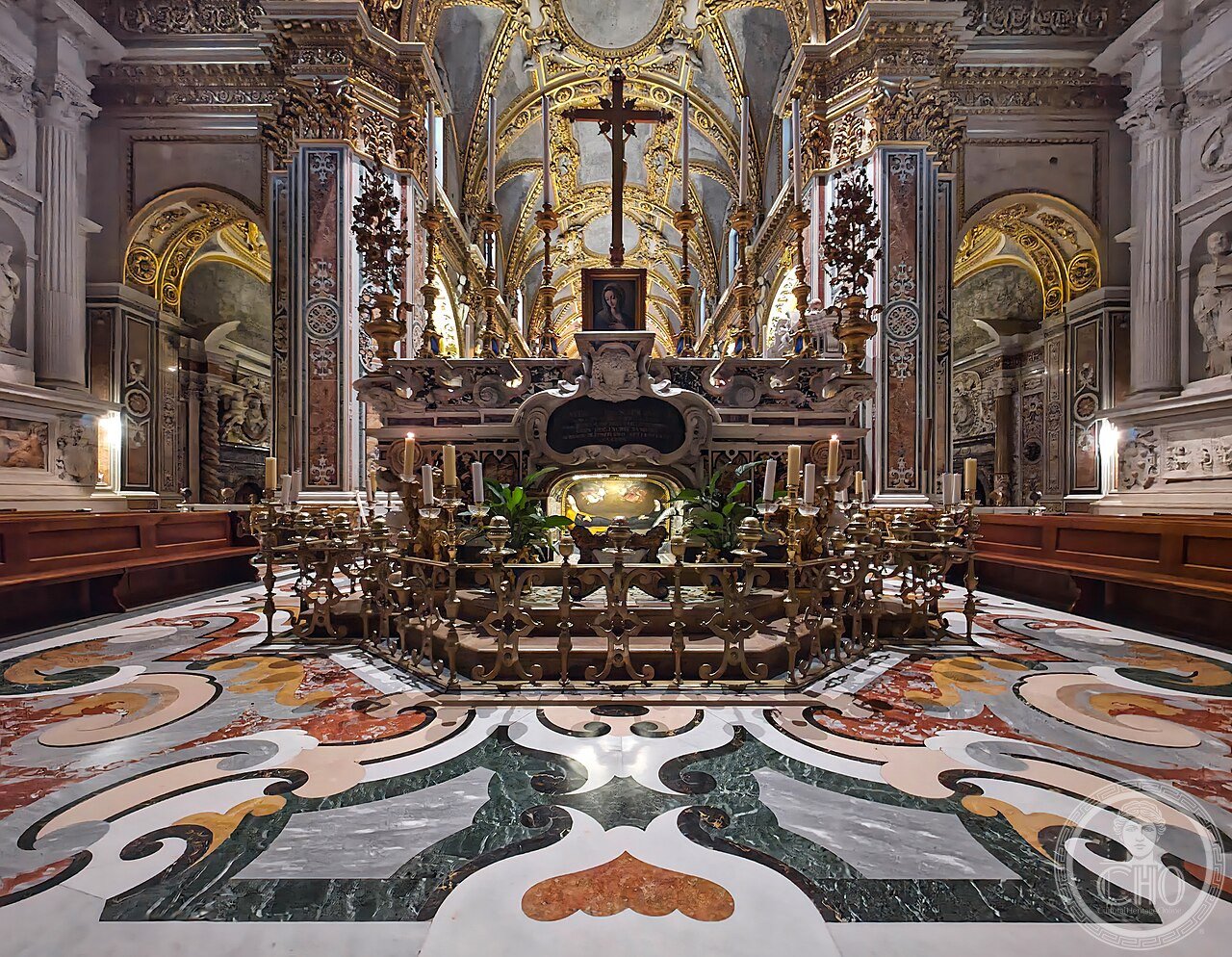
The crypt below the Basilica is the oldest continuously sacred space on the site: here, in a niche below the high altar, rest the relics of Saint Benedict and Saint Scholastica in a porphyry urn. The inlaid marble decoration of the crypt survived the bombing relatively intact, as the structure is cut into the rock of the mountain itself. The Abbey museum documents the pre-war treasure, the bombing, the reconstruction, and the Battle of Monte Cassino with photographs, manuscripts and archival material.
Practical information
- Opening hours: daily 09:00–17:00 (winter); 09:00–19:00 (summer); closed during religious services
- Admission: free for the abbey; small fee for museum access
- Dress code: shoulders and knees must be covered; shawls available at entrance
- WWII cemeteries: the Commonwealth War Cemetery and the Polish War Cemetery on Monte Cassino hill are open daily (free); the German and Italian cemeteries are nearby at Caira
- Best approach: shuttle bus from Cassino town centre to the abbey (recommended); roads are steep and parking limited
Getting there
By train to Cassino station (Rome–Naples line, 1.5 hours from Rome Termini); then shuttle bus or taxi up the mountain. By car from Rome: A1 motorway south, exit Cassino, then SS630 to the abbey road. GPS: 41.4915° N, 13.8136° E.
Nearby
- Museum of the Battle of Monte Cassino — the historical museum in Cassino town, documenting the four-month battle
- Polish War Cemetery — Commonwealth and Polish war graves on the slopes below the abbey; 1,072 Polish soldiers buried here
- Abbazia di Casamari — pristine 13th-century Cistercian abbey, 30 km north, a contrasting vision of medieval monasticism
Sources
- Wikipedia — “Monte Cassino” (en.wikipedia.org/wiki/Monte_Cassino)
- David Hapgood and David Richardson, Monte Cassino, Congdon & Weed, 1984 (definitive account of the bombing decision)
- Abbazia di Montecassino — official website (montecassino.it)
- Ildefonso Rea OSB, Historia Monachii Casinensis — the abbey chronicle (medieval Latin, 11th c.)
Find it on the map
See this place and what’s around it →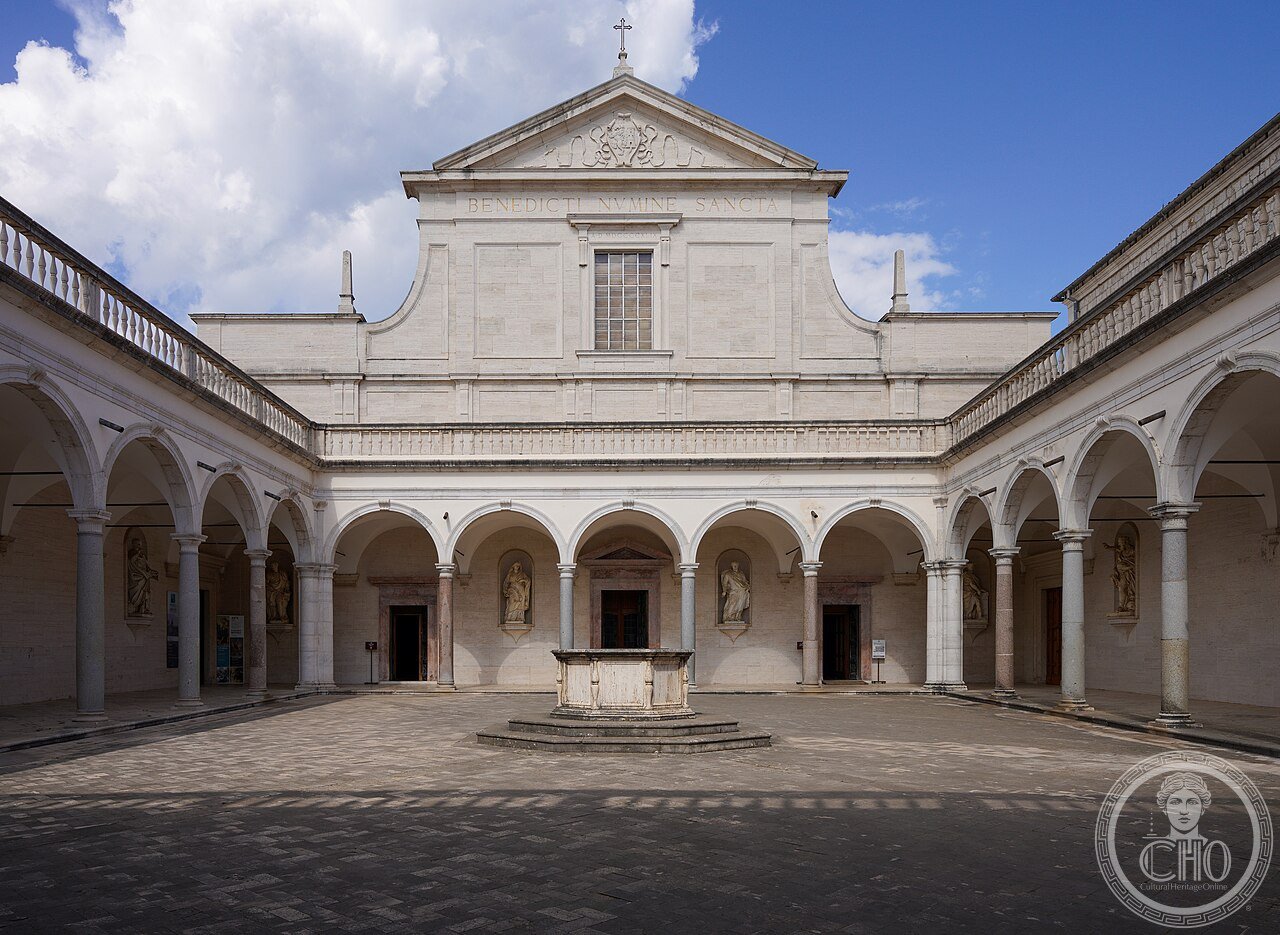
📷 Diventa un fotografo di Cultural Heritage Online
Condividi le tue foto dei luoghi: restano pubblicate con la tua firma come autore. Più vengono viste, più ti fai conoscere — e presto un concorso premierà le foto più apprezzate.
Accedi o registrati gratis per aggiungere una foto