
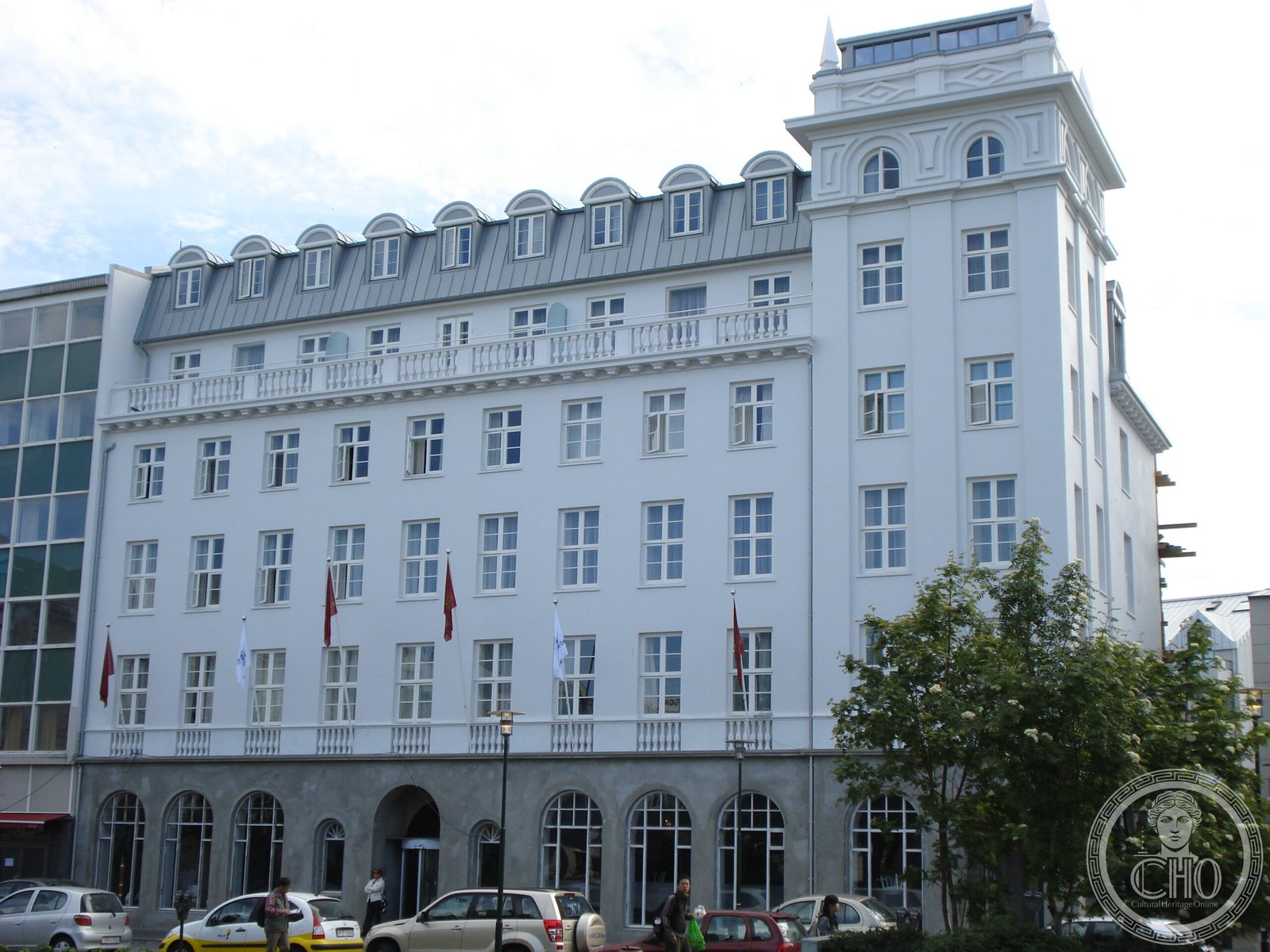
Built by the Icelandic wrestling champion Jóhannes Jósefsson to mark the 1,000th anniversary of the Alþingi, the Borg is Iceland’s first luxury hotel — an Art Deco landmark that predates most of Reykjavik’s built environment.
At a glance
Commissioned by Jóhannes Jósefsson, a legendary Icelandic wrestler who had made his fortune performing throughout Europe, and designed by architect Guðjón Samúelsson — the leading Icelandic architect of the 20th century — the Hótel Borg opened on 1 May 1930 overlooking Austurvöllur Square, directly opposite the Alþingi (Parliament). The hotel was timed to coincide with the millennial celebration of the first Alþingi at Þingvellir, and immediately became the social centre of an Iceland that was still defining its national institutions. The Art Deco aesthetic — conservative by Viennese standards but strikingly modern for Reykjavik in 1930 — has been carefully maintained through subsequent restorations.
Key facts
- Built: 1930; architect Guðjón Samúelsson; owner Jóhannes Jósefsson
- Style: Art Deco — the most complete surviving Art Deco building in Iceland
- Address: Pósthússtræti 11, 101 Reykjavik, Iceland
- GPS: 64.1476, -21.9398
- Status: Five-star hotel; managed by Keahotels
- Landmark: First luxury hotel in Iceland; faces Alþingi (Parliament) across Austurvöllur Square
History
Jóhannes Jósefsson was one of the most celebrated Icelandic public figures of the early 20th century: a glíma (Icelandic wrestling) champion who competed internationally in the Greco-Roman style, winning multiple European titles and accumulating sufficient wealth to fund a major architectural project on his return to Iceland. His decision to build Iceland’s first Grand Hotel on the most prominent square in Reykjavik was deliberate: he wanted a building that would signal Iceland’s readiness for international visitors at the precise moment the country was beginning to establish its independent identity (the Act of Union with Denmark, granting home rule, had been signed in 1918).
Samúelsson’s design for the Borg was restrained relative to his other major works — the Hallgrímskirkja church and the National Theatre — but the interior was finished to a luxury standard unprecedented in Iceland. The hotel immediately attracted foreign dignitaries, ambassadors, and the Danish royal family on official visits. During the wartime British occupation of Iceland (1940–1941) and subsequent American occupation, the hotel served as the principal formal venue for Allied diplomatic and military receptions.
What you see
The facade is a crisp Art Deco composition in white render with vertical stone pilasters and a stepped crown — visually simpler than the Borg’s continental contemporaries but perfectly calibrated to Austurvöllur’s modest civic scale. The interior has been restored twice, in 1991 and 2012, maintaining the original Art Deco detail work: chevron floor mosaics, geometric ironwork on the staircase, and a double-height dining room with its original plasterwork ceiling intact.
Practical information
The Borg faces Austurvöllur Square, the traditional venue for Iceland’s national celebrations and political protests. The Alþingi is directly across the square. The hotel’s Silfur restaurant and bar are among the leading dining venues in Reykjavik. The harbour and the Old Town’s main street (Laugavegur) are both within a 10-minute walk.
Find it on the map
See this place and what’s around it →📷 Become a Cultural Heritage Online photographer
Share your photos of places: they stay published under your name as the author. The more they're seen, the more you get noticed — and soon a contest will reward the most appreciated photos.
Log in or sign up free to add a photoIs this page about you?
This page is read by travellers and heritage enthusiasts who find it on Google. Tell us how you are connected to this place and we will take it from there.