
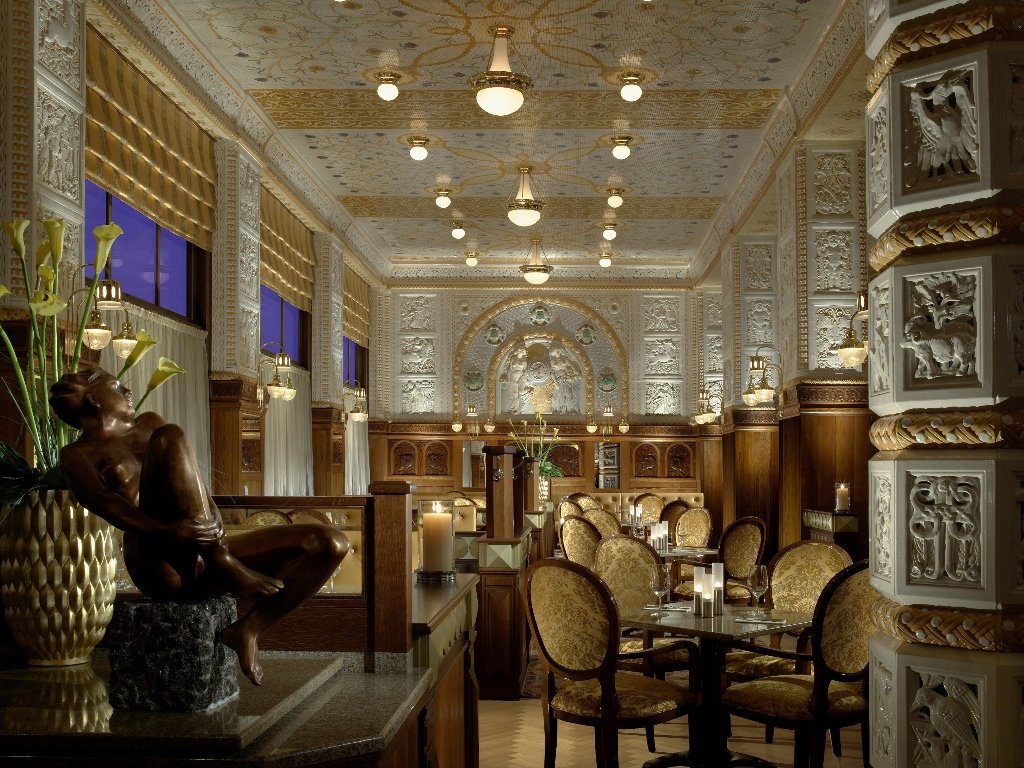
A ceramics manufacturer helped pay for this hotel, then had its public rooms lined in his own glazed tile. The decision has kept Café Imperial looking the way it did in 1914.
At a glance
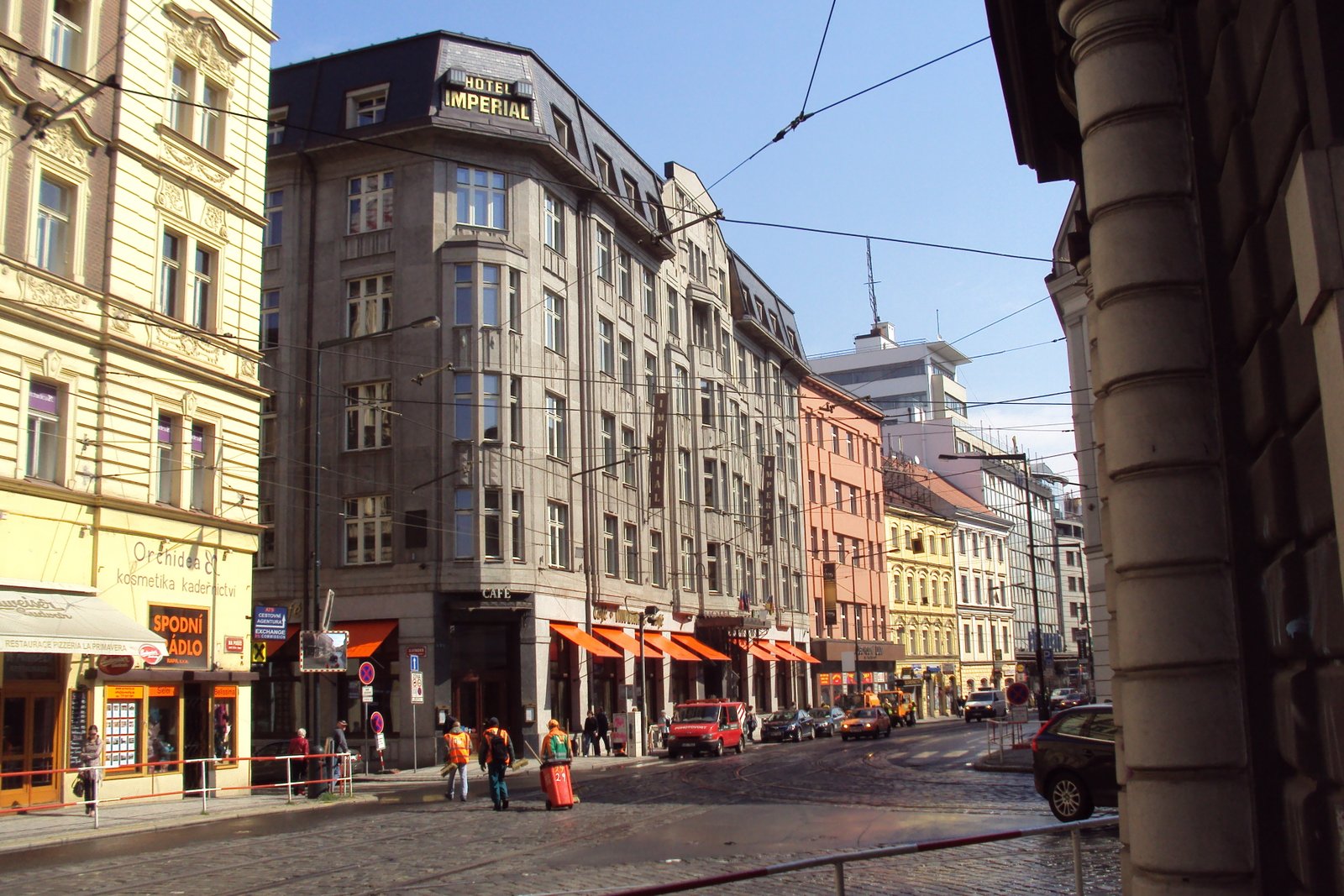
The Imperial stands on the corner of Na Poříčí and Zlatnická, in Prague’s New Town. Jaroslav Benedikt designed it and it went up in 1913–1914: four storeys over two basements, an Art Deco exterior with Cubist elements. What makes it exceptional is inside. The vestibule, the hall, the café and the wine cellar are clad in coloured glazed ceramic, relief panels and mosaic, to a scheme by Jan Beneš with sculpture by Josef Drahoňovský. The ceramic came from the works at Rakovník whose director, Emil Sommerschuh, was also one of the hotel’s two investors. Café Imperial is open to non-hotel guests; advance table reservations are strongly recommended.
Key facts
- Built: 1913–1914, to designs by Jaroslav Benedikt
- Style: Art Deco exterior with Cubist elements; original Art Nouveau café interior
- Interior scheme: Jan Beneš; sculpture by Josef Drahoňovský; ceramic executed by the Rakovník works, later RAKO
- Address: Na Poříčí 15, 110 00 Prague 1, Czech Republic
- GPS: 50.0899, 14.4328 — open in Google Maps
- Status: listed cultural monument; operating five-star hotel with 126 rooms; café open to the public
- Restored: November 2005 – August 2007; further reconstruction in 2022
History
A house on this corner is first recorded in 1383. It burned during the Swedish siege of Prague, was rebuilt around 1730 and traded as an inn called The Black Eagle; its yard wings were enlarged in 1840. Among its nineteenth-century owners was Vojtěch Náprstek, the patron who founded the Czech Industrial Museum. The old building came down in 1913, in the urban renewal that was then remaking whole streets of the city.
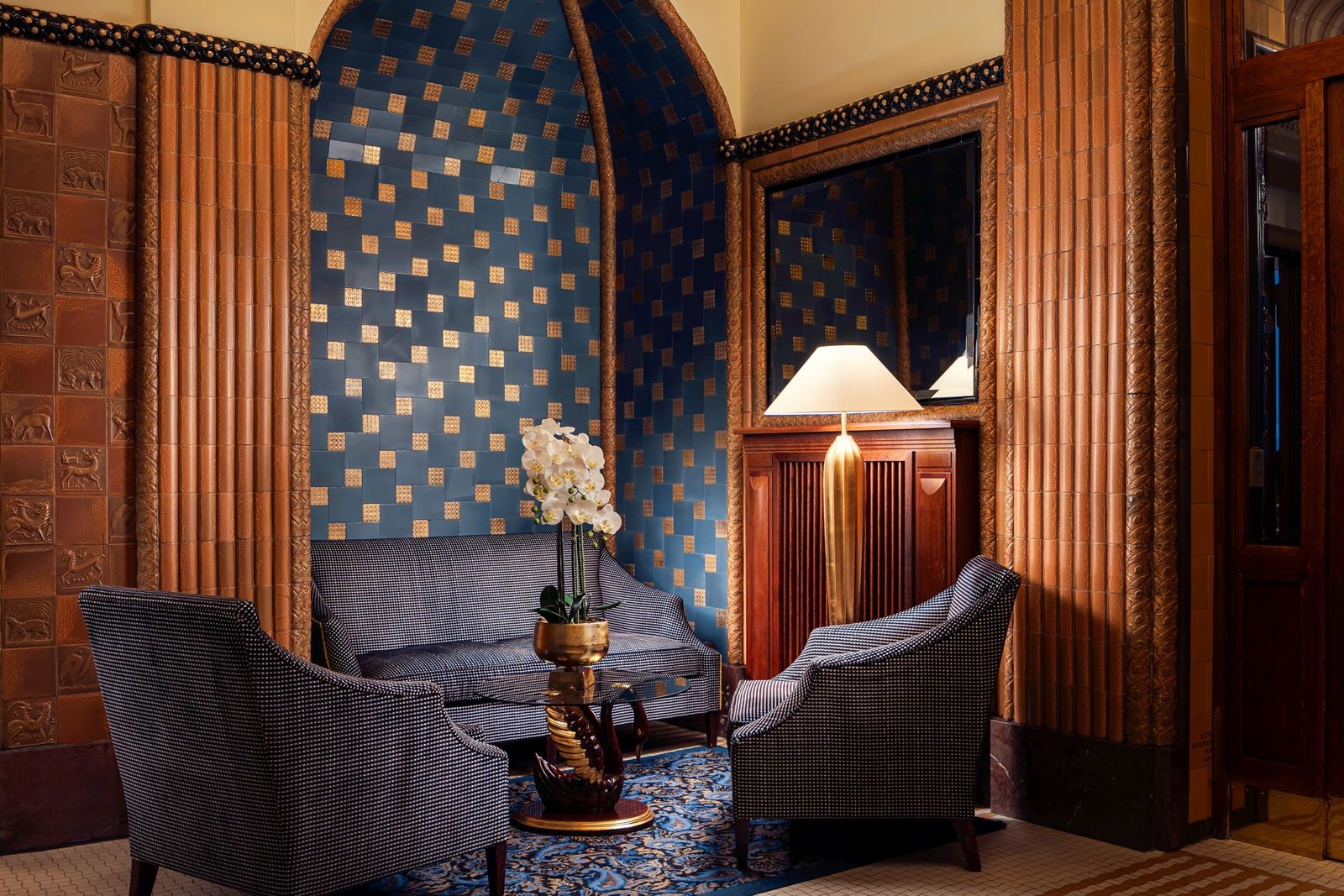
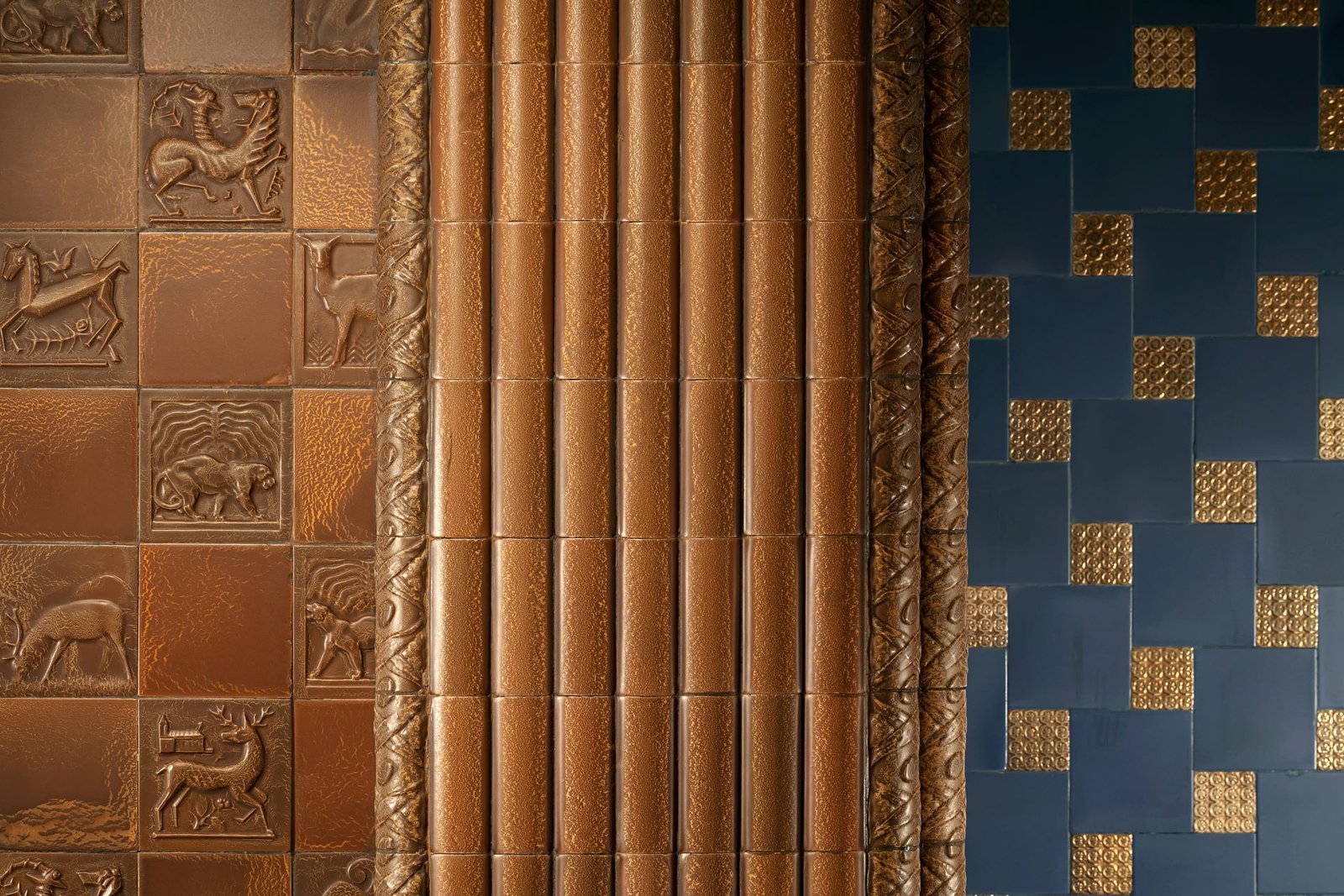
What replaced it was financed by J. Kolář, who had sold the Hotel Paris, together with Emil Sommerschuh, who ran the Prince Liechtenstein ceramic works at Rakovník. A record from 1913 states what the two of them were after: to pass to future generations a work not subject to the changes of time, in colours that would not fade. That is why the public rooms were built out of glazed ceramic rather than paint and plaster. The ceramic work alone was billed at 70,000 crowns, a considerable sum at the time.
Between the wars the hotel was at the centre of First Republic society. Tomáš Garrigue Masaryk, Franz Kafka and Leoš Janáček were among those who came. After 1948 the building passed to the trade unions, who ran it until operations faltered in the 1980s. Lasselsberger, successor to the original ceramic manufacturer, took part in the restoration of the ceramic interior, begun in November 2005 and finished in August 2007 with heritage conservators; a further reconstruction followed in 2022.
What you see
From the street the building is sober: a corner mass with a regular grid of windows, its ornament flattened into the wall in the way Prague architects were handling facades just before the First World War. The clue to what is inside is the café front at pavement level.
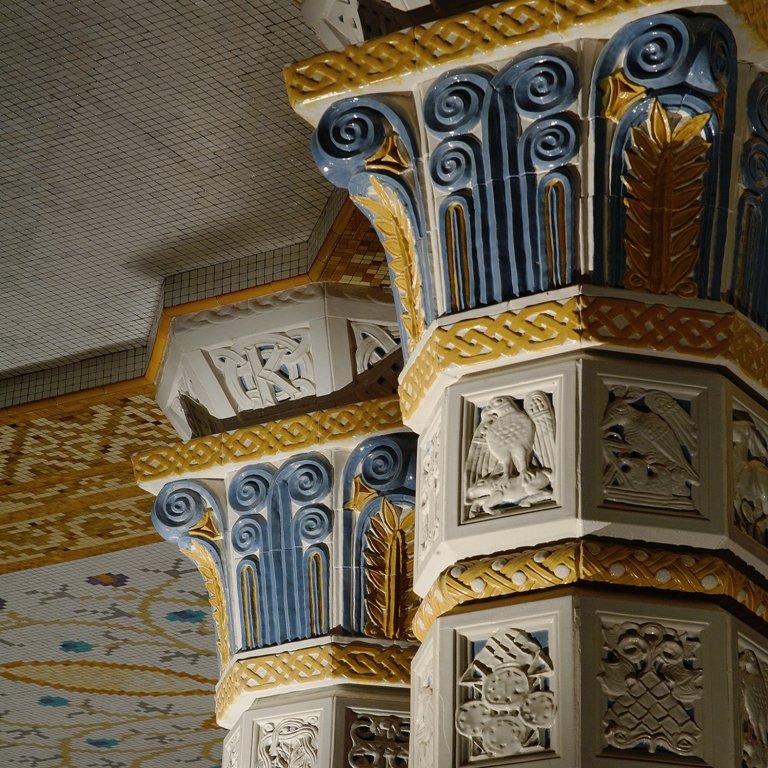
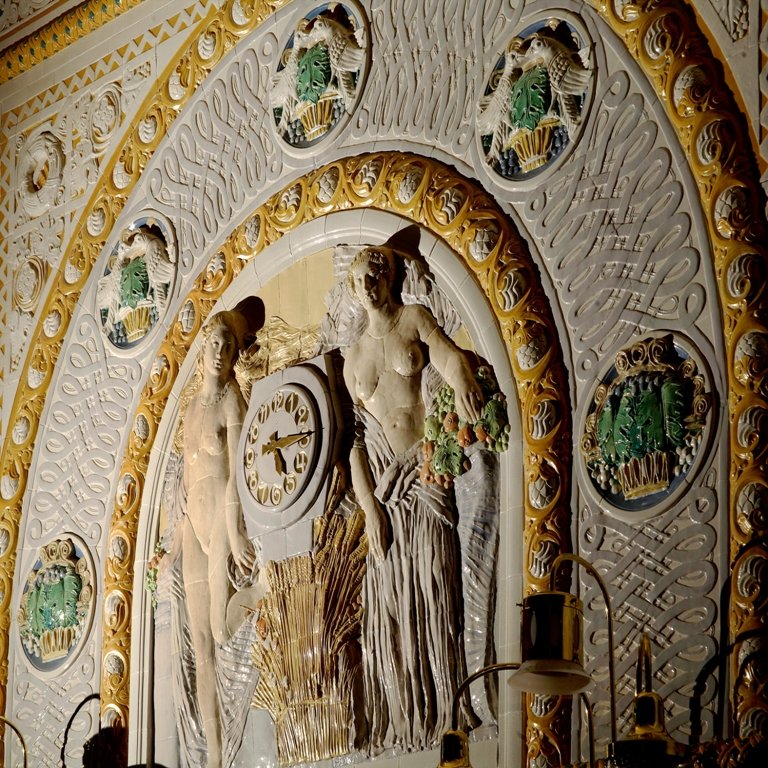
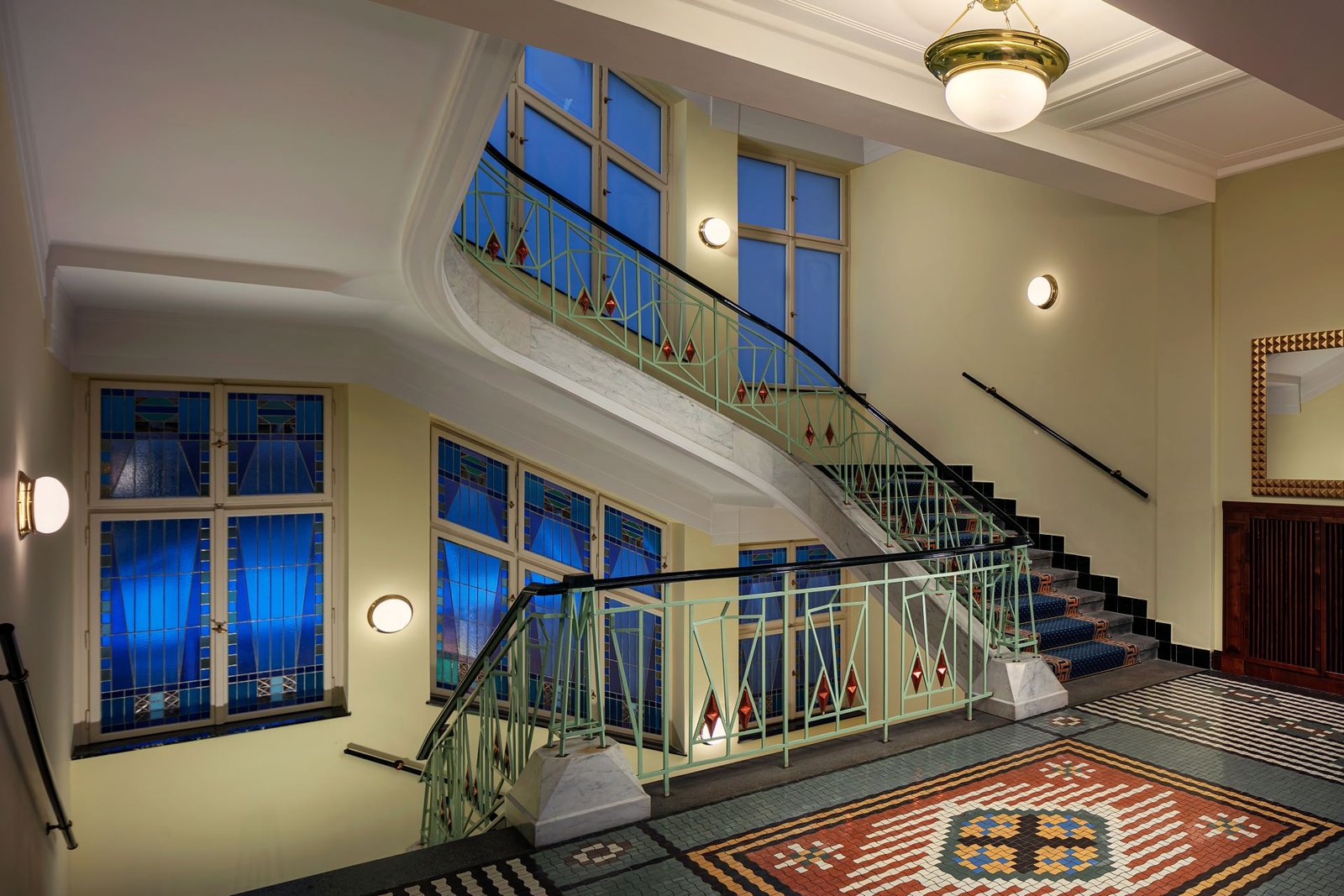
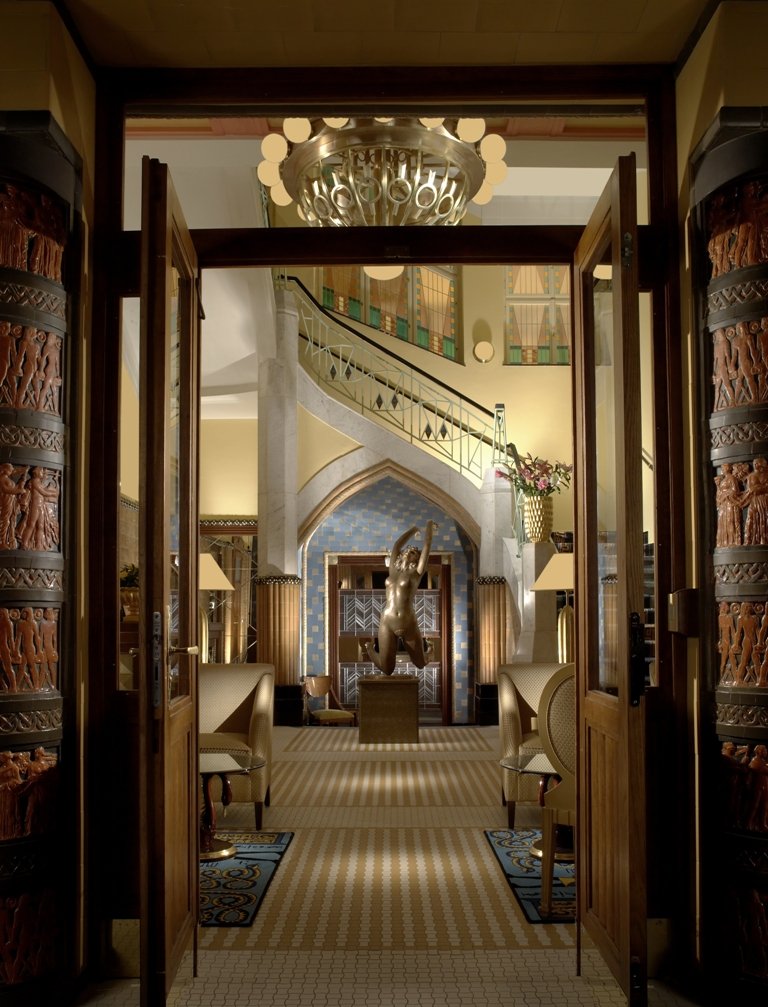
Then the ceramic starts. Glazed relief panels run up the walls of the entrance vestibule, under a mosaic ceiling. The hall has a coffered ceiling and ceramic decoration worked with animal and plant motifs; the café and the wine cellar below it are treated the same way. The motifs were drawn from the archaic art of the Aegean, Egypt and the Orient, which is why the room reads as older and stranger than its date. Drahoňovský’s sculpture is set among them, including two working clocks built into figural compositions.
The ceramic interior
Practical information
- Café Imperial is open to non-hotel guests; advance table reservations are strongly recommended.
- The ceramic decoration is at its best in daylight, when the glaze catches the light from the windows.
- The vestibule and hall are part of a working hotel: they can be seen, but they are not a museum.
- Hotel and café websites: hotel-imperial.cz · cafeimperial.cz
Getting there
Na Poříčí runs east from Náměstí Republiky, where the metro line B station of the same name comes up; the walk from the station takes a few minutes. Trams stop on Na Poříčí itself. Old Town Square is about ten minutes on foot to the west.
Nearby
- Obecní dům, Prague — the Municipal House, five minutes away
- Old Town Hall, Prague
- Prague — Alphonse Mucha and the Art Nouveau legacy
Sources
- Art Deco Imperial Hotel — History (official site): site history from 1383, The Black Eagle, Náprstek, demolition 1913, interwar guests, trade-union management, 2022 reconstruction.
- Silikátový svaz ČR — Prague Imperial Hotel: Benedikt, 1913–1914, Jan Beneš, Drahoňovský, Rakovník/RAKO, Sommerschuh and Kolář, the 70,000-crown bill, the 2005–2007 restoration.
- Památkový katalog — hotel Imperial: heritage listing, description of the vestibule mosaic and the ceramic decoration of the hall, café and wine cellar.
- Coordinates verified against OpenStreetMap (Nominatim), August 2026.
Find it on the map
See this place and what’s around it →📷 Become a Cultural Heritage Online photographer
Share your photos of places: they stay published under your name as the author. The more they're seen, the more you get noticed — and soon a contest will reward the most appreciated photos.
Log in or sign up free to add a photoIs this page about you?
This page is read by travellers and heritage enthusiasts who find it on Google. Tell us how you are connected to this place and we will take it from there.