
Villa Romana del Casale
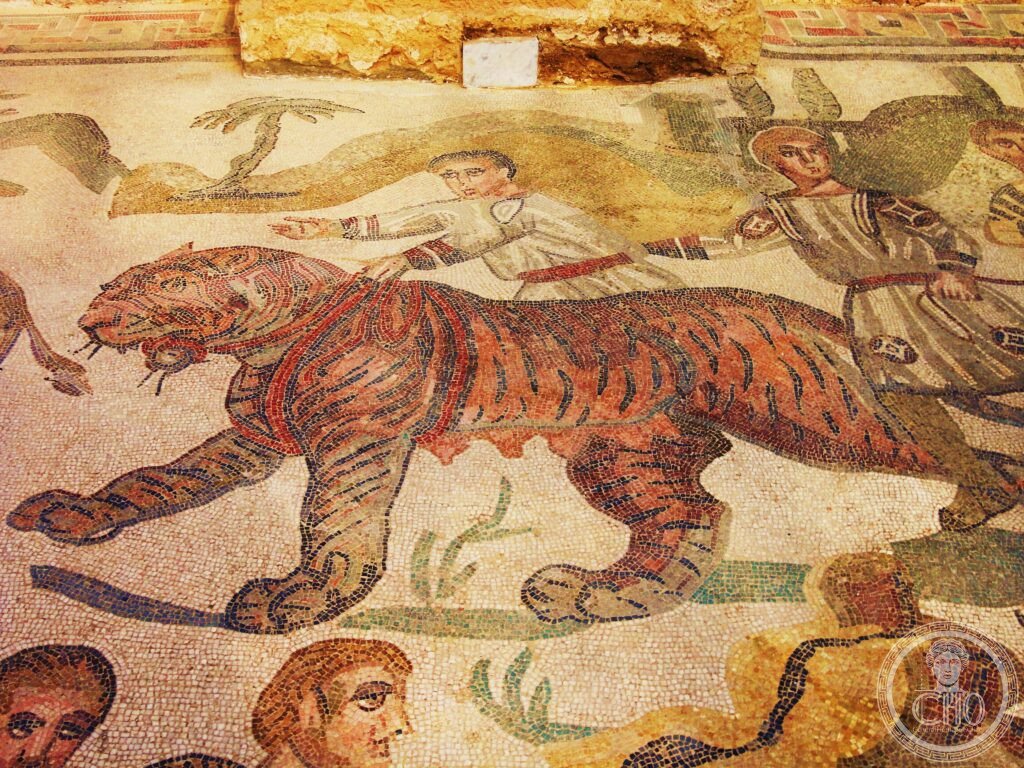
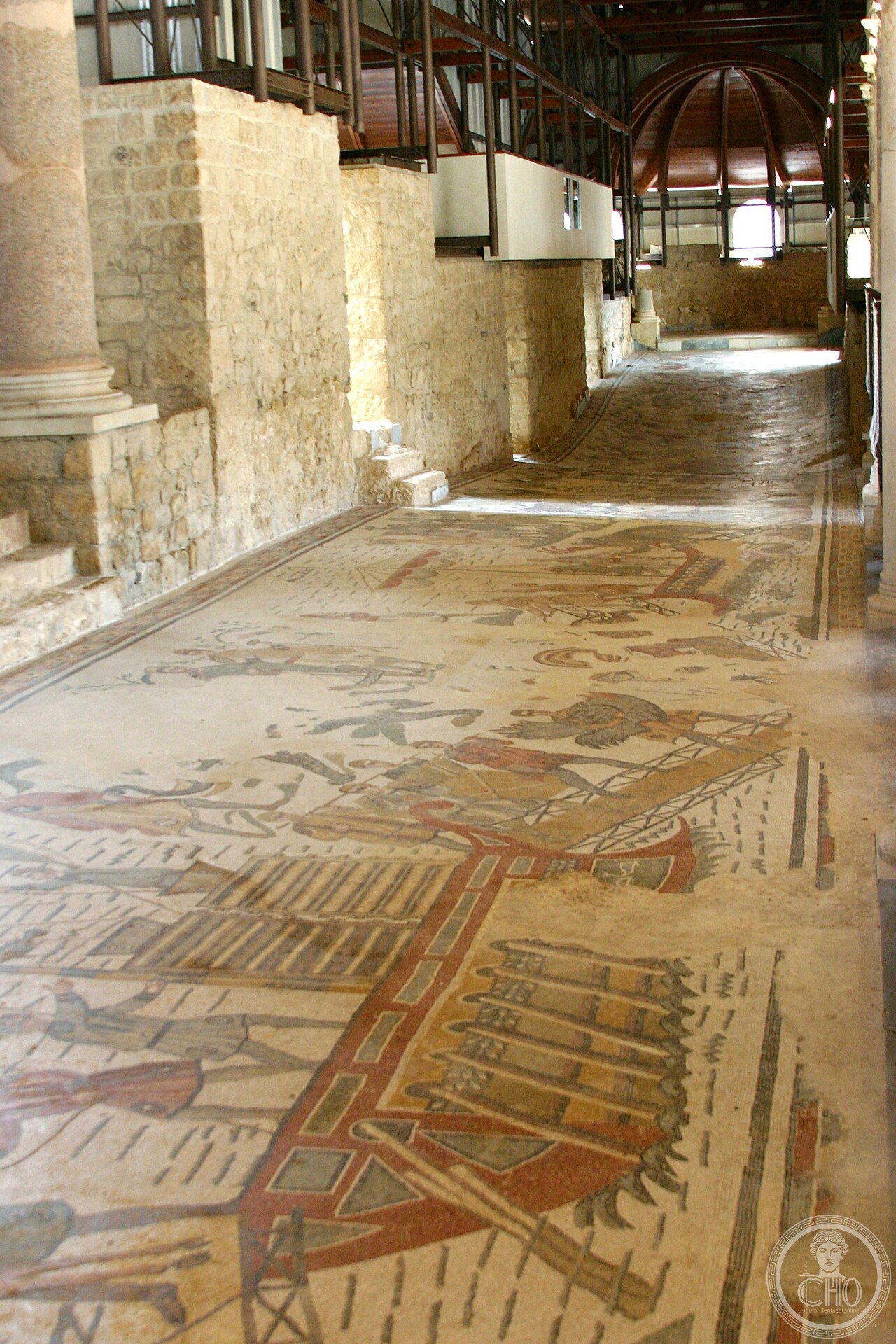
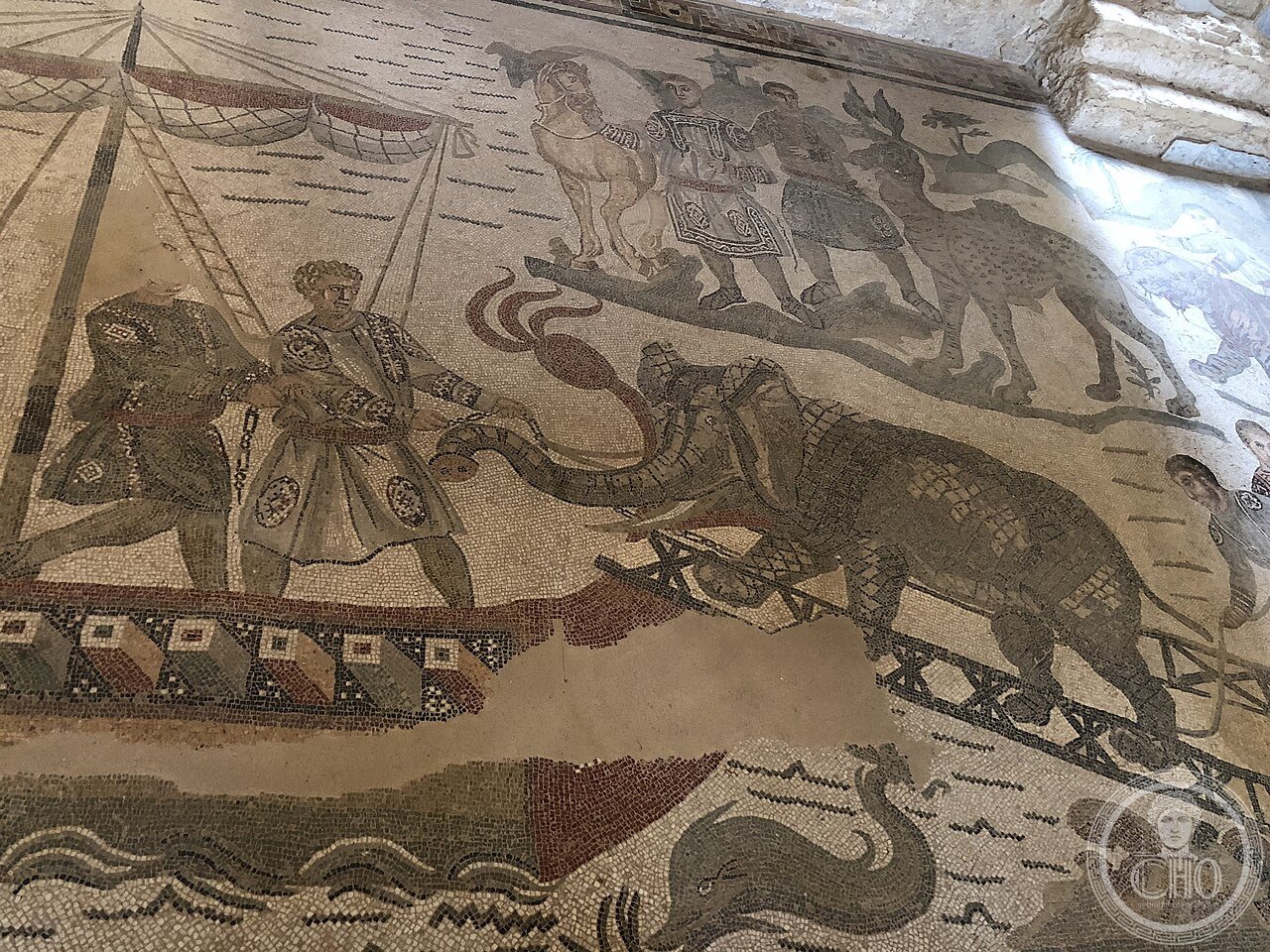
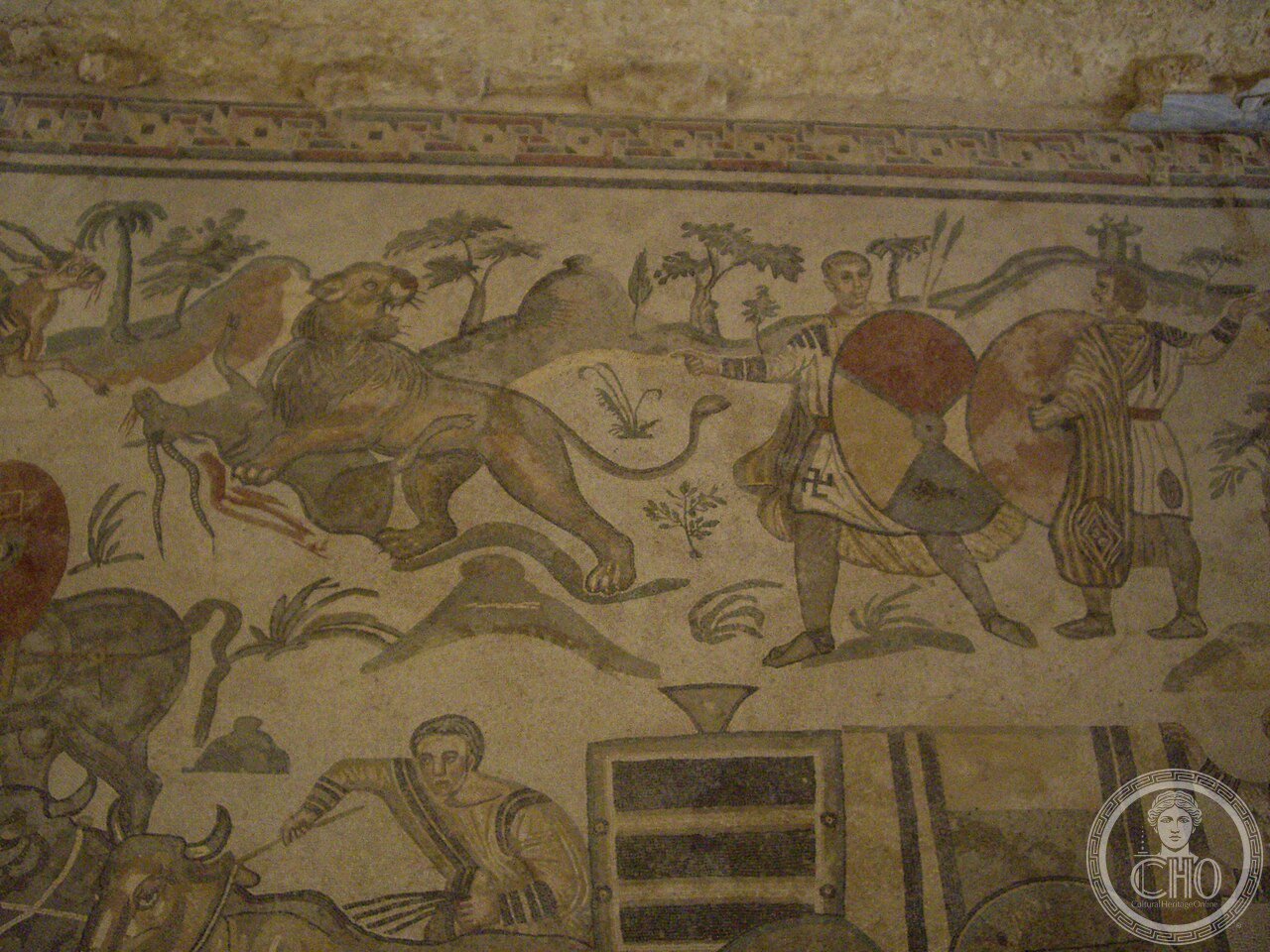
La Villa Romana del Casale (UNESCO 1997, rif. 832) è il più grande insieme di mosaici romani figurativi al mondo — 3.500 m² di pavimenti musivi tardoimperiali (III-IV sec. CE) conservati quasi intatti sotto i detriti dell’eruzione di fango del XII sec., con il corridoio della Grande Caccia lungo 60 metri e le celebri “ragazze in bikini” che giocano con attrezzi da ginnastica.
At a glance
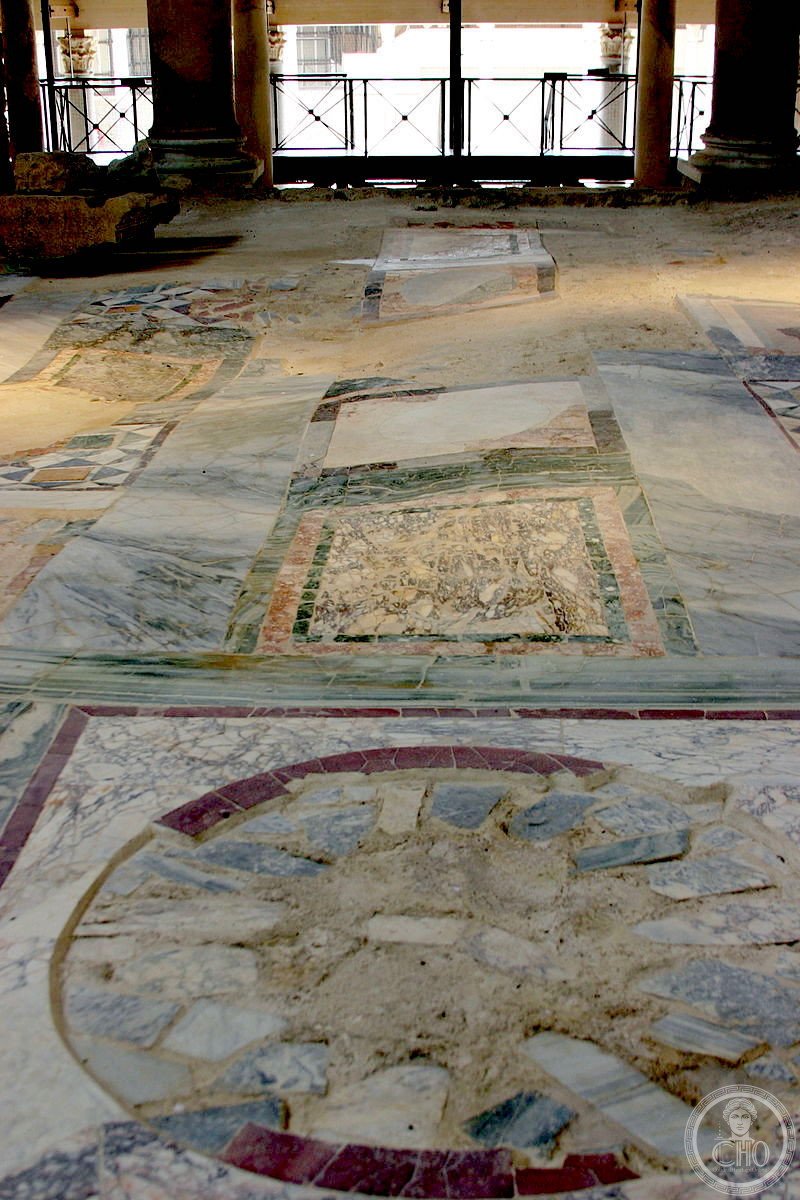
Villa Romana del Casale Piazza Armerina (the most precisely Villa Romana del Casale zone Piazza Armerina Enna Sicilia Italy 37.3619 N 14.3355 E UNESCO WHS 1997 reference 832: the site (the Villa Romana del Casale: the largest surviving complex of late Roman mosaics in the world (3,500 m² of figurative mosaic pavement preserved in approximately 12,000 m² of floor area; only about 29% of the total floor area is covered with mosaics — the remaining 71% was plain opus signinum or marble); the preservation mechanism (the preservation of the mosaics: a mudslide (the result of an exceptional rainstorm, estimated to have occurred c.1161 CE based on numismatic and ceramic evidence buried in the mud layer) covered the entire villa to a depth of 4–8 m; the mud acted as an anaerobic preservative for the mosaic tesserae (the specific mechanism: the clay content of the mud (estimated at 35–40% kaolinite) encased each tessera individually, preventing oxidation of the lime mortar binder); the discovery (the first systematic excavation: 1929-1950 CE by Paolo Orsi (1859-1935 CE; the “father of Sicilian archaeology”); the UNESCO inscription came in 1997 CE (reference 832)); the ownership attribution (the identification of the owner of the Villa Romana del Casale remains disputed: the two most commonly cited candidates: (1) Marcus Aurelius Valerius Maximianus (Maximianus Herculius; c.250-310 CE): the co-emperor who reigned as Augustus of the West 286-305 CE (and briefly again 307-308 CE); evidence for this identification: the iconographic program of the mosaic includes scenes of venatio (animal hunts) and circus games that in Roman tradition were specifically the prerogatives of emperors and very high-ranking aristocrats; (2) a Sicilian senatorial family (the anonymous “dominus” of the Villa): the counter-argument that no inscription naming Maximianus was found at the Villa, and that Maximianus had his official villa at Aquileia, not in Sicily)).
Key facts
- Le “ragazze in bikini” e perché il mosaico delle Atlete (Sala 30) è la prima raffigurazione di un abbigliamento sportivo femminile dell’antichità: the Sala delle Atlete (the “Room of the Girls in Bikinis”: the official archaeological designation is the “Sala delle Ragazze in Bikini” or “Bikini Room” (sala 30 in the standard room numbering of the Villa); the mosaic (6 m × 3 m; the mosaic shows 10 young women (aged 14-25 years by skeletal reference) engaged in 5 athletic disciplines: (1) dumbbell training (the Roman equivalent of weight training: the “halteres” — lead or stone weights held in each hand (2-4 kg each) and swung in rhythmic patterns to build arm strength; the halteres of Sala 30 are bilobate (two circular lobes connected by a grip) in the standard Roman athletic form); (2) discus throwing (the standard discus; the throwing technique shown: the rotational throw with left-foot pivot); (3) running (a 4-figure sprint sequence: the shoes shown are the calceamenta (the Roman athletic sandal with a thin sole and ankle straps)); (4) ball game (a game using a colored ball (painted red-orange-white; estimated diameter 20 cm)); (5) the award ceremony (the winner receives a crown (corona) and a palm branch — identical to the prize at the actual Roman imperial games))
- GPS (Villa Romana del Casale, ingresso): 37.3619° N, 14.3355° E
History
Dalla fondazione III sec. CE al UNESCO 1997 (the most precisely Villa Romana del Casale zone history: the construction phases (the Villa Romana del Casale was built in 3 phases: Phase 1 (c.290-310 CE): the peristyle and private baths; Phase 2 (c.310-330 CE): the great hunting corridor, the basilica, and the apartments of the dominus; Phase 3 (c.330-360 CE): the oval piazza (the “Triclinium”) and the additional rooms to the south; the dating (the dating of the construction is based on: (1) coin finds in the foundation mortar: the most recent coins found sealed in the primary construction layers date to 293-305 CE (the reign of Diocletian-Maximianus); (2) the mosaic style (the technique and iconographic parallels with North African mosaics of the late Tetrarchic period (284-312 CE))); the Arabic abandonment (the Villa was inhabited from c.310 CE until the Arab conquest of Sicily (827-902 CE): during the Arab period (902-1072 CE) the villa was used as a farming estate; the collapse (the final collapse of the villa occurred c.1161 CE: a mudslide buried the entire complex; the local population did not return to the site)); the discovery (1929-1950 CE: systematic excavation by Paolo Orsi; 1950-1960 CE: the protective covering structure was built over the most important mosaic rooms; 1997 CE: UNESCO inscription).
What you see
Il percorso dei mosaici, il peristilio, la Grande Caccia, le ragazze, il Triclinio di Ercole (the most precisely Villa Romana del Casale zone visit (2–2.5 hours; the visit follows a raised walkway system that traverses the entire mosaic floor area without touching the tesserae): the entrance (from the Monumental Entrance (the “Ingresso Monumentale”): a tricorned gateway (3 arches) in limestone + brick; visible on the right: the original Roman stone gutter (canaletto pluviale); the peristyle (the central peristyle: 34 m × 12 m; the walkway runs along the north side; visible: the Labors of Hercules in the side rooms (Rooms 6-8)); the Great Hunting Corridor (the “Ambulacro della Grande Caccia”: the centerpiece of the visit; 60 m × 5 m; the standard viewing sequence: start at the western (Africa) panel and walk east; the key detail at the midpoint: the personification of Africa (a woman with an elephant-tusk headdress) and Hispania (a veiled woman) who frame the central loading scene; the Sala delle Ragazze in Bikini (Room 30; accessible via the east walkway (15 m from the end of the Hunting Corridor); the 6 m × 3 m mosaic; the 10 athletic figures visible from the walkway at eye level); the Triclinium (the great dining room: the large apse mosaic of the Labors of Hercules (12 tasks visible; the Nemean Lion, the Lernaean Hydra, the Erymanthian Boar; the Stymphalian Birds in the upper register; the binding of Antaeus at the center)).
Practical information
- Come raggiungere la Villa Romana del Casale da Palermo e Catania e quanto tempo dedicare per vedere tutti i mosaici principali: il trasporto (Palermo → Piazza Armerina: Autolinee SAIS (3h; €12; 4 corse/giorno); Catania → Piazza Armerina: Autolinee SAIS (2h15; €9; 3 corse/giorno); dal centro di Piazza Armerina: bus municipale Villa (€1.50; ogni ora); taxi €15); il biglietto (€10 intero; €5 ridotto; open tutti i giorni 9:00-19:00 (apr-ott), 9:00-17:00 (nov-mar); la visita si percorre su passerelle sopraelevate (non c’è necessità di scarpe particolari)); il tempo stimato (il percorso completo dell’intero complesso: 2-2.5 ore al passo lento con sosta alle sale principali; la sala della Grande Caccia + le Bikini Girls: 1 ora (le 2 stanze più visitate)); il Ristorante Al Fogher (Contrada Ramaldo SP15; 2 km dalla Villa; i maccheroni al sugo di maiale (pasta corta di grano duro siciliano con ragù di maiale nero dei Nebrodi DOP; €13); prenotare la domenica))
Getting there
Bus SAIS da Palermo (3h, €12) o Catania (2h15, €9) a Piazza Armerina. Dal centro bus/taxi (3 km). GPS: 37.3619, 14.3355. Aperto 9 AM–19 PM. Ingresso €10.
Nearby
- Piazza Armerina centro storico (il Duomo barocco 1627 CE) — 5 km (il Duomo di Piazza Armerina (1627-1719 CE): il campanile medievale XV sec. con le campane longobarde e la facciata barocca; il Palio dei Normanni (agosto: la rievocazione storica dell’arrivo di Ruggero I il Normanno 1061 CE))
- Valle dei Templi di Agrigento (UNESCO 1997 rif. 831) — 90 km (i 6 templi greci del V sec. BCE; il Giardino della Kolymbethra FAI; €12)
Gallery
Sources
- Wikipedia, Villa Romana del Casale; Bikini girls mosaic, accessed June 2026
- UNESCO, Villa Romana del Casale, WHS reference 832, inscribed 1997
- Carandini, Andrea, et al. Filosofiana. La Villa di Piazza Armerina. Palermo: Flaccovio, 1982 (the foundational monograph)
Find it on the map
See this place and what’s around it →📷 Diventa un fotografo di Cultural Heritage Online
Condividi le tue foto dei luoghi: restano pubblicate con la tua firma come autore. Più vengono viste, più ti fai conoscere — e presto un concorso premierà le foto più apprezzate.
Accedi o registrati gratis per aggiungere una foto