
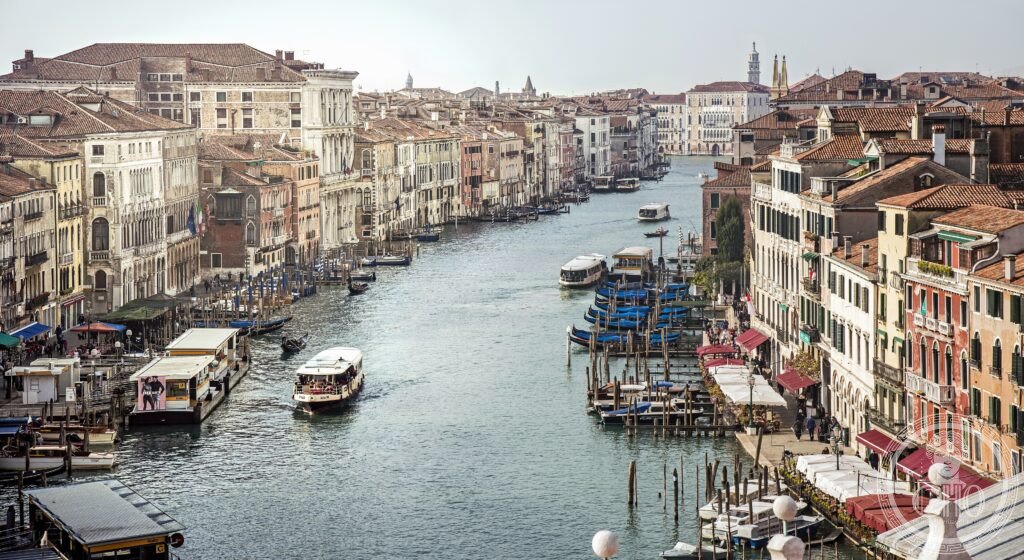
Venezia e la sua Laguna
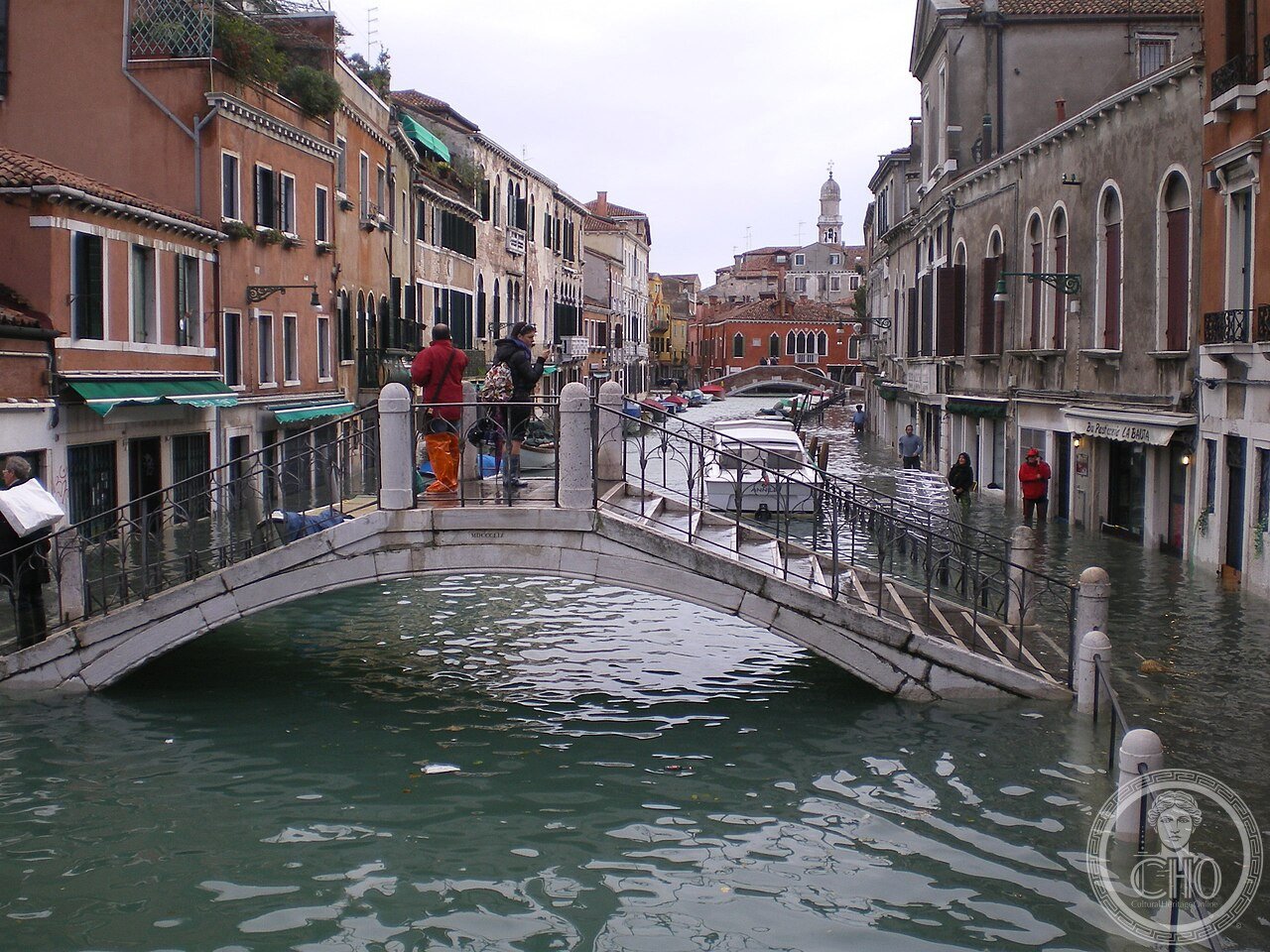
Venezia (UNESCO 1987) è la città lagunare più studiata al mondo — costruita su 118 isolette unite da 400 ponti su 150 canali, fondata da profughi romani nell’Alto Medioevo, diventata la più potente repubblica mercantile del Mediterraneo (697–1797 CE), e oggi la più sfidante frontiera dell’adattamento climatico urbano con l’acqua alta che sommerge Piazza San Marco 100+ volte all’anno.
At a glance
Venezia laguna (the most precisely Venezia zone Venezia Veneto Italy 45.4341 N 12.3388 E UNESCO WHS 1987 reference 394: the lagoon system (the Venetian lagoon (the Laguna Veneta): the largest coastal lagoon in the Mediterranean (550 km2 of total surface; 8% of the total Italian Adriatic coast; the lagoon has 3 inlets from the Adriatic Sea (the bocche di porto): Lido, Malamocco, Chioggia; the tidal range: approximately 1 m (the average spring tidal amplitude in the lagoon is 1.05 m; the range at Piazza San Marco is 0.8–1.2 m depending on meteorological conditions); the MOSE barrier (the Modulo Sperimentale Elettromeccanico: the flood barrier system completed 2020 CE: 78 mobile flap gates mounted on the lagoon floor at the 3 bocche di porto; each gate is a 30-tonne reinforced steel box (20 m × 4.5 m × 5 m) filled with water to remain on the floor; raised by compressed air injection when tidal levels >110 cm are forecast; cost: approximately €5.5 billion (the most expensive civil engineering project in Italian history))); the Basilica di San Marco (the Basilica of St Mark: the most important church in Venice and one of the most important in Europe: (1) the primary relic (the body of St Mark the Evangelist (c.1–74 CE): stolen from Alexandria, Egypt in 828 CE by Venetian merchants (Buono da Malamocco and Rustico da Torcello) who hid the body under layers of pork and cabbage to deter Muslim inspection at the Alexandria port); (2) the mosaics (the Byzantine golden mosaic programme: 8,000 m2 of gold-glass mosaic (the largest mosaic cycle in Western Christendom after the Hagia Sophia in Constantinople): the mosaic programme covers every surface of the 5-domed church (5 domes: one over the crossing, one over each of the 4 arms of the Greek cross plan; the total mosaic area of 8,000 m2 was created over 7 centuries (11th–17th century CE)); the specific mosaics (the Pala d’Oro (the “golden altar panel”; behind the high altar): the golden altarpiece of San Marco: 1.4 m × 3.45 m; 255 enameled panels set in gold; 1,300 pearls; 300 sapphires; 300 emeralds; 400 garnets; 90 amethysts; the most complex Byzantine enamel programme surviving outside Istanbul)); the Arsenal (the Arsenale di Venezia (founded 1104 CE; the gated shipyard complex in the eastern part of Venice; 32 hectares; the first example of industrial assembly-line production in history (the specific process: the Venetian war galley (the “galera sottile”: standard dimensions 39 m × 5 m × 1.5 m draft; 180 oarsmen; 30 soldiers; the building time (pre-Arsenal): 6 months; the building time (Arsenal assembly line): 1 day for finishing a hull pre-fabricated on a production line in which the hull moved along a canal past workshops that installed the rigging, oars, crossbows, and provisions at each station); the peak production rate (1570 CE: 100 galleys in 60 days for the Cyprus War (the Battle of Lepanto preparation); the rate confirmed by the Venetian chronicler Marino Sanudo)).
Key facts
- Il MOSE e la sfida dell’acqua alta — come funziona la barriera e quando viene attivata: the MOSE operation (the activation procedure: the Venice tide gauge (the “Centro Previsioni e Segnalazioni Maree” at Piazzale Roma): the forecast is issued 48 hours in advance for tides >80 cm; the activation decision is made 4–6 hours before the forecast high tide; the gates are raised in 30 minutes (compressed air is injected into each gate from the pier structure; the gate fills with air and pivots up; when all 78 gates are raised they form a continuous barrier across the 3 bocche di porto); the threshold (the current activation policy: gates raised when forecast >110 cm at Piazza San Marco; the “acqua alta eccezionale” threshold is >140 cm (the November 2019 flood reached 187 cm: the second-highest ever after the November 1966 flood of 194 cm)); the limitations (the MOSE cannot be activated for tides <110 cm (which still flood parts of Venice: Piazza San Marco floods at 80–90 cm); the barrier does not address the long-term subsidence of Venice (Venice has sunk 23 cm in the 20th century due to groundwater extraction stopped in 1975 CE); the combination of relative sea-level rise (the Adriatic is rising; Venice is sinking) means the MOSE threshold will need to be lowered over time))
- GPS (Piazza San Marco): 45.4341° N, 12.3388° E
History
Dai profughi romani alla Repubblica Serenissima al Carnevale al declino all’UNESCO 1987 (the most precisely Venezia zone history: the founding (the traditional founding date: 25 March 421 CE (the Feast of the Annunciation; the date is legendary: no contemporary source confirms it; the earliest documentary evidence of a Venetian settlement is the Chronicle of John the Deacon of Venice (c.1000 CE)); the historical foundation: the Byzantine Exarchate of Ravenna established the Ducatus Venetiae (the Duchy of Venice) c.697 CE; the first Doge (the “Doge” from Latin “dux” = leader): Paolo Lucio Anafesto (traditionally 697 CE; possibly apocryphal)); the Republic of Venice (697–1797 CE: the longest-surviving republic in history (1,100 years); the specific governance innovation: the “Serrata del Maggior Consiglio” (1297 CE: the closing of the Great Council; the list of Venetian noble families was fixed; from 1297 CE no new families could be admitted to the governing class; the families on the “Libro d’Oro” (Golden Book) numbered approximately 200 at any time; the specific stability consequence: Venice did not have a single successful coup or revolution between 1297 CE and the fall to Napoleon (1797 CE) — 500 years of stable oligarchic rule)); the Battle of Lepanto (7 October 1571 CE: the Holy League (Venice + Spain + Holy See + Genoa + others) vs the Ottoman Empire; the largest naval battle of the 16th century (560 ships total; 40,000 combatants; 30,000+ dead); the Venetian admiral Agostino Barbarigo died in the battle; the Ottoman admiral Ali Pasha was killed and decapitated; the result: the Ottoman fleet was destroyed (210 ships sunk or captured) but the Ottomans rebuilt within 2 years; Lepanto halted Ottoman naval expansion in the Mediterranean but did not recover Cyprus (which Venice lost in 1571 CE)); 1987 CE UNESCO inscription reference 394.
What you see
La Basilica di San Marco, il Palazzo Ducale, il Canal Grande, le isole di Murano e Burano (the most precisely Venezia zone visit (minimum 2 days; the lagoon islands add 1-2 more): Day 1 (Venice centro storico): 9 AM: Basilica di San Marco (Piazza San Marco 328; open Mon–Sat 9:30 AM–5 PM (7 PM summer), Sun 2–5 PM; the interior is free but the Pala d’Oro (€2), the Tesoro (€3), and the Museo di San Marco (€7) are separate; book the Pala d’Oro timed slot at veneziaunica.it to avoid the queue (average queue without booking: 45–90 min in high season)); 11 AM: Palazzo Ducale (the Doge’s Palace; Piazzetta San Marco 1; €30 (includes 30+ rooms); the Sala del Maggior Consiglio (the Great Council Hall: 75 m × 24 m; the largest hall in Europe when completed in 1340 CE; the wall painting Jacopo Tintoretto “Paradise” (1590 CE; 22 m × 7 m; the largest oil painting on canvas in the world)); the Ponte dei Sospiri (the Bridge of Sighs (1602 CE; Antonio Contino): the enclosed passage between the Palazzo Ducale and the New Prisons (prigioni nuove); the name was given by Lord Byron in the 19th century: the sighs of prisoners passing from their trial to their cell; the bridge is made of white Istrian stone and has 2 parallel corridors (one for movement toward the prison; one for movement away)); Day 2: Murano + Burano (Murano: vaporetto 4.1 from Fondamente Nove (20 min); the glass factories open daily 9 AM–5 PM (most free; some charge €5–10 for a glassblowing demonstration); the Museo del Vetro (Fondamenta Giustinian 8; €12.50; the most important glass collection in the world; the oldest piece: the Coppa Barovier (c.1470 CE; Angelo Barovier; the most important glass object surviving from the 15th century; the blue-ground chalice with portrait enamels of a bridal couple)); Burano: vaporetto 12 from Fondamente Nove via Mazzorbo (45 min); the colored houses (each house in Burano is painted a different primary color; the tradition (the origin of the regulation that each house must be painted a different color from its neighbor: the practice predates the municipal regulation; it may have originated as a navigation aid for fishermen returning in fog — identifying a house by color from the water); the lace (the Museo del Merletto (Piazza Baldassare Galuppi; €5); the Burano lace technique (tombolo a fuselli: a specific lace-making technique using between 200 and 400 small wooden bobbins working simultaneously; a single 30 × 30 cm piece requires 150–200 hours of work by an experienced maker)).
Practical information
- Il sistema di trasporto vaporetto: come comprare i biglietti e come navigare la laguna senza perdersi: the ACTV vaporetto system (the water bus system of Venice: 19 lines; the most important for tourists: Line 1 (Canal Grande full length, 45 min, €9.50 single); Line 2 (Canal Grande fast, 25 min, €9.50 single); Line 4.1 (Fondamente Nove → Murano, 20 min, €9.50 single); Line 12 (Fondamente Nove → Burano, 45 min, €9.50 single); the day pass (the most cost-effective option for 2+ rides: 24h €25, 48h €35, 72h €45; buy at ACTV ticket offices (Piazzale Roma, Ferrovia, the Rialto stop) or online at actv.avmspa.it; the tourist trap (the gondola: €90 for a 30-min ride (official fixed tariff, no negotiation possible by law); the traghetto (the standing gondola ferry crossing at 3 fixed points on the Canal Grande: San Tomà, Ca’ d’Oro, Santa Sofia): €2 standing, €4 seated; the locals stand; the traghetti run 7 AM–7 PM; they cross the Canal Grande (400 m) in approximately 4 minutes))
Getting there
Trenitalia alta velocità da Milano (2h20, €24.90) o Roma (4h, €49.90). Aeroporto Marco Polo (13 km; vaporetto AereoVenezia €15 in 80 min o taxi acqueo €18 in 60 min). Stazione Santa Lucia a 10 min a piedi da Piazza San Marco. GPS Piazza San Marco: 45.4341, 12.3388.
Nearby
- Padova: Cappella degli Scrovegni (UNESCO 2021) — 40 km ovest (Trenitalia da Venezia 30 min €5.10; Giotto 1303-05; prenotazione obbligatoria cappelladegliscrovegni.it)
- Treviso: Marca Gioiosa — 30 km nord (Trenitalia da Venezia 20 min €4.10; Tomaso da Modena affreschi 1352; prosecco DOCG Conegliano-Valdobbiadene; il Sile ciclabile)
Gallery
Sources
- Wikipedia, Venice; Grand Canal, Venice; Basilica di San Marco; MOSE project, accessed June 2026
- UNESCO, Venice and its Lagoon, WHS reference 394, inscribed 1987
- Lane, Frederic C. Venice: A Maritime Republic. Baltimore: Johns Hopkins University Press, 1973 (the standard economic and political history of the Venetian Republic)
Find it on the map
See this place and what’s around it →📷 Diventa un fotografo di Cultural Heritage Online
Condividi le tue foto dei luoghi: restano pubblicate con la tua firma come autore. Più vengono viste, più ti fai conoscere — e presto un concorso premierà le foto più apprezzate.
Accedi o registrati gratis per aggiungere una foto