
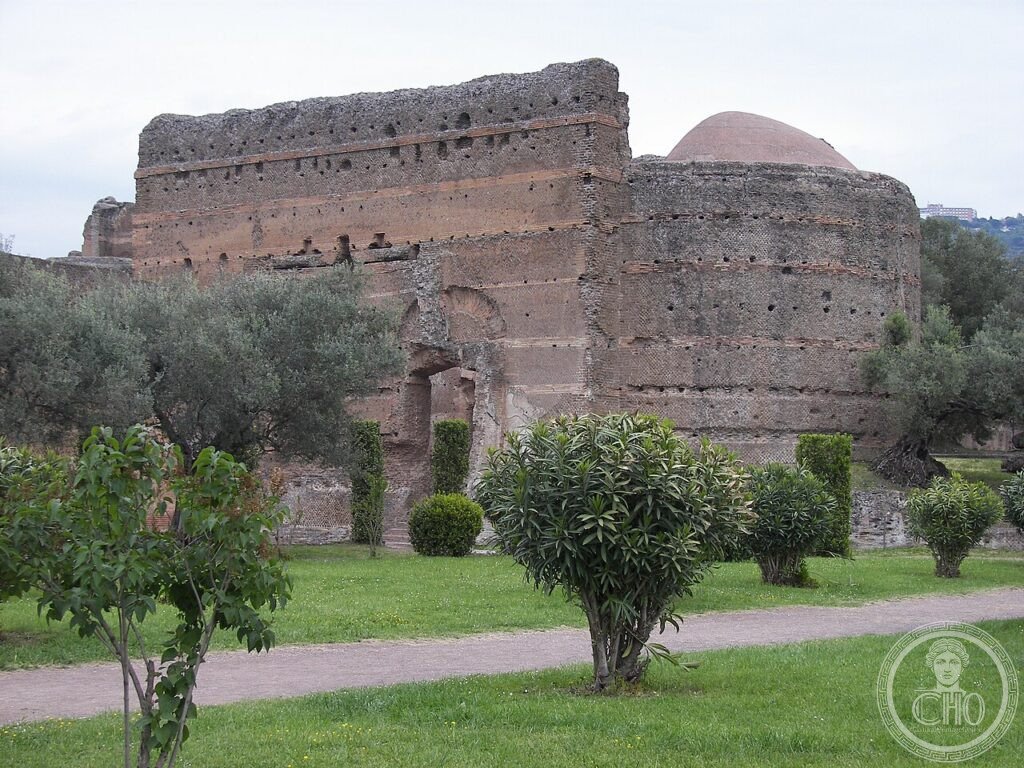
Villa Adriana, Tivoli
Villa Adriana a Tivoli (UNESCO 1999) è la villa imperiale più grande mai costruita nell’antichità — 120 ettari progettati dall’imperatore Adriano (76–138 CE) come antologia architettonica dei monumenti più amati del mondo ellenistico: il Canopo di Alessandria, la Stoà Poikile di Atene, l’Accademia di Platone, e una serie di sperimentazioni strutturali (il Teatro Marittimo: un’isola circolare su un fossato circolare, raggiungibile solo via un ponticello girevole) che non hanno precedenti nell’architettura romana e prefigurano il Barocco.
At a glance
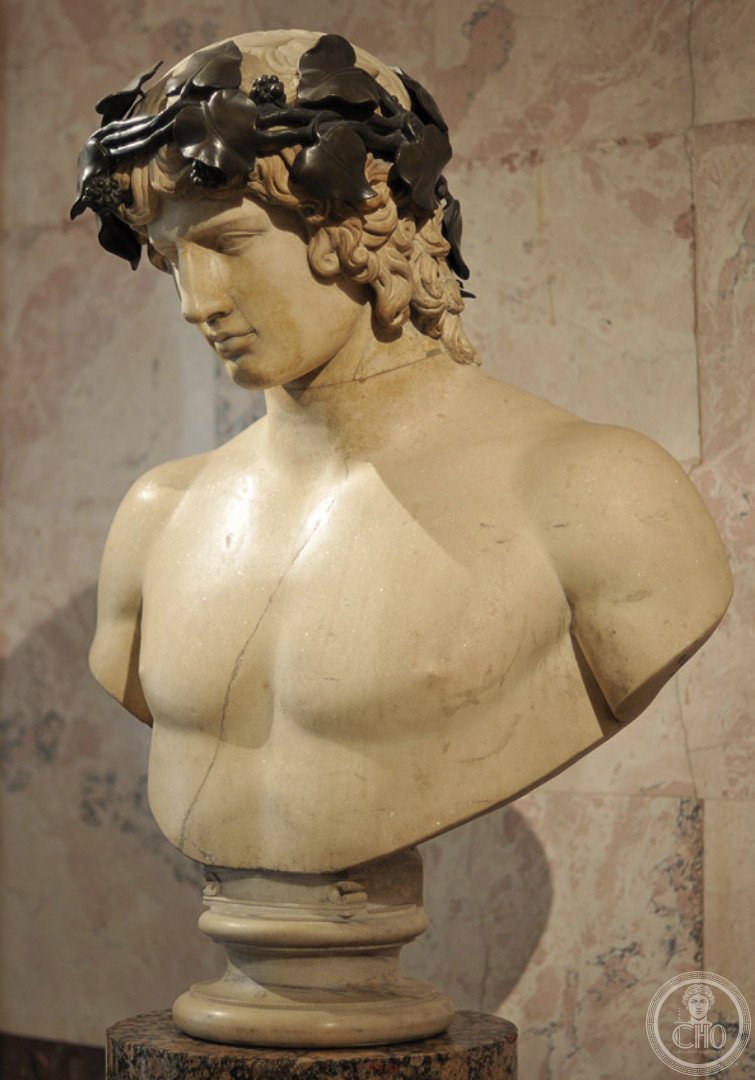
Villa Adriana Tivoli (the most precisely Tivoli zone Tivoli Lazio Italy 41.9420 N 12.7749 E UNESCO WHS 1999 reference 907: the Hadrian programme (Publius Aelius Hadrianus (76–138 CE): the Roman Emperor whose building programme was the most geographically dispersed since Augustus: (1) Hadrian’s Wall (Britain, begun 122 CE; 117 km; the most northwestern monumental project of any Roman emperor); (2) the Pantheon (Rome, rebuilt 118–125 CE; the concrete dome (43.3 m diameter) was the largest dome in the world for 1,300 years); (3) Villa Adriana (Tivoli, begun 118 CE; completed c.134 CE; 30+ architectural complexes; 120 hectares)); the specific architectural innovation of the Villa (the Teatro Marittimo (Maritime Theatre): the most extraordinary single building of the Roman Imperial period: a circular island (42 m diameter) surrounded by a circular canal (5 m wide); the island is connected to the perimeter colonnade by a wooden rotating bridge (no trace of the pivot mechanism survives; the existence of the rotating bridge is inferred from the absence of any permanent bridge in the archaeological record); the island contains: a miniature villa (dining room, bedroom, vestibule, latrine, curved corridors, marble pool); the circular colonnade around the perimeter: the first use of the “undulating entablature” in Roman architecture (the epistyle curves continuously in plan rather than making straight runs between columns — a structural impossibility without the Hadrianic concrete technique)); the Pecile (the large reflecting pool + 213 m colonnaded walk = Hadrian’s version of the Stoa Poikile (Painted Stoa) of Athens (336 BCE; the gallery of Polygnotos’s paintings (the Battle of Marathon, Troy, Odysseus in Hades); the Athenian philosophical school of the Stoics took their name from this stoa); Hadrian walked the Pecile as a morning exercise; the Pecile is oriented at precisely 10° off magnetic north to maximize morning sun exposure on the north portico); the Canopus (the Egyptian memory: Hadrian visited Egypt in 130 CE on a Nile cruise; his court favorite Antinous drowned in the Nile on 30 October 130 CE (the circumstances were never clarified; probably an accident; possibly a ritual suicide); Hadrian founded the city of Antinoopolis on the Nile at the place of the drowning; the Canopo of the Villa (built immediately after the Egypt trip) is Hadrian’s memorial to Antinous: the canal = the Nile; the Egyptian sculptures at the Serapeo end)).
Key facts
- Il Teatro Marittimo e la sua funzione come “isola privata” nell’isola privata dell’imperatore: the Teatro Marittimo function (the identification: the Teatro Marittimo (the term “theater” is a misidentification from 18th-century archaeology; the complex has no stage, no cavea, no theatrical function; it is a miniature private island villa (the dimensions: the outer ring 42 m outer diameter; the inner island 20 m; the canal 5 m wide; the colonnade around the canal: 40 Ionic columns of white marble lunense supporting a continuous curved architrave); the function (the current scholarly consensus (Eugenia Salza Prina Ricotti 1980s; Mary T. Boatwright 1987): the Teatro Marittimo was Hadrian’s private retreat (his “private sanctuary”): (1) the rotating bridge (only one bridge at a time connected the island to the perimeter ring; the bridge could be rotated to prevent access; no one could reach the island without Hadrian’s knowledge); (2) the floor plan includes all the elements of a self-sufficient mini-palace (triclinium/dining room with garden view; cubiculum/bedroom; bathing suite with hot and cold rooms; a private garden courtyard with a pool; a library space); (3) the scale (the island was sized for 1 person and a maximum of 2–3 attendants; no space for court dining or public ceremony); the specific irony (the island is the most private space in a villa that was itself never open to the public; the 12,000 residents of the Villa were there to serve the Emperor’s retreat; the Teatro Marittimo was his retreat from the retreat))
- GPS (ingresso principale): 41.9420° N, 12.7749° E
History
Da Adriano a Pirro Ligorio a Ippolito II d’Este all’UNESCO 1999 (the most precisely Tivoli zone history: the Roman Imperial period (118–138 CE: the 20 years of Hadrian’s construction and residence at the Villa; the specific building sequence: (1) 118–125 CE (the first decade): the Pecile, the Teatro Marittimo, the Grande Terme, the Piccole Terme, the Poikile, and the guest residences; (2) 125–134 CE (the mature phase): the Canopus and the Serapeo (after the Egypt trip of 130 CE), the Accademia, the Vale of Tempe; (3) 134–138 CE (final years): Hadrian is ill; he died in Baiae (Campania) on 10 July 138 CE, having lived at the Villa for less than 4 years total; the post-Hadrian period (2nd–4th century CE): the Villa was used by subsequent emperors (Marcus Aurelius was born in the Villa (26 April 121 CE; as the adopted son of Antoninus Pius who had inherited the Villa; the only Roman emperor born outside Rome)); the Renaissance spoliation (the Villa was systematically stripped of its marble facing and sculpture during the Renaissance; Pirro Ligorio (1512–83 CE; the Neapolitan antiquarian and architect) was appointed custodian in 1549 CE; he stripped the Villa’s remaining marble to build the Villa d’Este in Tivoli (located 1 km from the Villa Adriana: the Villa d’Este (UNESCO 1999 as a separate inscription reference 908) is therefore partly built from Villa Adriana material); the specific Ligorio theft (the Caryatids of the Canopus (the 4 female figures in the Serapeo portico) were sold by Ligorio to various Roman collections; the exact sculptures are now dispersed among the Musei Vaticani, the Museo Nazionale Romano, and the British Museum)); 1999 CE UNESCO inscription reference 907.
What you see
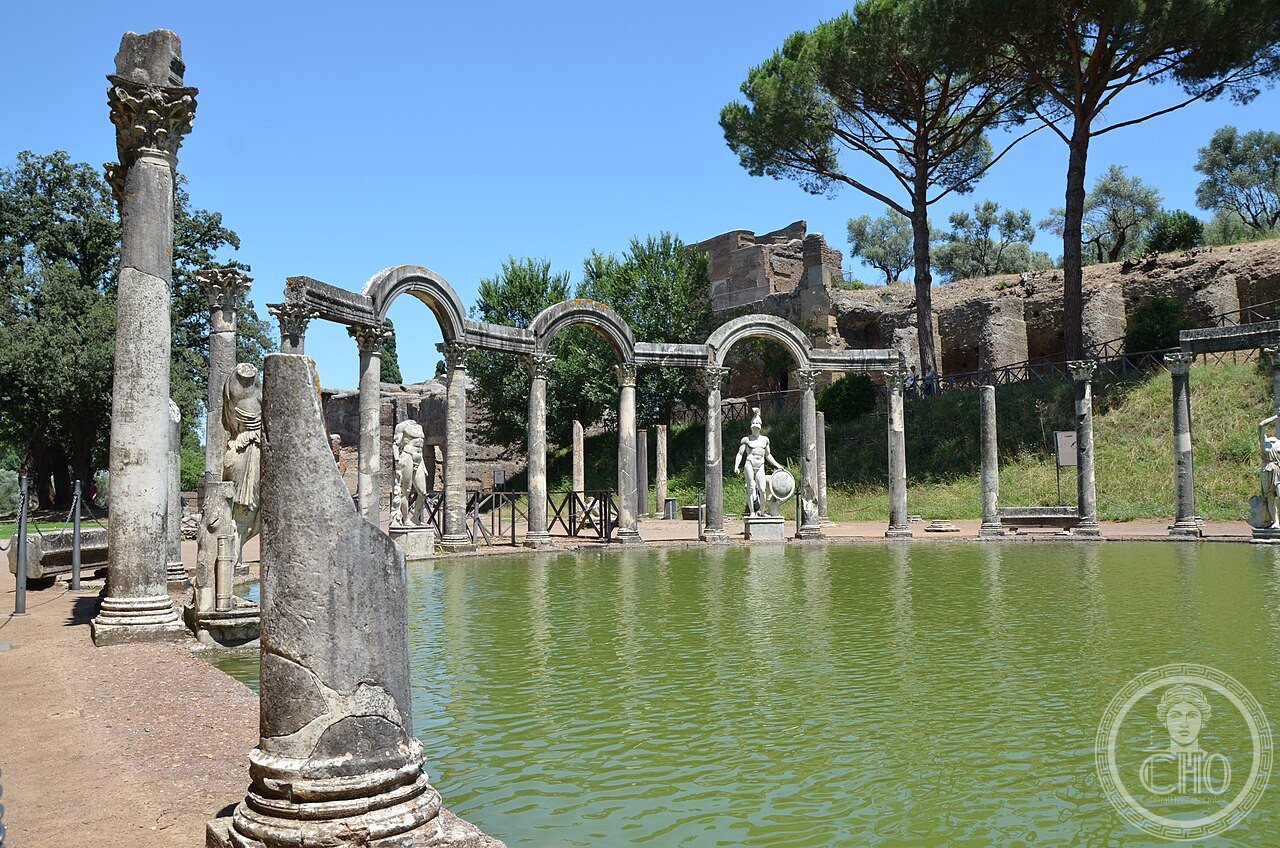
Il Canopo, il Teatro Marittimo, il Pecile, e il Serapeo (the most precisely Villa Adriana zone visit (3–4 hours; the site is large and needs comfortable shoes): the entrance (Via di Villa Adriana; open daily 9 AM–1 hour before sunset; €15 + €2 audio guide; €26.50 combo Villa Adriana + Villa d’Este in 2 days; a free 1:500 scale model of the Villa in the entrance hall provides orientation); the must-see circuit (2.5 hours minimum): (1) the Teatro Marittimo (15 min from the entrance; the best-preserved complex in the Villa; the circular canal still contains water; the Ionic colonnade is partially rebuilt); (2) the Terme del Grande Palatino (the large imperial bath complex; the octagonal frigidarium with an opus vermiculatum mosaic floor (the pattern: a Nilotic scene with crocodiles and hippopotami; now 80% missing; visible as an inlaid marble border)); (3) the Canopus (600 m from the entrance on the southeast axis; 45 min at the complex; the canal reflecting pool (119 m × 18 m); the Serapeo (the barrel-vaulted grotto at the end of the canal; the statues (modern replicas; the originals are in the Museo Nazionale Romano and the Vatican Museums))); (4) the Pecile (the large reflecting pool + the colonnade; the scale (the Pecile colonnade was 213 m long × 97 m wide: approximately the same footprint as the Campo dei Miracoli in Pisa)); the night visit (the Parco Archeologico di Villa Adriana holds an annual summer night-visit programme (usually July–August): open until 11 PM; tickets online at coopculture.it).
Practical information
- Come raggiungere Villa Adriana da Roma e combinare con la Villa d’Este a Tivoli: transport (bus Cotral (Roma Ponte Mammolo M3 → Tivoli: 1h10; every 20 min; €3.30 one-way; the Ponte Mammolo bus terminal is directly connected to the M3 metro line Pont Mammolo stop (3 stops from Termini)); local connection (in Tivoli: bus CAT 4 from the Tivoli bus terminal to the Villa Adriana stop (15 min; €1.20); or taxi from Tivoli centro (€12–15)); the Villa d’Este (1 km from the Villa Adriana (not walkable: the road is not pedestrian-safe; use taxi €8 or CAT bus 4)); the combo visit (Villa Adriana: open 9 AM–1 hour before sunset (closes at 7 PM in summer); Villa d’Este: open 8:30 AM–7:45 PM (summer); the optimal order: Villa Adriana 9–12:30; lunch in Tivoli centro (the Ristorante Sibilla overlooking the gorge of the Aniene; €30–40; reservations at ristorante-sibilla.com); Villa d’Este 2–6 PM; return bus to Roma 6:30 PM))
Getting there
Bus Cotral da Roma Ponte Mammolo M3 (1h10, €3.30, ogni 20 min) poi bus CAT 4 a Villa Adriana (15 min, €1.20). Da Roma Termini con auto (30 km via A24, €3 pedaggio). GPS ingresso: 41.9420, 12.7749.
Nearby
- Villa d’Este, Tivoli (UNESCO 1999) — 1 km nord (serial con Villa Adriana (stessa iscrizione UNESCO rif. 908); giardino rinascimentale del Cardinale Ippolito II d’Este (c.1550–72 CE); Fontana dei Cento Cannoni; Fontana di Nettuno; Fontana dell’Ovato; taxi €8 da Villa Adriana o bus CAT 4)
- Roma: Palatino e Foro Romano — 30 km ovest (UNESCO WHS 1980 ref 91; Metro B Colosseo; la residenza imperiale dove Adriano era ospite prima di costruire la Villa a Tivoli; Domus Aurea di Nerone a 2 km)
Gallery
Sources
- Wikipedia, Hadrian’s Villa; Canopus (Hadrian’s Villa); Maritime Theatre, Hadrian’s Villa, accessed June 2026
- UNESCO, Villa Adriana (Tivoli), WHS reference 907, inscribed 1999
- Boatwright, Mary T. Hadrian and the City of Rome. Princeton: Princeton University Press, 1987 (the authoritative study of Hadrianic architecture including the Villa)
Find it on the map
See this place and what’s around it →📷 Diventa un fotografo di Cultural Heritage Online
Condividi le tue foto dei luoghi: restano pubblicate con la tua firma come autore. Più vengono viste, più ti fai conoscere — e presto un concorso premierà le foto più apprezzate.
Accedi o registrati gratis per aggiungere una foto