
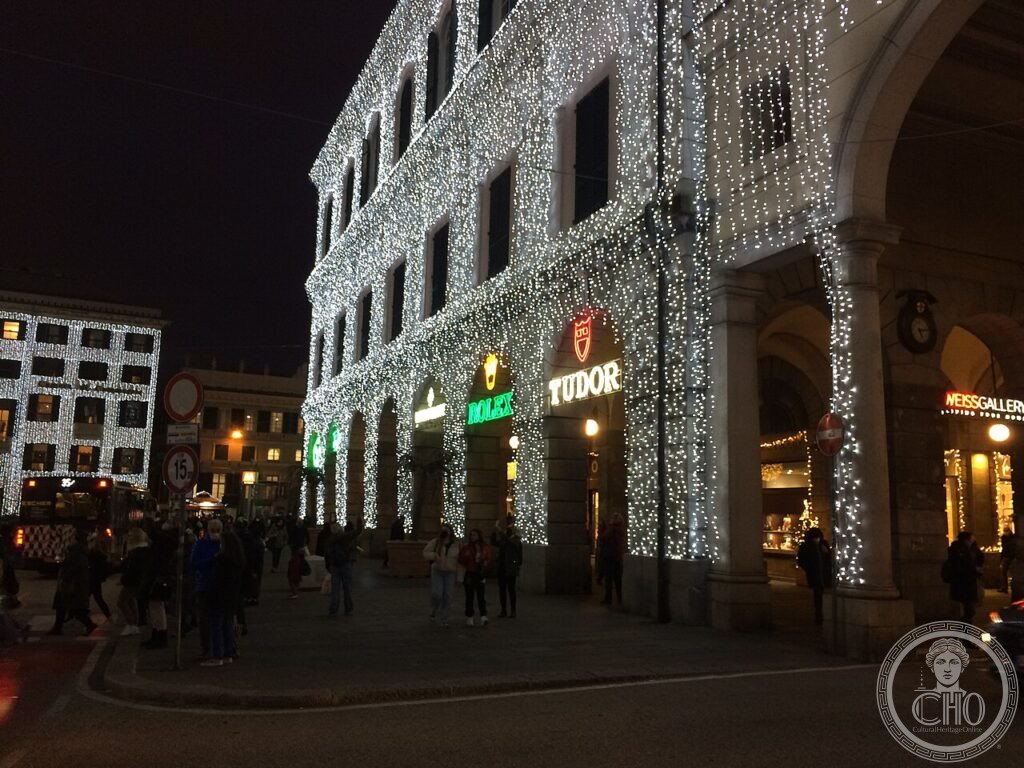
Via Garibaldi, once called Strada Nuova, was the first Renaissance street in Europa conceived as a unified project of noble façades. Along its length arose the Rolli system, which required registered families to host visiting dignitaries. Rubens documented this system in 1622, bringing Genoese Baroque to Fiandra.
At a glance
Via Garibaldi in Genova, the former Strada Nuova, was laid out as a straight street lined with noble palaces built to a coordinated design, rather than as the result of spontaneous urban growth. The sequence of Palazzo Bianco, Palazzo Tursi and Palazzo Rosso forms the most coherent group of late-Renaissance civil architecture in Genoa. The street and its palaces are linked to the Rolli system, the public list through which the Repubblica di Genova assigned the hosting of visiting dignitaries on a rotating basis. The families who owned the most prestigious palaces were the ones registered on this list. The ensemble was inscribed on the Lista del Patrimonio Mondiale UNESCO in 2006.
Key facts
- Località: Via Garibaldi, Genova, Liguria, Italia
- Costruzione: Strada Nuova built between 1550 and 1558, designed by the engineer Bernardino Cantone
- Rolli system: established by law in 1576, with 42 palaces registered on the rotation list for hosting dignitaries
- Documentazione: Pietro Paolo Rubens published the volume Palazzi di Genova in Anversa in 1622, containing 52 engravings of twelve palaces on Strada Nuova
- Riconoscimento: Patrimonio Mondiale UNESCO since 2006, reference 1211
History
Genova reached its financial peak in the sixteenth century, after the admiral and statesman Andrea Doria restored the republic’s independence in 1528. In the following decades, Genoese bankers became the main financial intermediaries of the Spanish Empire. They managed the flows of silver from the American colonies in Siviglia and financed Spanish troops in Europe. This wealth made possible the construction of the palaces of Strada Nuova. The new street was designed in 1550 and completed in 1558. It was the first street in northern Italy conceived as a unified project, rather than as a sedimentation of pre-existing buildings. In 1576 the Republic passed the Rolli law. This law required the families who owned the largest and best-furnished palaces to register on a public list. From this list, the Doge, or the visitor himself, chose the residence that would host kings, cardinals and ambassadors at the expense of the host family. The competition to keep the status of a house registered on the Rolli list pushed families to constantly improve their palaces, fueling the architectural development of the street. Between 1607 and 1608 Pietro Paolo Rubens stayed in Genova, working for the Doria family and other local families. In 1622 he published the volume Palazzi di Genova in Anversa, spreading the Genoese architectural model among noble Flemish, German and English families. A few years later, between 1624 and 1627, Antoon van Dyck worked in Genova, producing over forty portraits of the city’s aristocracy. The financial decline of Genova followed the Spanish default of 1627. The Republic was abolished by Napoleone in 1797 and replaced by the Repubblica Ligure. It then passed to the Regno di Piemonte-Sardegna with the Congresso di Vienna of 1815, and finally became part of the Regno d’Italia in 1861. In 2006, the Strada Nuova and its palaces were inscribed on the UNESCO World Heritage List.What you see
Via Garibaldi preserves the sequence of noble façades that earned it the fame of being the first example of planned Renaissance urban design in northern Italy. Three of the palaces, Palazzo Bianco, Palazzo Rosso and Palazzo Tursi, now house the Musei di Strada Nuova. These museums hold portraits by Van Dyck, works by Rubens, and paintings by Veronese, Tiziano and Palma il Vecchio. Palazzo Rosso, built for the Brignole family between 1671 and 1677, is the largest private palace on the street. It has frescoed ceilings and portraits of the Genoese aristocracy, as well as works by Bernardo Strozzi.
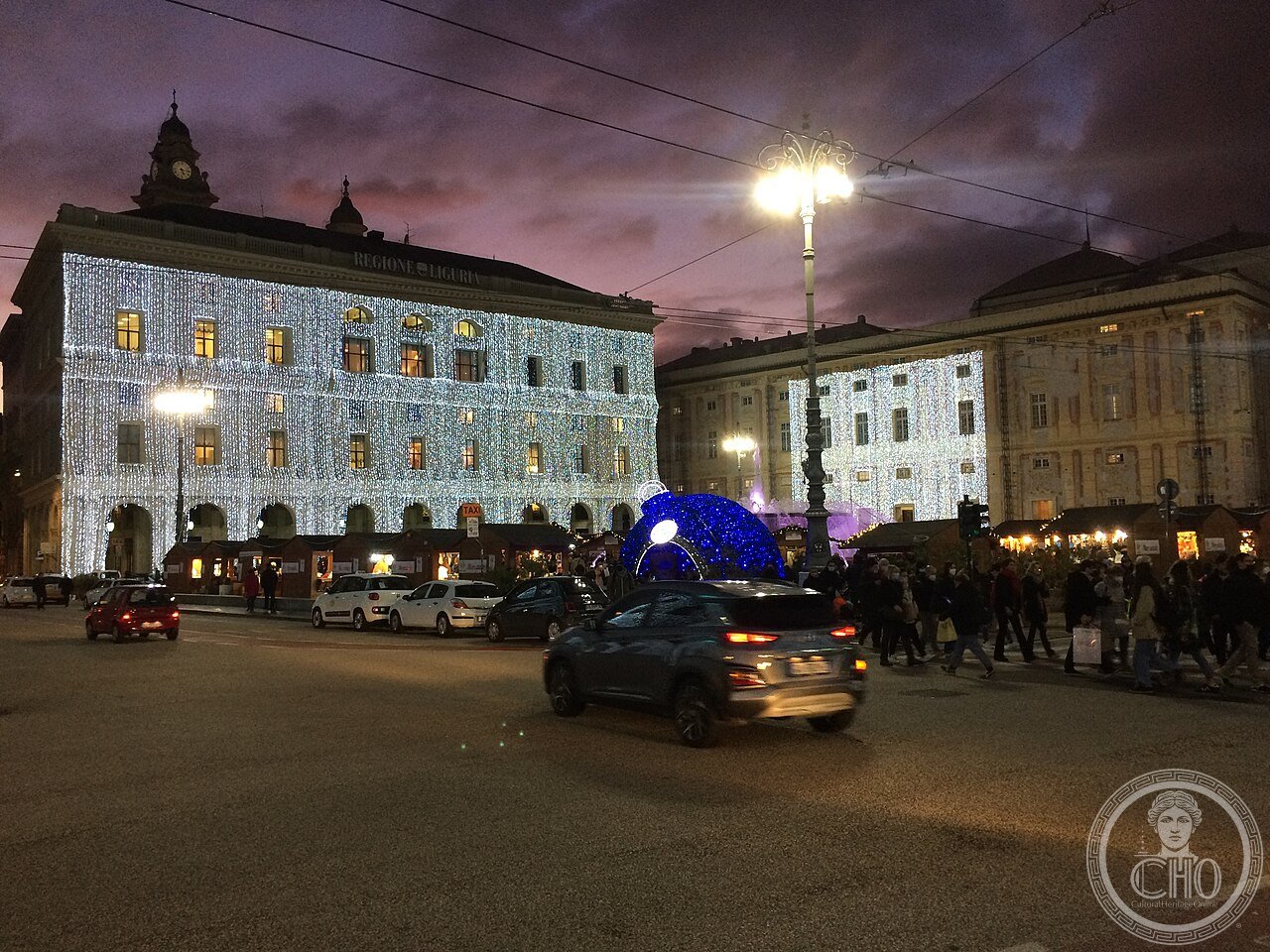
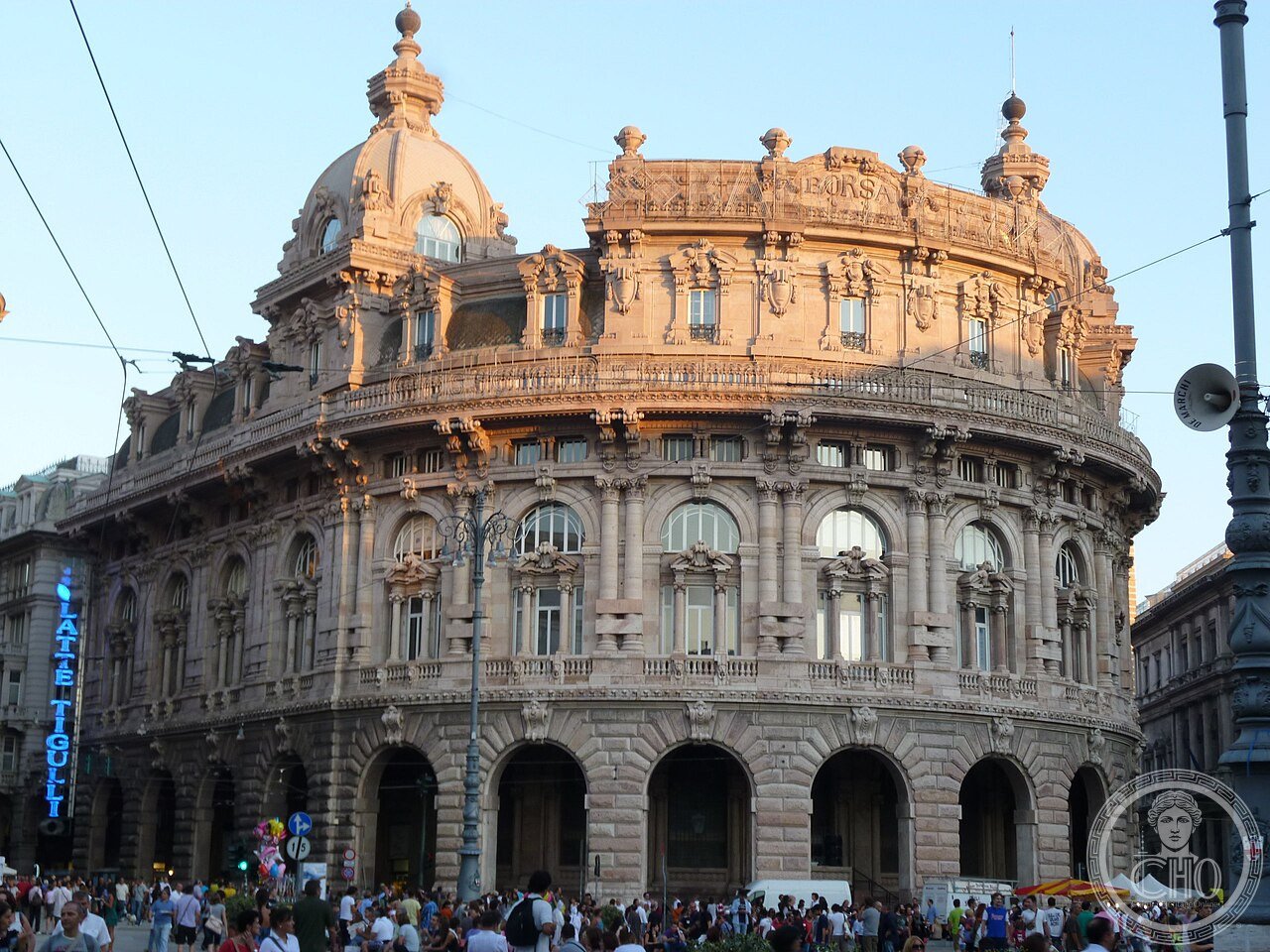
Palazzo Tursi, built between 1564 and 1597 for the Grimaldi family and later passed to the Doria family, is today the seat of the Comune. It still preserves some museum rooms on the ground floor. One of these houses the Cannone, the Guarneri del Gesù violin of 1743 that belonged to Niccolò Paganini, who left it to the city of Genova. The violin has never been sold and is sometimes played in public on special occasions. A short distance away, the seventeenth-century extension of Via Balbi includes the Palazzo dell’Università, with its two-storey internal courtyard. Nearby are also the Palazzo Ducale, the former seat of the Dogi, the central Piazza de Ferrari, the Porto Antico redesigned by Renzo Piano, and the medieval historic centre with its alleys, the caruggi.
Practical information
- Accesso: Via Garibaldi can be reached on foot from Genova Piazza Principe station in a few minutes.
- Musei di Strada Nuova: Palazzo Bianco, Palazzo Rosso and Palazzo Tursi can be visited with a combined ticket. Updated opening hours and prices should be checked on the official website of the Musei di Strada Nuova.
- Il Cannone di Paganini: displayed in a climate-controlled case at Palazzo Tursi. The occasions when it is played in public are announced by the Comune di Genova.
- Centro storico: the caruggi behind the Strada Nuova are best explored starting from Via San Luca, proceeding without a rigid map.
Getting there
Genova is connected by high-speed trains from Milano and Torino, arriving at either Piazza Principe station or Brignole station. From Piazza Principe, Via Garibaldi can be reached with a short walk through the city centre.
Nearby
- Palazzo Ducale — former seat of the Dogi di Genova, today an exhibition space, a few steps from Via Garibaldi.
- Piazza de Ferrari — the city’s central square, with its large fountain, a short walk away.
- Porto Antico — the historic port area, redesigned by Renzo Piano, which also houses the Acquario di Genova.
- I caruggi — the dense network of medieval alleys in the historic centre, immediately behind the Strada Nuova.
Sources
- UNESCO World Heritage Centre
- Musei di Strada Nuova
- Peter Paul Rubens, Palazzi di Genova (1622)
Gallery
Find it on the map
See this place and what’s around it →📷 Become a Cultural Heritage Online photographer
Share your photos of places: they stay published under your name as the author. The more they're seen, the more you get noticed — and soon a contest will reward the most appreciated photos.
Log in or sign up free to add a photo